
Destinations · Oct 15, 2026
Dubai Desert Stargazing: What You Can See and When It Works
An honest guide to city glow, haze and moon phase, and to choosing between a night drive and a night in the dunes.

The short answer
Yes, stargazing in the Dubai desert is worth doing, if you set your expectations correctly. You will not get the empty, glittering sky of a remote mountain range. Dubai is a huge, bright city, and its glow reaches a long way into the dunes. What you can get, on a good night, is a clearly darker sky than anything you see from your hotel balcony, a guide who knows where to point, and a telescope to make the most of it.
The decision most travellers face is how late to stay. If the stars are the point, book the Dubai Night Desert Wildlife and Stargazing trip: quiet, built around the evening, and back at your hotel the same night. If you want to sleep in the dunes and watch the sunrise too, the overnight camp is the longer option, though stargazing there is one part of a busy evening rather than the whole programme. Aim for late October into winter, and check the moon before you pick a date.
What you can realistically see
Be honest with yourself about three things that shape every night out here.
City glow
Even from deep in the red dunes, the horizon in the direction of Dubai carries an orange-grey smear of light. Overhead the sky is much darker, but faint objects, the kind that need a truly dark site, stay out of reach. The brightest stars and the planets cope well with light pollution; delicate, spread-out features do not. We will not promise you the Milky Way, or any named object. What is above you depends on the date, the hour and the weather, and a guide can only work with what the night gives.
Humidity and haze
Dubai sits on a humid coast, and for much of the year a thin veil of moisture and fine dust hangs in the air. In summer it is heavy. In the cooler months it thins, and the air after a clear, cold-ish day can be noticeably crisp. Even then, the sky near the horizon stays murkier than the sky overhead, so the best viewing is high up. A windy day can lift dust and soften the stars; a calm one tends to help.
Moon phase
This is the factor travellers forget. A bright moon floods the dunes with silver light, which is beautiful to walk in and quite poor for seeing stars. Around a full moon, fainter stars vanish. In the days around a new moon the sky is at its darkest. If your dates are flexible, check a moon calendar and, where you can, put your night out in the dark half of the lunar month. If your dates are fixed, do not cancel: a bright moon makes its own spectacle, and a telescope turns it into a close-up of craters and shadow.
When it works: late October into winter
The honest case for late October and November is comfort as much as clarity. The brutal heat of summer eases, evenings cool off, and the air generally clears compared with the sticky months. You can stand outside for a while without feeling wrung out. December to February is cooler still, and the desert at night can feel genuinely chilly, so bring a layer.
Timing within the evening matters too. In this season the sun sets in the early evening, but real darkness arrives well over an hour later, because the sky keeps a lingering glow after sunset. A trip that stops stargazing early is looking at a bright dusk sky. This is why the later start times, which put you in the desert as darkness settles, suit the stars best. If you are comparing months more widely, our month-by-month guide to Dubai's weather and seasons covers the full year, and Dubai in October is useful if you arrive at the start of the season, when afternoons are still hot.
Why a guided night beats a self-drive
Renting a car and heading to the dunes sounds romantic and gives you freedom. In practice it is a poor trade. Soft sand traps ordinary vehicles easily; recovery in the dark is miserable, and some stretches have little or no mobile signal. Parts of the desert are protected, with access controlled, and driving off-road without experience is how people end up stranded. You also need to know where to go to get away from the nearest lights, and where the wildlife is, which is local knowledge rather than something a map app provides.
A guided trip solves all of that. Someone else drives, someone else knows the ground, and you spend your energy looking up rather than worrying about the way back. You also get the telescope, which is the single biggest upgrade over standing in a layby with a phone.
Option one: the night wildlife and stargazing trip
This is the stargazing-first choice. The night desert wildlife and stargazing trip lasts five hours and is by road from Dubai and back. There are several start times, from 16:00 to 19:15, so you can choose how much daylight you want before dark. A vehicle collects you at your hotel and drives into the desert as the city falls behind.
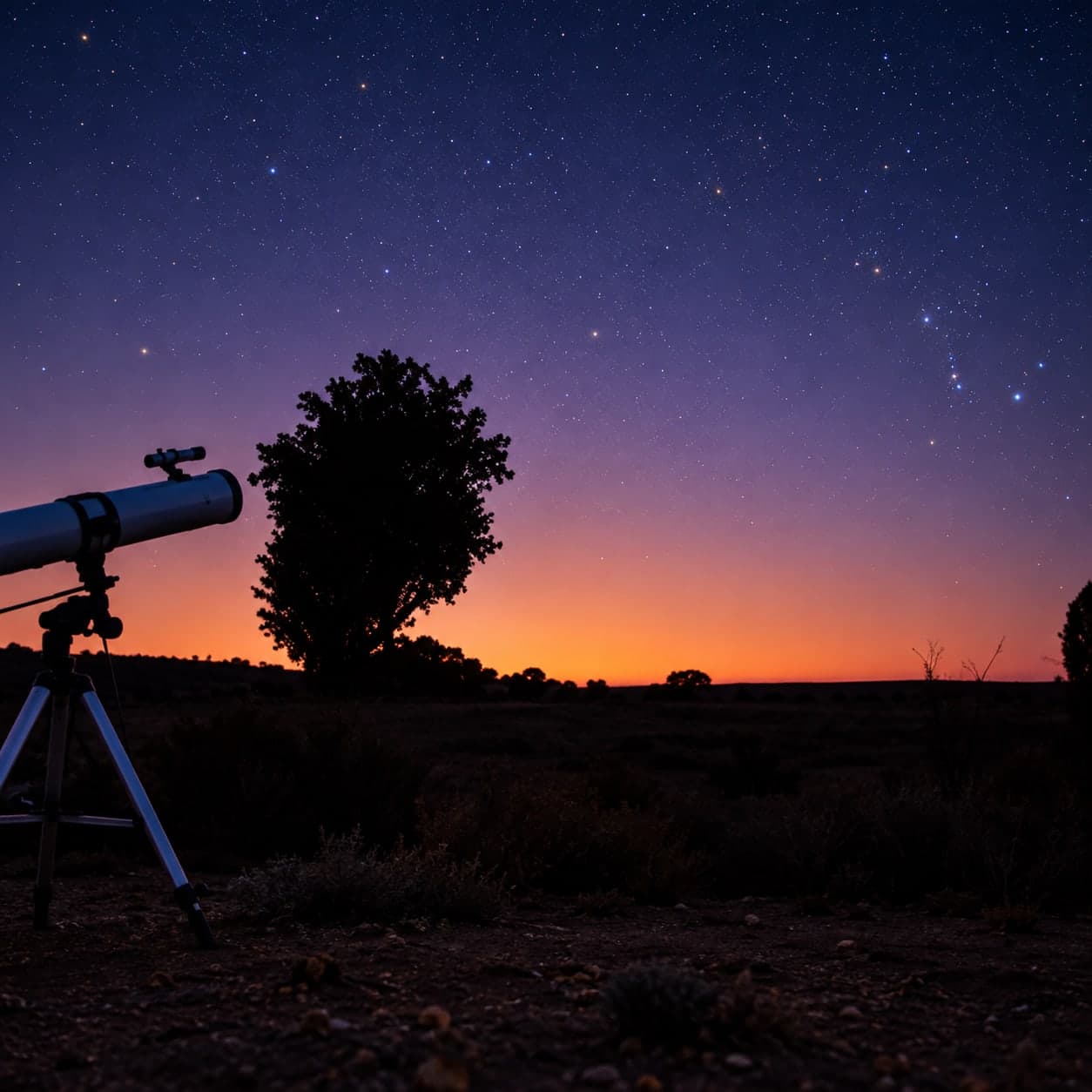
The first part is a slow wildlife drive. Many desert animals rest through the heat and move once the sand cools, and the guide points out tracks and animals along the way. A word of caution: sightings are never guaranteed, and tracks in the sand are often easier to find than the animal that made them. Along the way there is a camel ride, a run down a dune on a sandboard and a chance to hold a falcon for a photo. The evening ends with the night sky seen through a telescope.
Dinner is not part of this trip, and food, drinks and tips are not included, so eat beforehand or plan a late meal back in the city. It runs in two formats: a small group, shared with up to 15 guests, or private, just your party, whatever its size. For couples who want the quiet to themselves, the private format is the one to look at; for everyone else the small group works well. The trip suits curious travellers, families with older children and anyone who prefers quiet to loud camp shows.
Option two: the overnight camp
If you want to stay out late and wake up in the dunes, the overnight camp is the alternative. Dubai Overnight Desert Camp and Sunrise lasts 17 hours and starts at 13:45. It runs as a small group, shared with up to 15 guests. You are collected by four-wheel drive, spend time in the red dunes with a dune drive and sandboarding, then reach the camp in time for a sunset camel ride.
The evening is full: a three-cuisine buffet with barbecue, live shows, then stargazing through a telescope. After that comes a night camel ride to a campfire, where you learn to brew Arabic coffee. You sleep in a private, air-conditioned tent with showers, towels and toiletries, wake for a sunrise camel walk, eat an Arabic breakfast and drive back to Dubai.
Here is the unflattering part. A camp with shows is a lit, social place, and the stargazing slot sits inside a long evening. It is a pleasant ending to dinner rather than a dedicated astronomy night. You will also give up a night in your own bed and some of your sleep. But for couples, waking in the quiet dunes to a sunrise is something a five-hour trip cannot offer. If you would like the longer picture, our guide to what a night in the dunes involves goes through the evening in detail.
The quad bike version
The overnight camp with a quad ride follows the same overnight programme and starts at 14:30, with a 35-minute ride on your own quad bike when you reach the dunes. It is also a small group of up to 15 guests. The quad is a fun extra, but it is not about the stars at all; if you are unsure whether it is for you, our comparison of quad bike or dune buggy in Dubai helps you decide.
A middle option: barbecue dinner at camp
If you want an evening at a camp but no jolting dune drive and no overnight stay, the Dubai Desert Camp BBQ Dinner lasts four hours, with pickup at 15:45 or 16:30. It is shared with up to 15 guests. You get a short camel ride, a falcon photo, henna, live performances and a buffet of Emirati, Moroccan and Arabian dishes with a live barbecue, then time to look at the night sky away from the city lights. The listing mentions stargazing but not a telescope, so treat it as a dinner evening with a view of the sky rather than a guided sky tour. It works well for older travellers, families and anyone prone to motion sickness.
How the trips compare
| Trip | Length | Start | Format | Dinner | Stars |
|---|---|---|---|---|---|
| Night wildlife and stargazing | 5 hours | 16:00 to 19:15 | Small group (up to 15) or private | Not included | Telescope, the focus of the evening |
| Desert camp BBQ dinner | 4 hours | 15:45 or 16:30 | Small group (up to 15) | Buffet and live barbecue | Time to look at the sky |
| Overnight camp and sunrise | 17 hours | 13:45 | Small group (up to 15) | Buffet and barbecue | Telescope, after dinner and shows |
| Overnight camp with quad ride | 17 hours | 14:30 | Small group (up to 15) | Buffet and barbecue | Telescope, after dinner and shows |
How to choose how late to stay
- You want the best chance at the sky and a quiet evening: the night wildlife and stargazing trip, ideally in the private format if you are a couple who like to be alone with the guide.
- You want to be out late and sleep under canvas: the overnight camp. Expect a full programme, a short night and an early sunrise.
- You want a relaxed evening and a view of the stars after dinner: the barbecue dinner, with the caveat above.
- You are travelling with children: the five-hour trip has the shortest late stretch; our guide to Dubai with kids breaks down desert trips by age.
If you are still weighing morning, evening and overnight desert trips as a whole, our Dubai desert safari guide sets them side by side.
What to bring
Bring a light jacket or jumper; once the sun is gone the sand loses its heat quickly, and winter nights are properly cool. Wear closed shoes, since you will be walking on sand and dunes. Pack light, loose clothing for the afternoon and a layer for the night; our dress code guide for Dubai and the Dubai packing list cover the details. Let your eyes adjust: put your phone away for a few minutes, because screen light undoes your night vision. Above all, treat the trip as an evening in the desert with a decent chance at a good sky, not a guaranteed show.
FAQ: Dubai desert stargazing
Can you see the Milky Way from the Dubai desert?
We would not promise it. City glow and humidity haze limit how dark the sky gets, and what you see depends on the night and the moon. Expect the brighter stars and, with luck, planets; treat anything beyond that as a bonus.
What is the best month for stargazing in Dubai?
The cooler months, from late October into winter, are generally the most comfortable, and the air tends to be clearer than in the humid summer. Within any month, nights around a new moon are darker than nights around a full moon.
Is stargazing included on the overnight desert camp?
Yes. Both overnight camp trips include stargazing through a telescope after dinner and the live shows, followed by a night camel ride to a campfire. It is one part of a long evening rather than the main event.
Is the stargazing trip private?
It runs in two formats: a small group, shared with up to 15 guests, and a private option for just your party. The overnight camps and the barbecue dinner run as small group trips only.
Should I drive into the desert myself?
We advise against it. Soft sand, patchy signal, restricted areas and the dark make it risky, and you would miss the guide's local knowledge and the telescope.
Book what you just read about
Explore related tours and check each trip for available booking options and inclusions.
Dubai Night Desert Wildlife and Stargazing
5 hours · Dubai
€42/ person
See the tour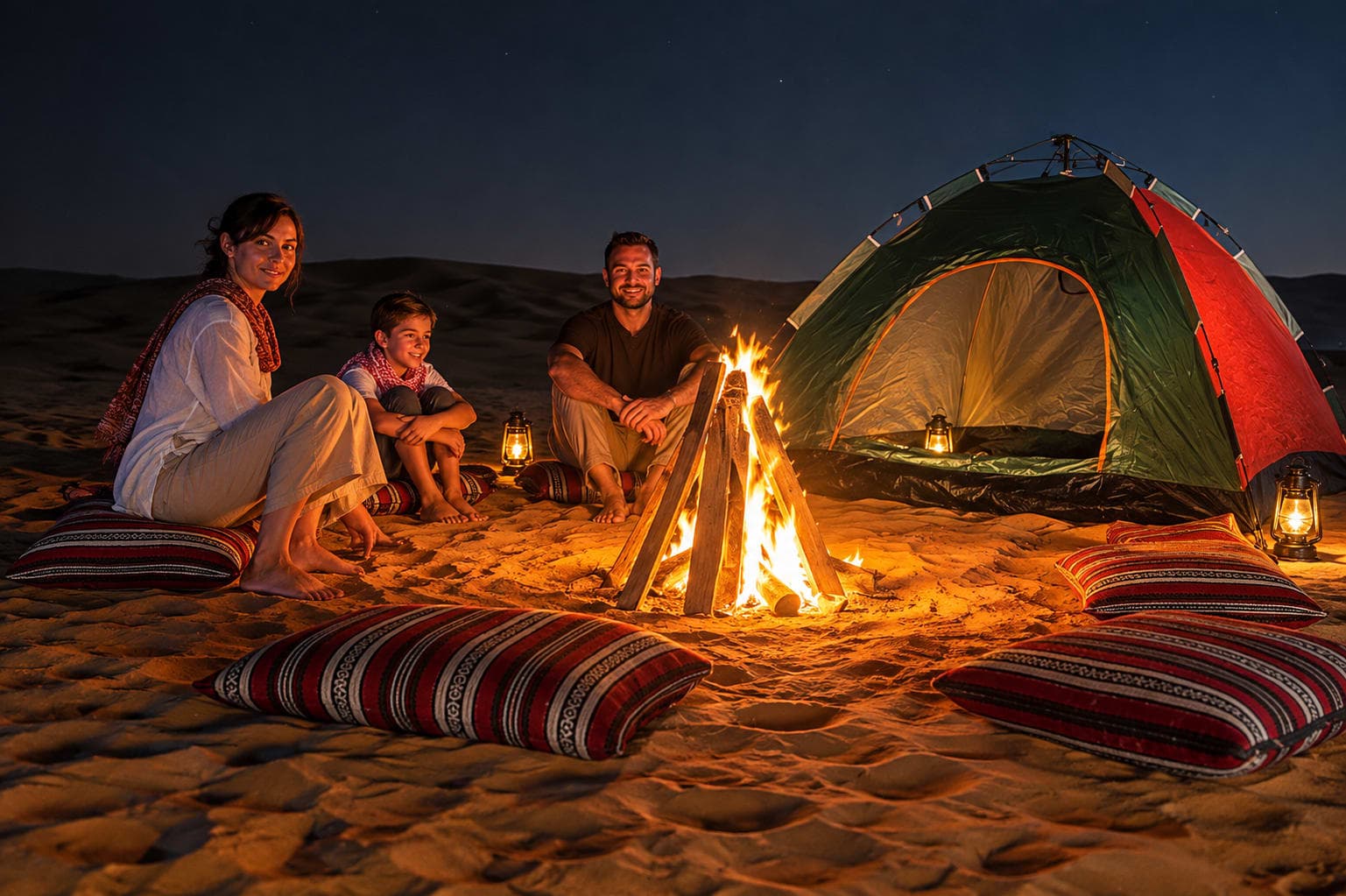
Dubai Overnight Desert Camp and Sunrise
17 hours · Dubai
€160/ person
See the tour
Dubai Overnight Desert Camp and Sunrise — Overnight with quad ride
17 hours · Dubai
€201/ person
See the tour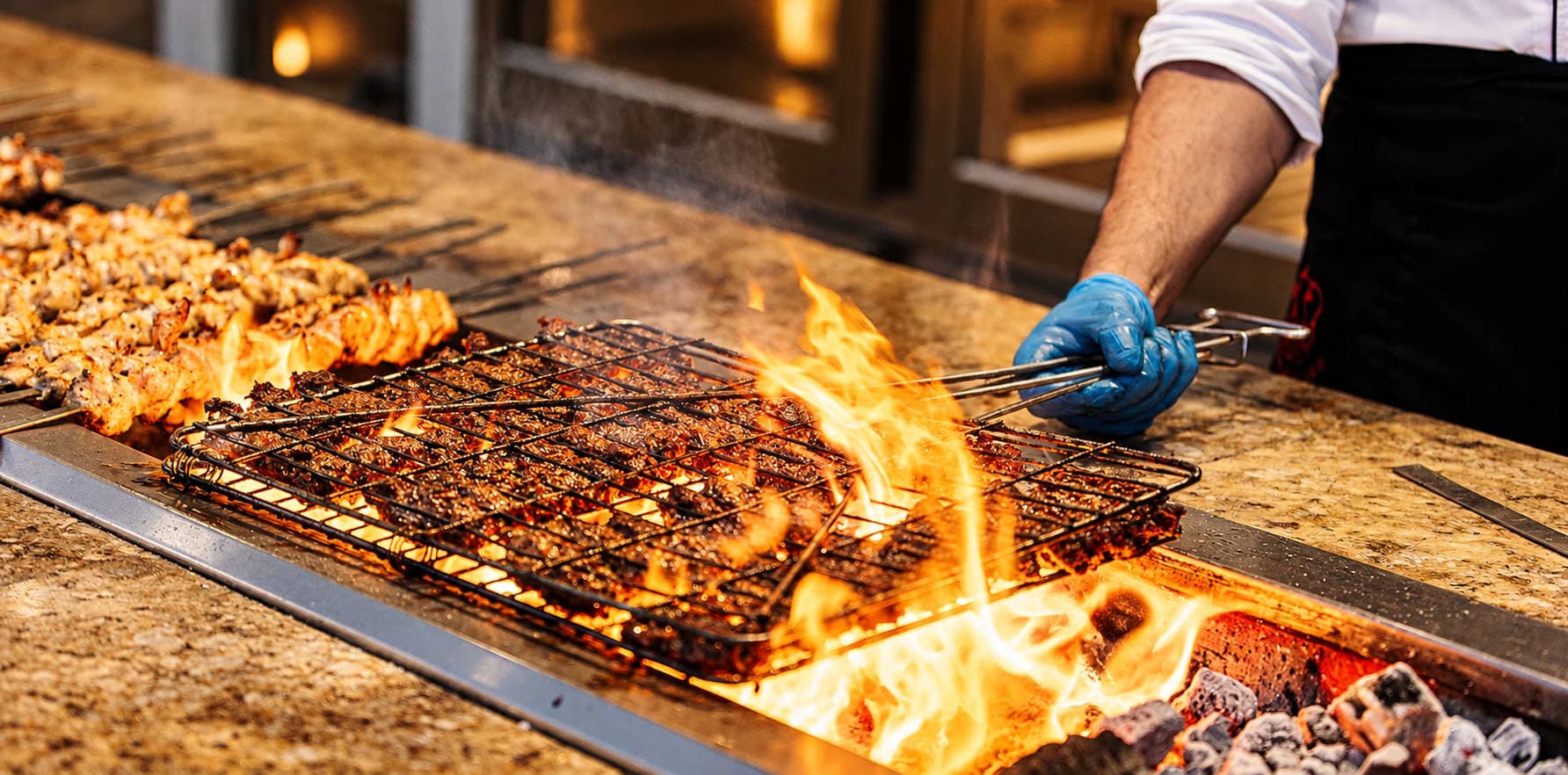
Dubai Desert Camp BBQ Dinner
4 hours · Dubai
€68/ person
See the tour