

Cairo Day Trip
From $128 / person17 hoursCairoIncludes 30 min at this sight
The lion-bodied guardian of the plateau
Typical visit: 45 min
Period: 2500 BC · Old Kingdom
The world's most famous statue — a colossal lion with a pharaoh's head, carved from the living rock.


Photo credits: Mstyslav Chernov · CC BY-SA 3.0; Kurohito · CC BY-SA 3.0
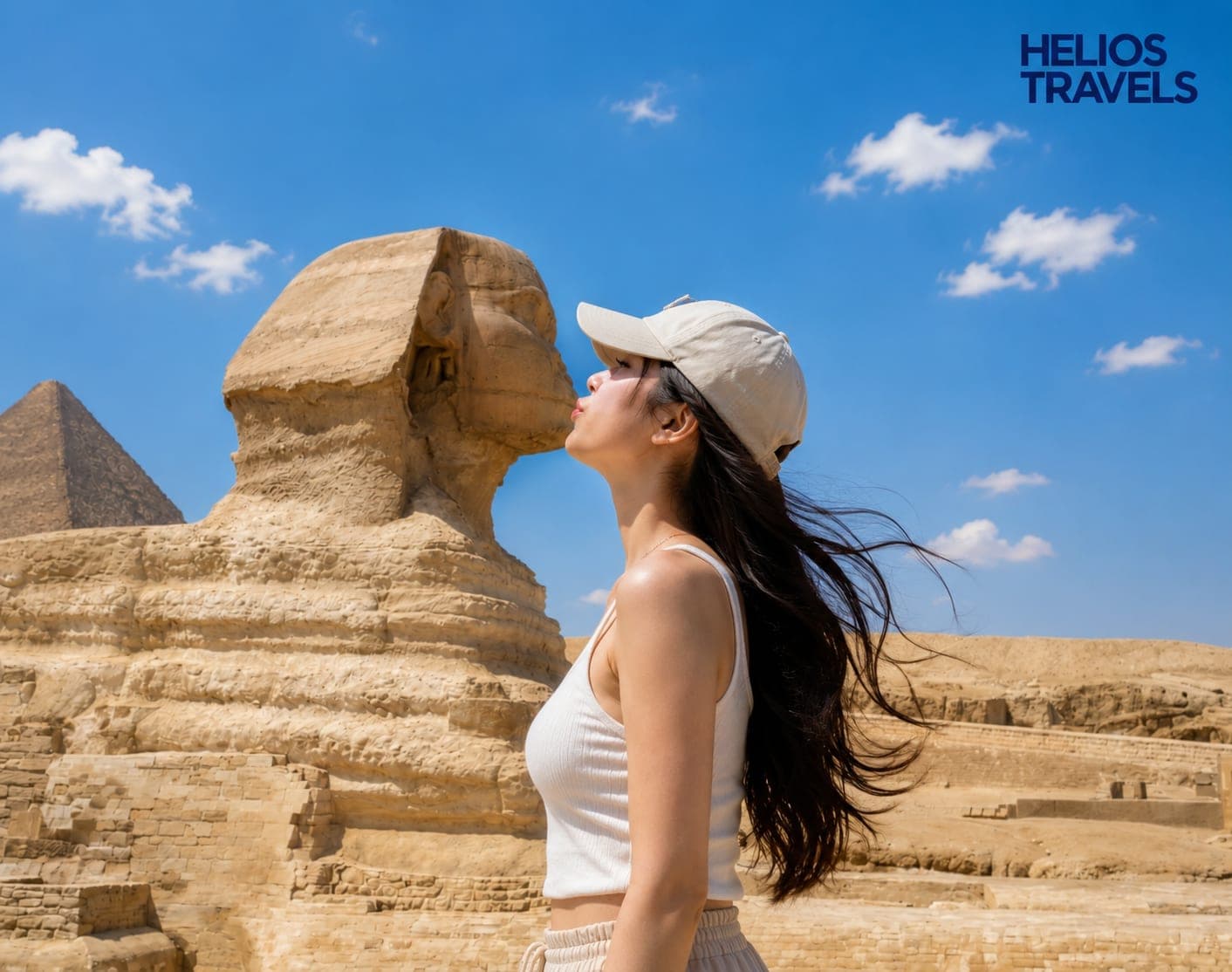
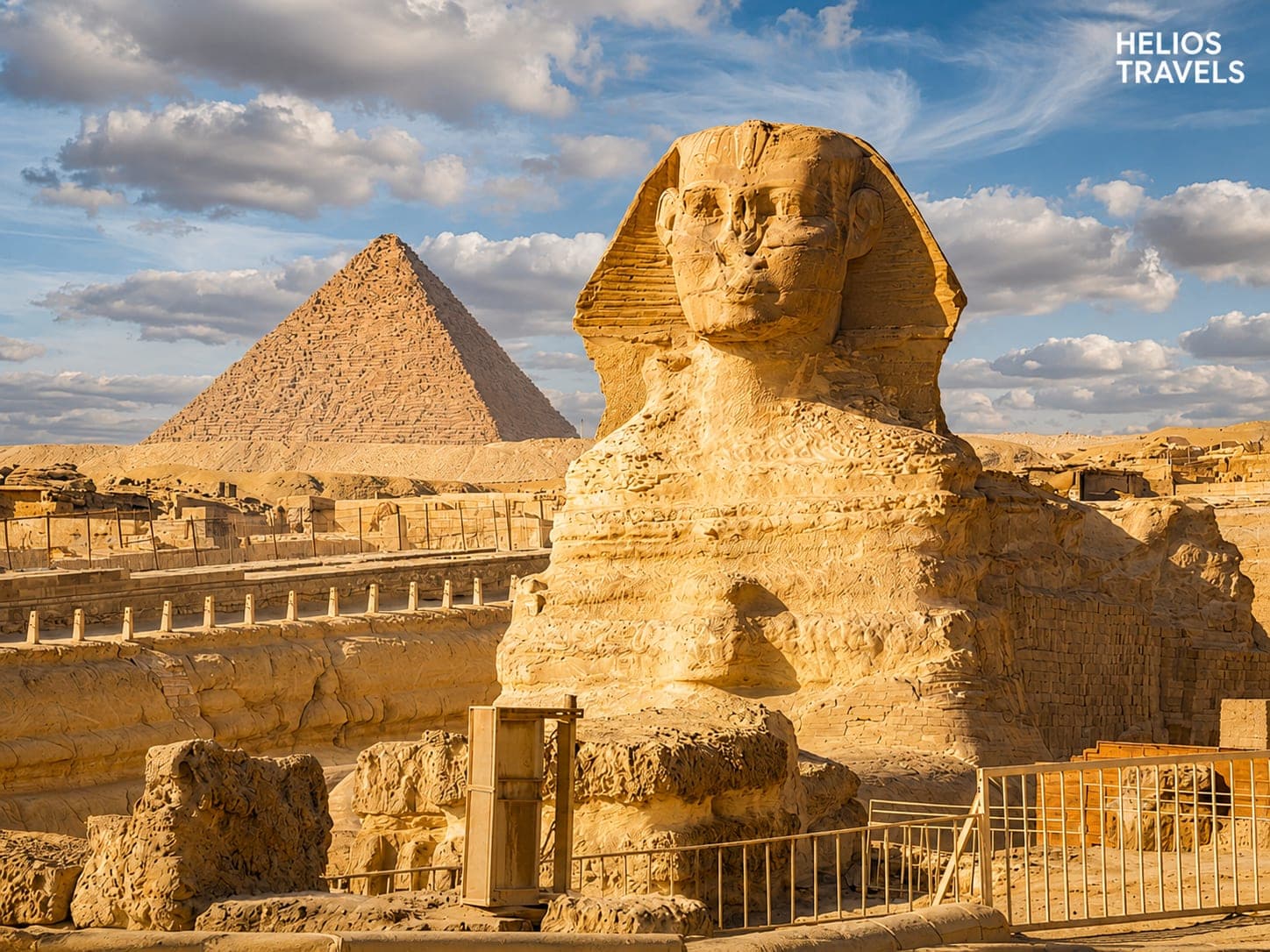
Seventy-three metres long and twenty high, the Sphinx was not assembled but subtracted — carved in place from a single limestone outcrop left over from the quarry that supplied the Great Pyramid. The body is soft, coarsely bedded rock that has eroded into deep horizontal grooves; the head is harder stone, which is why it has kept its features while the flanks have crumbled and been patched.
Stand at the viewing terrace first, then walk the southern side. From there you get the alignment the builders intended: the Sphinx facing due east, with Khafre's pyramid rising directly behind its shoulder.

Twenty metres of lion cut from the living limestone of the plateau, with a human head at a scale that does not read from photographs. The head is harder stone than the body, which is why it has kept its features while the flanks eroded into deep horizontal grooves.

A granite slab set between the front paws by Thutmose IV, recording a dream he had while sleeping in the Sphinx's shadow: the statue, buried to its neck in sand, promised him the throne if he would dig it out. He did, and put up the stele to say so.
Under the chin, the broken attachment point for a plaited ceremonial beard. It was probably added centuries after the carving rather than being original. Fragments are in the British Museum and in Cairo, and neither will be putting them back.
The flanks are patched in layers you can date by eye: large Pharaonic blocks low down, smaller Roman work above, cement from the last century above that. The Sphinx has been under restoration, on and off, since roughly 1400 BC.
Most Egyptologists attribute it to Khafre, around 2500 BCE, carved as part of his pyramid complex — a lion's body with a king's head, guarding the approach to the tomb. Its ancient name is unknown. "Sphinx" is Greek, applied more than two thousand years after it was made.
By the New Kingdom the statue had been buried to its neck in drifting sand for centuries. A young prince, out hunting on the plateau, is said to have slept in the shade of the head and dreamt that the Sphinx spoke to him: clear away the sand, and you will be king. He did, and he was — and Thutmose IV set up a granite stele between the paws recording the bargain. It is still standing there, which makes it one of the oldest surviving pieces of political publicity in the world.
Napoleon's artillery did not do it. The nose was already gone when Europeans began drawing the Sphinx, and the Arab historian al-Maqrizi records that it was deliberately broken off in the 14th century by a Sufi named Muhammad Sa'im al-Dahr, who was reportedly enraged at finding peasants making offerings to the statue for a good harvest.
Pick how many days you have, add attractions per day, and see average activity and travel times between cities.
Places that carry the same story forward, or sit close enough to take in the same day.
2560 BC · Old Kingdom
1 km away
2550 BC · Old Kingdom
0 km away
2023 · Contemporary
3 km away
1902 · Khedivial
12 km away

2021 · Opened 2021
11 km away
2650 BC · Old Kingdom
14 km away
Book a ready-made tour or use the designer above to build your own plan.

















Hand-picked tours our guests love — top quality at reasonable prices, curated by Helios for your trip.