
Cairo 2 Days by Plane · private
From $387 / person2 daysIncludes 2 h at this sight
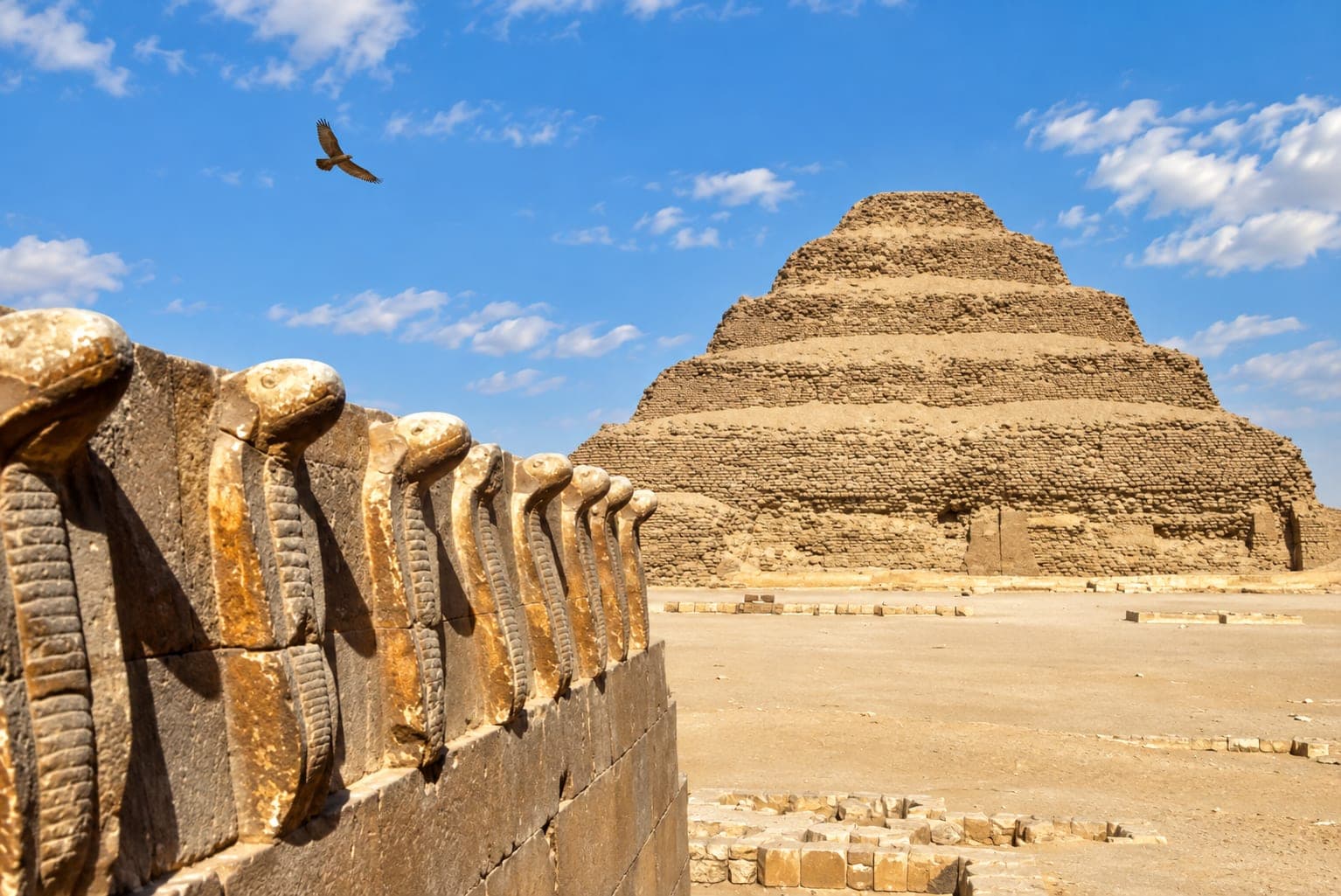
Egypt's first pyramid, the Step Pyramid of Djoser
Typical visit: 2 h
Period: 2650 BC · Old Kingdom
The vast necropolis of ancient Memphis, home to the Step Pyramid — the world's oldest large stone building.


Saqqara is the necropolis of Memphis, a strip of desert plateau some thirty kilometres south of Cairo that stayed in use for more than three thousand years. The Step Pyramid of Djoser dominates it: six diminishing stone terraces, sixty metres high, the oldest large stone building anywhere in the world.
The enclosure around it is the part people underestimate. Its colonnade of ribbed limestone columns imitates bundled reeds, and the dummy chapels of the Heb-Sed court have doors carved permanently open — architecture built for a ritual the king was meant to perform for eternity.
Saqqara is also the most active dig in Egypt: mummy workshops, sealed coffin caches and animal catacombs have come out of the sand here through the last several seasons.
Before Djoser, kings were buried under mastabas — low rectangular mudbrick benches. Around 2670 BCE his architect stacked six of them, each smaller than the last, and built the whole thing in stone. It was the first monumental building in the world not made of mud, timber or reed, and it set the direction that led, in barely a century, to the Great Pyramid.
That architect was Imhotep — one of very few non-royal Egyptians whose name survived on his king's own monument. He was remembered as a physician and sage, and over the following two millennia his reputation grew until he was worshipped outright as a god of healing. The Greeks identified him with Asclepius. It is a rare thing in any civilisation: a working architect deified for his engineering.
The Serapeum was found in 1850 by Auguste Mariette, who was in Egypt to buy Coptic manuscripts, noticed a sphinx head protruding from the sand, and followed the buried avenue instead. He dug up the entire processional way and the vaults beyond — one of which held a sarcophagus still sealed and undisturbed, with the fingerprints of the workmen who closed it preserved in the plaster.
Pick how many days you have, add attractions per day, and see average activity and travel times between cities.
Places that carry the same story forward, or sit close enough to take in the same day.

2600 BC · Old Kingdom
9 km away
2560 BC · Old Kingdom
14 km away
2550 BC · Old Kingdom
14 km away
2500 BC · Old Kingdom
14 km away
2600 BC · Old Kingdom
54 km away
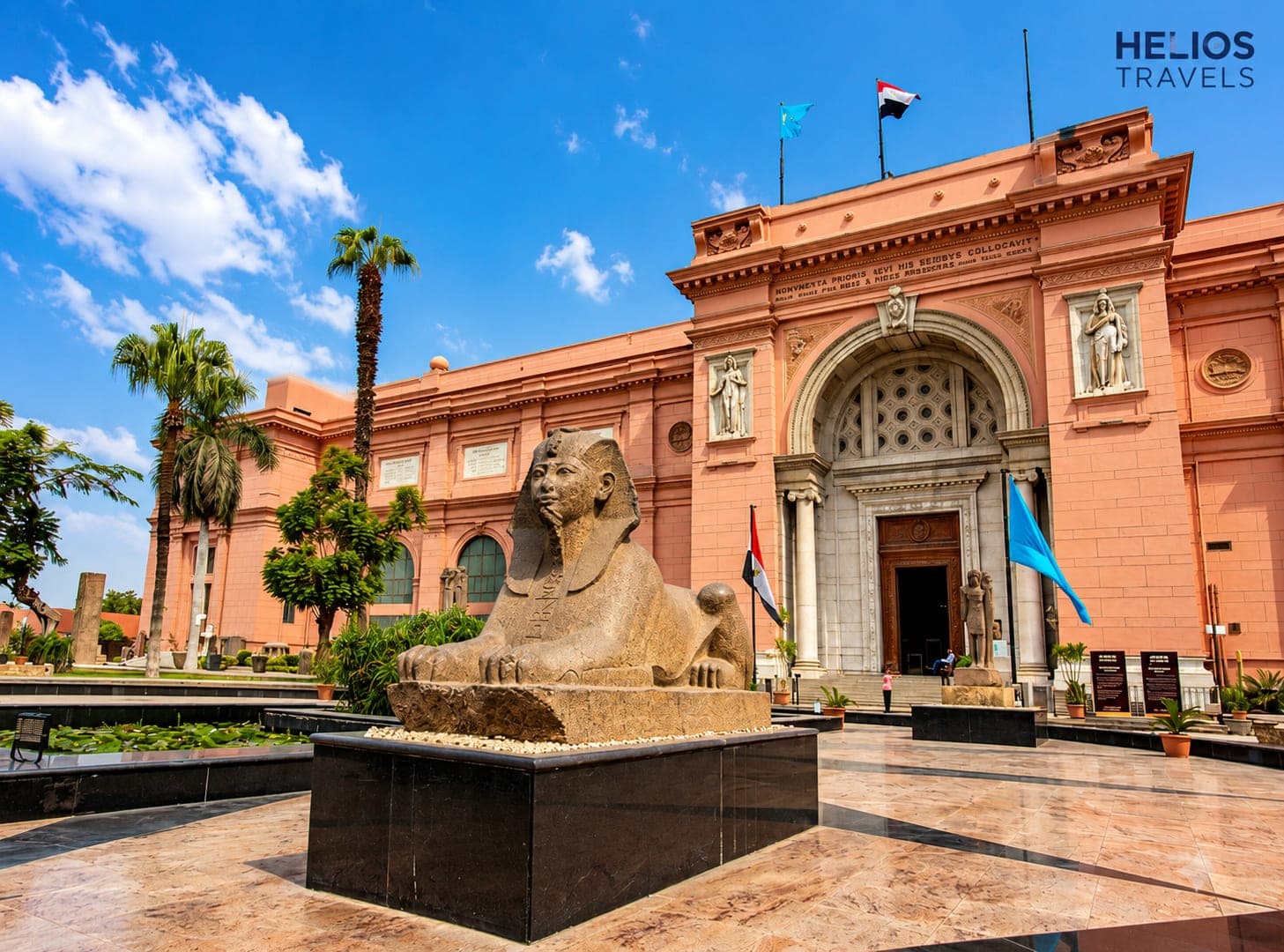
1902 · Khedivial
20 km away
Book a ready-made tour or use the designer above to build your own plan.











Hand-picked tours our guests love — top quality at reasonable prices, curated by Helios for your trip.