

Cairo Day Trip
From $128 / person17 hoursCairoIncludes 3 h at this sight
Giza · the last standing ancient wonder
Typical visit: 3 h
Period: 2560 BC · Old Kingdom
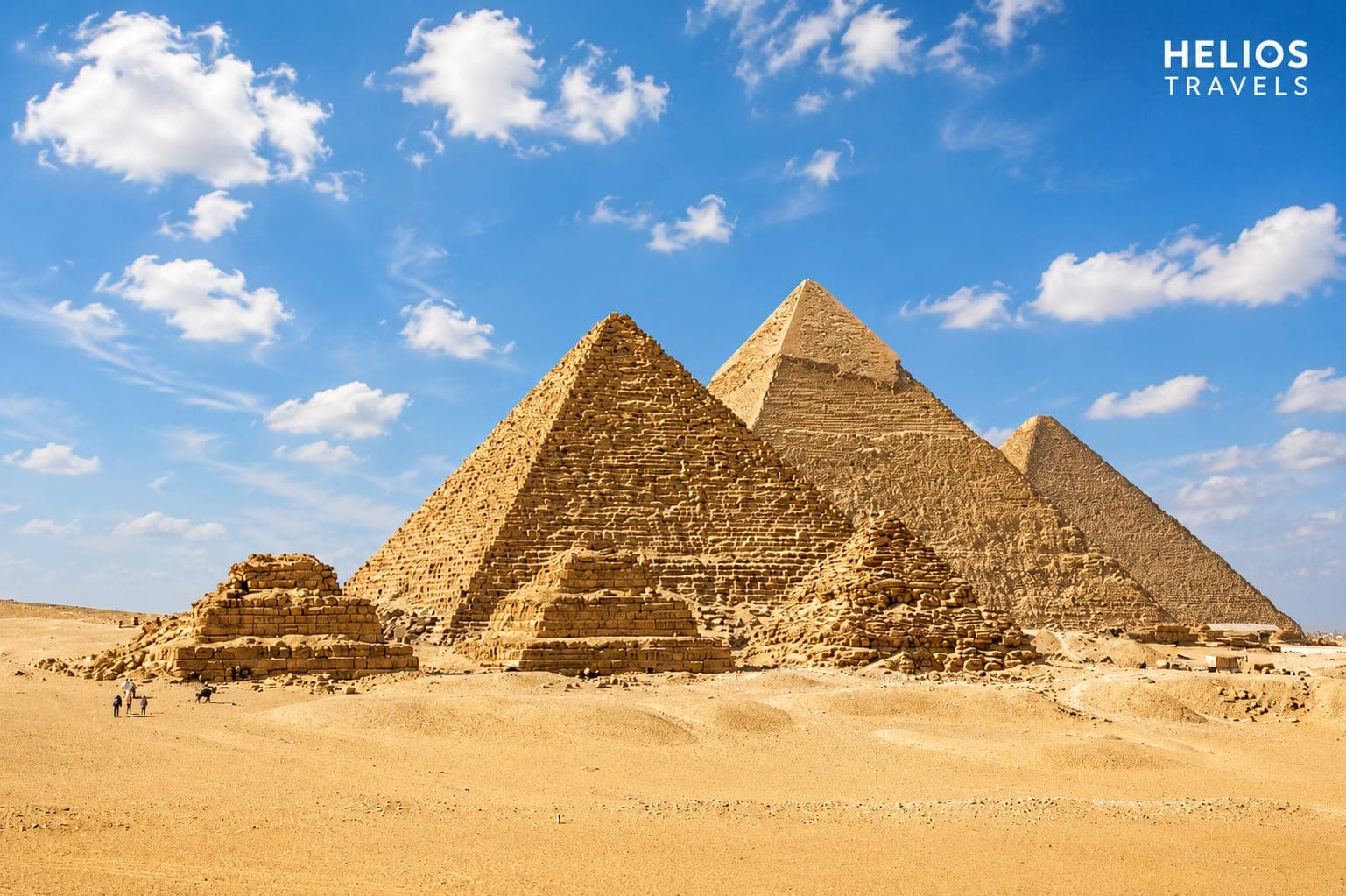
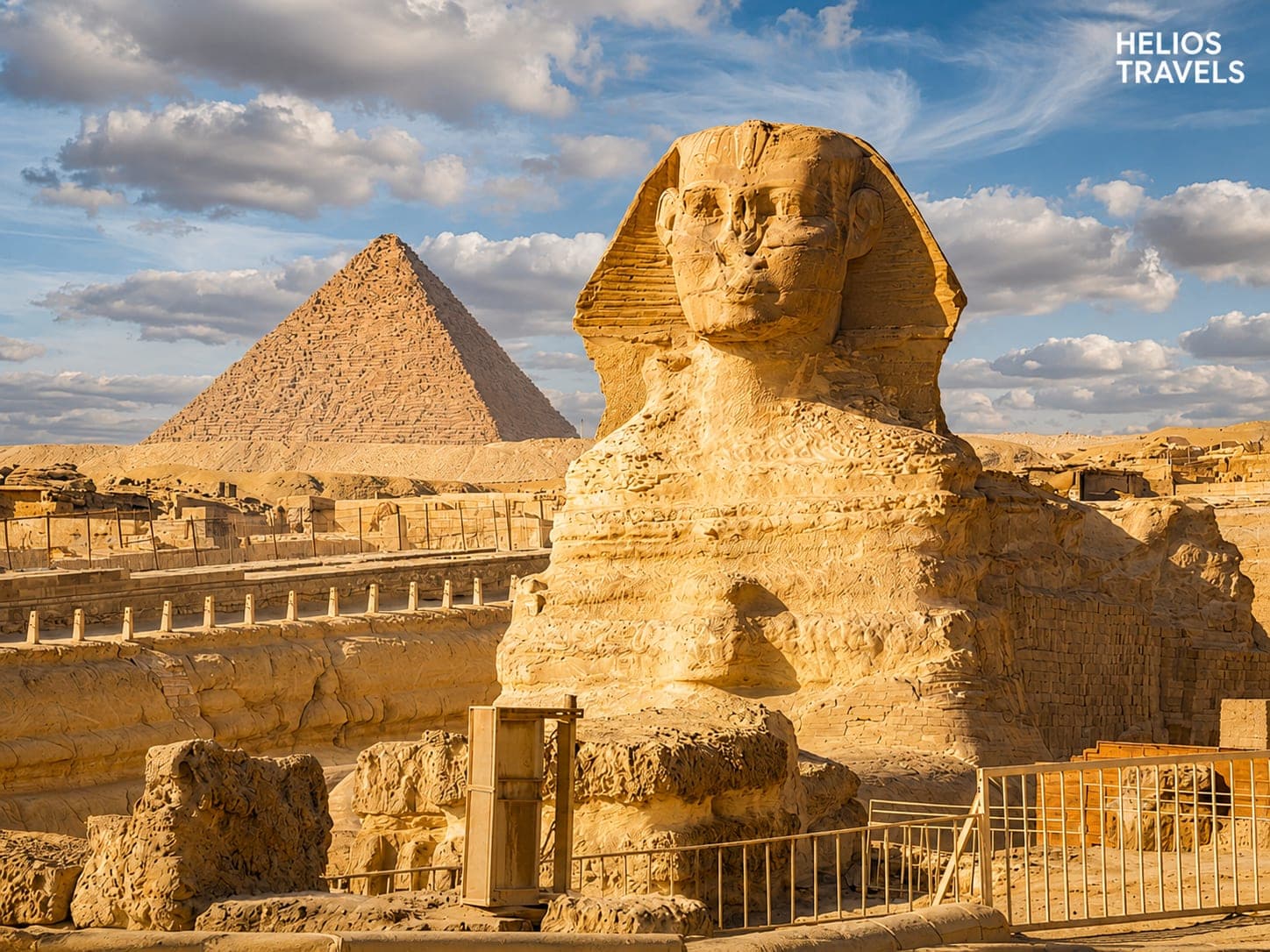
The three great pyramids and their causeways, tombs and boat pits — the only one of the seven ancient wonders still standing.


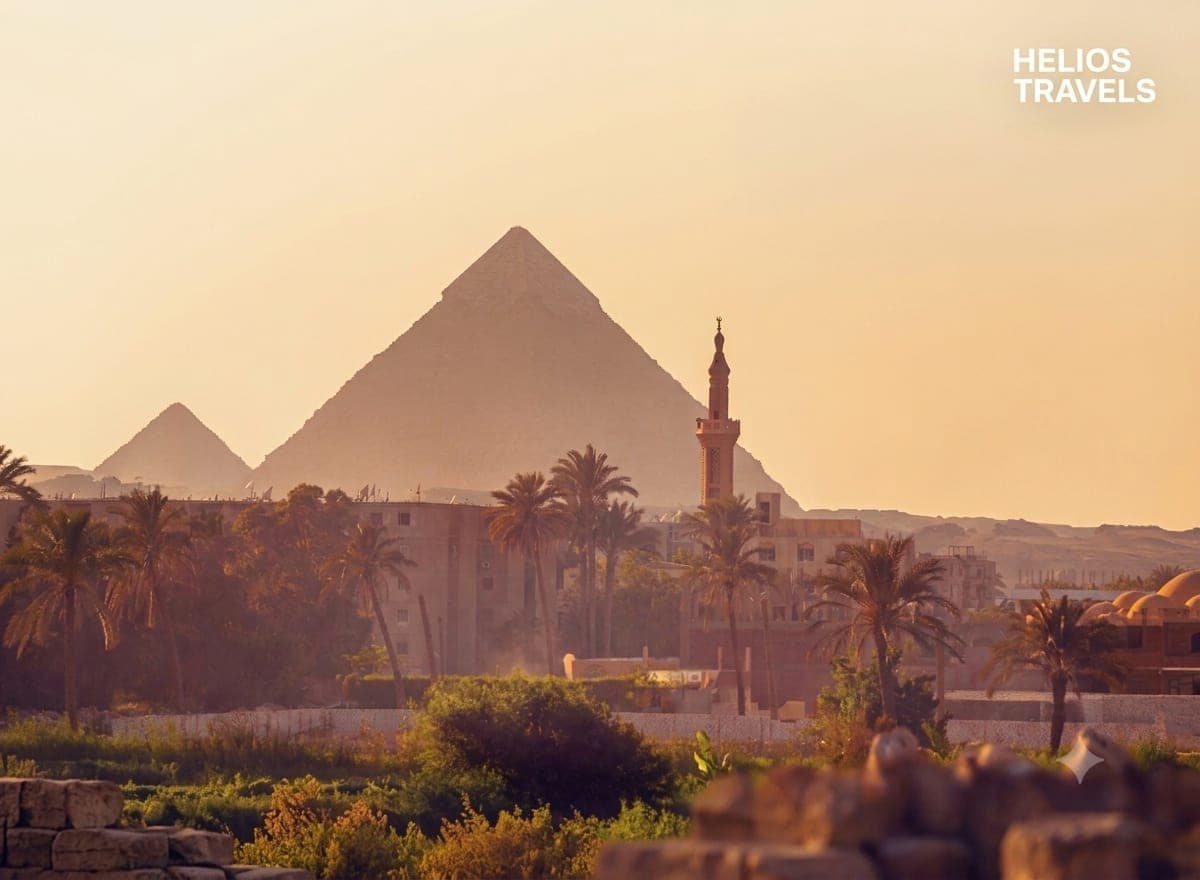
Photo credits: kallerna · CC BY-SA 3.0; Vincent Brown · CC BY 2.0; kallerna · CC BY-SA 4.0; Djehouty · CC BY-SA 4.0
Three pyramids on a limestone plateau at the edge of the city, built for three kings across roughly eighty years in the 26th and 25th centuries BCE. The Great Pyramid of Khufu is the largest, originally about 146 metres tall and made of some 2.3 million blocks; Khafre's looks taller only because it stands on higher ground, and still wears a cap of the polished casing that once covered all three; Menkaure's is markedly smaller, with a granite lower course left unfinished.
Entry into a pyramid is a separate ticket and a genuinely tight, steep, airless climb up a low ramped passage. There is nothing decorative to see at the top — the burial chambers are bare granite. Go for the experience of the space, not for the art, and skip it if you dislike confined places.

The largest of the three and the only one you can still climb inside. Originally 146 metres, now 138 after the loss of its casing and capstone; some 2.3 million blocks, the heaviest of them granite beams over the burial chamber weighing eighty tonnes each.

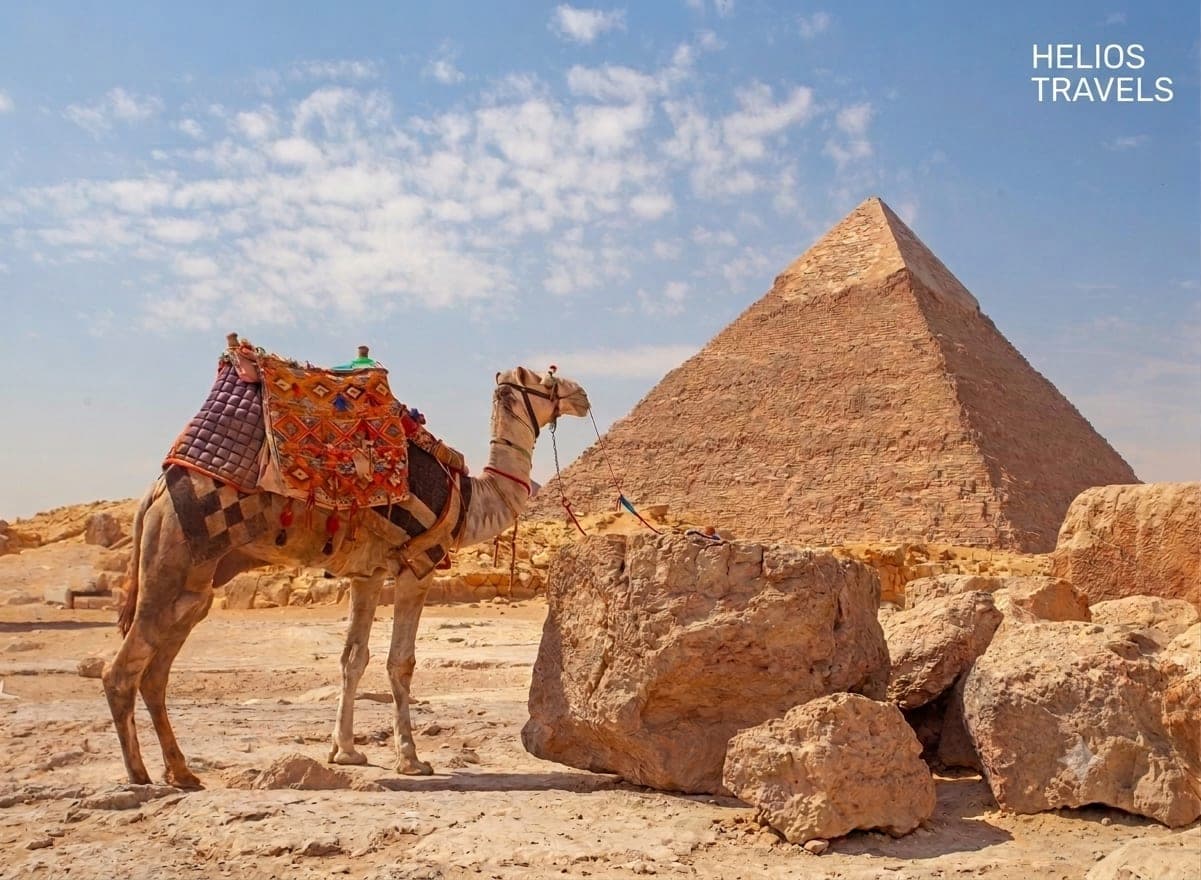
Khafre's pyramid looks the tallest because it stands on higher ground, and it still wears the top few courses of the polished Tura limestone that once sheathed all three. That band at the summit is what the whole plateau looked like — smooth, white, and blinding in the sun.

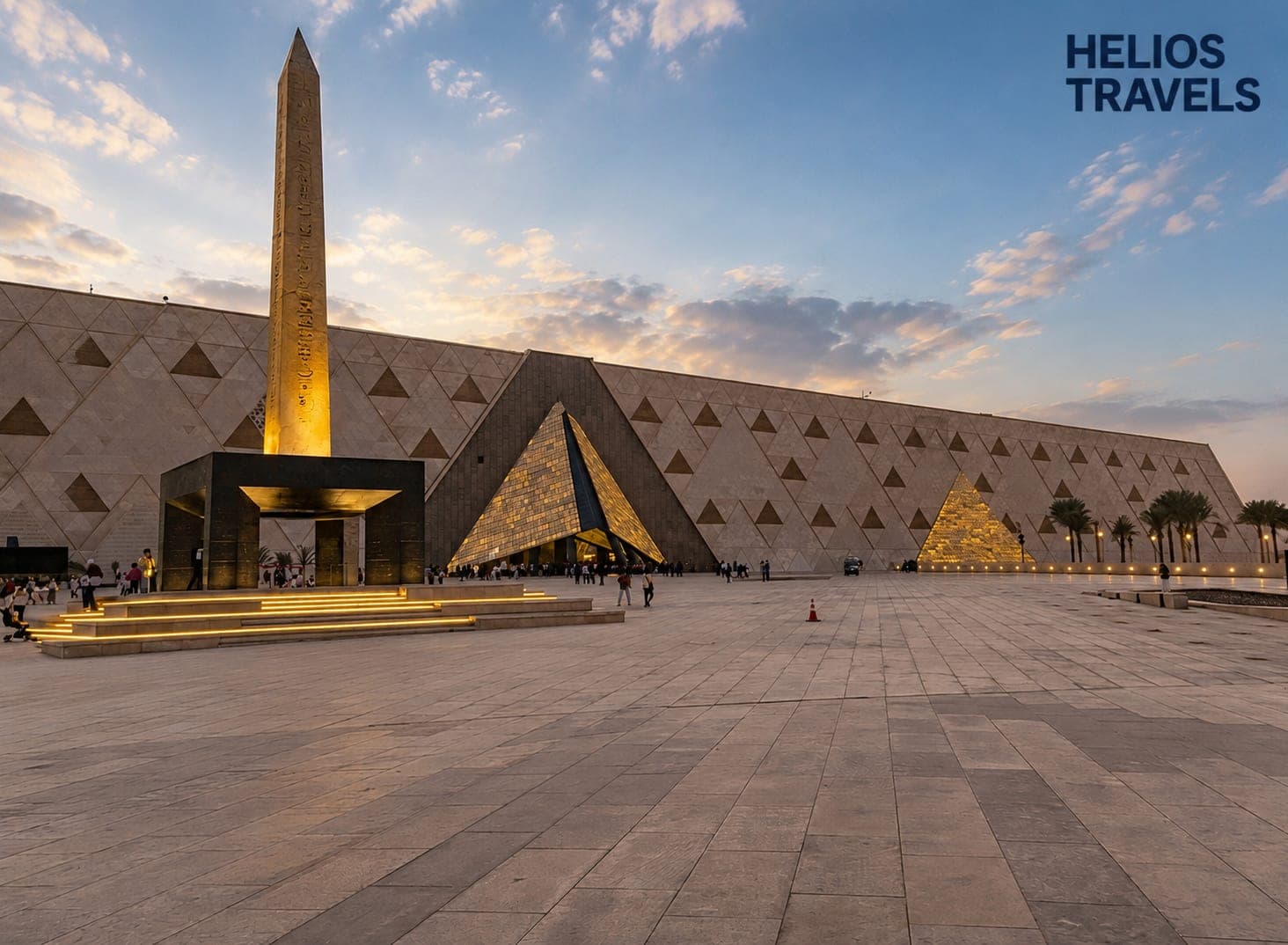
A rock-cut trench beside the Great Pyramid where a cedar ship lay disassembled into 1,224 pieces for four and a half thousand years, then went back together with no metal in it — lashed with rope, as it was built. The ship itself is now at the Grand Egyptian Museum; the pit is still here.

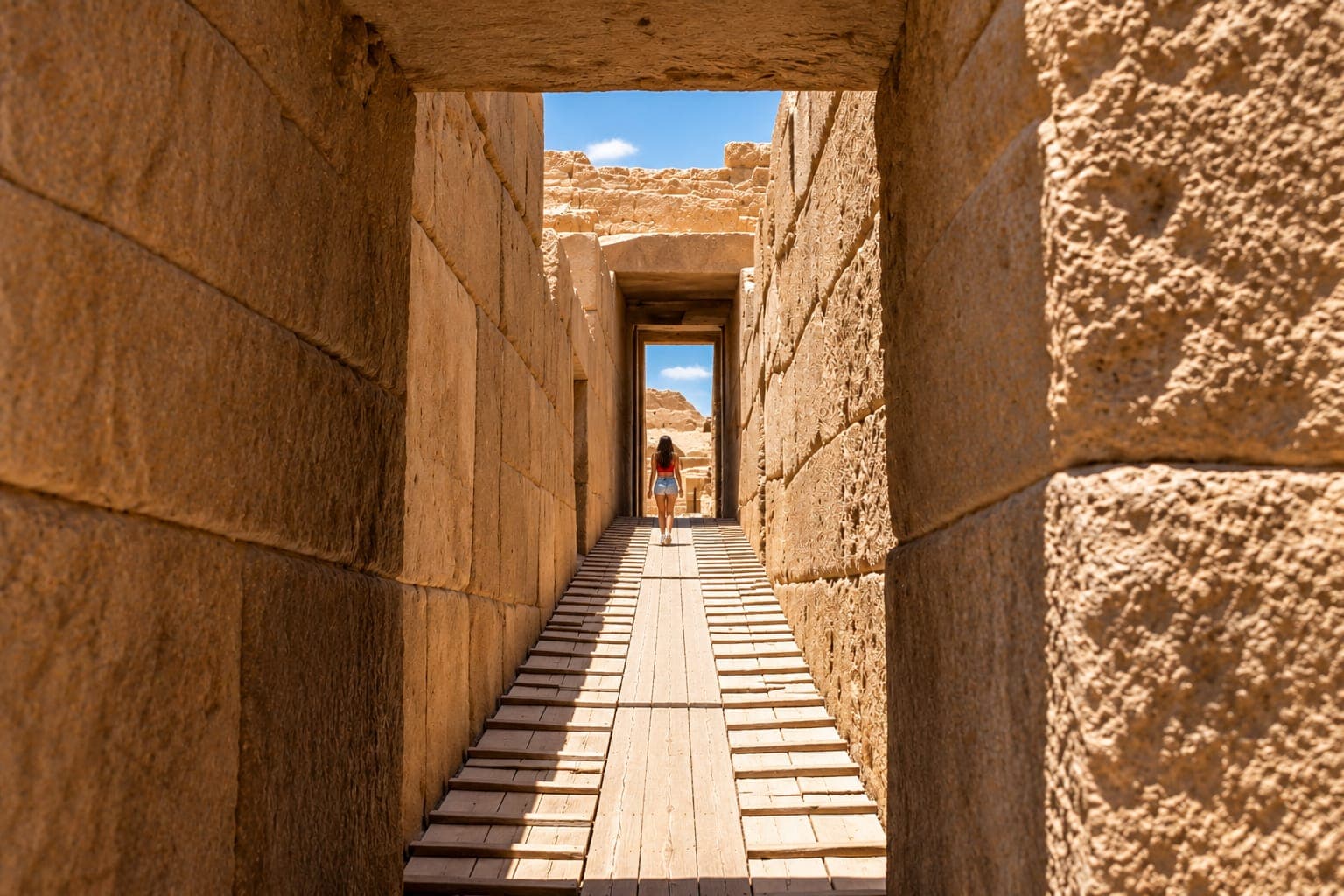
The best-preserved Old Kingdom building on the plateau and the one most people walk past. Bare pink granite piers, monolithic and unadorned, in an alabaster-floored hall where the king's body was received. No inscriptions, no reliefs — the effect is entirely proportion and stone.
Three small pyramids in the shadow of each great one, for the king's mother, wives and daughters. They look like rubble heaps now, but the one belonging to Khufu's mother Hetepheres gave up a burial chamber whose gilded furniture is one of the finest things in the Egyptian Museum.
West of the Great Pyramid, streets of flat-topped tombs laid out in blocks for officials, priests and relatives — an Old Kingdom cemetery arranged like a town. Several are open and many keep their reliefs: daily life, cattle counts, bakers, boatmen. It is the quietest part of the plateau.
Out in the desert south-west of the plateau, the one place where all three pyramids line up in a row. Every vehicle stops here and it is worth the stop — it is also the only viewpoint that gives you the site without the city behind it.
The pyramids were built in a single, extraordinary burst. Egypt went from Djoser's stepped pyramid at Saqqara to Khufu's smooth-sided Great Pyramid in under a century — a leap in engineering, logistics and state organisation with no real parallel in the ancient world.
Not slaves. Excavations from the 1990s onward uncovered the builders' settlement south-east of the plateau: bakeries turning out bread at scale, breweries, a fish-processing area, dormitories, and cattle bone in quantities that mean the workforce was eating well. Their cemetery lies alongside, and the men buried in it were given proper tombs in the shadow of the king's — unthinkable for slaves.
Skeletons show healed fractures and treated injuries, meaning workers received medical care. The picture that has emerged is of a rotating national labour force, fed, housed, paid in rations and organised into named gangs — some of whose graffiti survives inside the pyramid, cheerful crew names daubed on blocks nobody was ever meant to see.
All three were once sheathed in polished white Tura limestone, so smooth that Arab writers described them as gleaming. Most of that casing was quarried away after a 14th-century earthquake loosened it, and reused to build medieval Cairo — so a good deal of the Great Pyramid's surface is now standing in the mosques and walls of the old city.
In 2017 the ScanPyramids project used muon tomography — cosmic-ray imaging — to detect a large void above the Grand Gallery of the Great Pyramid, at least thirty metres long. What it was for is still unresolved. Four and a half thousand years on, the building has not finished being surveyed.
Pick how many days you have, add attractions per day, and see average activity and travel times between cities.
Places that carry the same story forward, or sit close enough to take in the same day.
2550 BC · Old Kingdom
1 km away
2500 BC · Old Kingdom
1 km away
2023 · Contemporary
2 km away
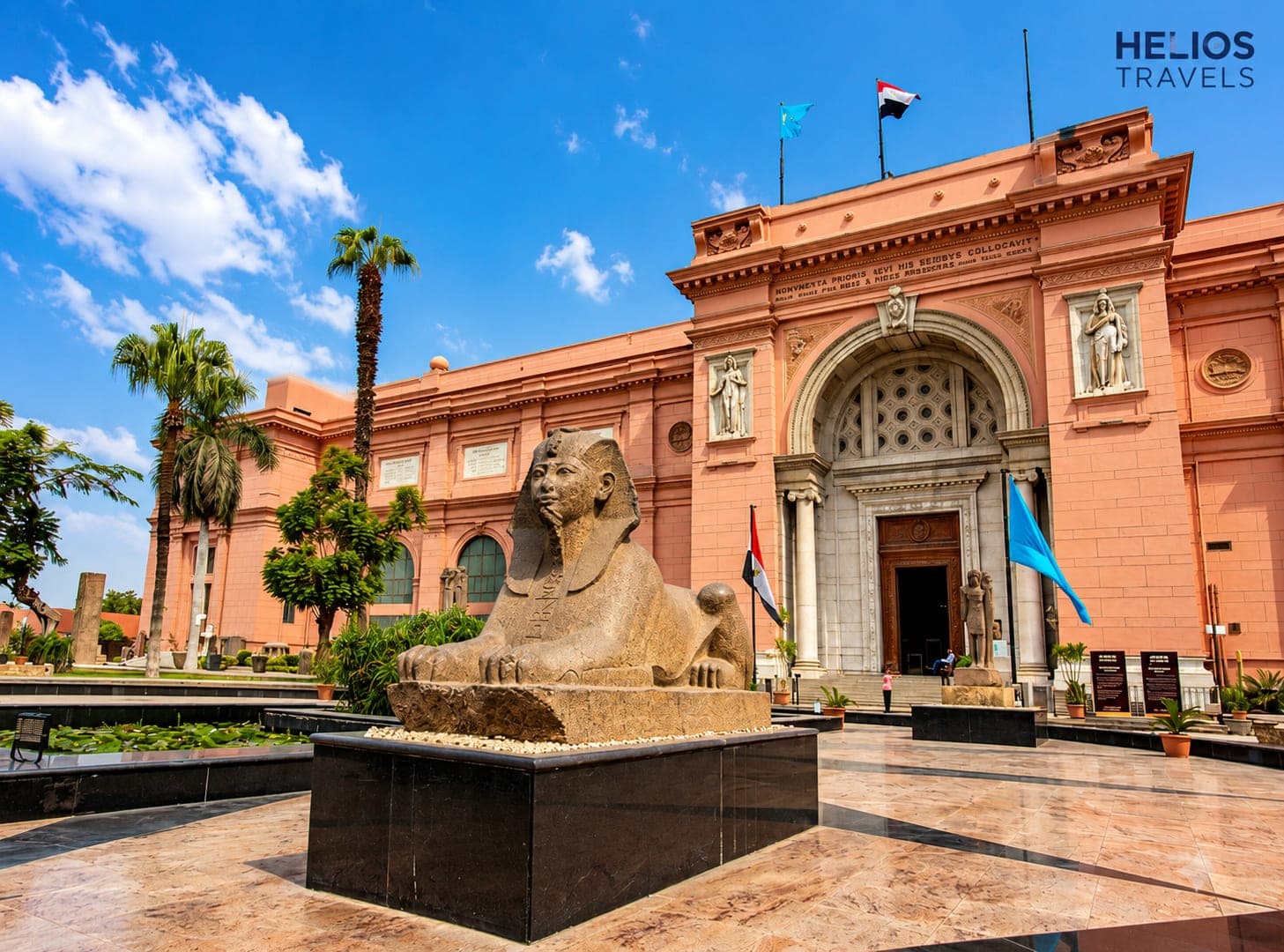
1902 · Khedivial
12 km away
2021 · Opened 2021
12 km away
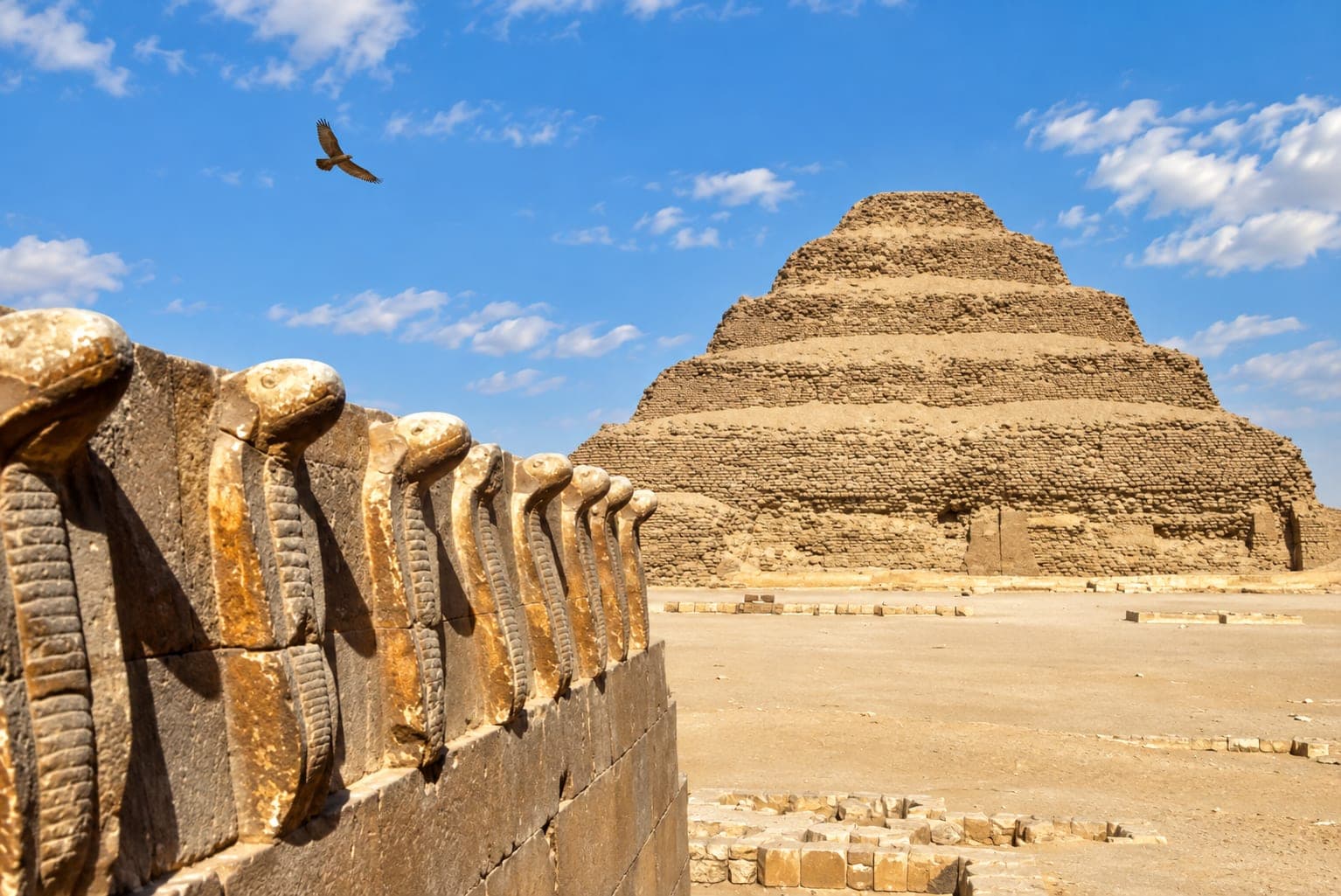
2650 BC · Old Kingdom
14 km away
Book a ready-made tour or use the designer above to build your own plan.














Hand-picked tours our guests love — top quality at reasonable prices, curated by Helios for your trip.