
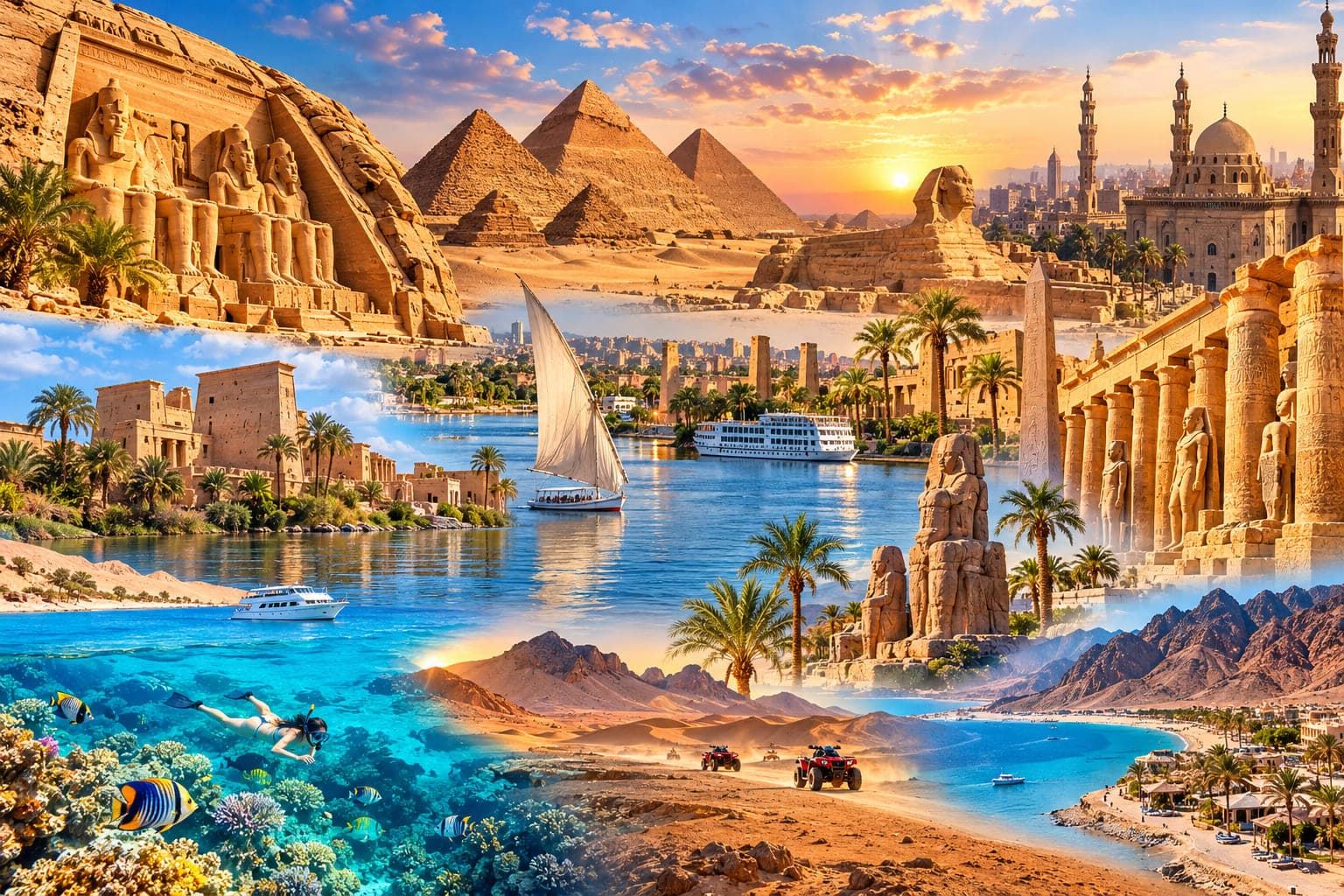

Egypt in 16 Days · special
From $4,323 / person16 daysIncludes 1 h 30 m at this sight
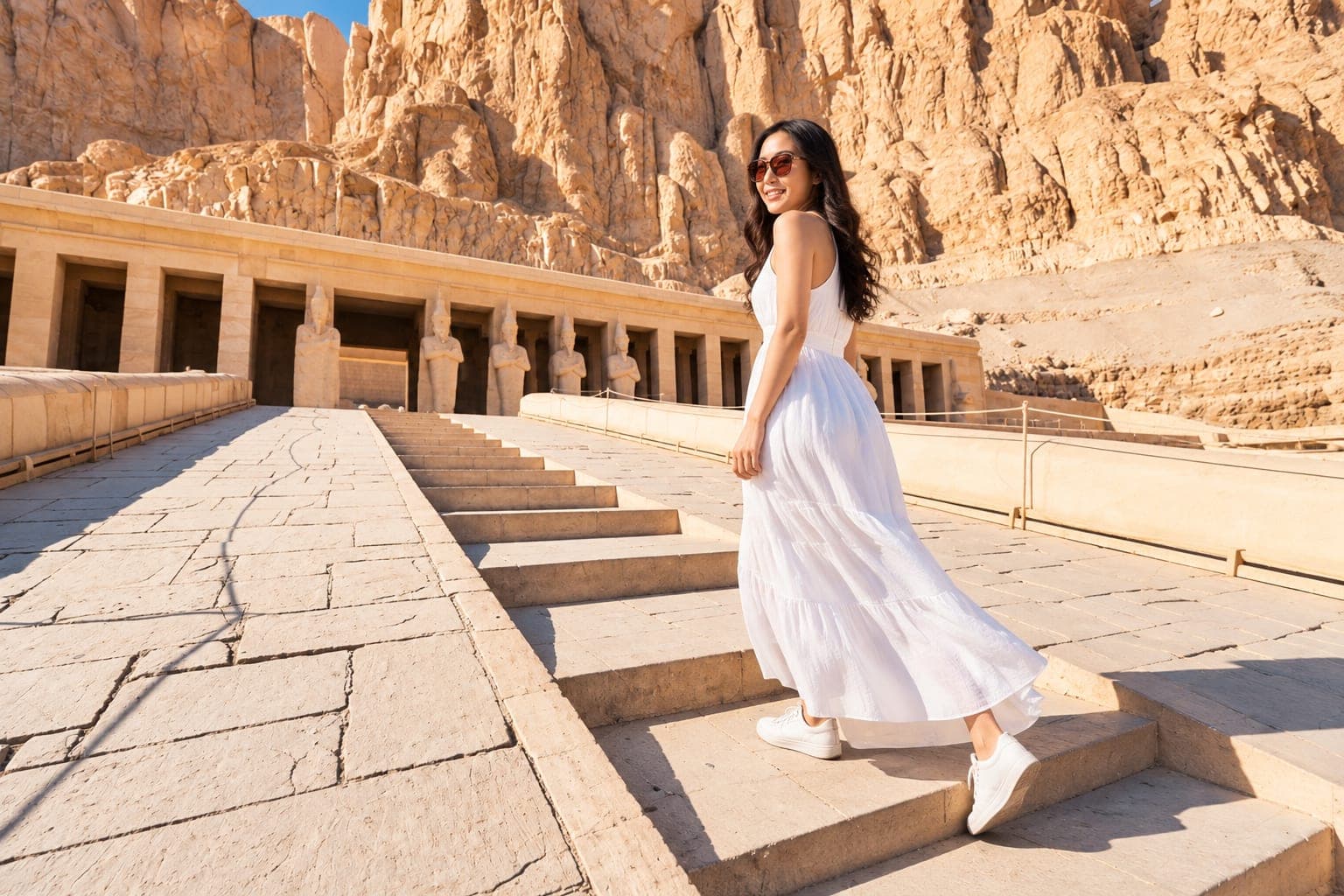
Luxor · Deir el-Bahari
Typical visit: 1 h 30 m
Period: 1470 BC · New Kingdom
The dramatic terraced temple of Egypt's most successful female pharaoh, set against sheer cliffs at Deir el-Bahari.


Photo credits: Diego Delso · CC BY-SA 4.0; Warren LeMay from Chicago, IL, United States · CC0
Djeser-Djeseru, "Holy of Holies", is built straight into the cliff wall at Deir el-Bahari — three colonnaded terraces rising on long ramps, the top one cut back into the rock itself. Against a 300-metre limestone face burnt orange by afternoon sun, the effect is less like a building than like something the cliff produced.
It reads as startlingly modern, and it is: nothing else in Egypt looks like this. The architect, Senenmut, hid a small portrait of himself behind a door in one of the upper shrines, where the queen would not have seen it.
There is no shade on the terraces at all. Early morning, before the light goes flat and the stone starts radiating heat.

Colonnades stacked against a 300-metre cliff and joined by two long ramps. The design answers the rock behind it rather than competing with it, which is why it looks modern — there is only one way to build a set of horizontal lines under a vertical one, and this is it.

A full illustrated expedition report: ships loaded with myrrh trees carried home in baskets with their root-balls intact, heaps of ebony and ivory, and a portrait of the queen of Punt drawn from life with a candour Egyptian art almost never allows.
Hatshepsut's argument for her own legitimacy, carved: the god Amun visits her mother in the guise of her father, and the child conceived is therefore divinely appointed. A woman taking the throne needed a case, and this wall is it.
At the southern end of the middle terrace, columns capped with the cow-eared head of Hathor on all four faces. It is shaded, which on this site matters, and it holds the best-preserved colour in the building.
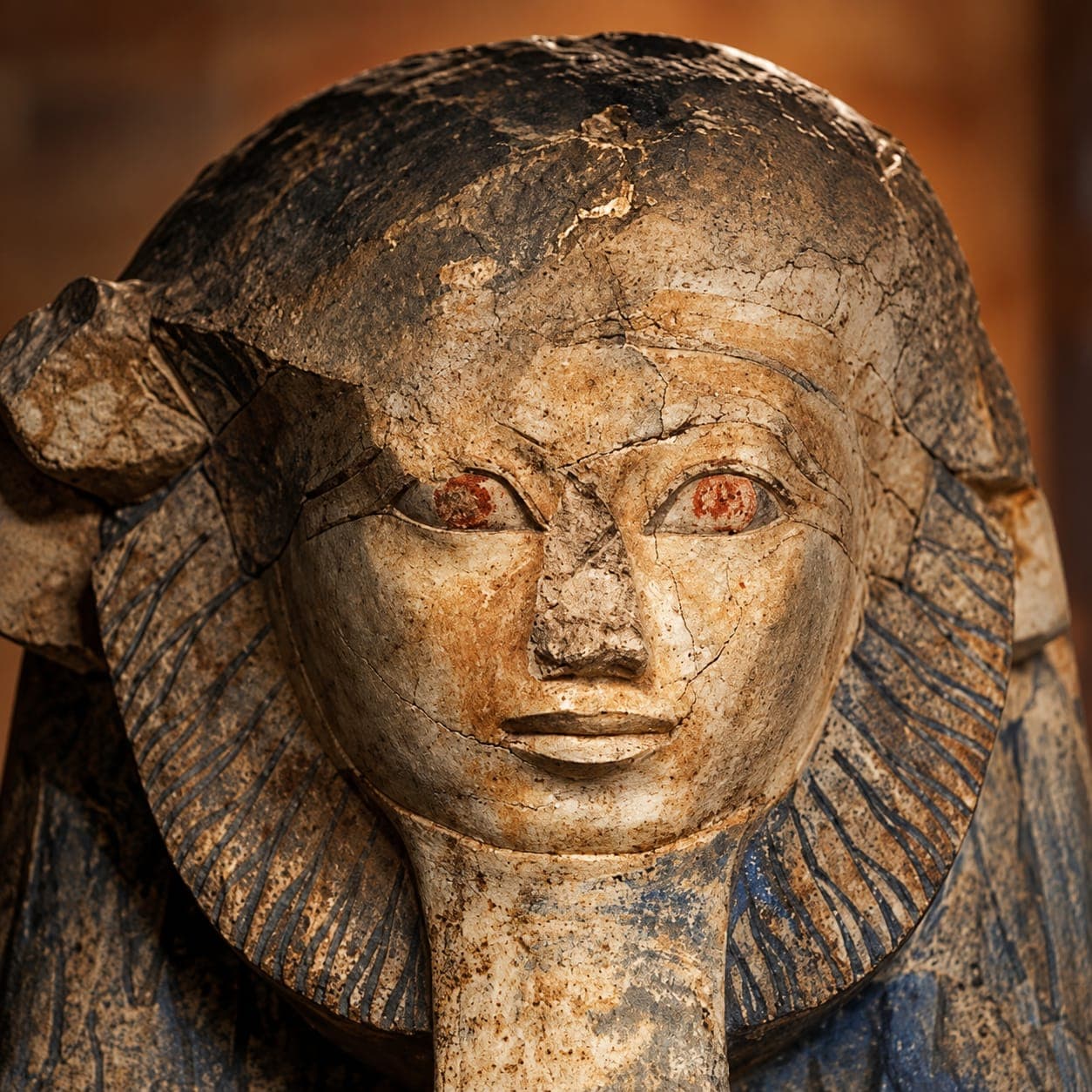
Look at the cartouches and the standing figures: many have been chiselled out. The erasing was thorough but not careful, so the shape of what was there is still readable in the stone. The gaps are legible as gaps, and that is the point of them.
Hatshepsut ruled for about two decades in the 15th century BCE, first as regent for her stepson Thutmose III and then as pharaoh outright — taking the full titulary, and in official art the false beard and male form that the office required. Her reign was prosperous and, unusually, largely peaceful; the Punt expedition she commemorated here was a trading voyage, not a campaign.
Roughly twenty years after her death, her images and cartouches began to be chiselled out — from this temple, from Karnak, from her monuments generally. Statues were smashed and dumped in a pit beside the causeway. For a long time this was read as personal revenge by Thutmose III, but the timing undercuts that: he waited two decades, and he left much of her work standing. The more likely explanation is dynastic housekeeping — securing his own son's succession by removing an irregular female precedent from the record.
The attempt failed. The smashed statues were excavated in the 1920s and reassembled, and Hatshepsut is now among the most recognisable pharaohs of them all.
In February 2025 the tomb of her husband and half-brother Thutmose II was identified nearby — the first royal tomb found in the Theban hills since Tutankhamun's.
Pick how many days you have, add attractions per day, and see average activity and travel times between cities.
Places that carry the same story forward, or sit close enough to take in the same day.

1400 BC · New Kingdom
5 km away

1350 BC · New Kingdom
2 km away
1250 BC · New Kingdom
1 km away
1180 BC · New Kingdom
2 km away

1975 · Modern Egypt
5 km away
1539 BC · New Kingdom
1 km away
Book a ready-made tour or use the designer above to build your own plan.









Hand-picked tours our guests love — top quality at reasonable prices, curated by Helios for your trip.