


Egypt in 16 Days · special
From $4,323 / person16 daysIncludes 1 h 15 m at this sight
Mortuary temple of Ramesses III
Typical visit: 1 h 15 m
Period: 1180 BC · New Kingdom
A vast, vividly carved temple complex on Luxor's west bank, second only to Karnak in scale.
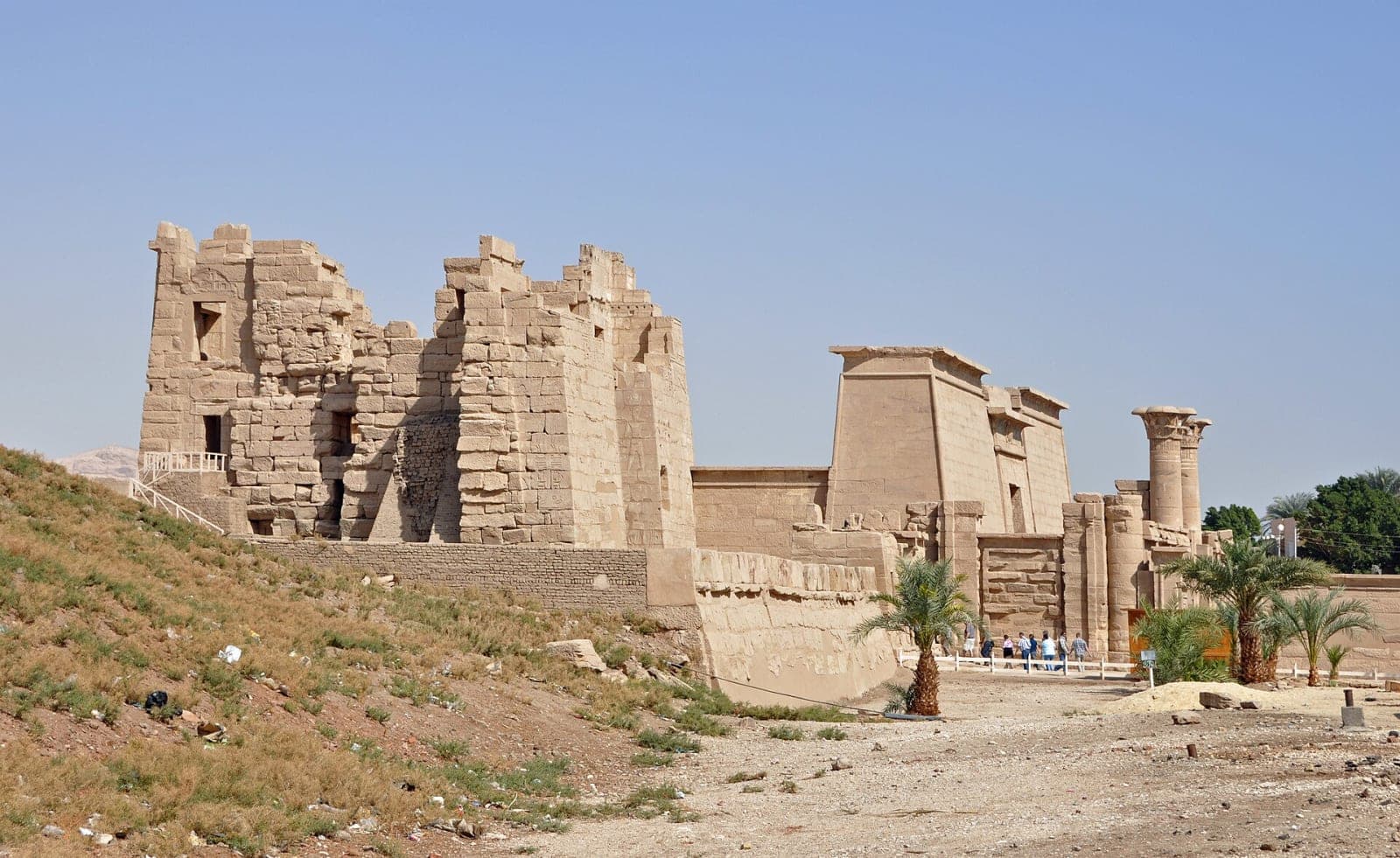
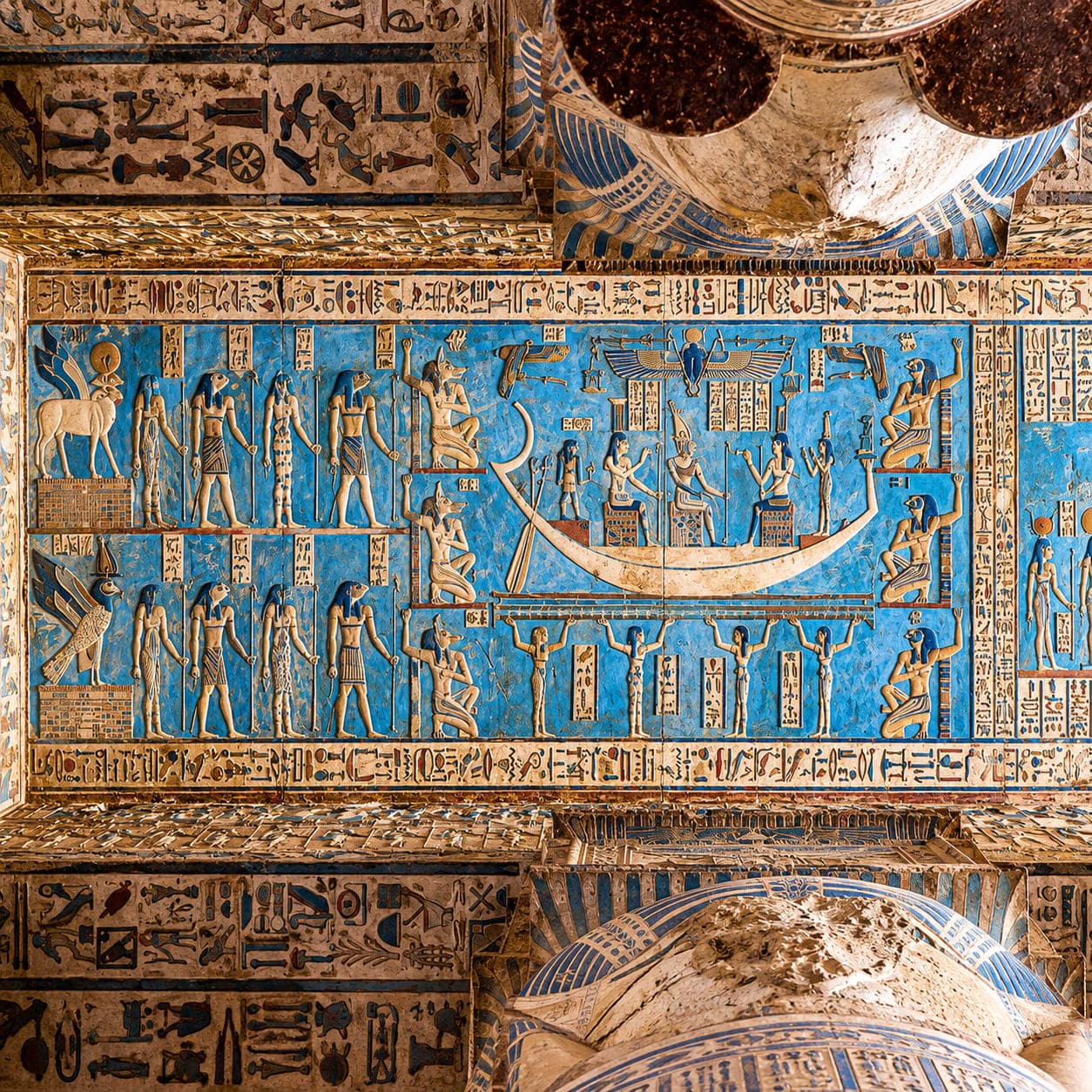
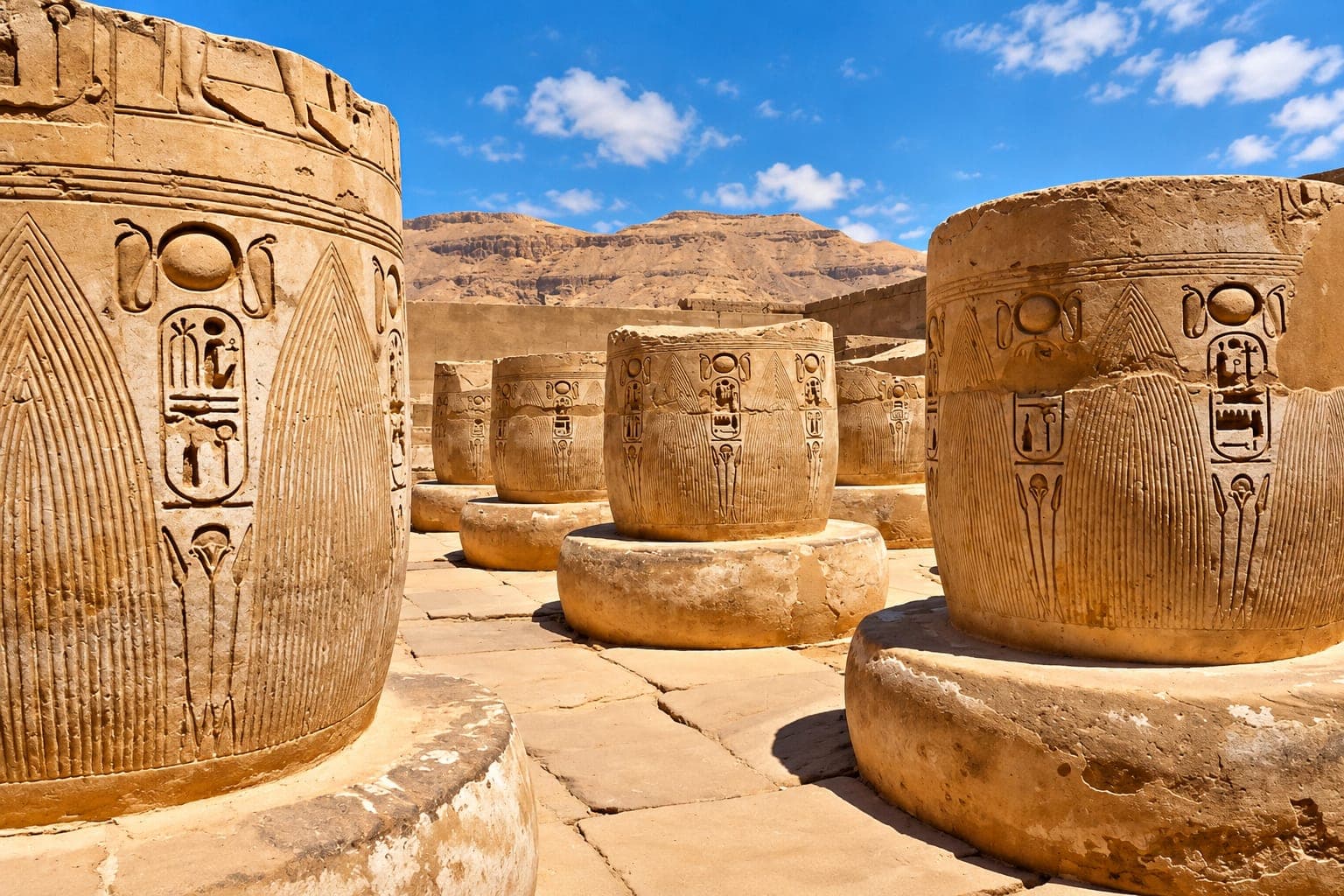
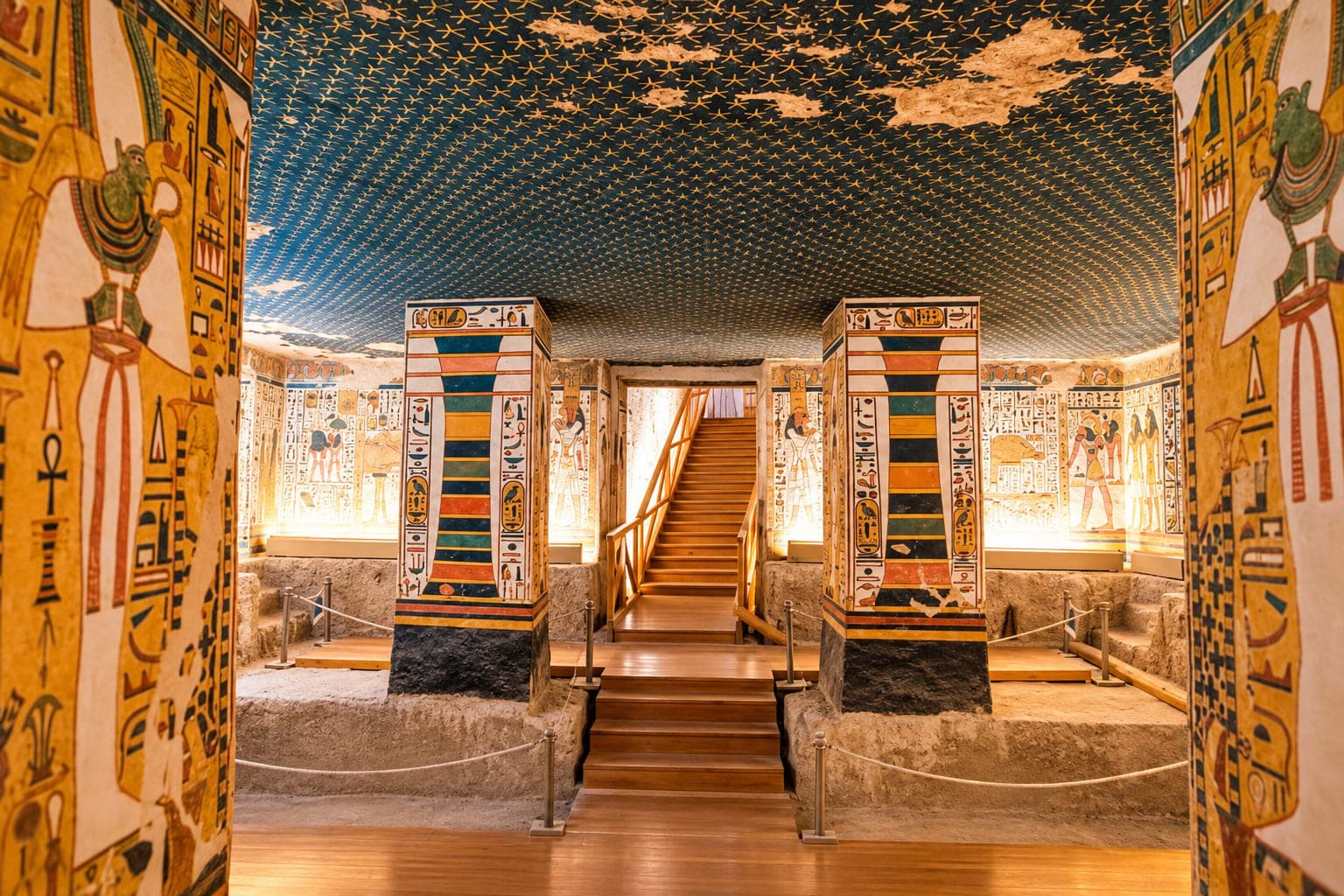
The mortuary temple of Ramesses III, and the best-preserved large temple on the Theban west bank — bigger, quieter and more complete than most visitors expect. Colour survives on the ceilings and in the upper reaches of the columns, and the enclosure walls still stand to full height.
You enter through a migdol gateway modelled on a Syrian fortress, complete with mock battlements and window openings — an odd, deliberately foreign piece of architecture at the front of an Egyptian temple.
Ramesses III ruled in the early 12th century BCE, at the point where the Bronze Age world was coming apart. Across the eastern Mediterranean, cities were burning and states were collapsing; the Hittite empire disappeared entirely. Egypt was attacked by a coalition the texts call the Sea Peoples, and the reliefs here record Ramesses defeating them in a battle fought in the Nile mouths, using archers on the banks against ships driven into shallow water.
Egypt survived, but barely, and never recovered its former reach. This temple is the last monument of its scale built by an Egyptian king.
The reign ended badly. The state ran short of grain, and the tomb workers of Deir el-Medina downed tools in the first recorded labour strike in history, marching to this temple's storerooms to demand the rations they were owed.
Ramesses III was then killed in a conspiracy organised inside his own harem, intended to put a secondary son on the throne. The Judicial Papyrus of Turin records the trial of those involved. For a long time it was unclear whether the attempt had actually succeeded — until a CT scan of the king's mummy in 2012 found a deep cut across the throat, severing the windpipe and major vessels. It had.
Long after the temple stopped functioning, the enclosure became a fortified village. Coptic Christians built a settlement called Djeme inside the walls, complete with a church, and lived here for centuries. Their houses were cleared in the 20th century, but you can still see where they cut into the ancient stone.
Pick how many days you have, add attractions per day, and see average activity and travel times between cities.
Places that carry the same story forward, or sit close enough to take in the same day.

1975 · Modern Egypt
4 km away
1539 BC · New Kingdom
2 km away
2000 BC · Middle Kingdom
6 km away

1350 BC · New Kingdom
1 km away
1550 BC · New Kingdom
1 km away
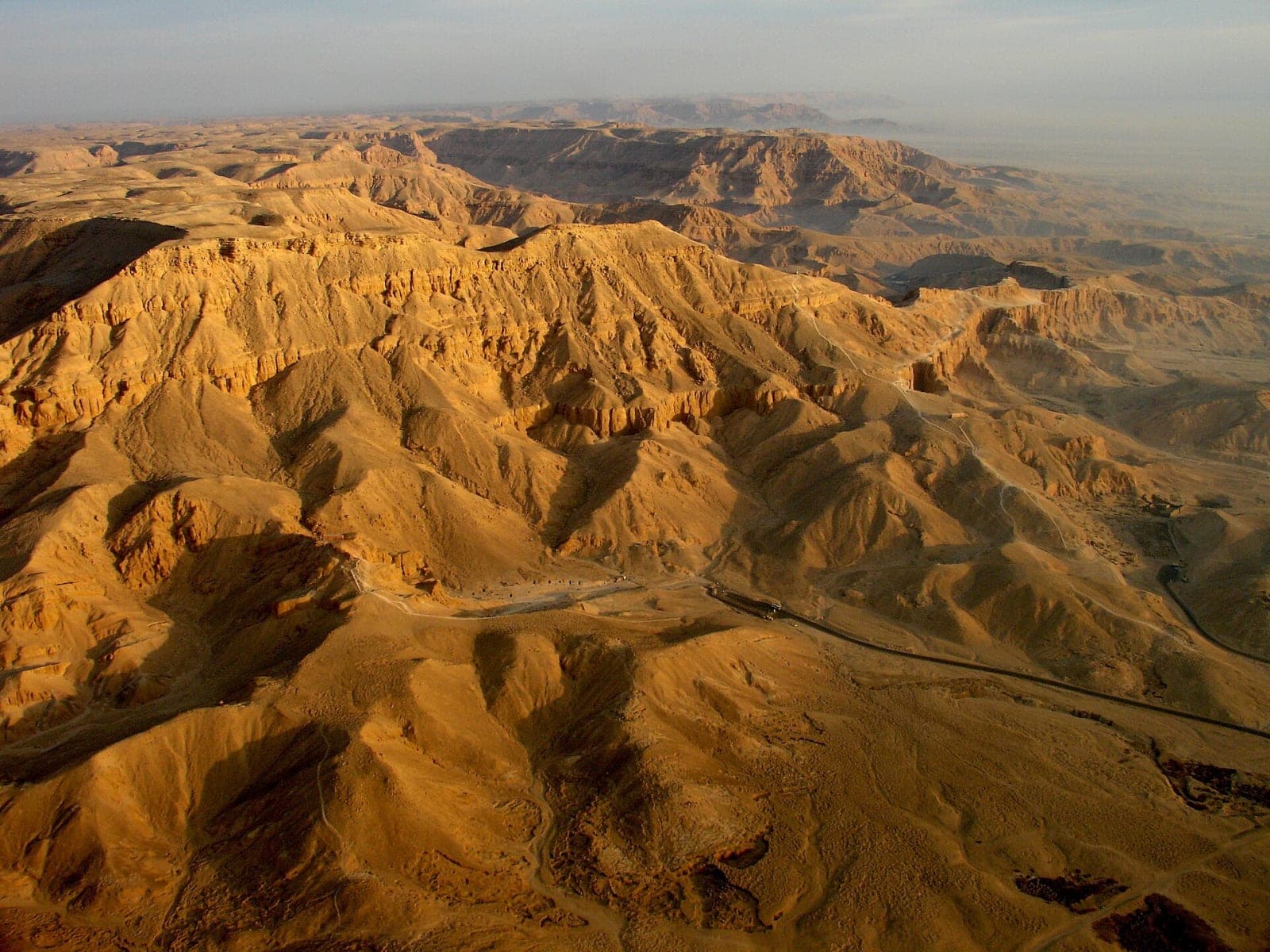
1500 BC · New Kingdom
1 km away
Book a ready-made tour or use the designer above to build your own plan.


Hand-picked tours our guests love — top quality at reasonable prices, curated by Helios for your trip.