
Abu Simbel Sun Festival
From $236 / person5 hoursAswanIncludes 1 h 30 m at this sight
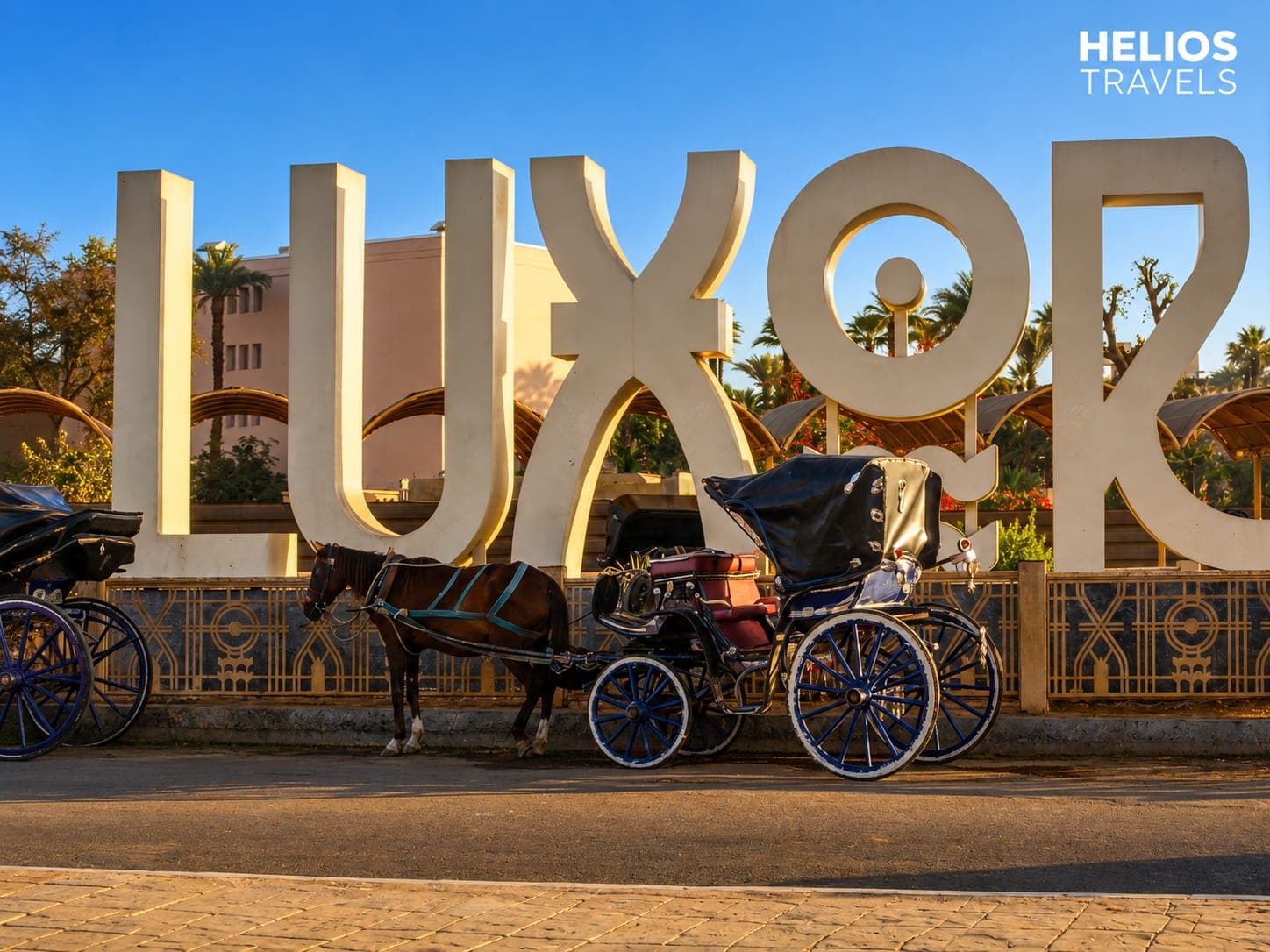
Luxor · East Bank
Typical visit: 1 h 30 m
Period: 1400 BC · New Kingdom
A graceful riverside temple in the centre of Luxor, especially magical when floodlit after dark.


Unlike almost every other Egyptian temple, Luxor sits in the middle of a living town, and it is the only major site that is arguably better after dark — floodlit, with the columns throwing shadows up the walls and the modern city humming just beyond the fence.
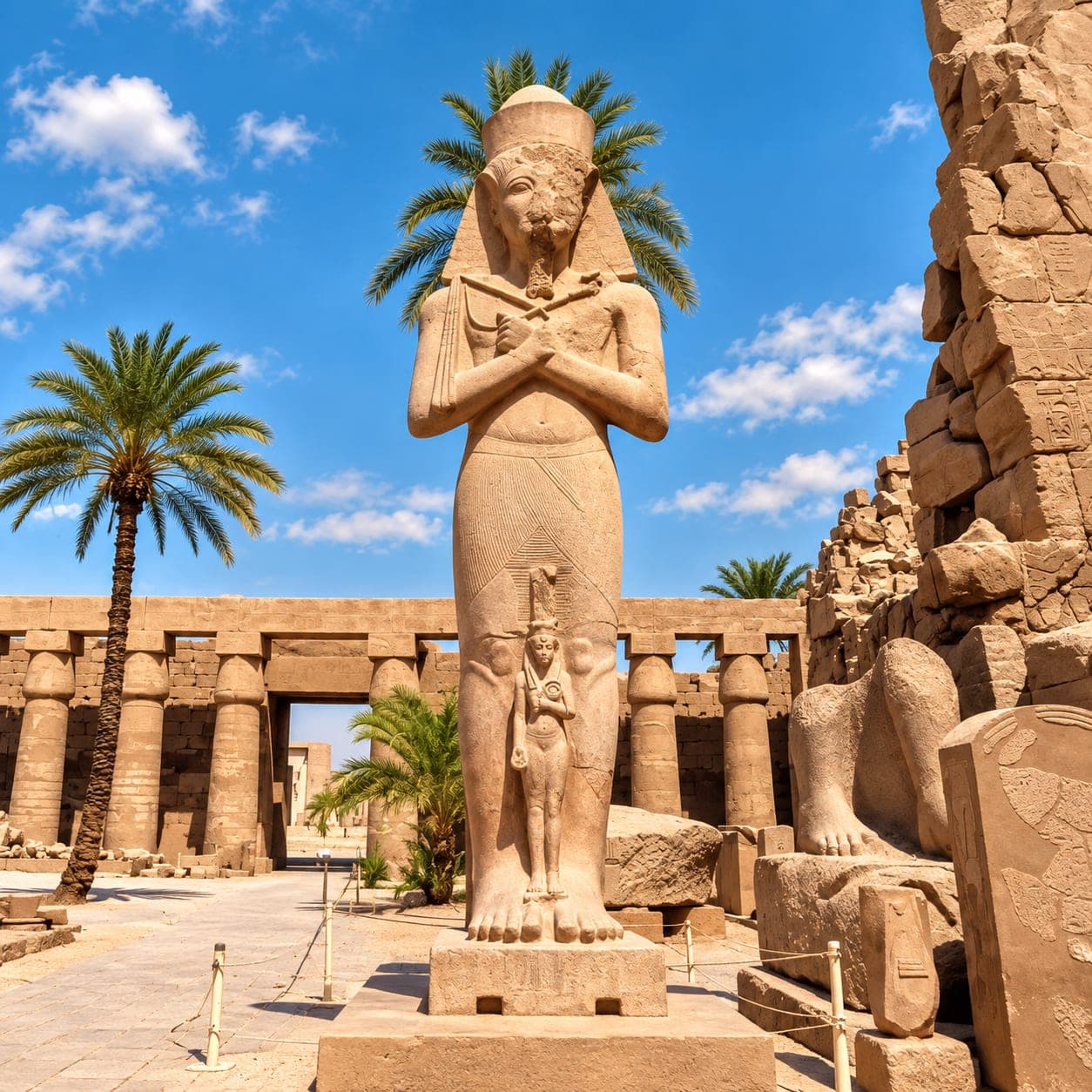
You enter past a single obelisk of Ramesses II and two seated colossi. Its twin obelisk is in Paris, on the Place de la Concorde, given to France in the 1830s. Beyond the pylon, a colonnade of fourteen columns nearly sixteen metres tall runs towards the older court of Amenhotep III.
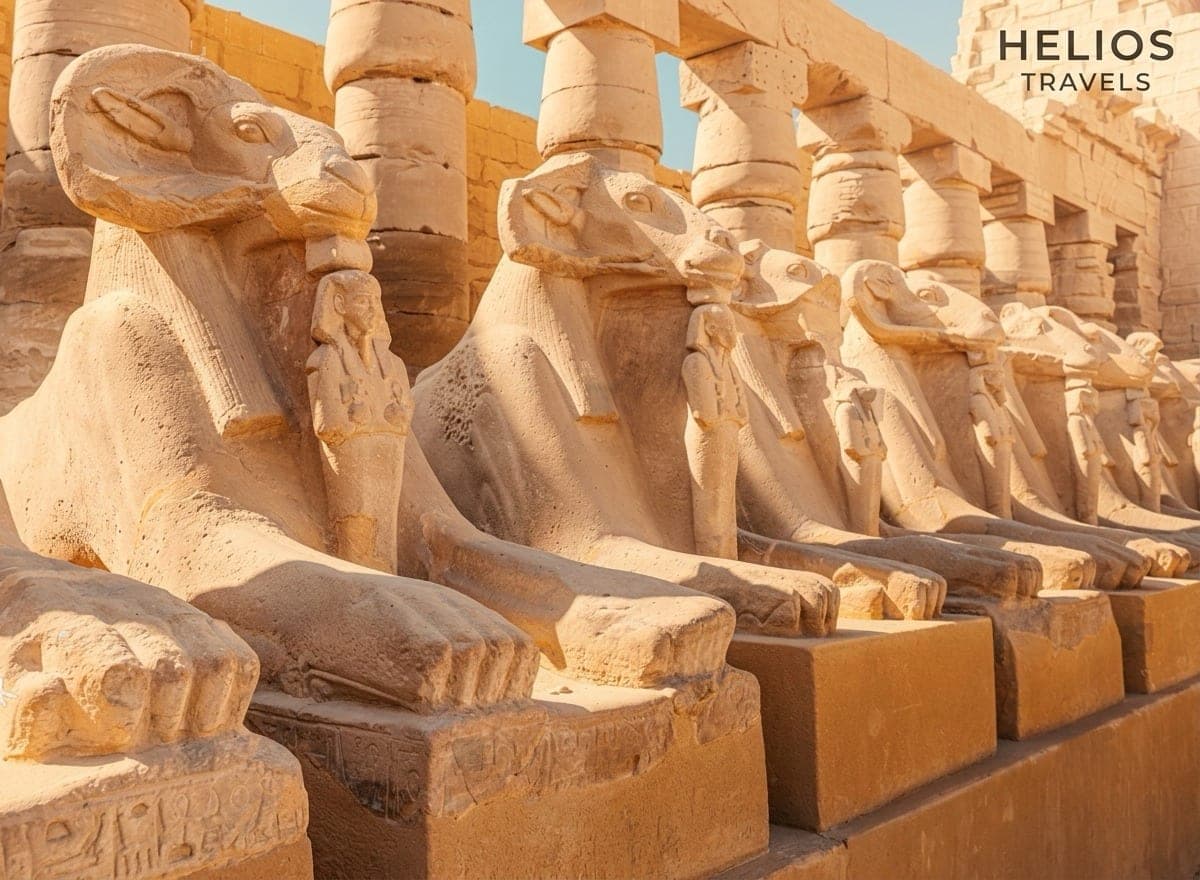
The Avenue of Sphinxes runs from the entrance all the way to Karnak, 2.7 kilometres north.
Luxor Temple was not a mortuary temple and it was not really the house of a single god. It was built for the Opet Festival: once a year, the statue of Amun travelled by barque from Karnak to Luxor, and in the sanctuary here the king's divine essence was renewed. In effect, the building existed to re-crown the pharaoh annually — a machine for manufacturing legitimacy.
Amenhotep III built most of it in the 14th century BCE; Ramesses II added the great forecourt, the pylon, the colossi and the obelisks, and — characteristically — inscribed his own name across a good deal of what was already there.
This is what makes Luxor unusual. When Egyptian religion ended, the temple became a Roman fort — the camp gave the site its Arabic name, al-Uqsur, "the palaces", from which "Luxor" comes. Then a Christian church stood inside the courtyard. Then, in the 13th century, a mosque was built over the accumulated debris, and it is still in use today.
When the temple was excavated in the 19th century, archaeologists dug down around the mosque and left it standing where it was — thirteen metres above the ancient floor, on top of everything that had happened in between.
Pick how many days you have, add attractions per day, and see average activity and travel times between cities.
Places that carry the same story forward, or sit close enough to take in the same day.

1350 BC · New Kingdom
4 km away
1250 BC · New Kingdom
4 km away
1180 BC · New Kingdom
4 km away

1975 · Modern Egypt
1 km away
2000 BC · Middle Kingdom
3 km away
1264 BC · New Kingdom
388 km away
Book a ready-made tour or use the designer above to build your own plan.






Hand-picked tours our guests love — top quality at reasonable prices, curated by Helios for your trip.