


Egypt in 16 Days · special
From $4,323 / person16 daysIncludes 2 h at this sight
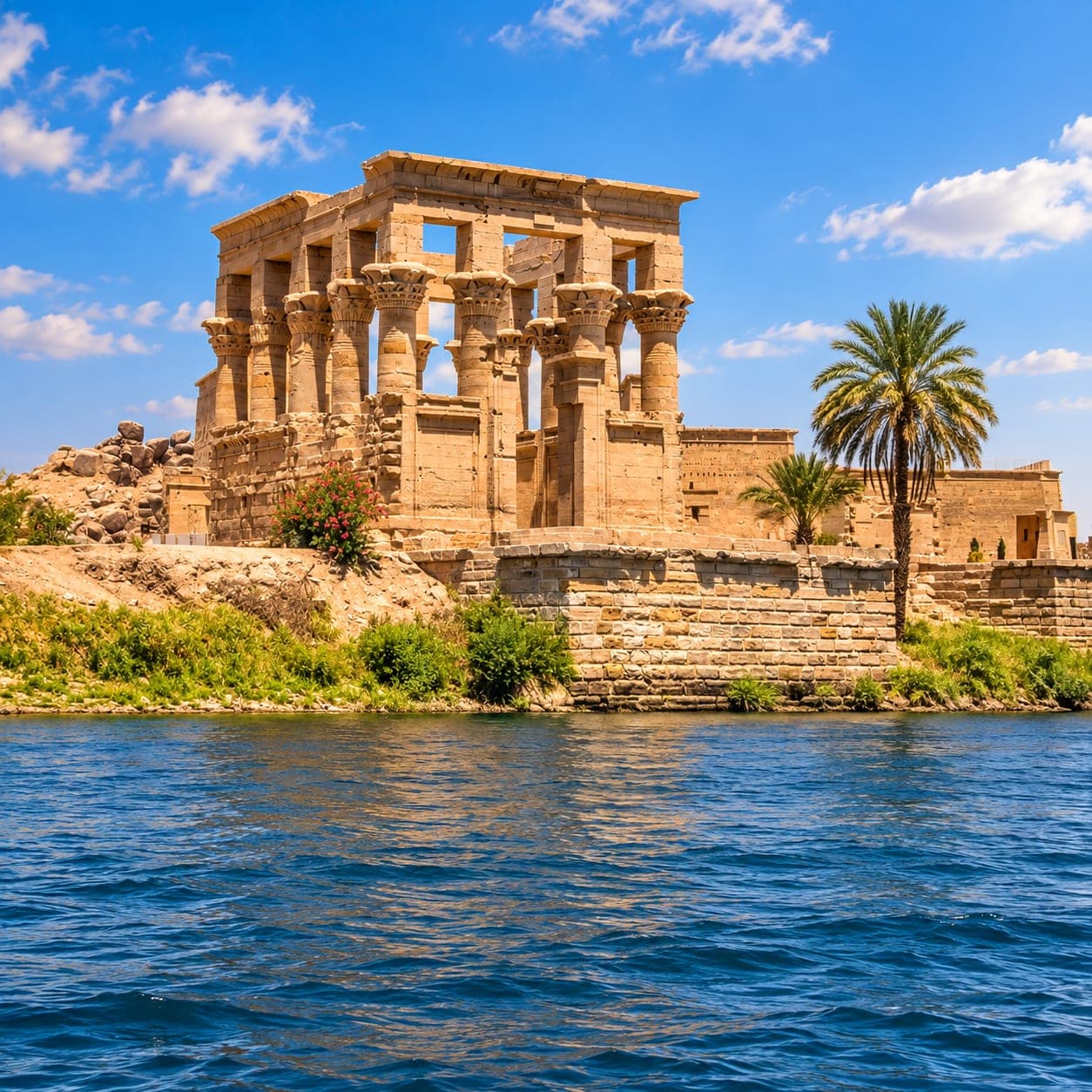
Island temple of the goddess Isis
Typical visit: 2 h
Period: 280 BC · Ptolemaic
A graceful Ptolemaic temple to the goddess Isis, on an island in the Nile reached by boat.

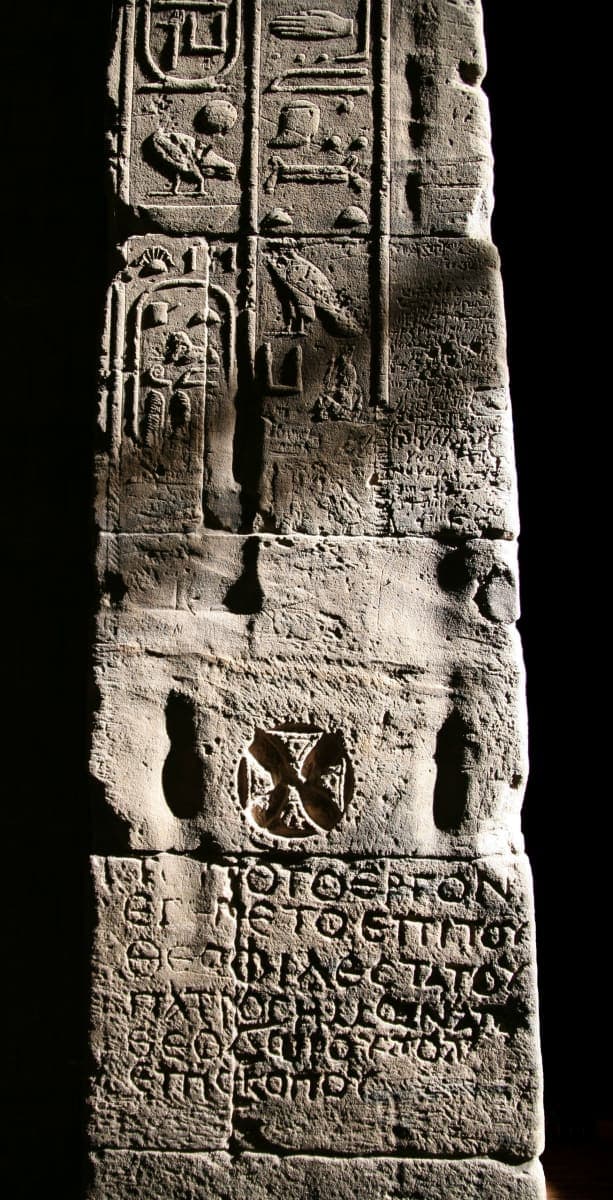

Photo credits: Vyacheslav Argenberg · CC BY 4.0; Carole Raddato from FRANKFURT, Germany · CC BY-SA 2.0
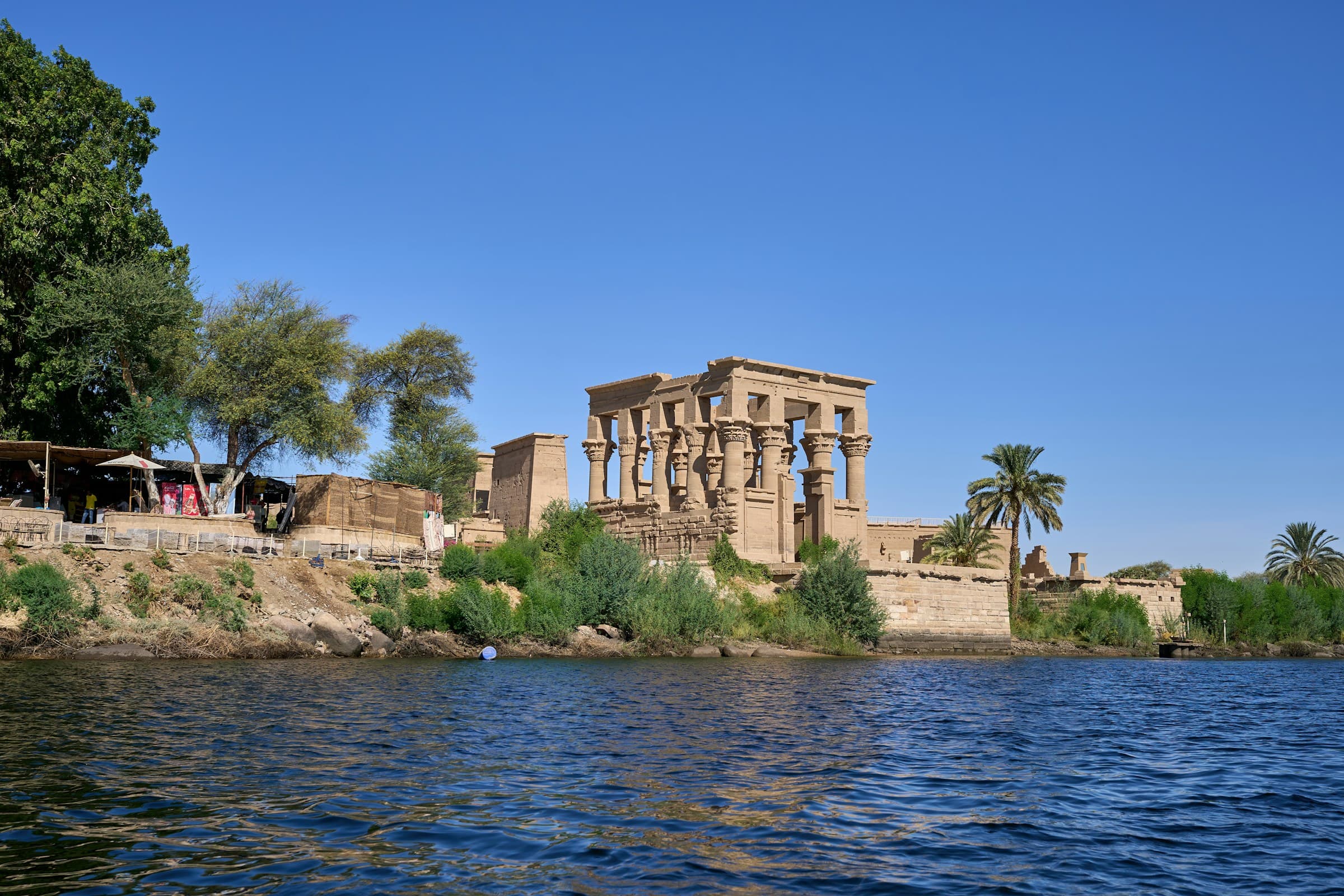
Philae is reached only by boat, which is half the point: the motorboat ride across the reservoir south of Aswan, with the temple pylons rising out of the water ahead, is the arrival the builders would have recognised even if the island beneath it is not the one they used.
The complex is Ptolemaic and Roman, dedicated to Isis, and it is unusually complete — pylons, a birth house, colonnades running the length of the island, and the elegant unfinished Kiosk of Trajan that generations of painters used as their emblem of Egypt.
An evening sound-and-light show runs on the island, and the boat back under a dark sky is genuinely lovely.

You arrive by boat, which is the right way to meet it — the colonnade running along the water was built to be seen from one. The pylon still carries its reliefs of the king smiting his enemies, defaced in places by later hands that had other views about that.

Fourteen columns with floral capitals, no roof, standing at the water's edge — the most painted structure in Egypt and one that was never finished. Roman work on an Egyptian temple, in Egyptian style, six hundred years after the temple's own founders had gone.
The hypostyle hall was converted into a church, and the converters left their mark literally: Coptic crosses chiselled into the temple walls, with a Greek inscription recording the work. Philae is the one place where three Egypts are stacked in a single room, each cut into the last.
Paint is gone from the lower registers and the stone is stained in a level band: the mark of seventy years spent underwater before the temple was moved. Look closely at the joints and you will find the numbers the engineers wrote on each block. The whole island is a reassembly.
Philae was the last place in Egypt where the old religion was practised. Long after the temples elsewhere had closed, priests here were still serving Isis; the final dated hieroglyphic inscription anywhere in the world was cut on this island in 394 CE, and the temple was not formally shut until the emperor Justinian ordered it around 537 CE. Four thousand years of continuous practice ended here.
When the first Aswan Dam was completed in 1902 and then twice raised, Philae was submerged for most of each year. Travellers rowed out and peered down through green water at the capitals of the columns. The paintwork dissolved, but the sandstone — waterlogged and silt-packed — survived better than anyone expected.
The High Dam would have drowned it permanently. Between 1972 and 1980, a UNESCO campaign built a coffer dam around the island, pumped it dry, and dismantled the temples into some forty thousand blocks. Nearby Agilkia Island was then reshaped with explosives to match the original island's contours, and the whole complex was rebuilt on it, stone by numbered stone.
Pick how many days you have, add attractions per day, and see average activity and travel times between cities.
Places that carry the same story forward, or sit close enough to take in the same day.
180 BC · Ptolemaic
48 km away
237 BC · Ptolemaic
106 km away
54 BC · Ptolemaic
236 km away
AD 50 · Roman
145 km away
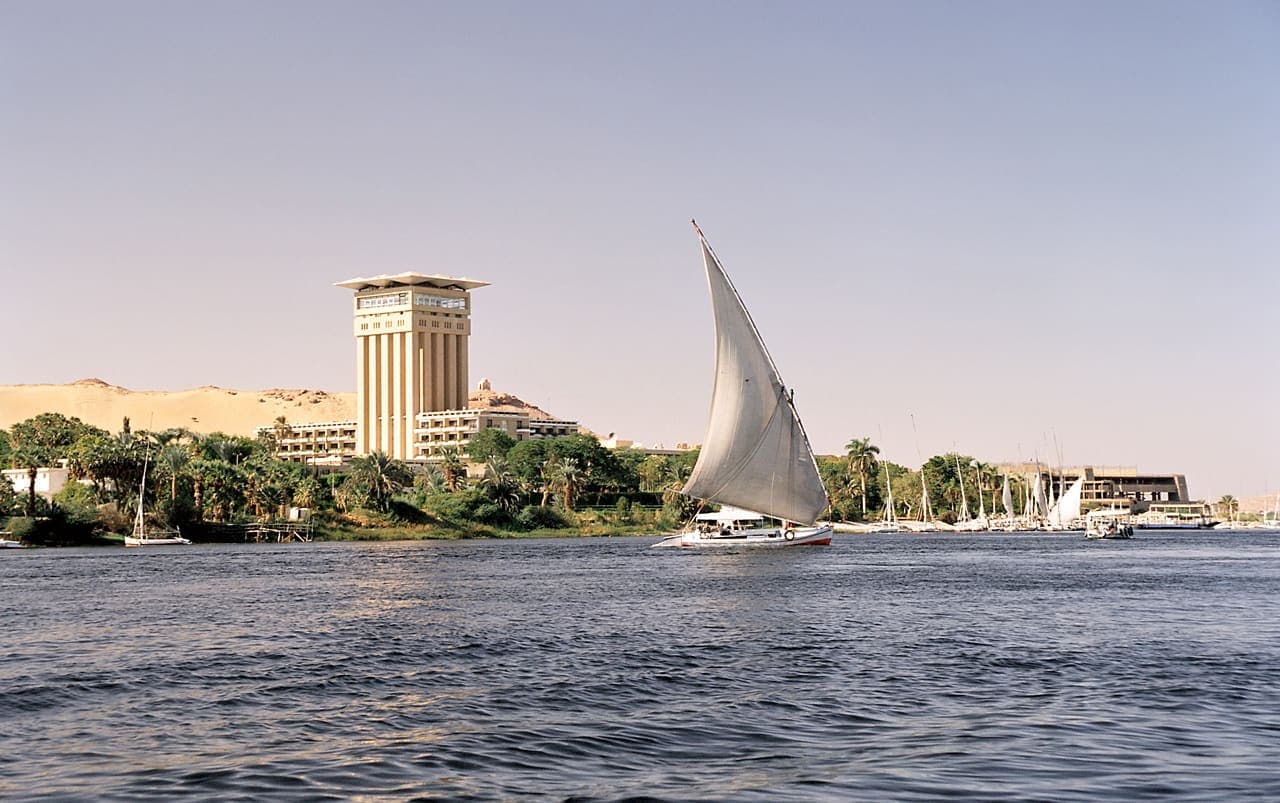
3000 BC · Early Dynastic
7 km away
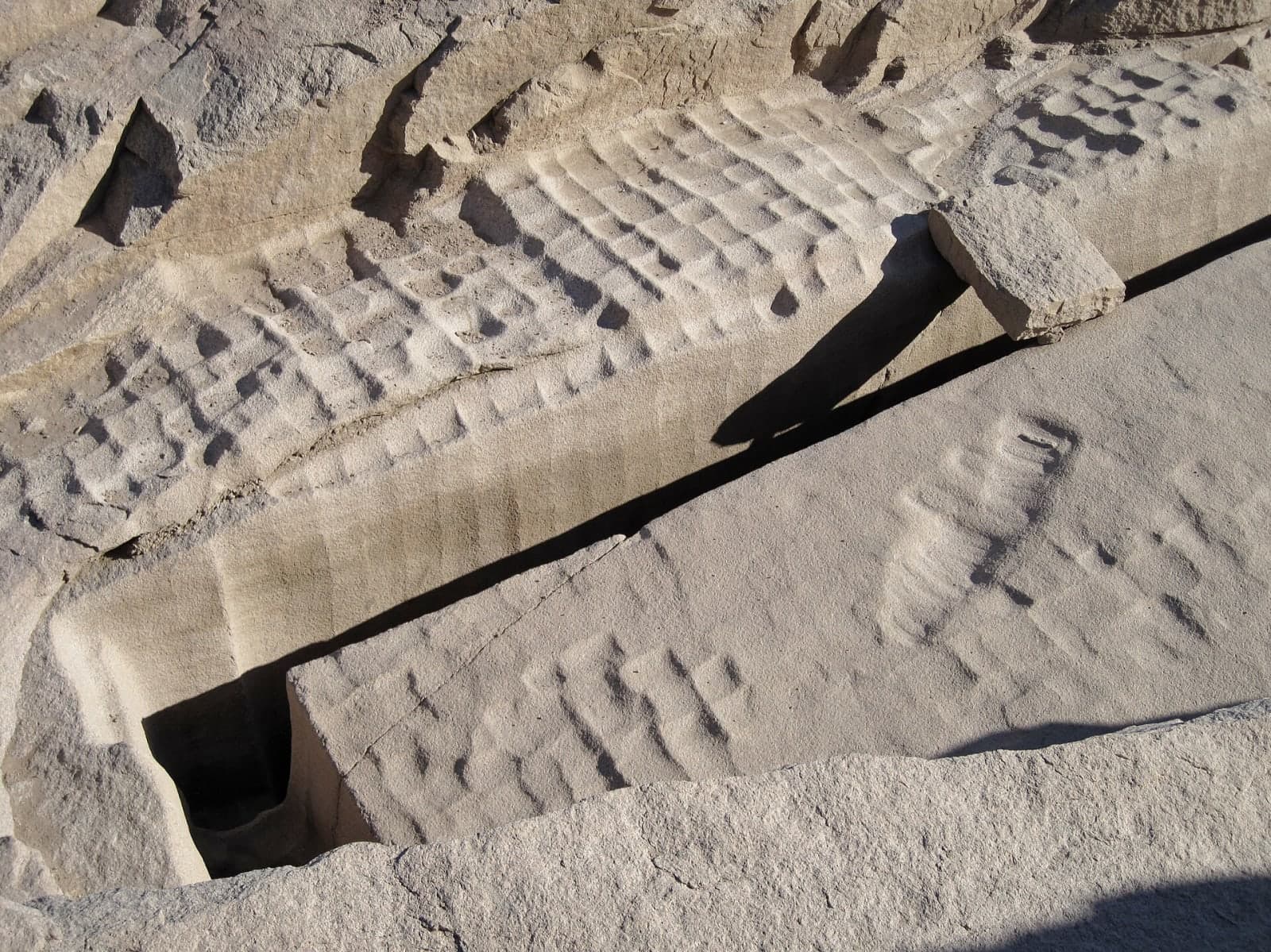
1500 BC · New Kingdom
6 km away
Book a ready-made tour or use the designer above to build your own plan.







Hand-picked tours our guests love — top quality at reasonable prices, curated by Helios for your trip.