


Egypt in 16 Days · special
From $4,323 / person16 daysIncludes 2 h at this sight
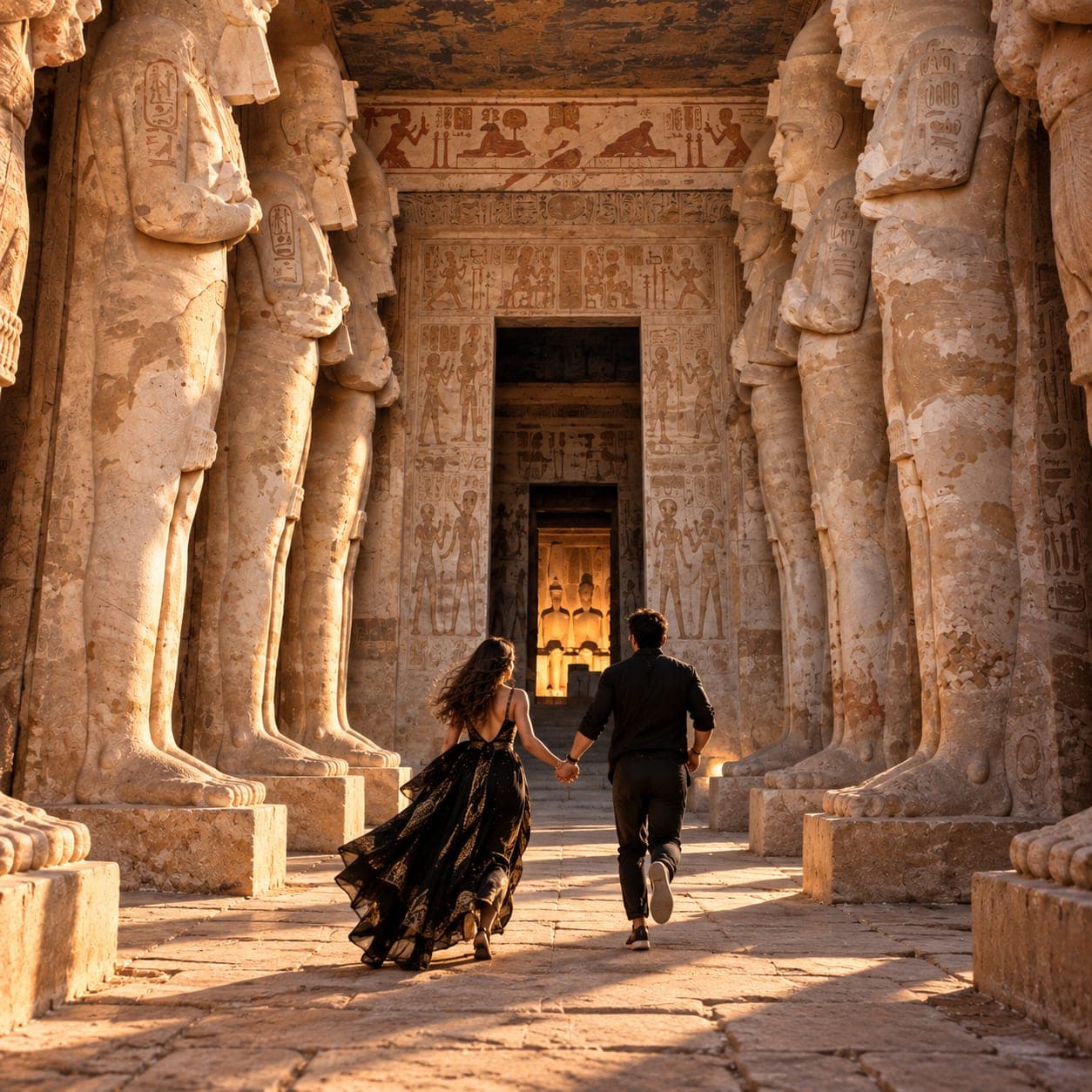
Superbly preserved temple of Hathor
Typical visit: 3 h
Period: 54 BC · Ptolemaic
One of the best-preserved temple complexes in Egypt, dedicated to the goddess Hathor.
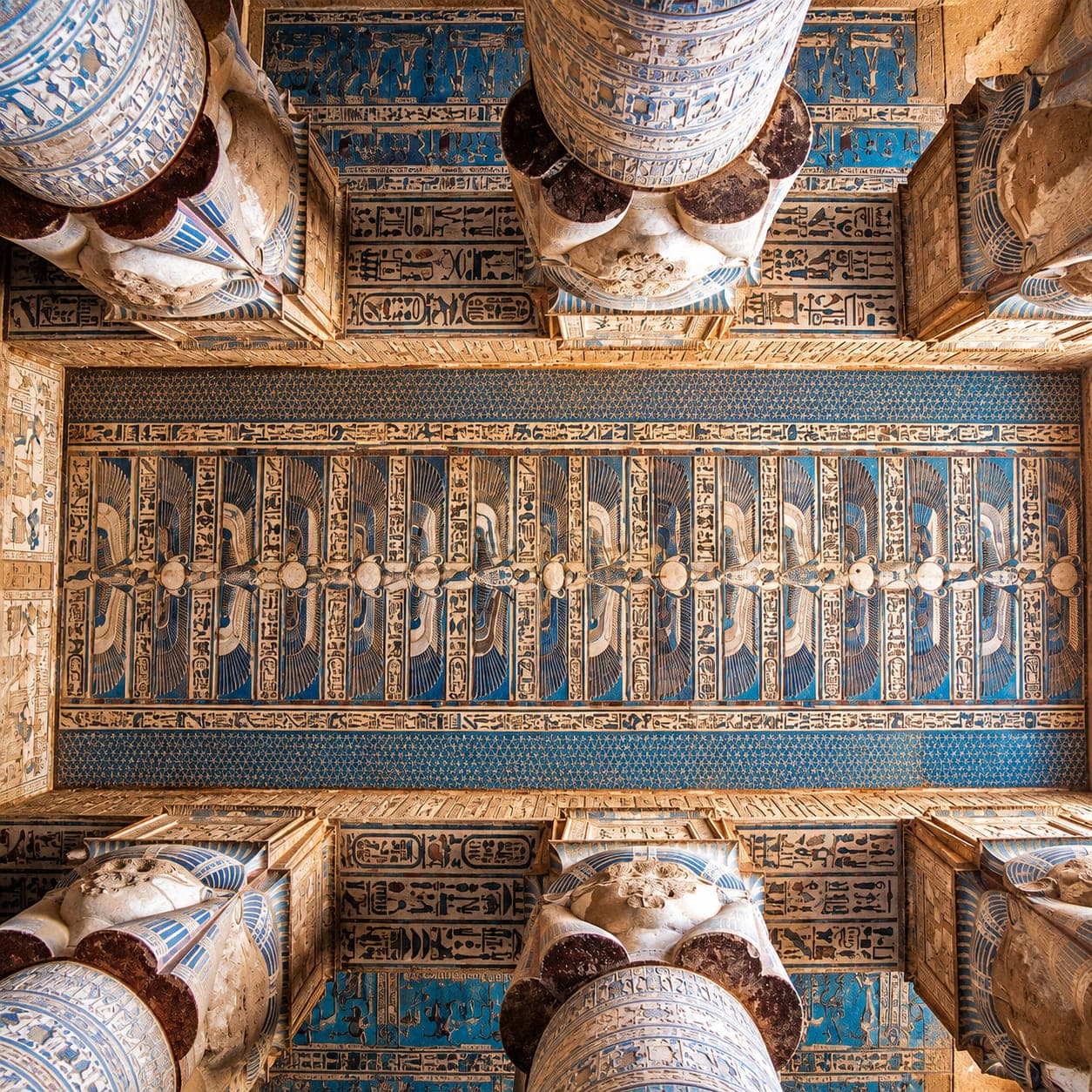
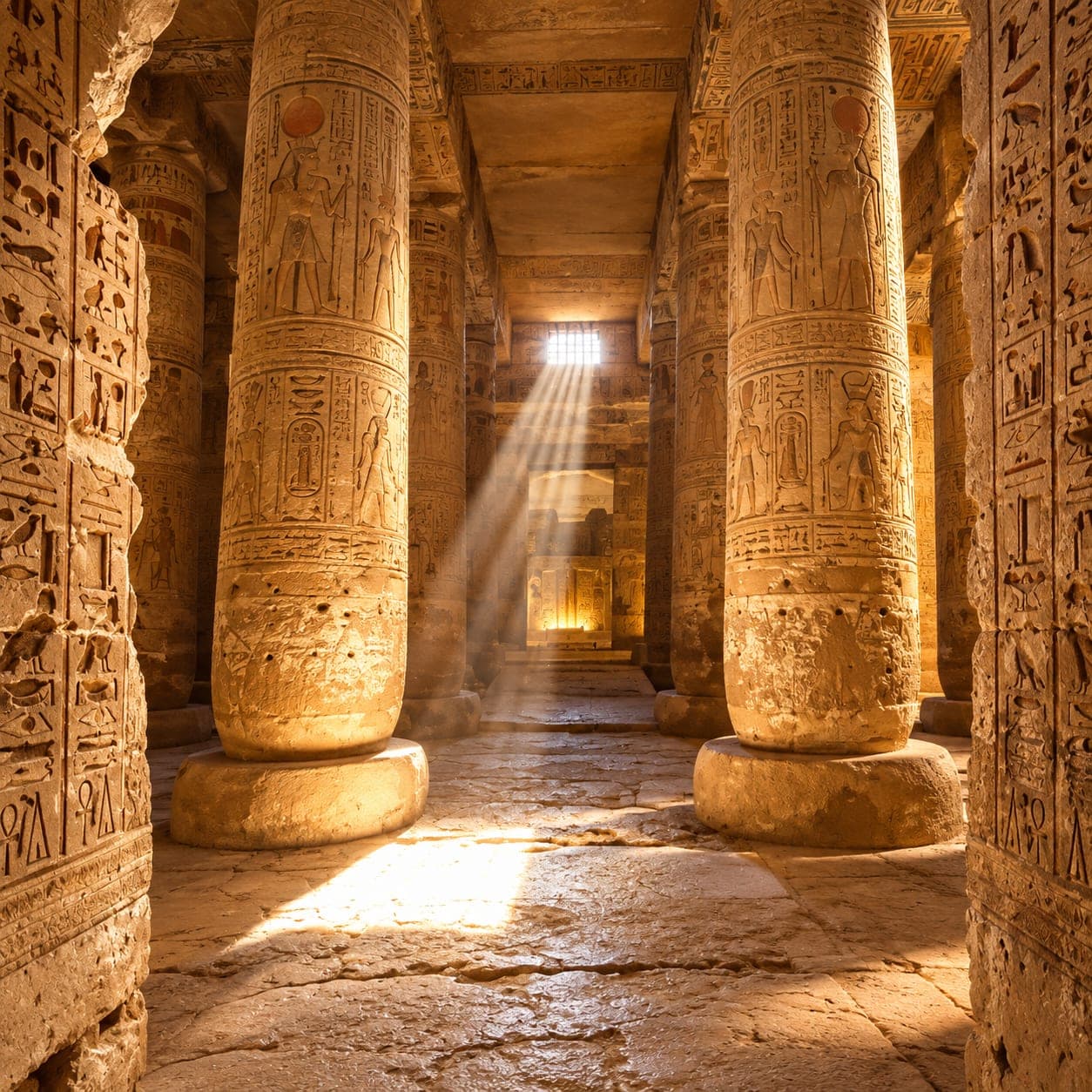
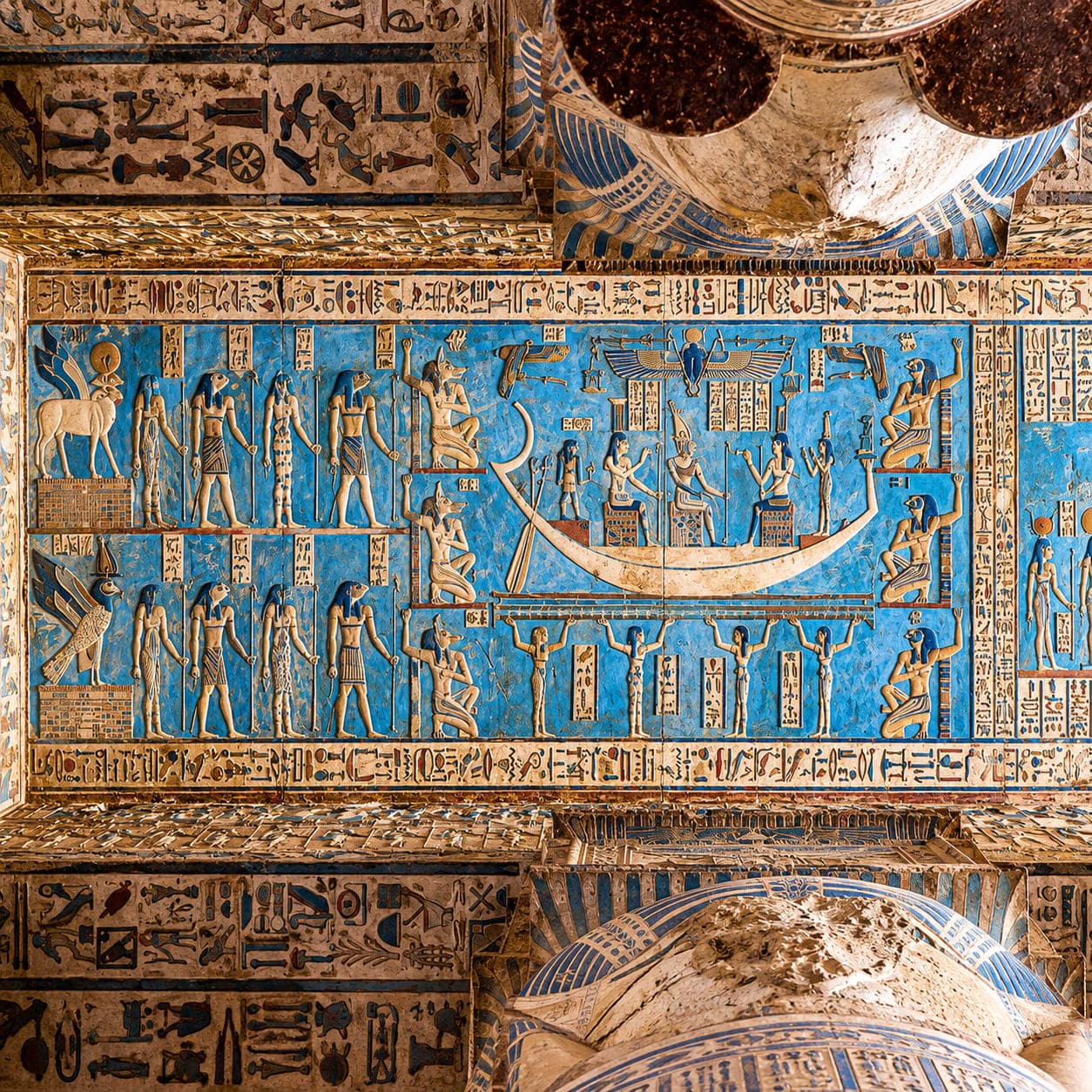
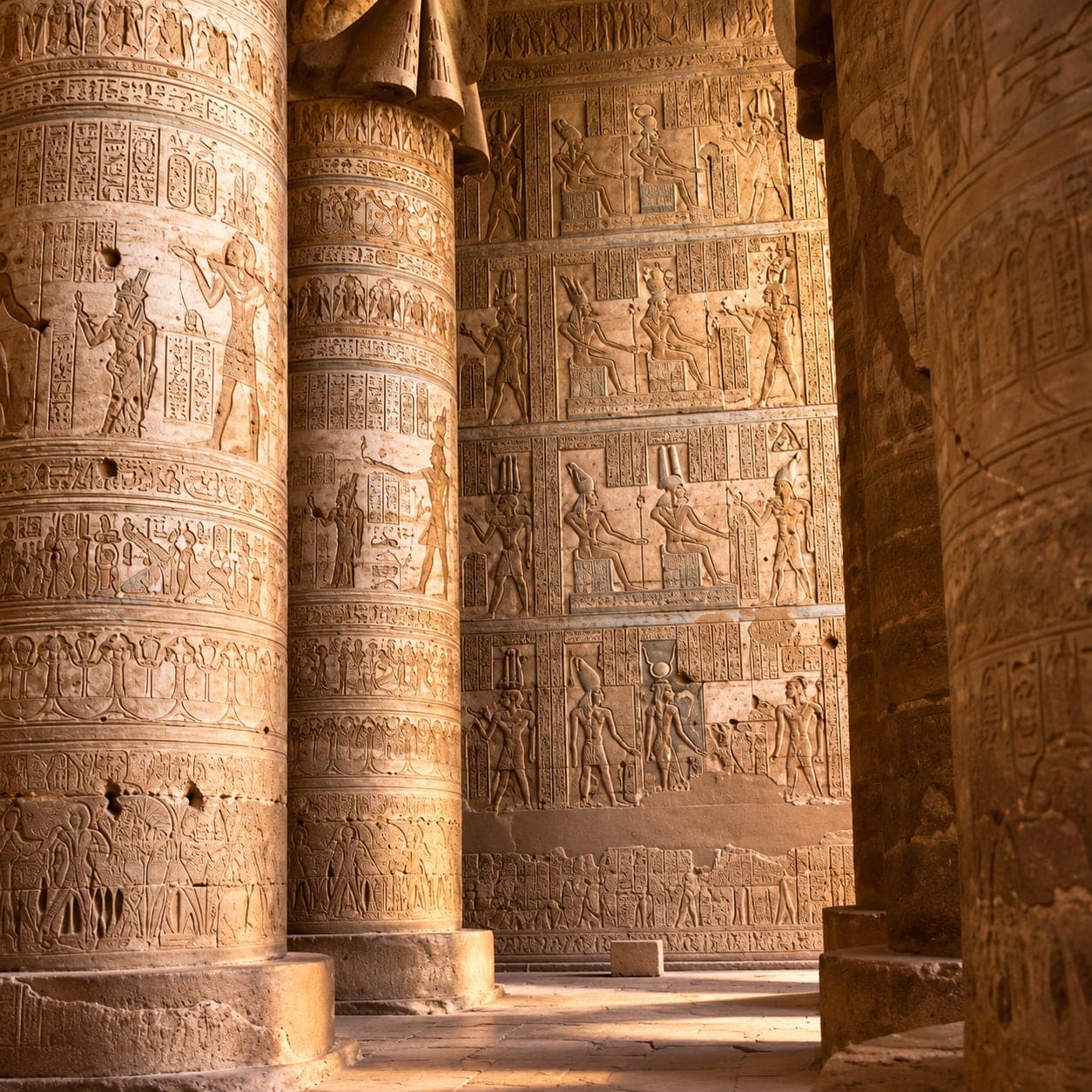
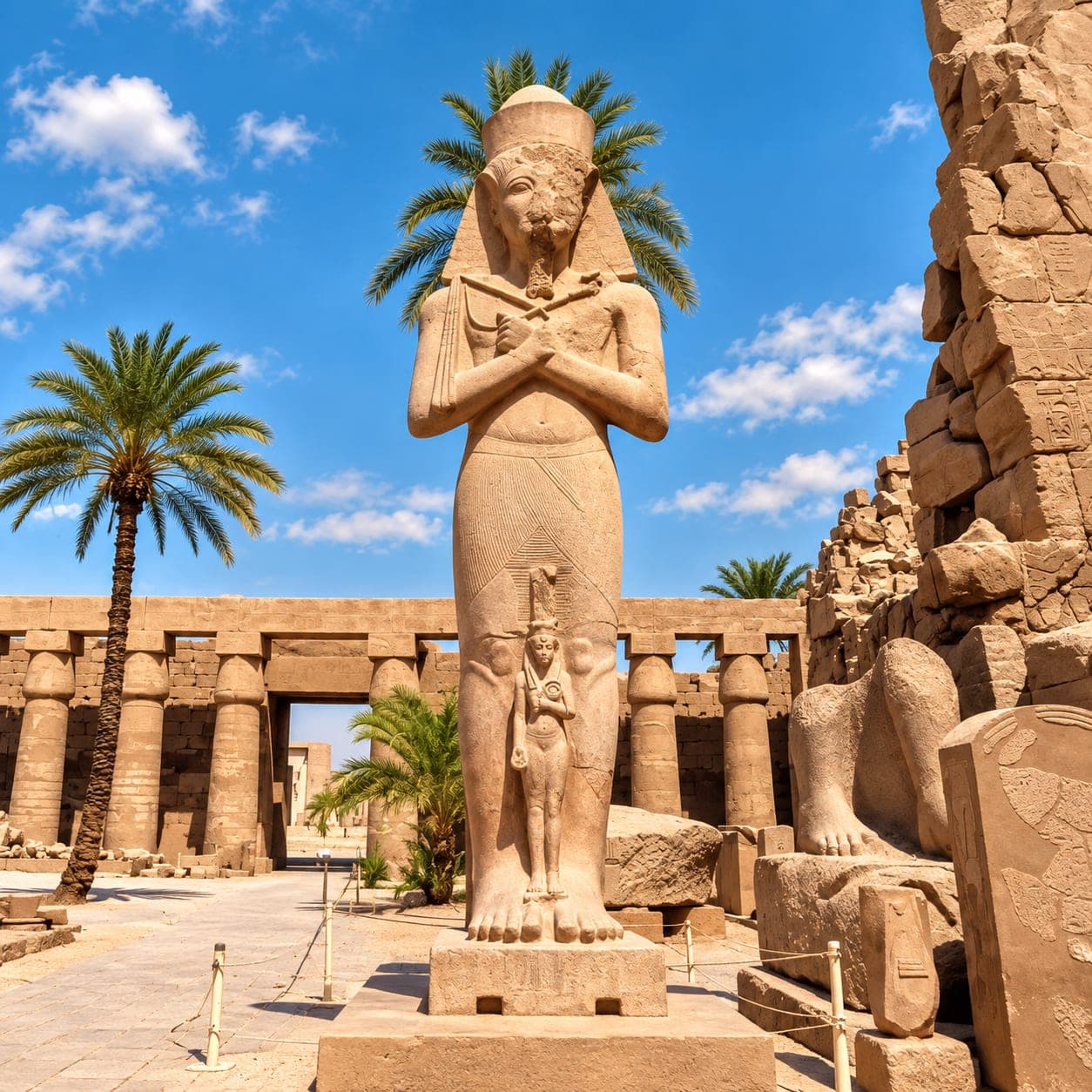
Dendera is the temple people leave saying they wish they had heard of it sooner. It is largely complete, it is comparatively quiet, and its ceilings are the reason to come: cleaned of centuries of soot in a long restoration, they have emerged with their original paint — deep blues, ochres and reds on figures of the sky goddess Nut swallowing and rebirthing the sun.
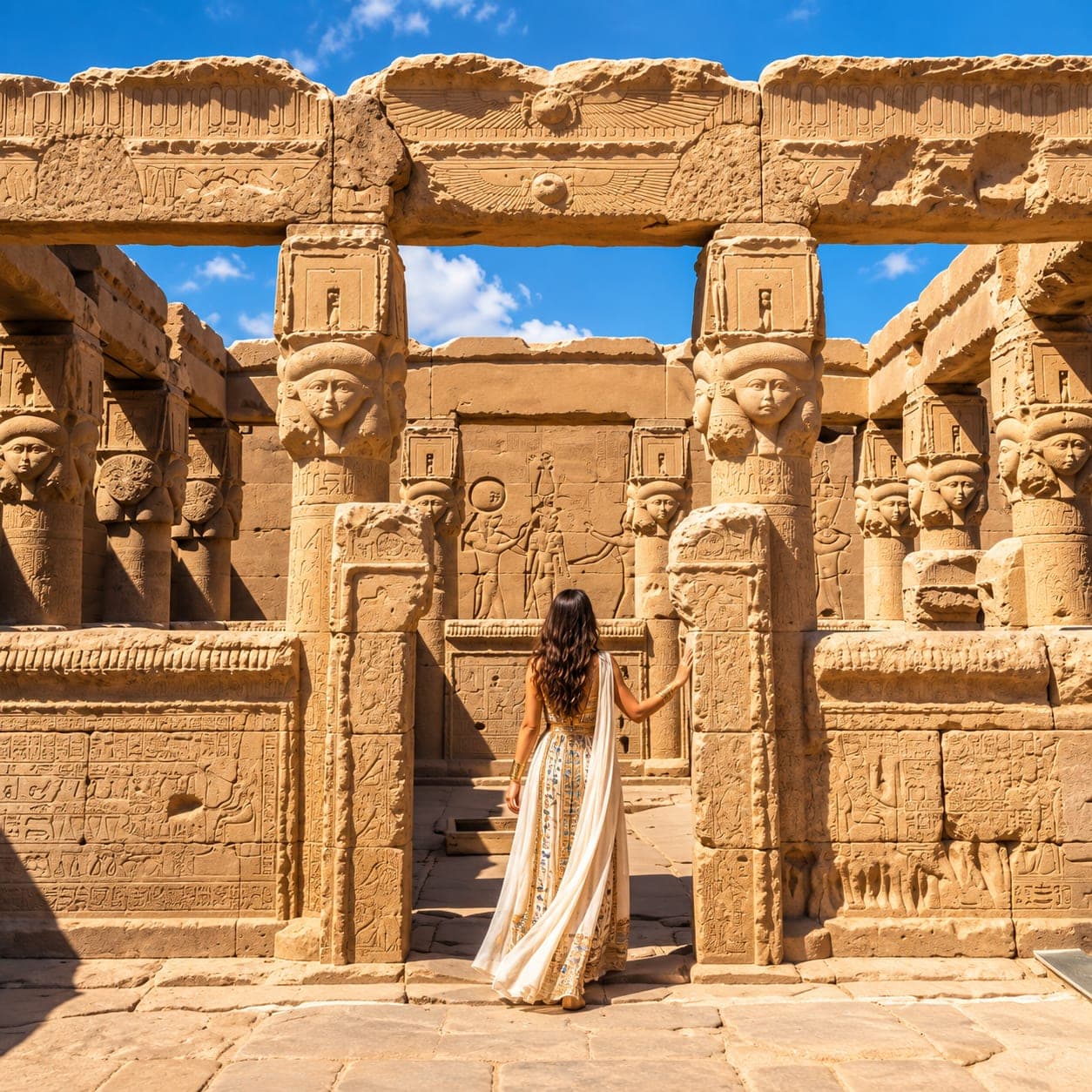
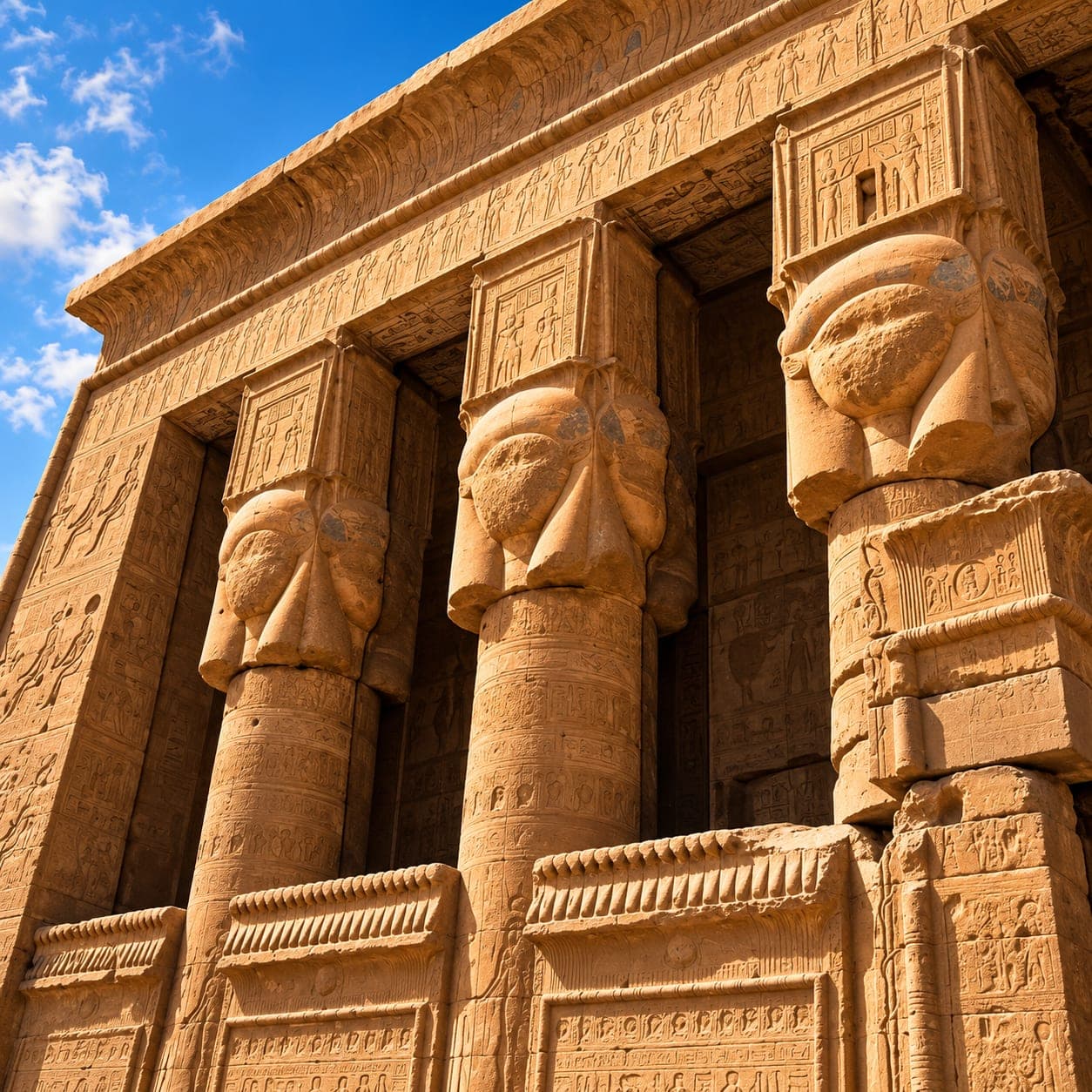
The hypostyle hall has twenty-four columns topped with the face of Hathor. Every one was defaced in antiquity, and the vandalism is itself part of the record.
The building is Ptolemaic and Roman, put up between roughly the 1st century BCE and the 1st century CE, though Hathor had been worshipped on this spot for millennia before that. Hathor was goddess of love, music, drunkenness and joy, and Dendera was a place of festival — its most important rite sent her statue by river to Edfu each year for a fortnight-long "beautiful reunion" with Horus.
In 1821 a French antiquarian, Sébastien Saulnier, sent an agent to remove the circular zodiac from a roof chapel. It was cut out of the ceiling with saws, gunpowder and chisels, shipped to France and sold to Louis XVIII. It has been in the Louvre since, and Egypt has repeatedly asked for it back. The blackened scar it left is still visible above the replica.
The systematic damage to the Hathor heads came later, from Christian communities who occupied the temple after the old cults were suppressed. They left their own marks too — a Coptic church stands in the complex, built from reused temple stone.
Dendera therefore records three religions in sequence on the same walls: Egyptian ritual, Roman patronage, and Christian iconoclasm, one cut over the other.
Pick how many days you have, add attractions per day, and see average activity and travel times between cities.
Places that carry the same story forward, or sit close enough to take in the same day.
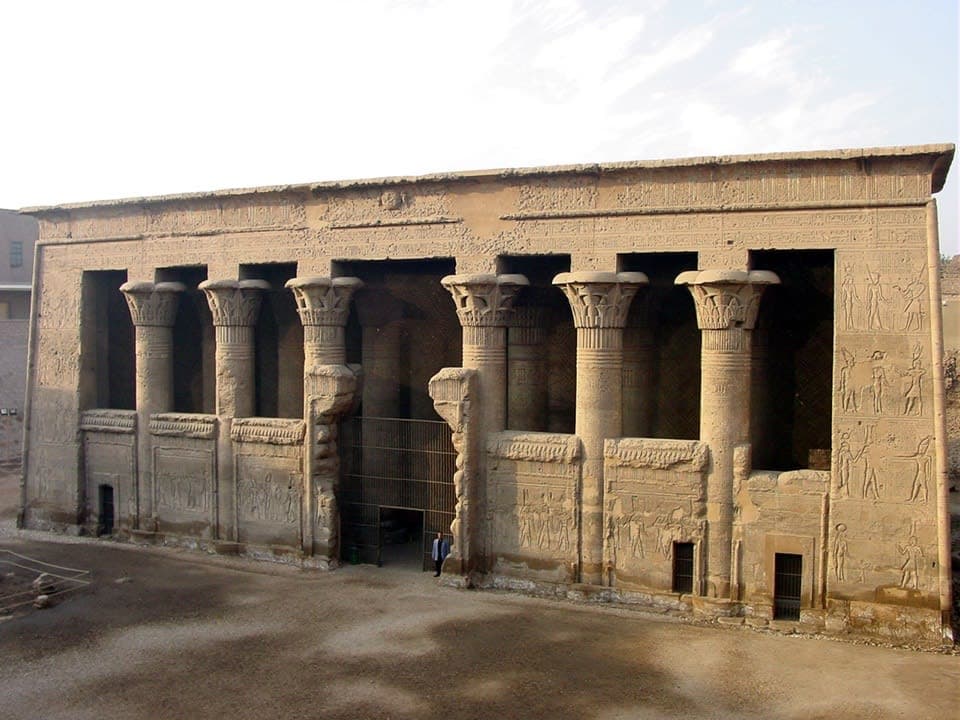
AD 50 · Roman
95 km away
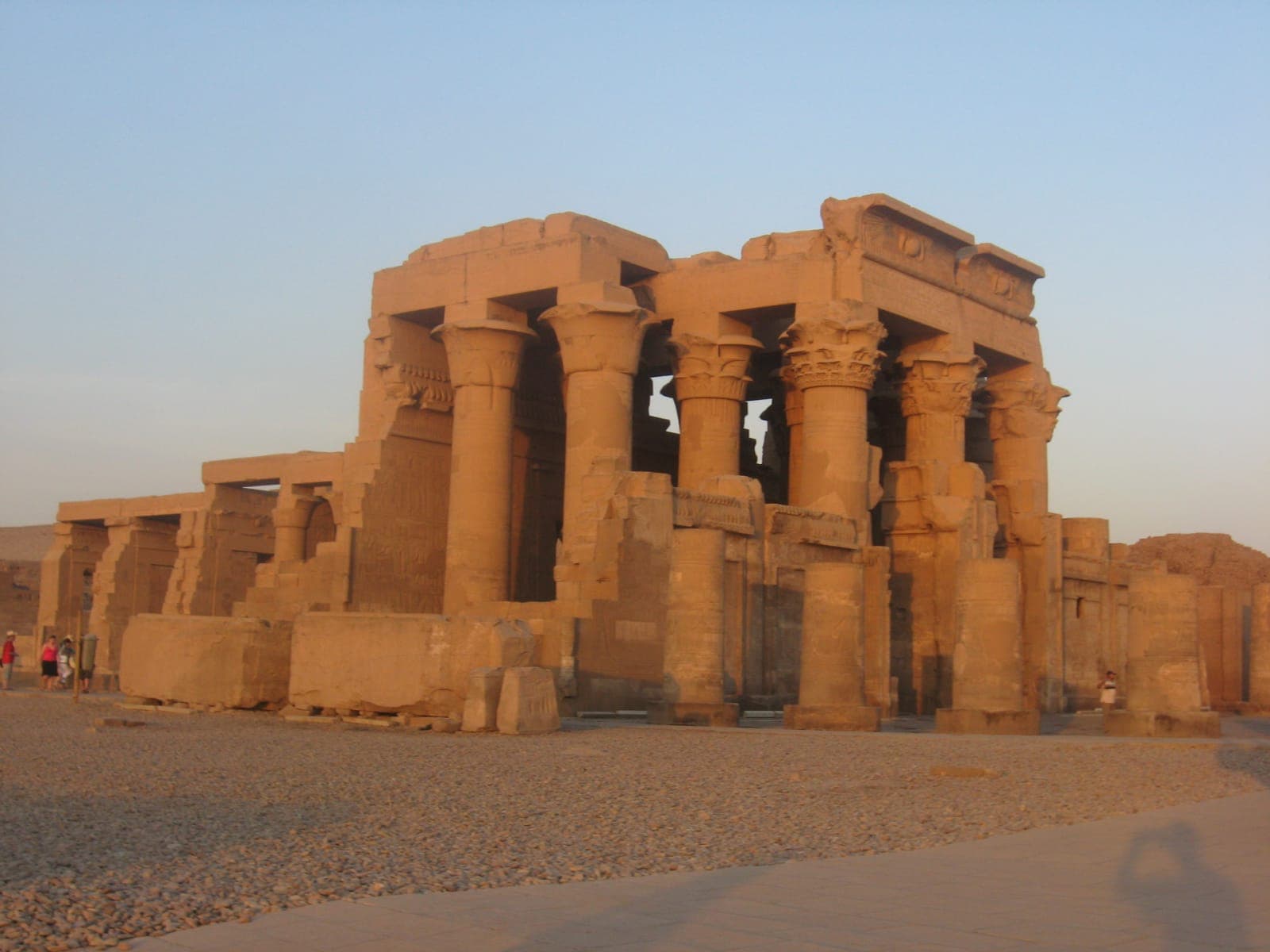
180 BC · Ptolemaic
190 km away
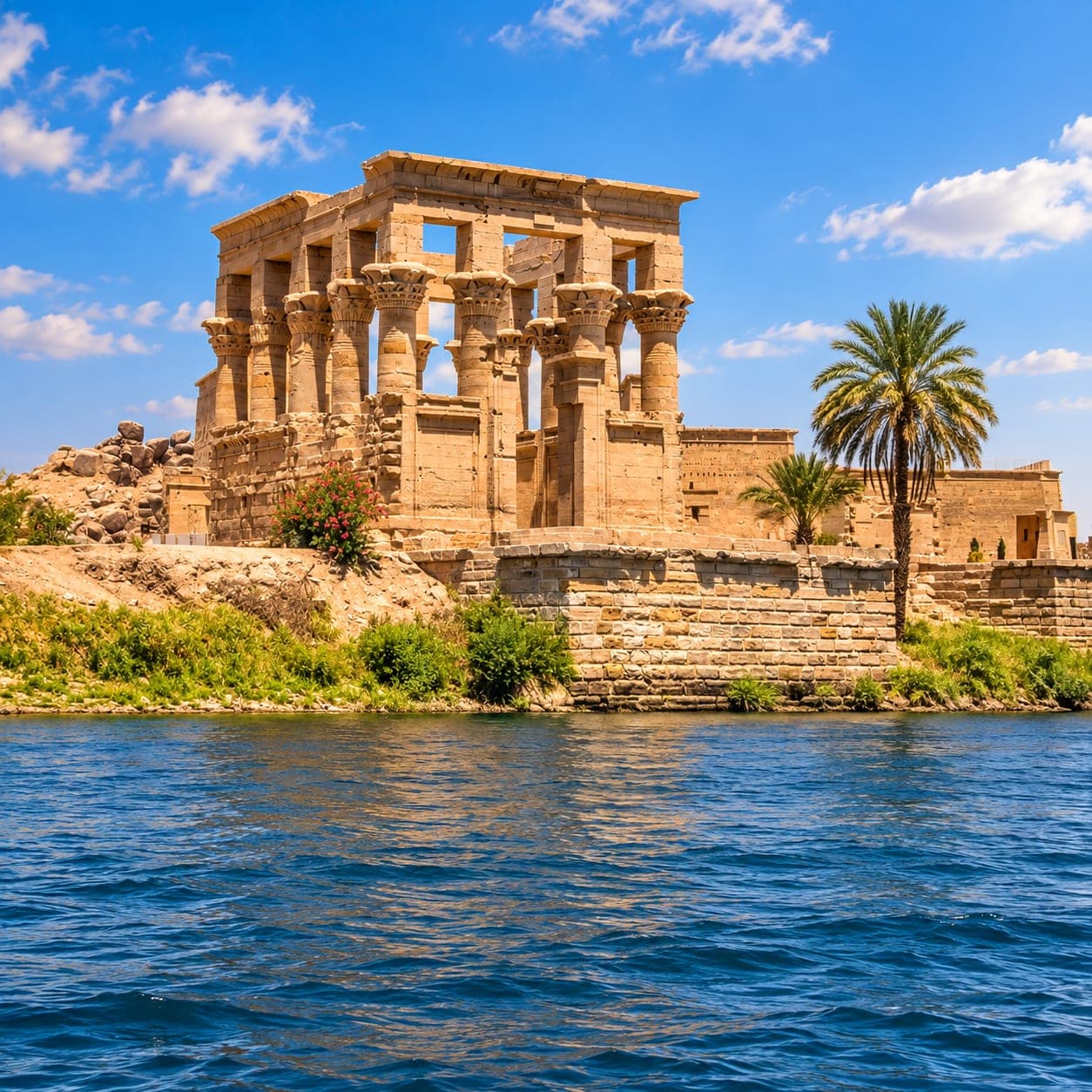
280 BC · Ptolemaic
236 km away
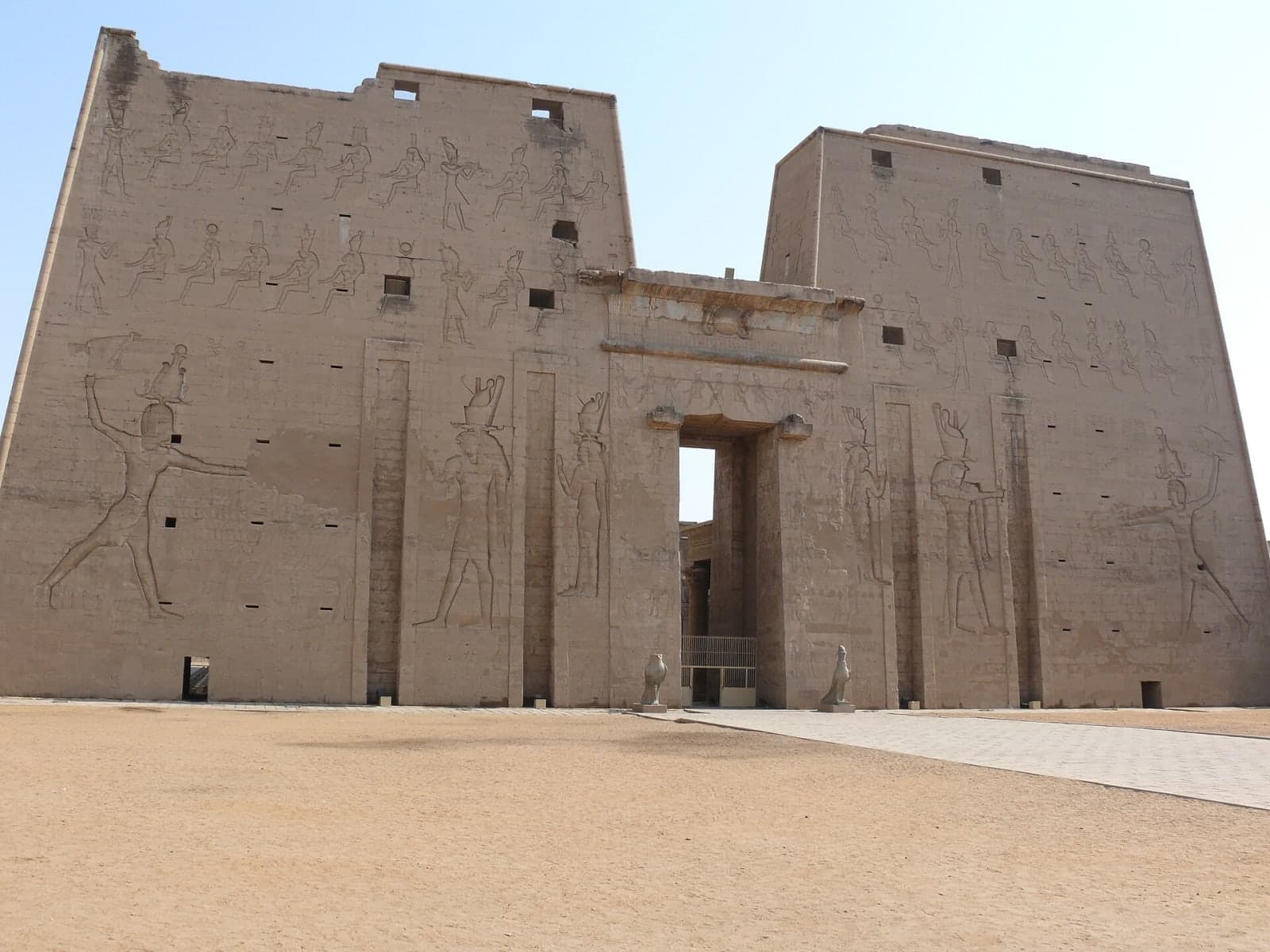
237 BC · Ptolemaic
131 km away

1975 · Modern Egypt
49 km away
1539 BC · New Kingdom
45 km away
Book a ready-made tour or use the designer above to build your own plan.


Hand-picked tours our guests love — top quality at reasonable prices, curated by Helios for your trip.