


Egypt in 16 Days · special
From $4,323 / person16 daysIncludes 1 h 30 m at this sight
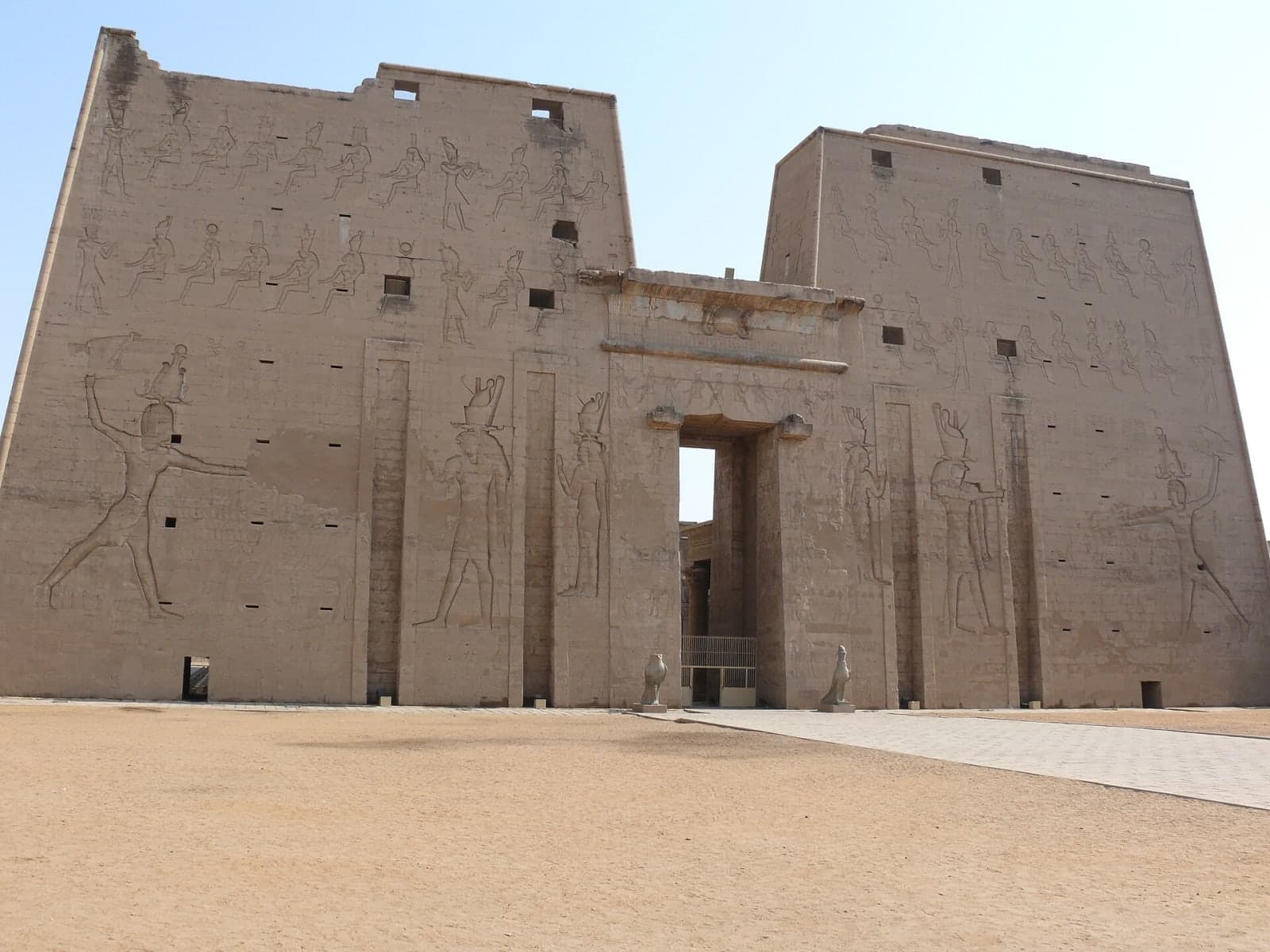
The best-preserved temple in Egypt
Typical visit: 1 h 30 m
Period: 237 BC · Ptolemaic
The most completely preserved ancient temple in Egypt, dedicated to the falcon-god Horus.
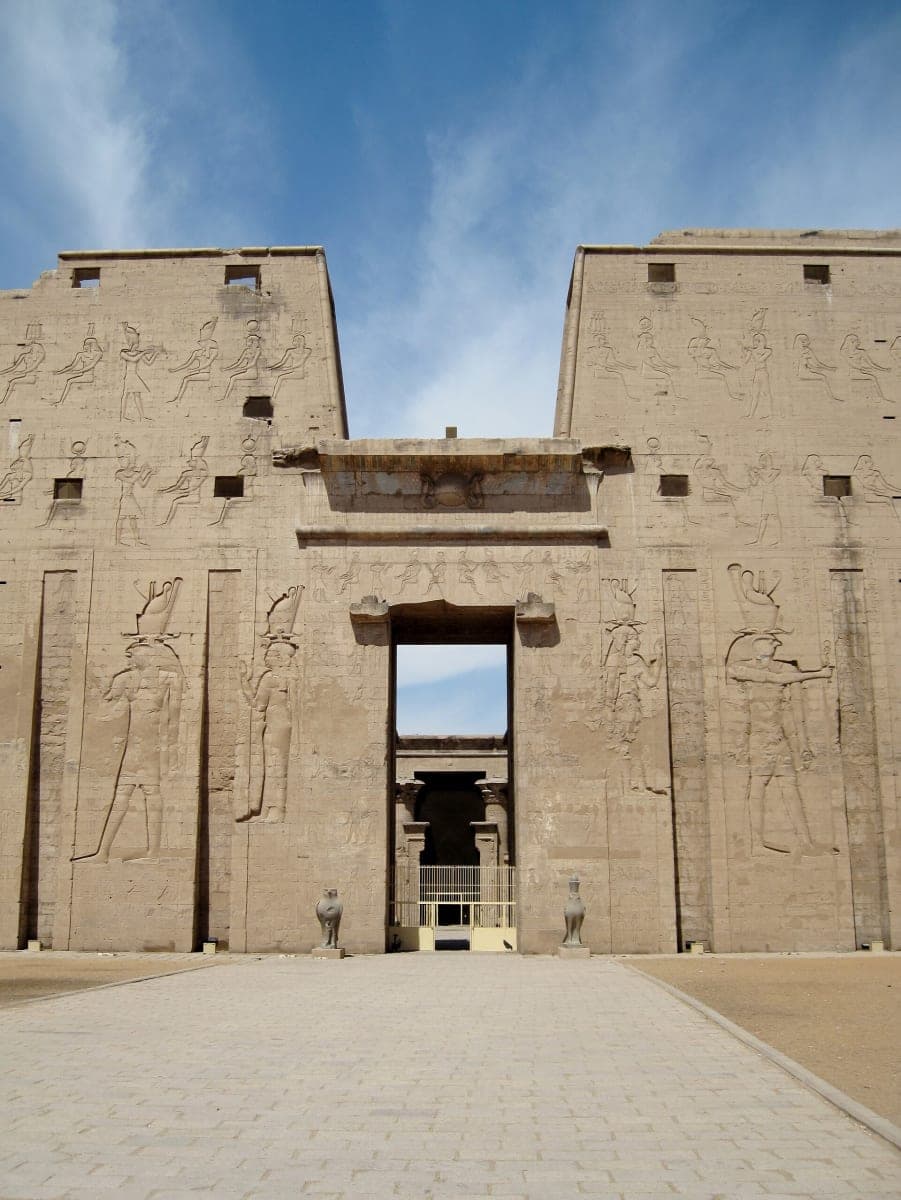
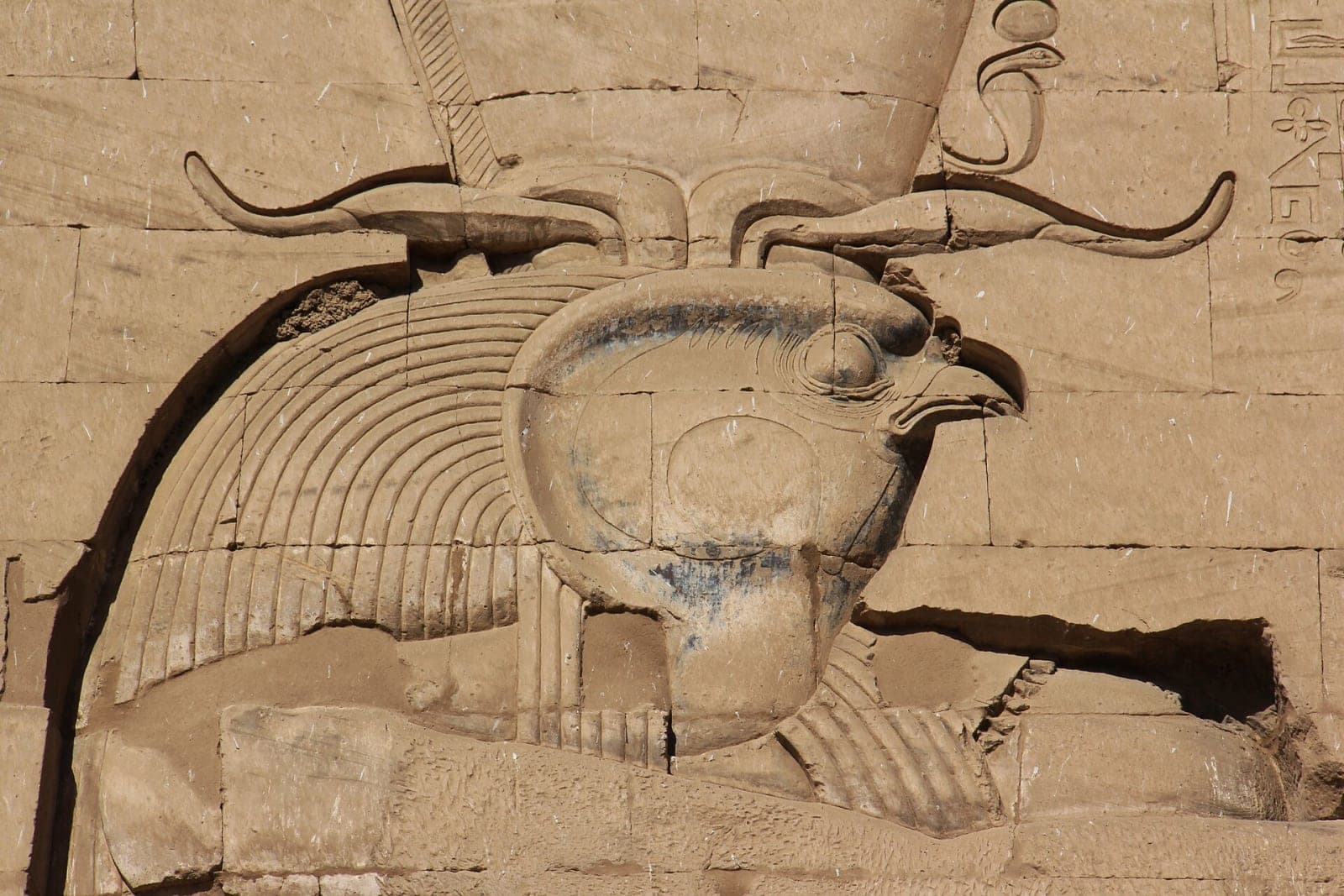
Edfu is the temple that shows you what all the others looked like before time got to them. Its roof is on. Its walls stand full height. The great pylon still carries its reliefs, the courtyard colonnade is complete, and the inner rooms are dark in the way they were designed to be — light falling in narrow slots, the sanctuary at the end almost black.
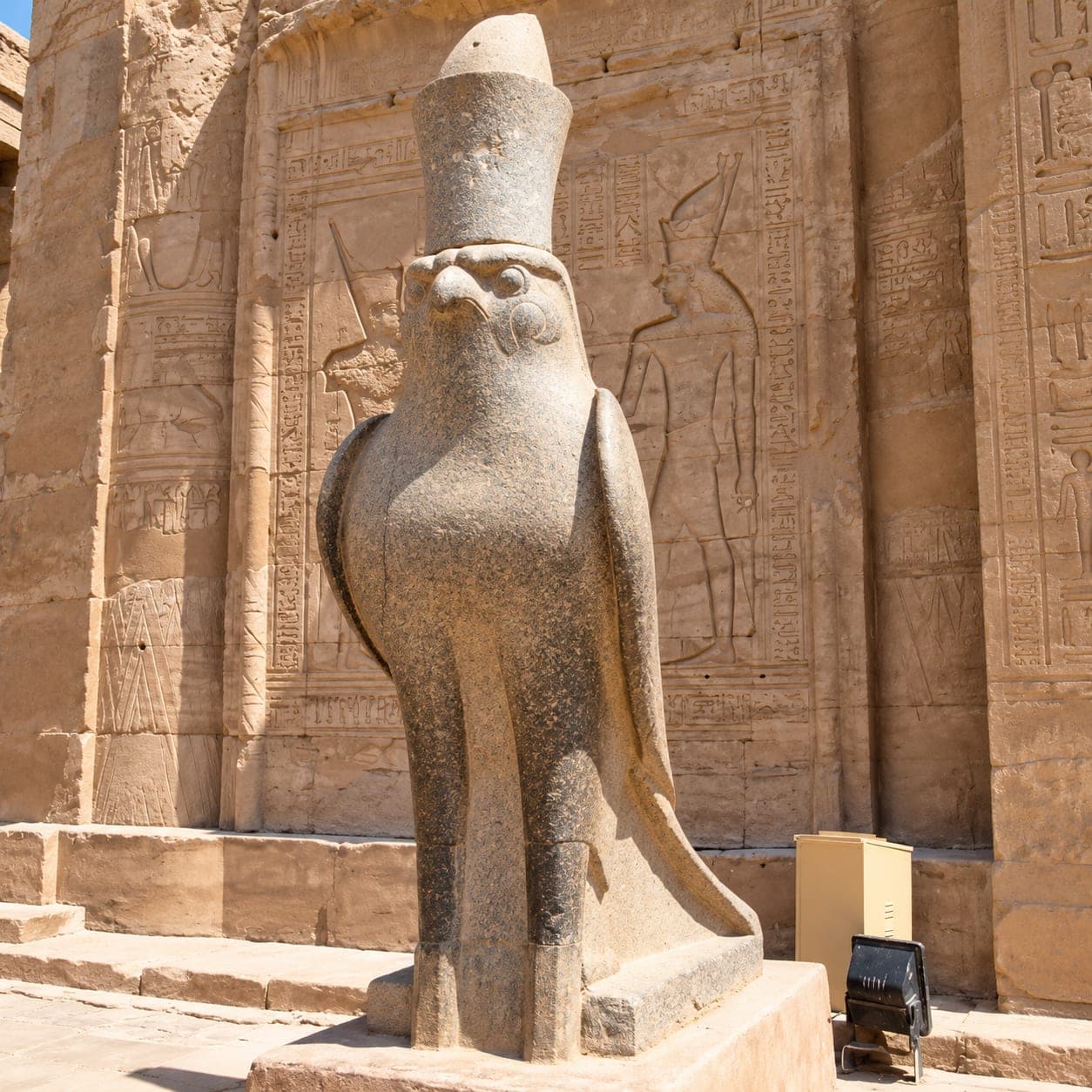
Two black granite falcons stand at the entrance, one of them wearing the double crown. In the sanctuary is a polished granite shrine, older than the building around it, which once held the god's statue; in front of it sits a replica of the sacred barque used to carry Horus in procession.
Building began in 237 BCE under Ptolemy III and finished in 57 BCE — a hundred and eighty years, with long pauses for revolt. The Ptolemies were Greeks ruling Egypt, and temples like this were a deliberate argument for their legitimacy: entirely Egyptian in form, carved with the pharaonic imagery of a dynasty that had arrived with Alexander's army.
Because it disappeared. After the temples were closed in the Christian era the desert began to fill Edfu, and the annual Nile silt did the rest. A village grew on top of the mound, its houses standing directly on the temple roof, with the pylon's upper courses sticking out of the ground like a low hill.
Buried, the sandstone was protected from wind, rain and stone-robbers for something like eighteen centuries. Auguste Mariette began clearing it in the 1860s, digging the village off the roof and the sand out of the halls, and what emerged was a nearly complete Egyptian temple.
Its walls are covered with inscriptions describing the temple's own rituals, festivals, foundation myth and even its construction accounts. Egyptologists rely on Edfu to interpret sites where the writing has been lost — it is, in effect, the instruction manual for temples everywhere else.
Pick how many days you have, add attractions per day, and see average activity and travel times between cities.
Places that carry the same story forward, or sit close enough to take in the same day.
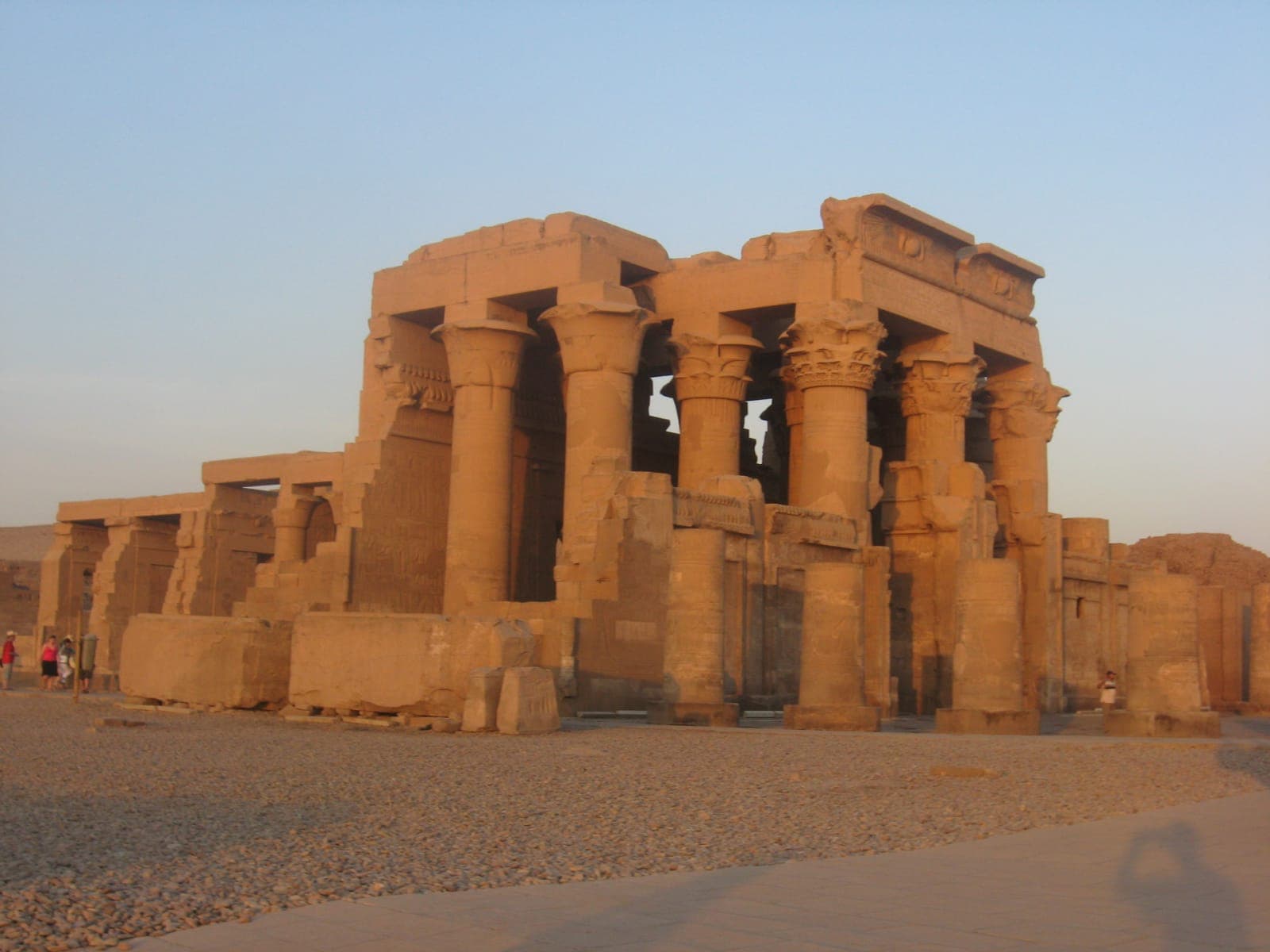
180 BC · Ptolemaic
59 km away
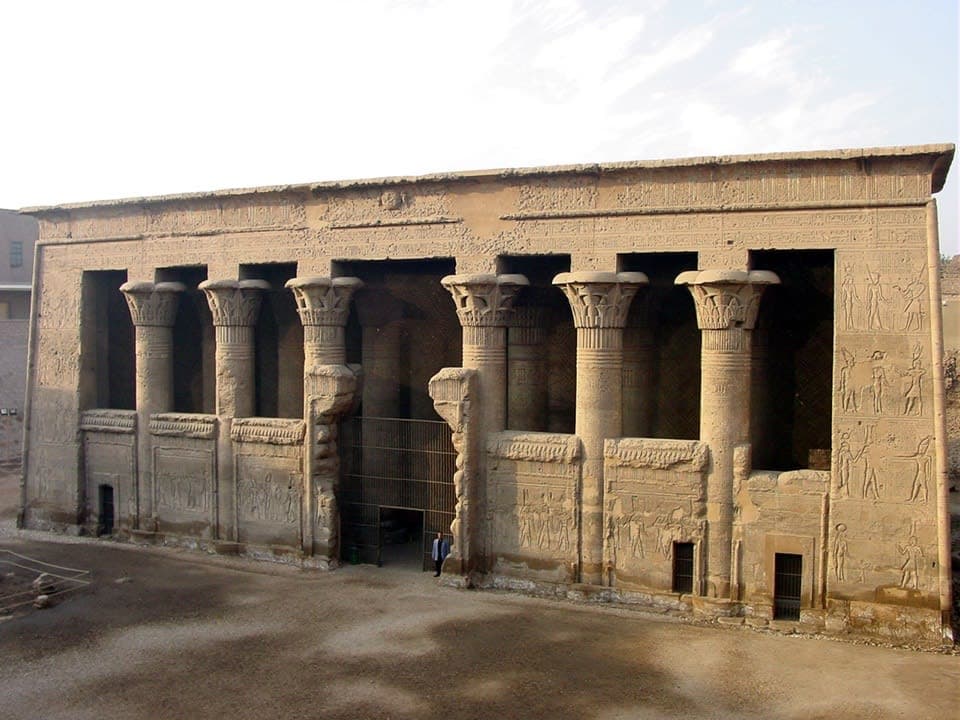
AD 50 · Roman
48 km away
54 BC · Ptolemaic
131 km away
280 BC · Ptolemaic
106 km away

3000 BC · Early Dynastic
99 km away

1975 · Modern Egypt
84 km away
Book a ready-made tour or use the designer above to build your own plan.







Hand-picked tours our guests love — top quality at reasonable prices, curated by Helios for your trip.