
Abu Simbel Sun Festival
From $236 / person5 hoursAswanIncludes 3 h at this sight
Aswan region
Typical visit: 3 h
Period: 1264 BC · New Kingdom
Two colossal rock temples carved by Ramesses II — and famously relocated block by block to escape the rising Nile.
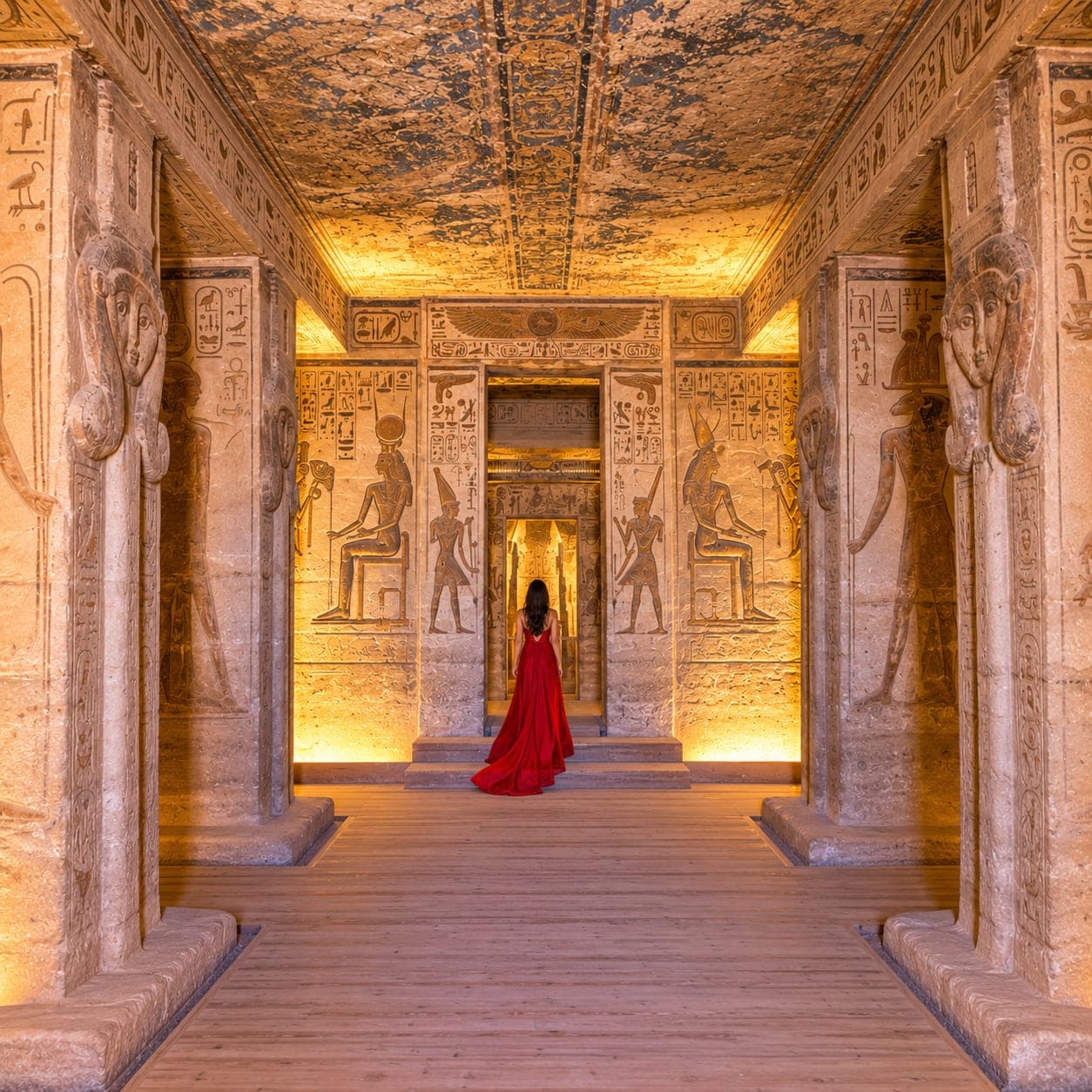


Photo credits: Diego Delso · CC BY-SA 4.0
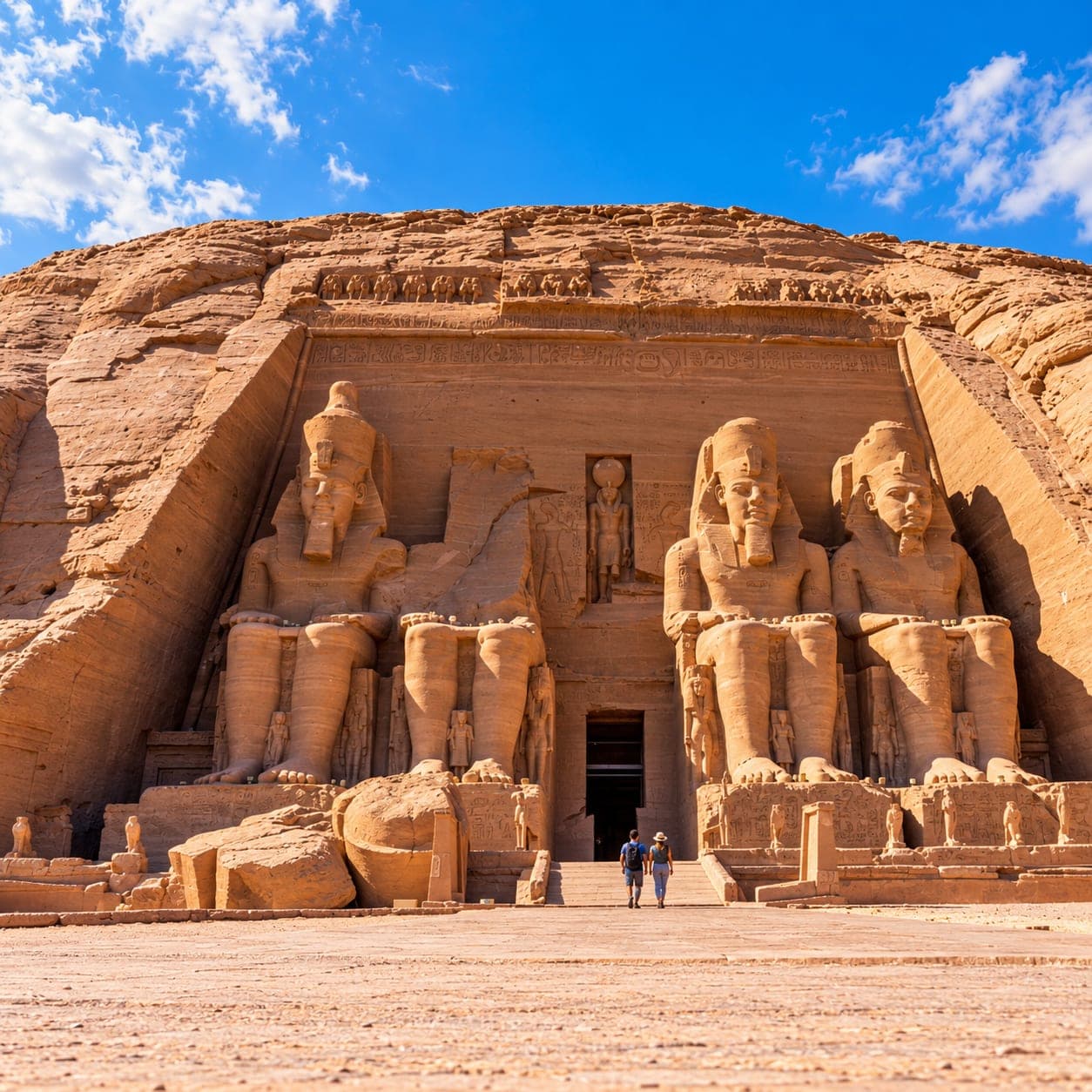
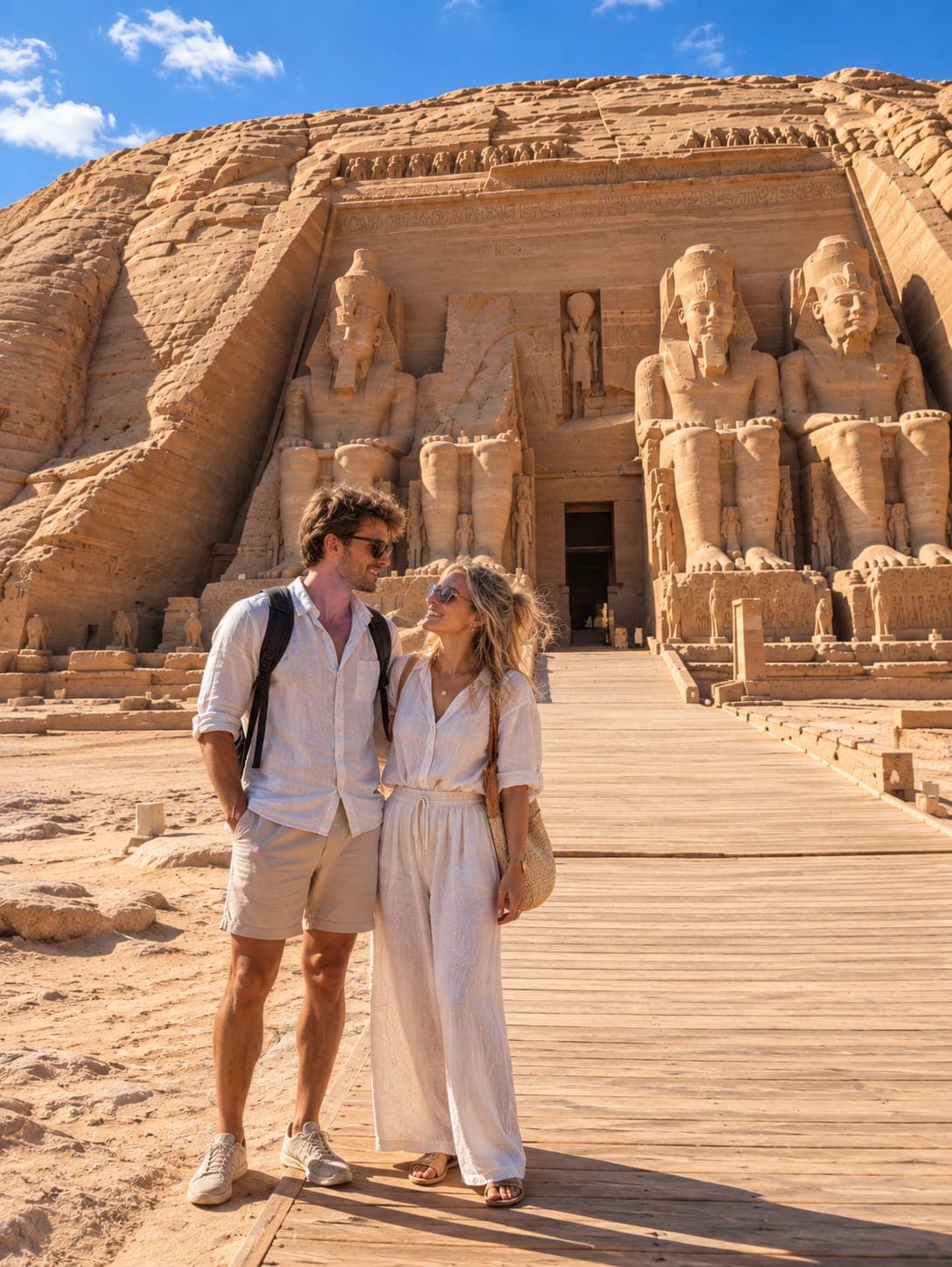
Two temples cut straight into a sandstone cliff above the water, fronted by four seated colossi of Ramesses II, each about twenty metres high. One of them lost its head and shoulders to an earthquake in antiquity; the fragments lie at its feet exactly where they fell, and were carefully replaced in the same position when the temples were moved.
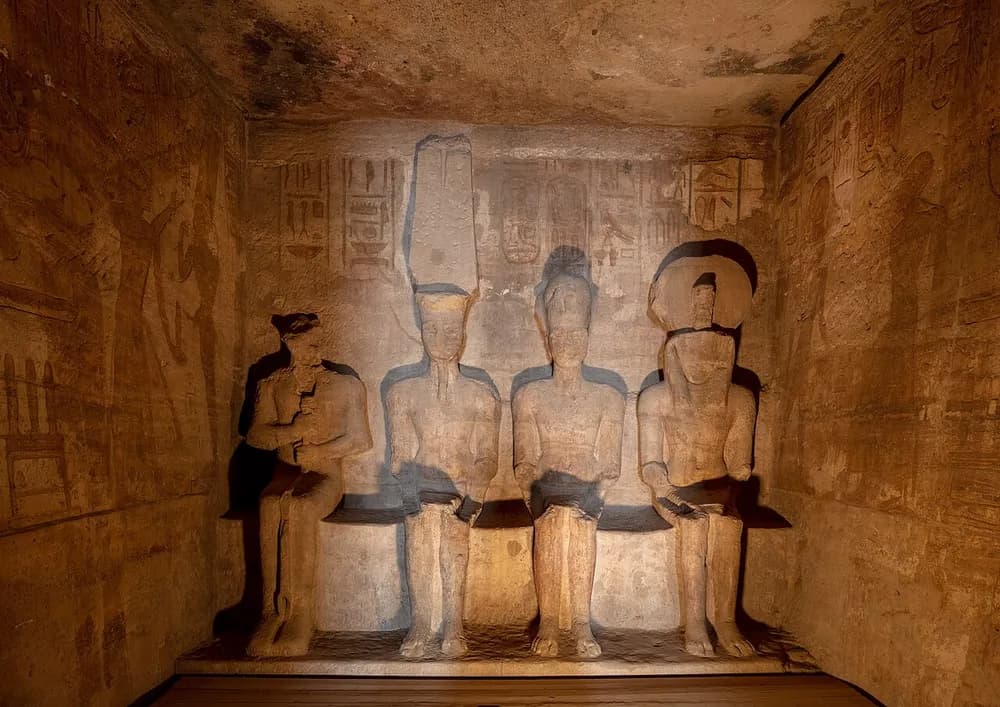
Inside, the Great Temple runs some sixty metres back into the rock. An eight-pillared hall of Osiride statues leads through smaller chambers to a sanctuary where four seated gods wait in the dark — and where Ramesses placed himself among them as an equal.
Beside it stands the smaller temple for Nefertari and the goddess Hathor. Its facade is the reason it matters: the queen is carved at the same height as the king, which happens almost nowhere else in Egyptian art. The dedication says the temple was built "for whose sake the very sun does shine".
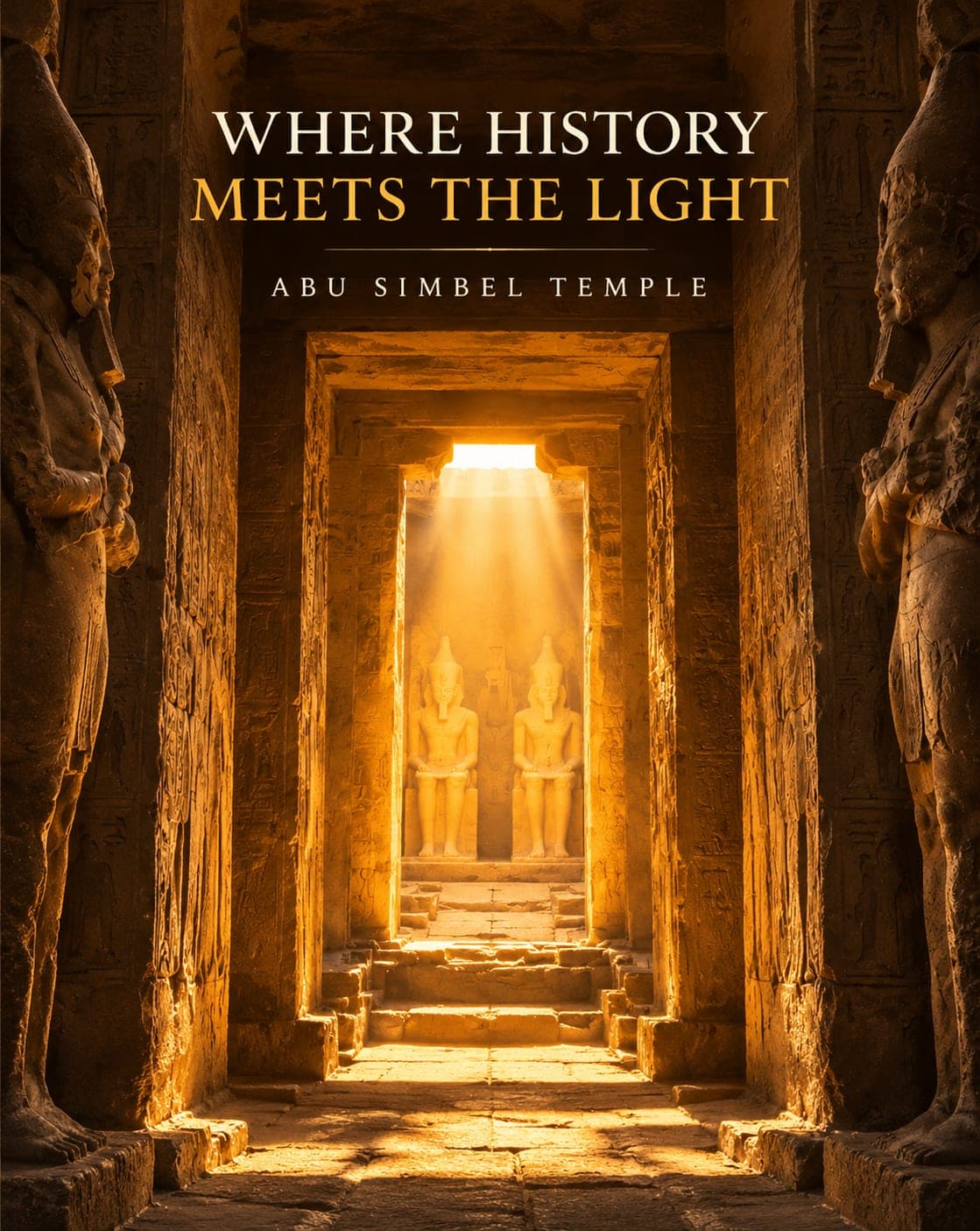
Twice a year — around 22 February and 22 October — the rising sun drives a shaft of light the full depth of the Great Temple and lights three of the four gods in the sanctuary. Ptah, a god of the underworld, stays in shadow. He was meant to.

Four Ramesses, twenty metres each, subtracted from the cliff face rather than built against it. The second from the left lost its head and torso to an earthquake in antiquity; the pieces lie at its feet where they fell, and were put back in exactly that position when the temple was moved.

Four seated figures at the far end of the axis: Ptah, Amun-Ra, the deified Ramesses, and Ra-Horakhty. An eight-pillared hall of Osiride statues leads to them through smaller chambers, getting darker and lower the whole way — the architecture is doing the work before you arrive.
Ramesses II built Abu Simbel in the 13th century BCE at the southern edge of his territory, where it functioned as propaganda aimed squarely at Nubia: anyone travelling north met a cliff face with four enormous images of the pharaoh watching the river. The interior reliefs push the same message, above all the Battle of Kadesh, which Ramesses presents as a personal triumph. It was, at best, a draw.
The sand buried it. In 1813 the Swiss traveller Johann Ludwig Burckhardt spotted the tops of the colossi protruding from a dune; four years later Giovanni Belzoni dug his way in and became the first person in centuries to stand in the sanctuary.
The High Dam would have put both temples under Lake Nasser. Between 1964 and 1968, in the largest single operation of the UNESCO rescue campaign, engineers sawed the temples into more than a thousand numbered blocks weighing up to thirty tonnes each, lifted them 65 metres up the cliff and 200 metres back from the water, and reassembled them inside an artificial hill built over a concrete dome.
The alignment was recalculated and reproduced, though the solar event now falls about a day later than it originally did. Look closely at the walls and you can still find the seams between blocks.
Pick how many days you have, add attractions per day, and see average activity and travel times between cities.
Places that carry the same story forward, or sit close enough to take in the same day.

1255 BC · New Kingdom
0 km away
1250 BC · New Kingdom
390 km away
1180 BC · New Kingdom
389 km away
3000 BC · Early Dynastic
233 km away

1975 · Modern Egypt
388 km away
2000 BC · Middle Kingdom
390 km away
Book a ready-made tour or use the designer above to build your own plan.










Hand-picked tours our guests love — top quality at reasonable prices, curated by Helios for your trip.