


Egypt in 16 Days · special
From $4,323 / person16 daysIncludes 45 min at this sight

The Small Temple of Abu Simbel
Typical visit: 45 min
Period: 1255 BC · New Kingdom
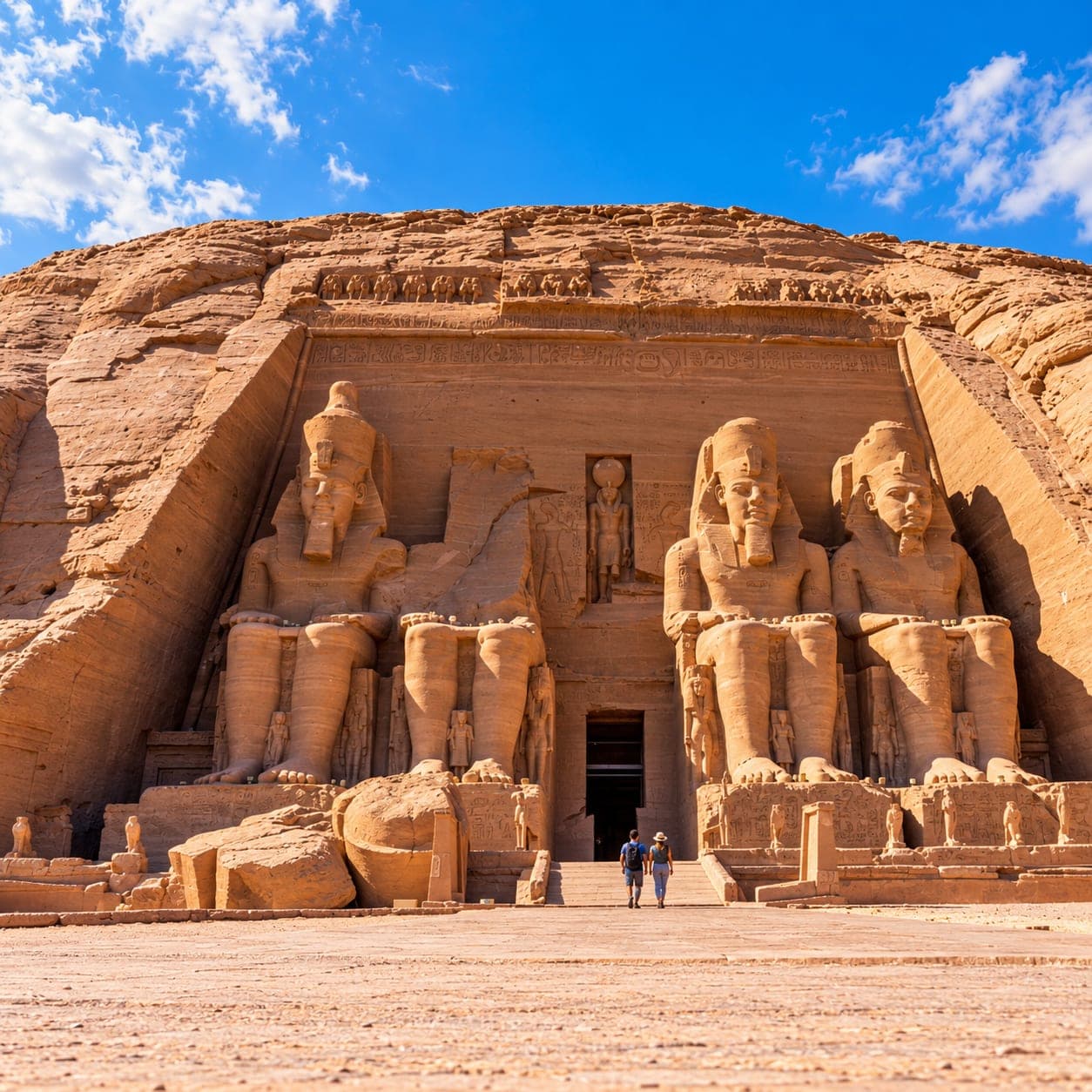
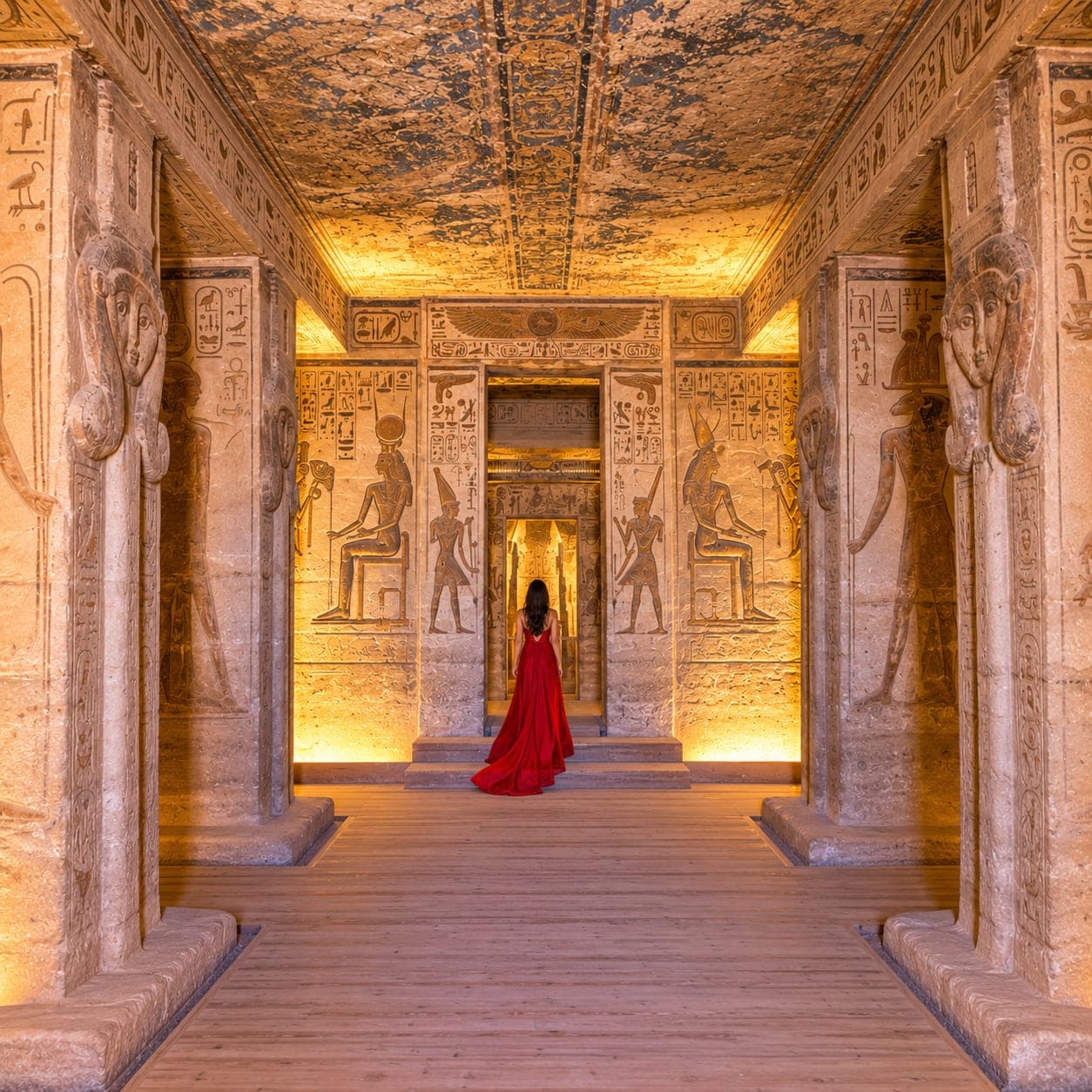
The smaller Abu Simbel temple, dedicated by Ramesses II to his queen Nefertari and the goddess Hathor.


Photo credits: Diego Delso · CC BY-SA 4.0
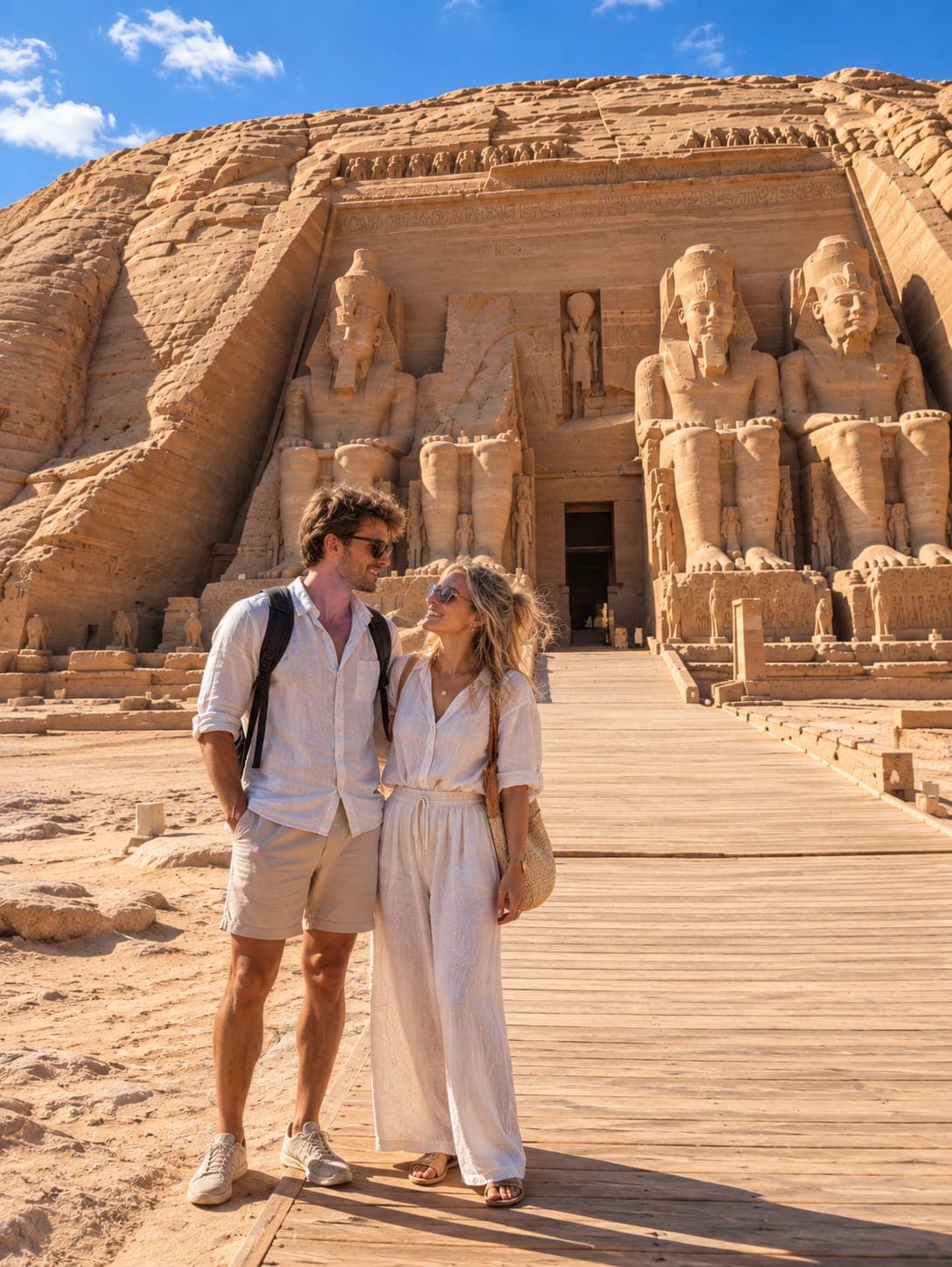
The smaller of the two Abu Simbel temples, cut into the same cliff a short walk north of the Great Temple, and dedicated jointly to the goddess Hathor and to Nefertari, Ramesses II's principal wife.
Its facade carries six standing colossi about ten metres high — four of Ramesses, two of Nefertari — and the detail that matters is the height. In Egyptian royal art a queen is normally carved knee-high to her husband. Here she is his equal in scale, which is close to unique.
Inside, six pillars carry the head of Hathor with her distinctive cow ears, and the wall scenes show Nefertari taking an active part in the rituals rather than standing behind the king — offering to the gods, and being crowned by Hathor and Isis.
The dedication above the entrance is unusually personal for a royal monument. The temple, it says, was made for the Great Royal Wife Nefertari, "for whose sake the very sun does shine". Whatever else it was — and it was certainly diplomacy in stone — it is one of very few ancient buildings raised by a king explicitly in honour of his wife.
Nefertari was not a decorative consort. After the treaty that ended the long war with the Hittites — the earliest surviving peace treaty between two great powers — she exchanged letters directly with the Hittite queen Puduhepa, sending gifts and diplomatic greetings in her own name. Copies of that correspondence survive in the Hittite archives at Hattusa.
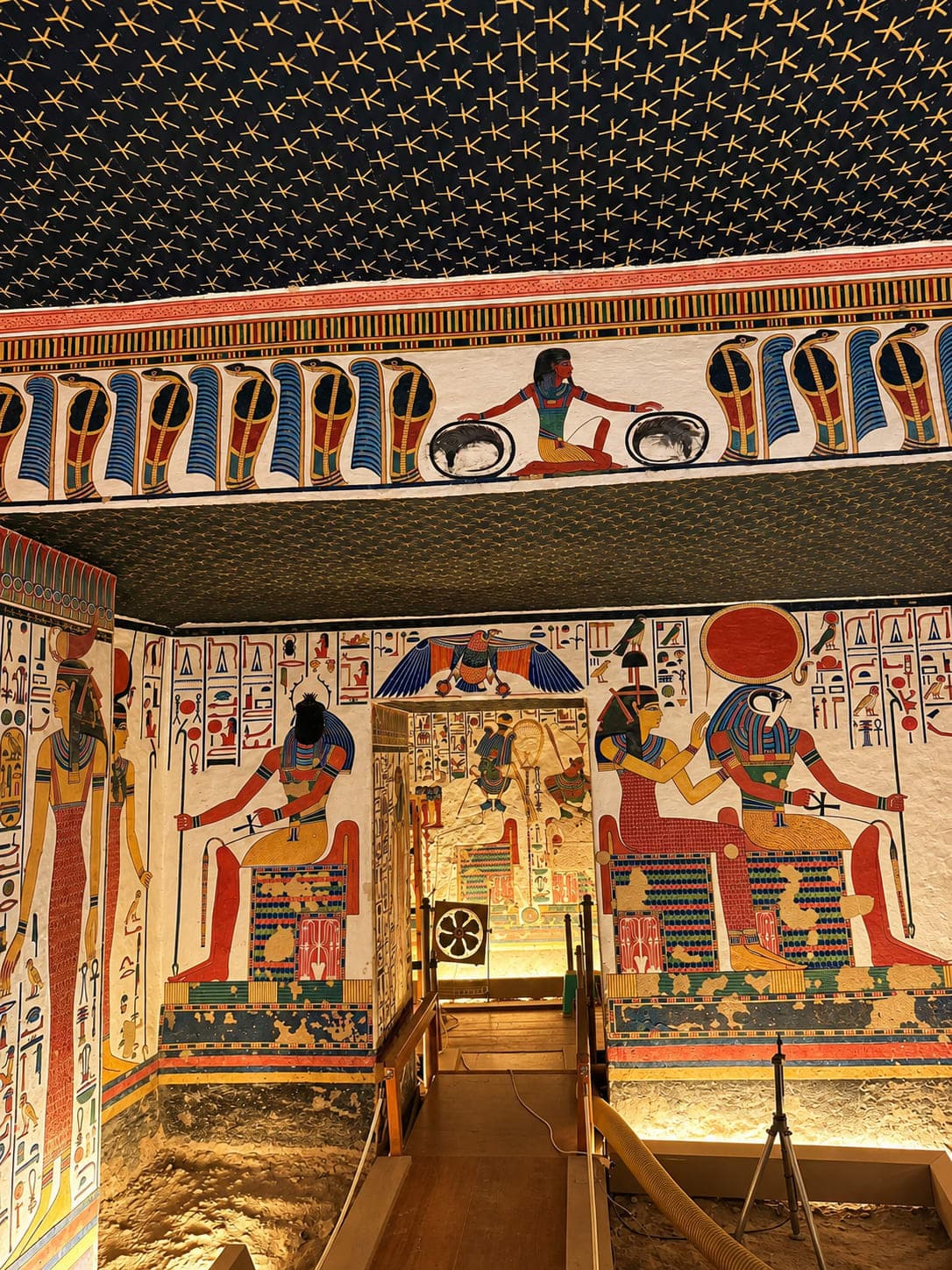
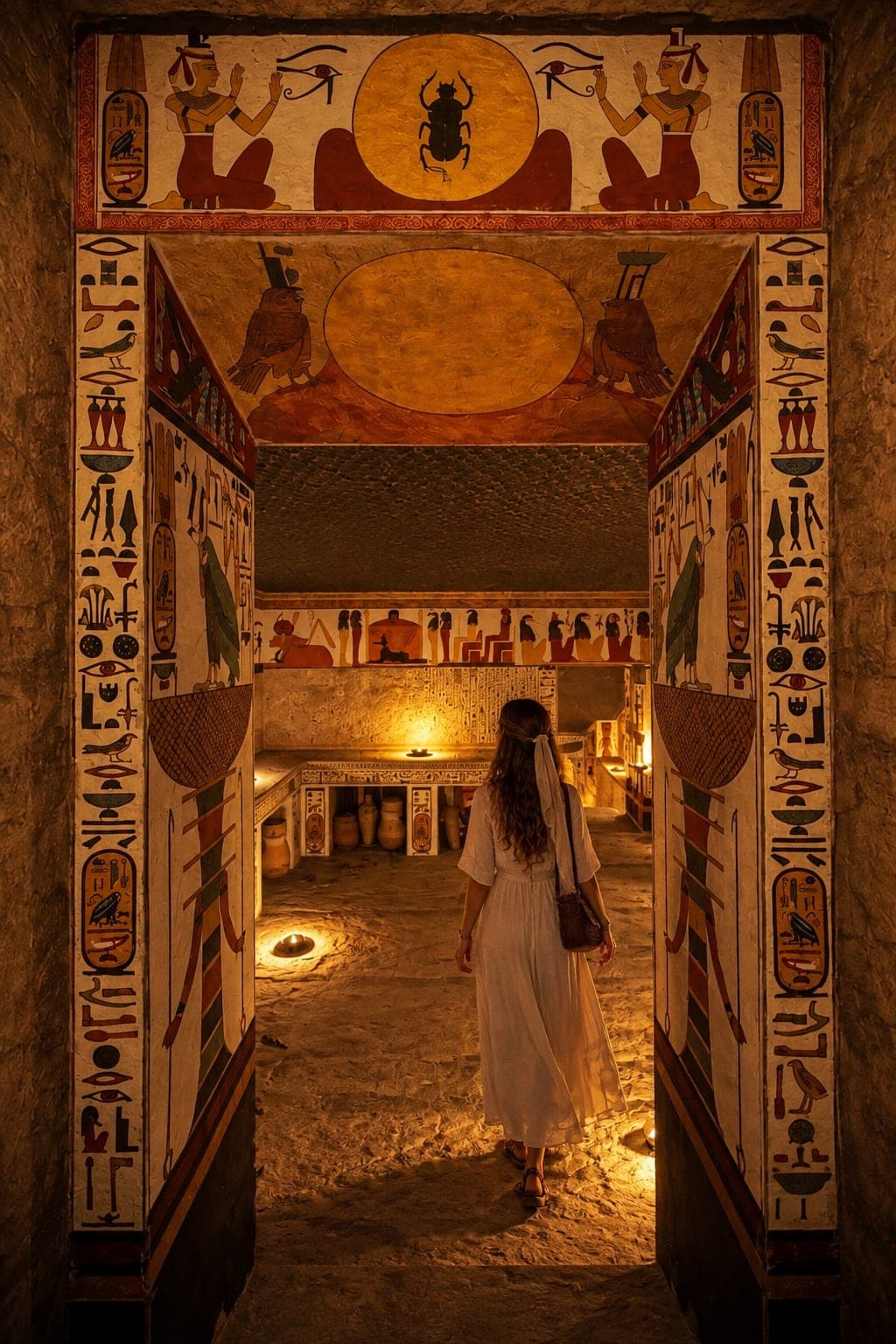
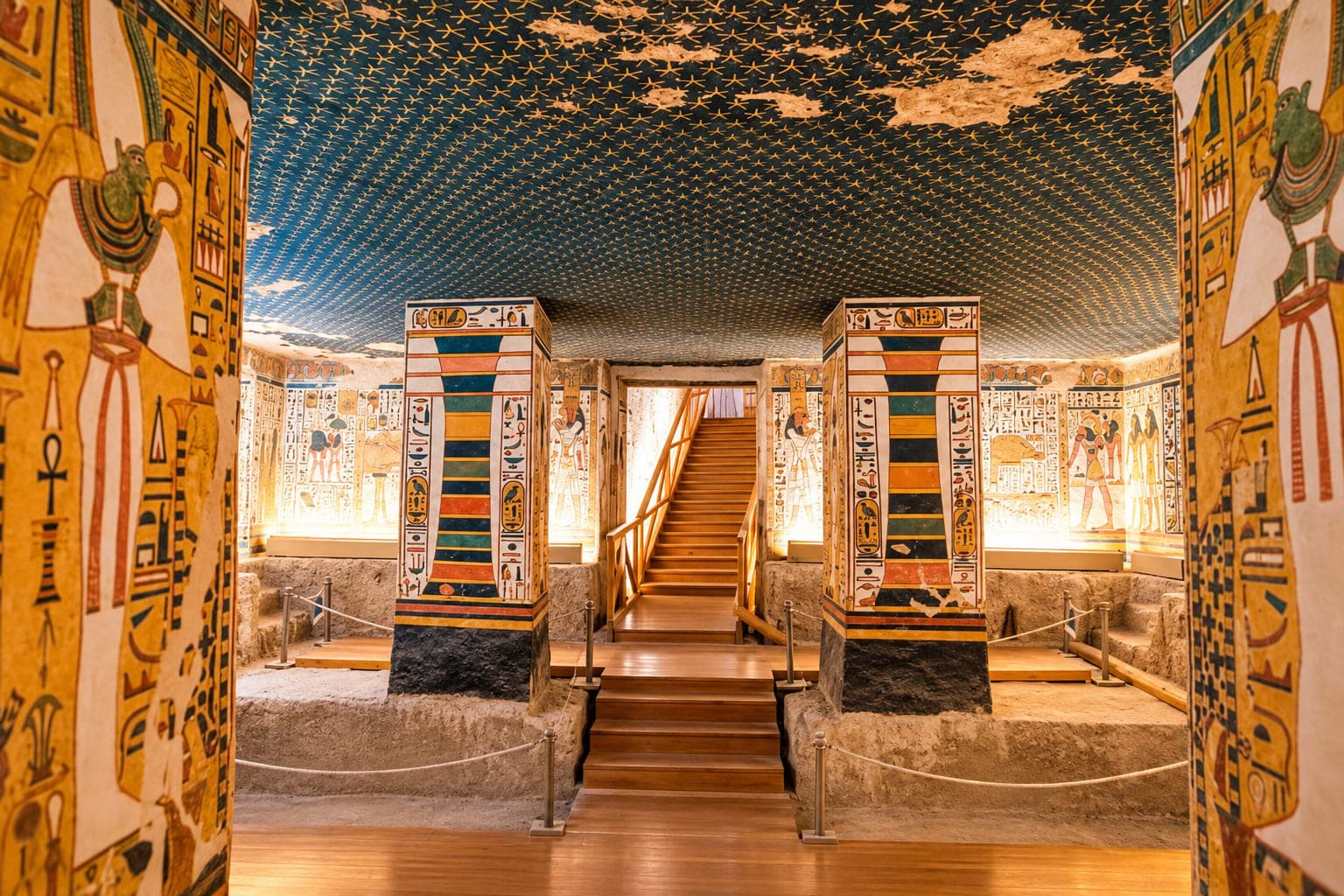
Her burial, QV66 in the Valley of the Queens, was found by the Italian archaeologist Ernesto Schiaparelli in 1904. Robbers had emptied it in antiquity, leaving fragments of a pink granite sarcophagus and a pair of sandals — but the paintings were almost untouched, and they are generally considered the most beautiful in Egypt: Nefertari playing senet, led by the hand through the underworld, against ceilings of gold stars on deep blue.
The tomb was closed for decades while conservators stabilised the salt-damaged plaster, and access is now tightly limited to protect it.
Pick how many days you have, add attractions per day, and see average activity and travel times between cities.
Places that carry the same story forward, or sit close enough to take in the same day.
1264 BC · New Kingdom
0 km away
1250 BC · New Kingdom
390 km away
1180 BC · New Kingdom
389 km away
3000 BC · Early Dynastic
233 km away

1975 · Modern Egypt
388 km away
2000 BC · Middle Kingdom
390 km away
Book a ready-made tour or use the designer above to build your own plan.







Hand-picked tours our guests love — top quality at reasonable prices, curated by Helios for your trip.