


Egypt in 16 Days · Red Sea
From $3,180 / person16 daysIncludes 2 h at this sight
Luxor · West Bank
Typical visit: 2 h
Period: 1539 BC · New Kingdom
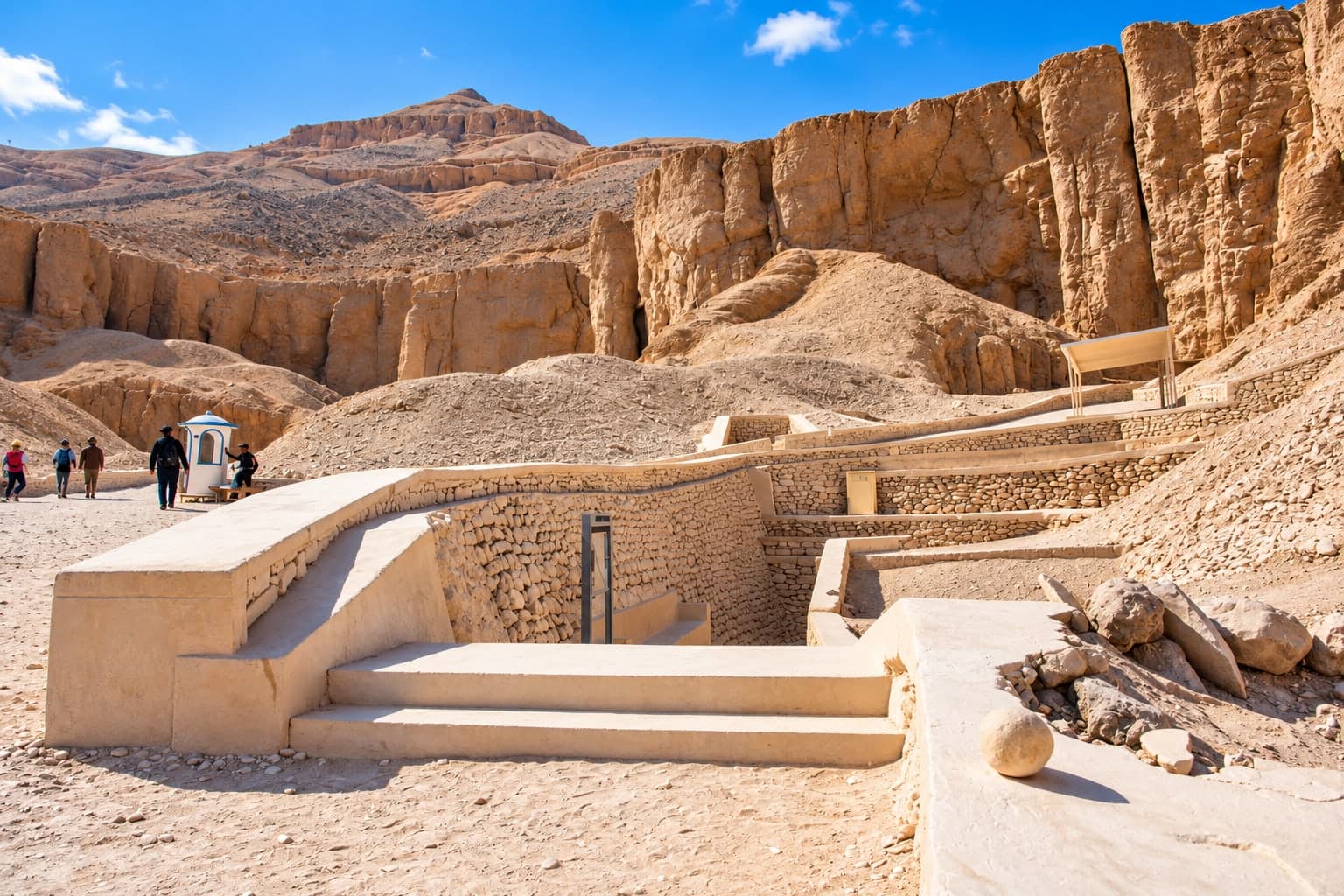
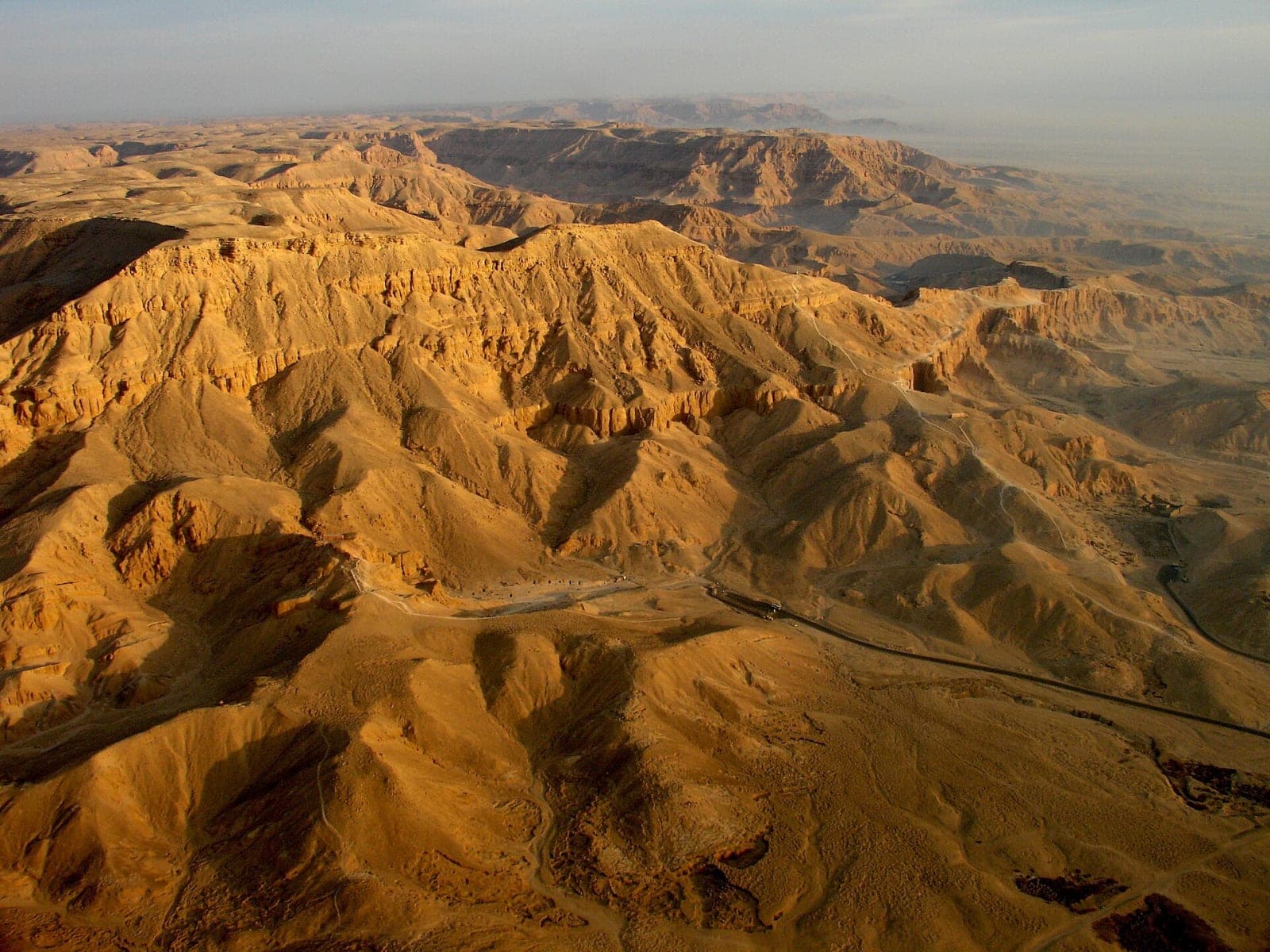
The hidden desert valley where New Kingdom pharaohs — including Tutankhamun — were buried in decorated rock-cut tombs.

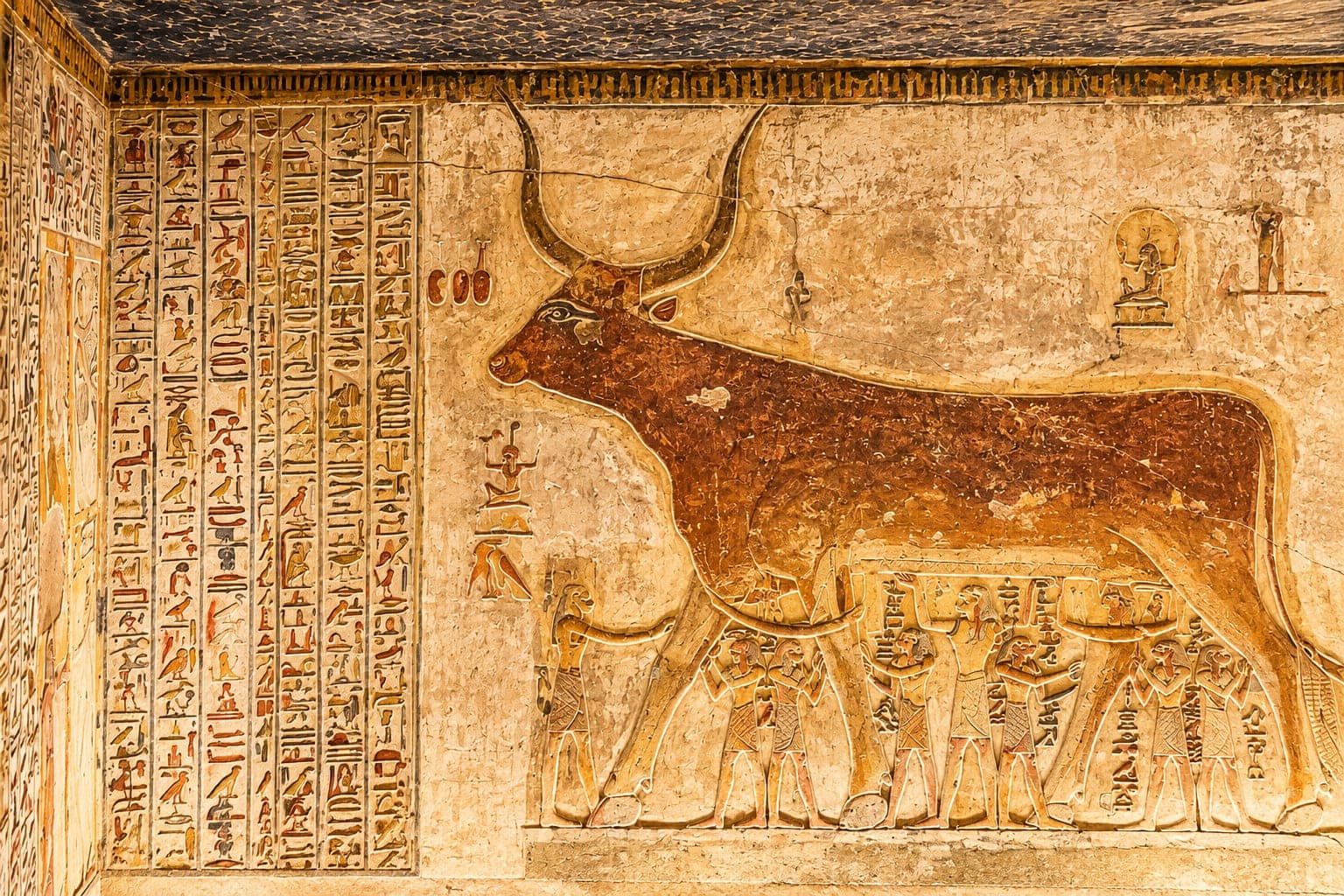
Photo credits: Diego Delso · CC BY-SA 4.0; Romagy · CC BY-SA 4.0
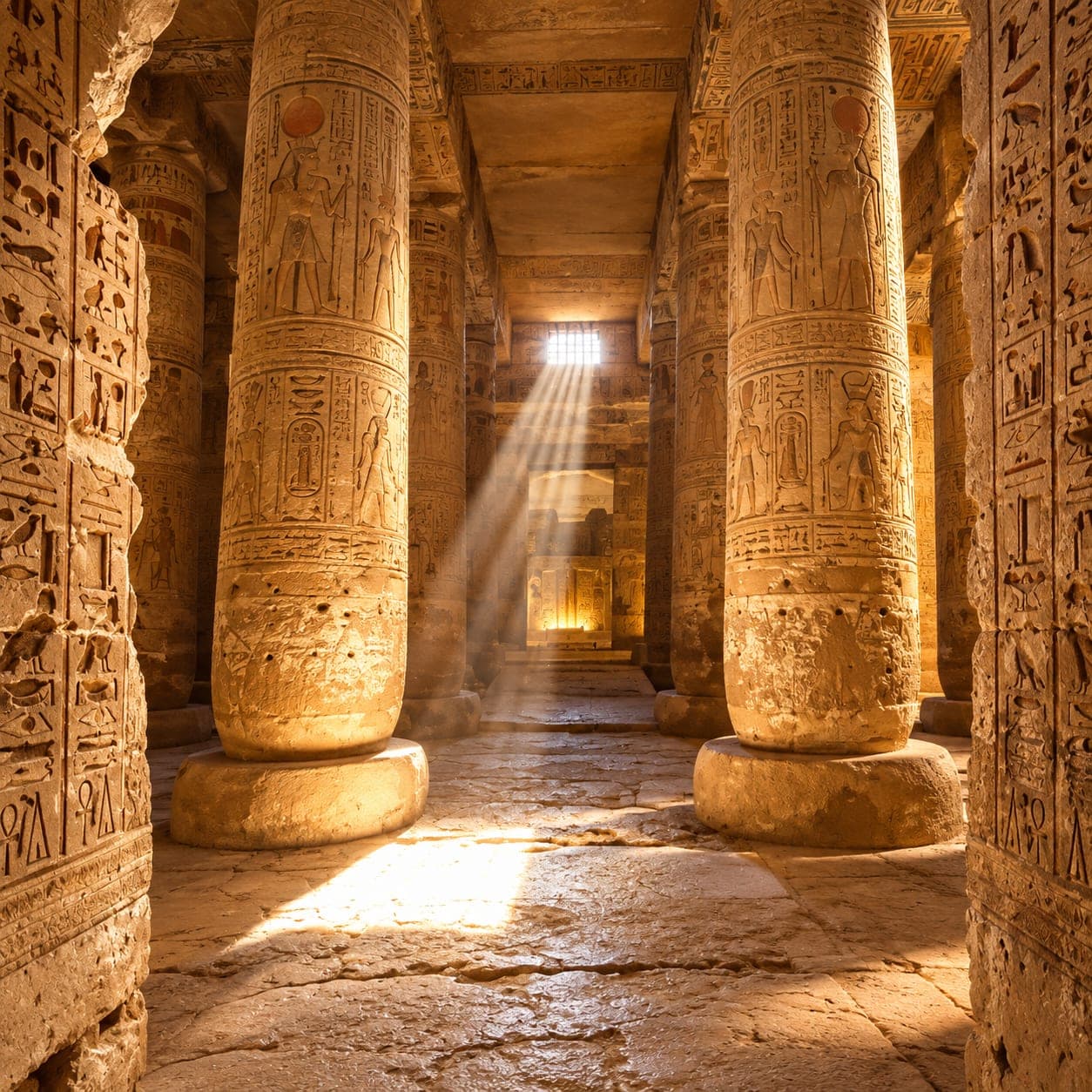
A dry limestone valley behind the Theban cliffs, chosen because a natural pyramid-shaped peak — el-Qurn — rises above it, and because it was hidden. For roughly five hundred years the pharaohs of the New Kingdom cut their tombs into its walls rather than building monuments that advertised where their gold lay.
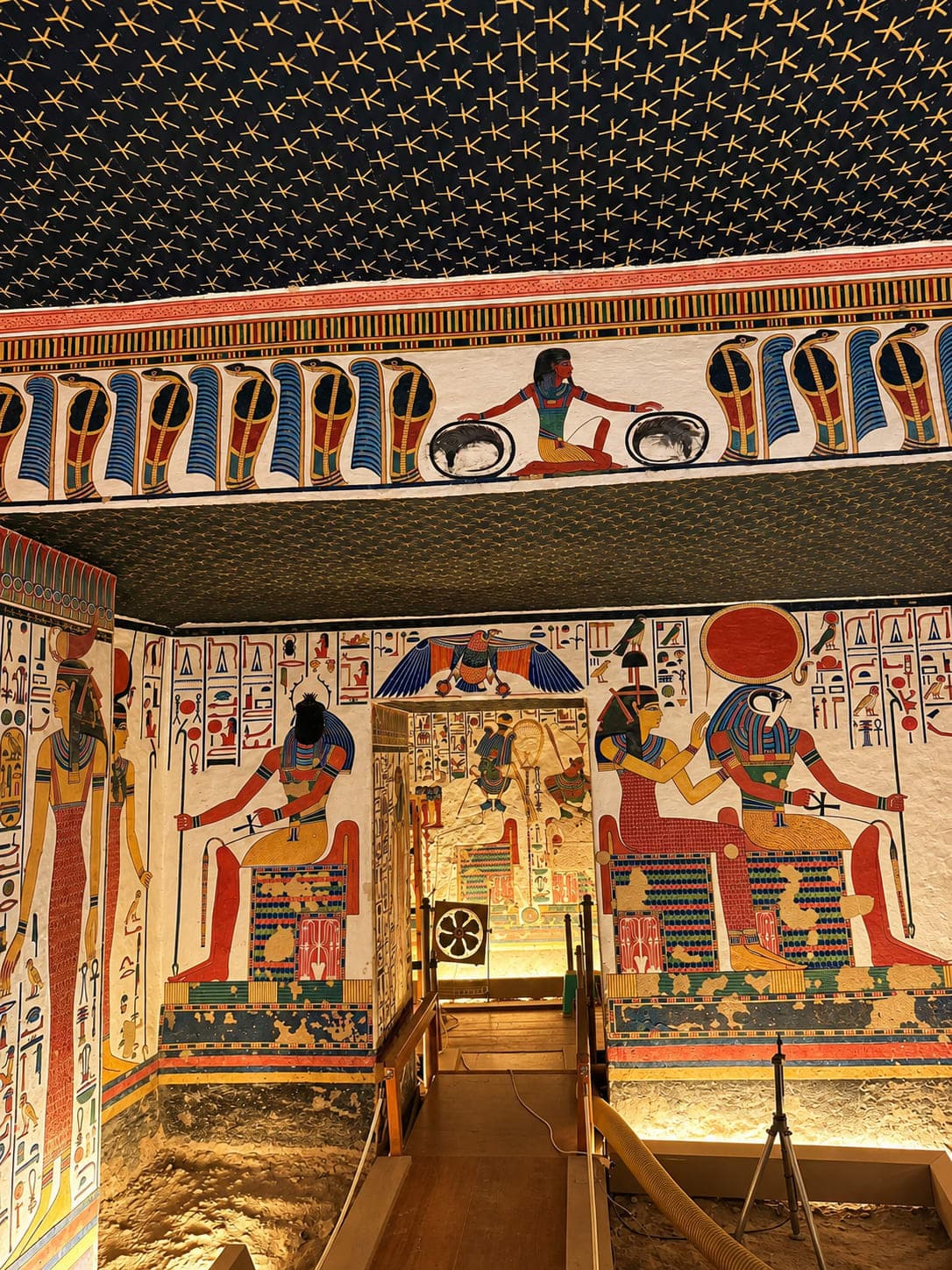
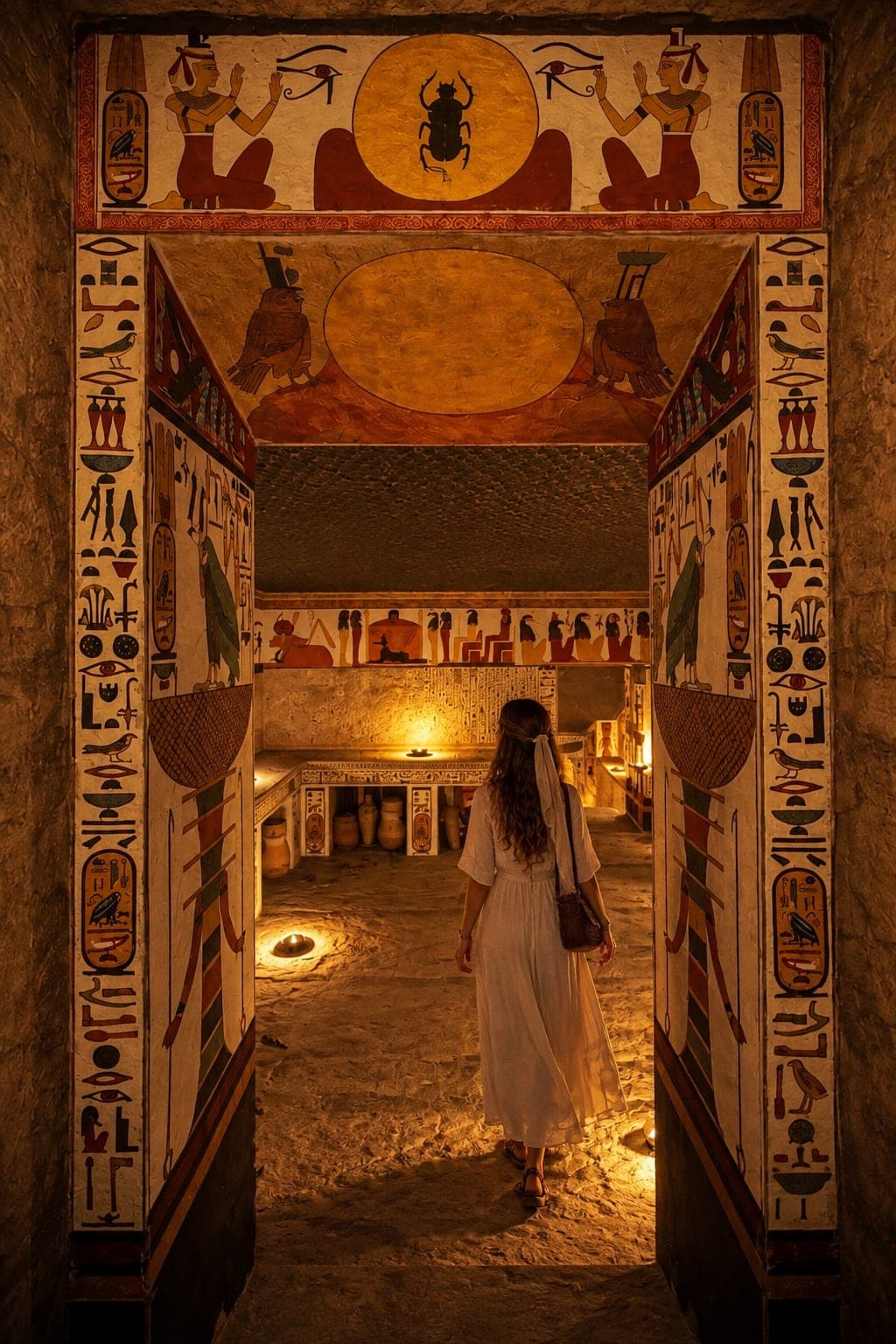
More than sixty tombs and chambers have been found. A standard ticket admits you to three; the rest rotate open and closed so the painted plaster gets time to recover from visitors' breath.
Go early. The valley is a stone bowl that concentrates heat, and there is almost no shade between the tomb entrances.
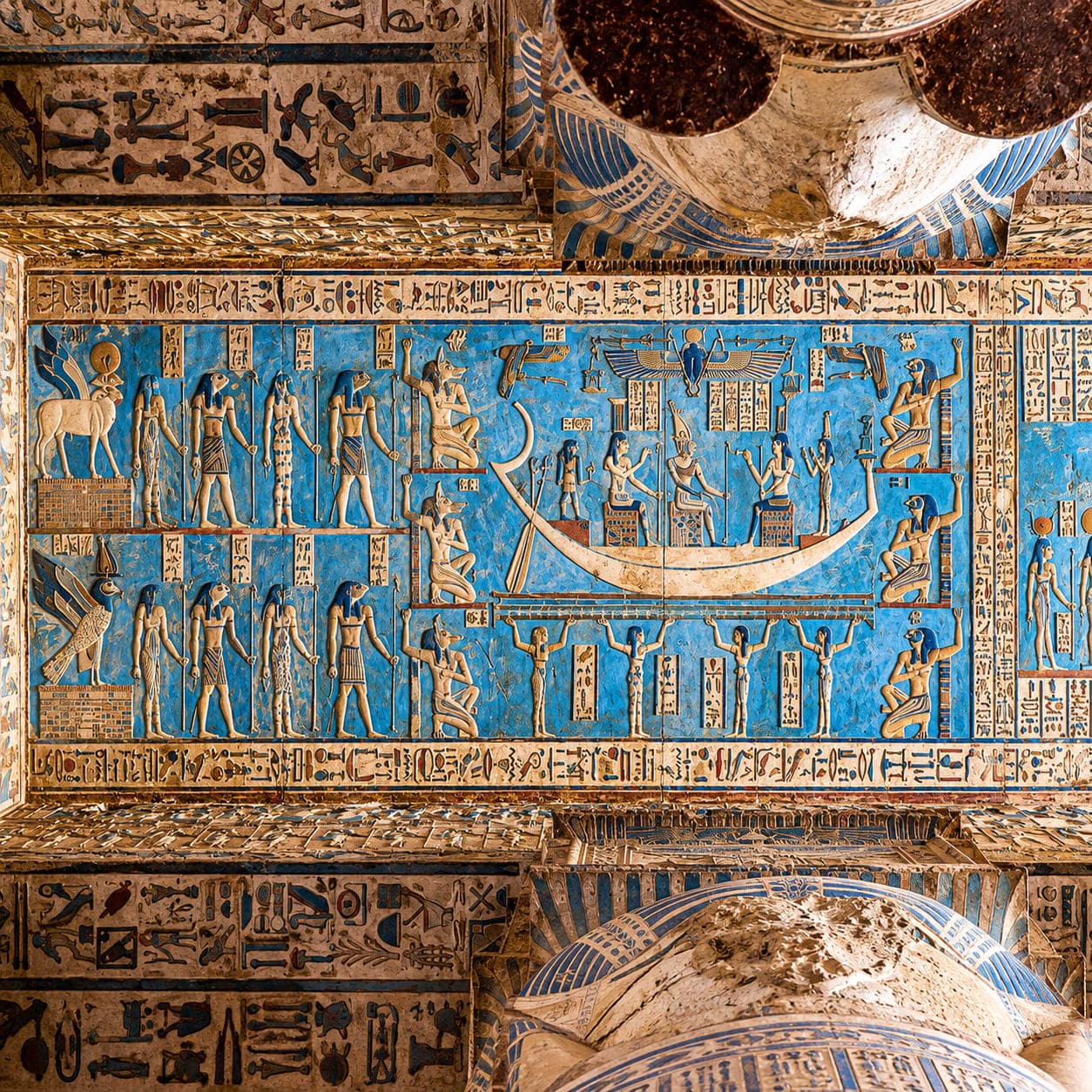
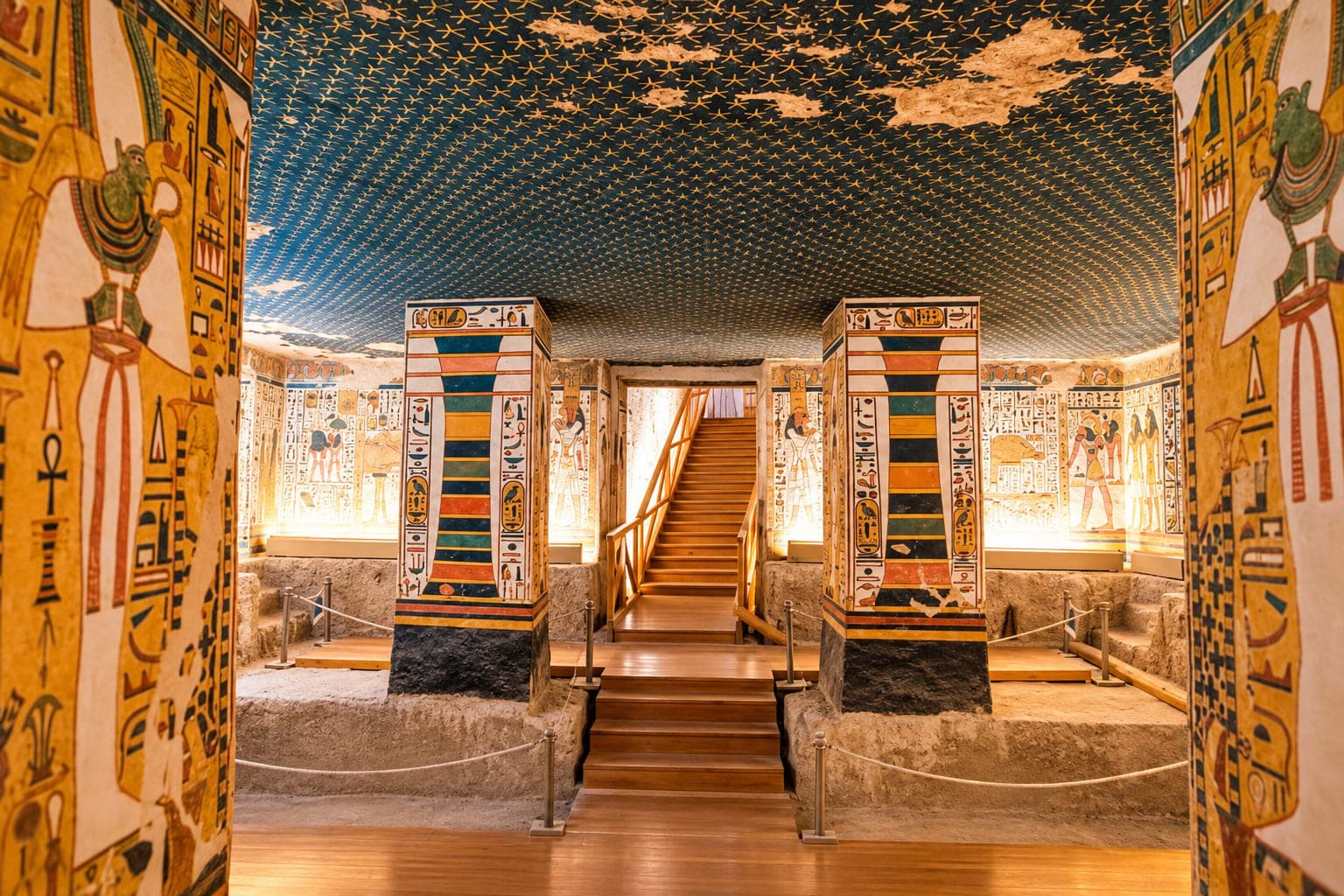
The longest and finest tomb in the valley, its ceiling painted with a full astronomical chart. It takes a separate ticket and is worth it — this is the standard every other tomb here is measured against.

A long straight corridor decorated end to end with the Book of Gates and the Book of Caverns, and a ceiling carrying the sky goddess Nut stretched the full length of the chamber, swallowing the sun at dusk and giving birth to it at dawn. The colour is essentially intact.

Small and plain next to the others, and the only tomb in the valley found with its contents still in it. The burial chamber is the only decorated room; the king himself is still here, in a climate-controlled case. Separate ticket, and four people fill the room.
Side chambers painted with harpists, boats, bakers and craftsmen — domestic subjects that appear almost nowhere else in a royal tomb. If the Book of Gates has begun to blur, this is the one that will hold your attention.
The tombs were dug by a village of specialists at Deir el-Medina, just over the ridge — draughtsmen, plasterers and stonecutters who worked in eight-day shifts and lived on rations of grain, fish and beer. Their own rubbish heap has made them the best-documented workforce of the ancient world: we have their pay disputes, their sick notes, their laundry lists, and the record of the first recorded labour strike in history, when rations arrived late under Ramesses III.
Nearly every tomb here was robbed in antiquity, often within a generation of the burial. Howard Carter spent six seasons finding nothing before, in November 1922, a water-boy's stumble uncovered a step cut into the valley floor. Behind it lay Tutankhamun — a minor king, dead at about nineteen, in the smallest royal tomb in the valley, and the only one to reach the modern world with its contents essentially intact.
In February 2025 Egypt announced the tomb of Thutmose II, husband and half-brother of Hatshepsut, found in Wadi Gabbanat el-Qurud about 2.4 kilometres west of the valley proper. It is the first royal tomb identified since Carter's — and it was empty, flooded soon after the burial, its contents moved out in antiquity.
Pick how many days you have, add attractions per day, and see average activity and travel times between cities.
Places that carry the same story forward, or sit close enough to take in the same day.
1500 BC · New Kingdom
2 km away
1470 BC · New Kingdom
1 km away

1400 BC · New Kingdom
6 km away

1350 BC · New Kingdom
2 km away
1250 BC · New Kingdom
2 km away
1180 BC · New Kingdom
2 km away
Book a ready-made tour or use the designer above to build your own plan.














Hand-picked tours our guests love — top quality at reasonable prices, curated by Helios for your trip.