

Egypt in 16 Days · special
From $4,323 / person16 daysIncludes 45 min at this sight
Ruins of Egypt's first capital
Typical visit: 45 min
Period: 3100 BC · Early Dynastic
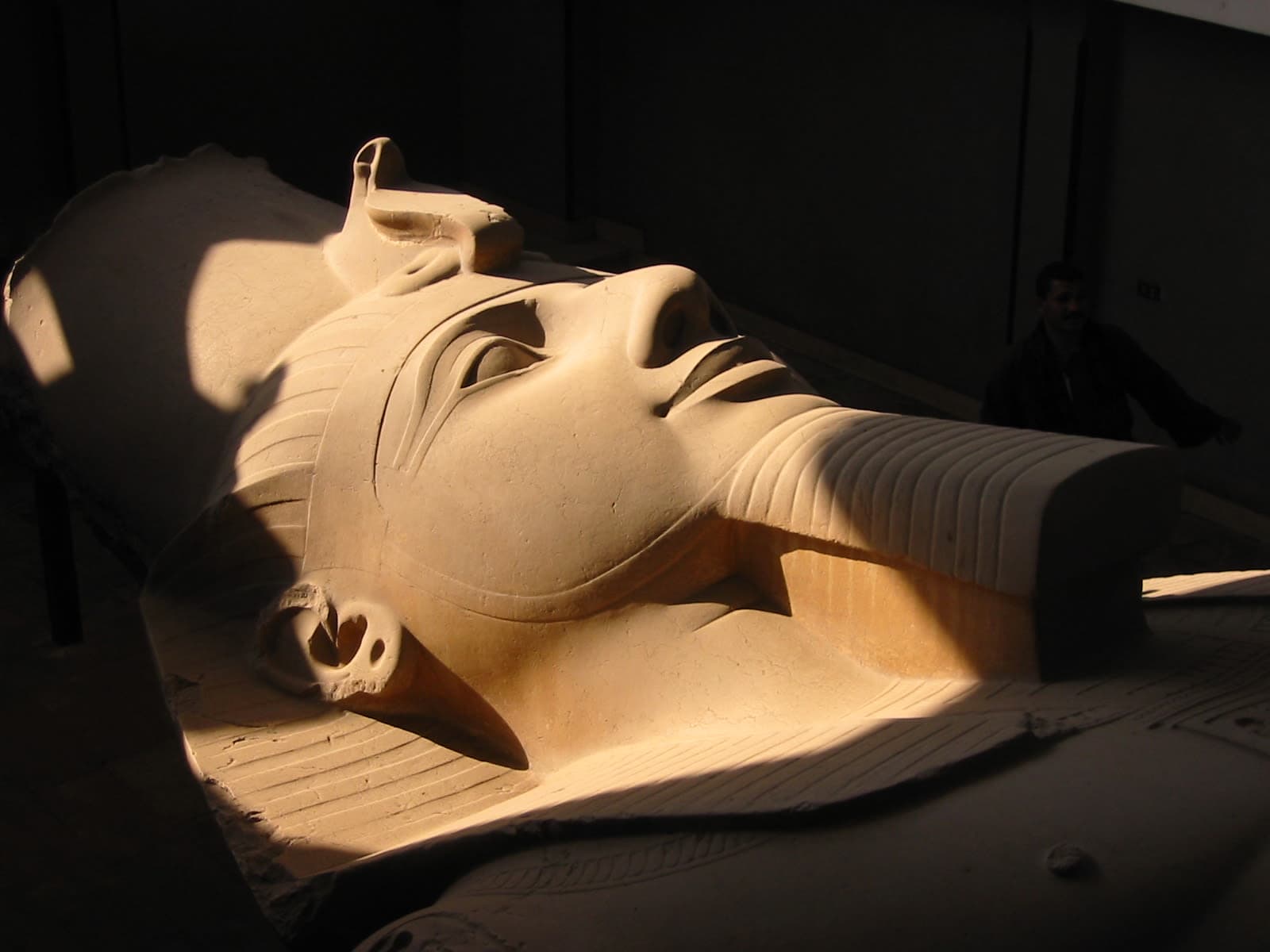
The remains of Egypt's ancient capital, centred on a giant fallen colossus of Ramesses II.
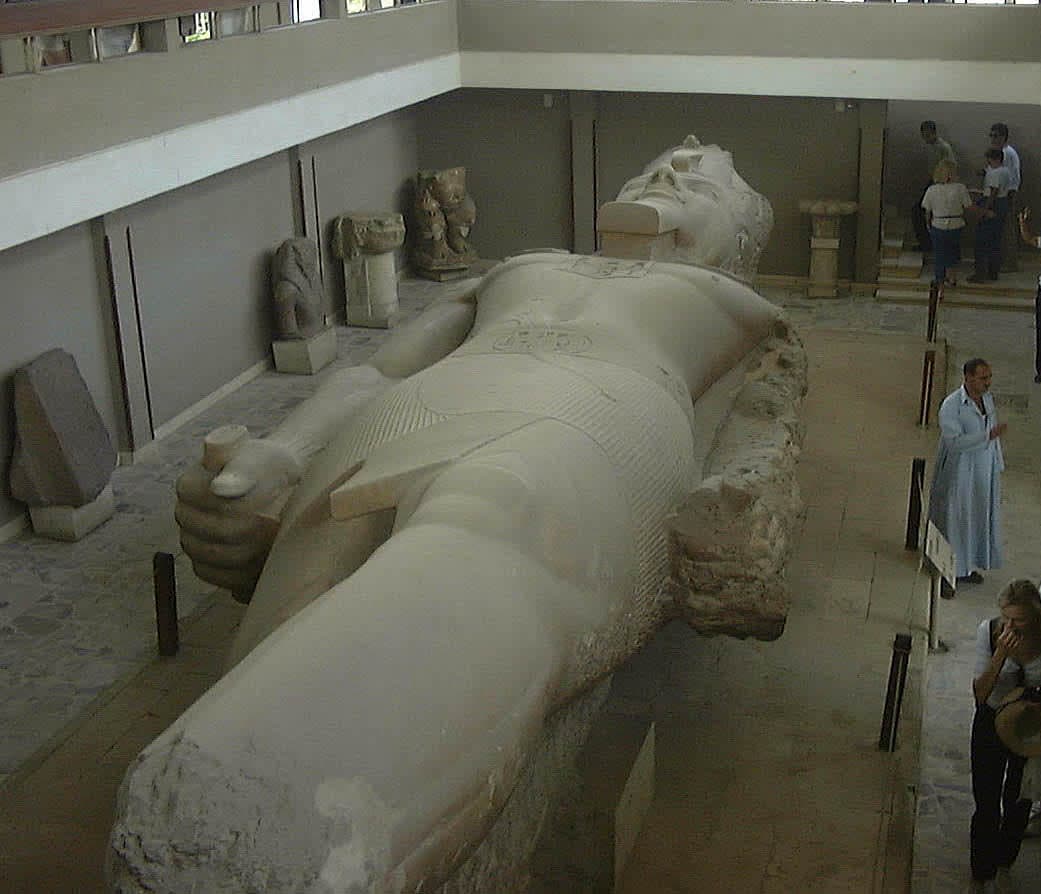
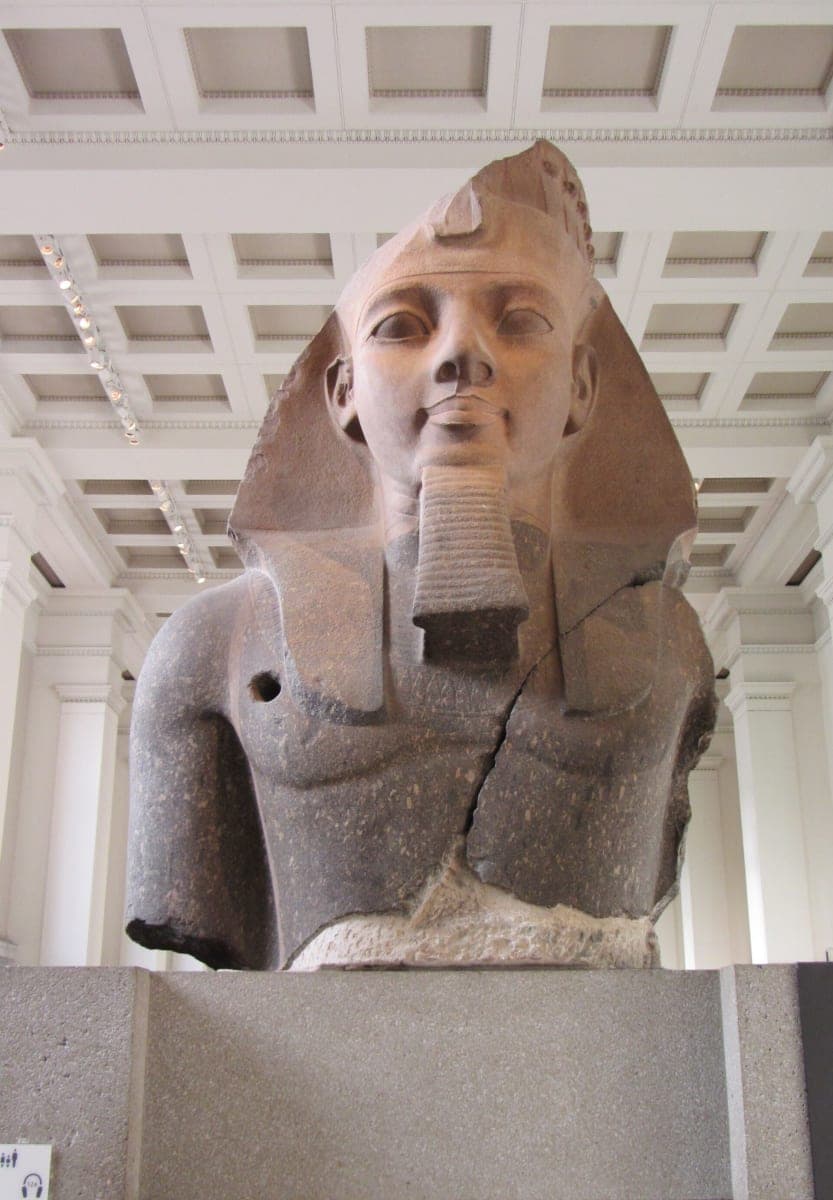
An open-air museum in a palm grove at Mit Rahina, on the site of what was for most of its history the capital of Egypt. The city is essentially gone, so what you visit is a garden of what survived: statues, sphinxes and architectural fragments gathered under trees.
Most visits take under an hour and are combined with Saqqara, ten minutes away. Go with the knowledge of what stood here, or the garden will feel slight.
Memphis was founded around 3100 BCE, by tradition at the moment Upper and Lower Egypt were unified, and it sat at the hinge point where the Nile valley opens into the Delta — the natural place to control both halves of the country. For long stretches of three thousand years it was the largest city in the world.
Its Egyptian name, Hut-ka-Ptah, "the enclosure of the soul of Ptah", was borrowed by the Greeks as Aigyptos. The country's name in most European languages descends from a temple that stood on this spot.
Three things removed it. The Nile shifted its course eastwards, burying the low-lying city under metres of silt. The founding of Fustat and then Cairo, thirty kilometres north, made Memphis a quarry rather than a capital — its limestone went into the medieval city, and its granite into mosques. And what remained was ploughed over as the floodplain was farmed.
Herodotus visited and described a great temple of Ptah. It is under the fields.
Very little of Memphis has been excavated, because most of it lies below the water table and beneath cultivated land. Surveys have mapped a large buried settlement, and the necropolis that served it — Saqqara, Dahshur, Abusir and Giza, thirty kilometres of tombs along the escarpment — is entirely a product of this city. You have almost certainly visited Memphis's cemeteries without visiting Memphis.
Pick how many days you have, add attractions per day, and see average activity and travel times between cities.
Places that carry the same story forward, or sit close enough to take in the same day.
2650 BC · Old Kingdom
4 km away

2600 BC · Old Kingdom
8 km away
2560 BC · Old Kingdom
18 km away
2550 BC · Old Kingdom
18 km away
2500 BC · Old Kingdom
18 km away
1902 · Khedivial
22 km away
Book a ready-made tour or use the designer above to build your own plan.




Hand-picked tours our guests love — top quality at reasonable prices, curated by Helios for your trip.