
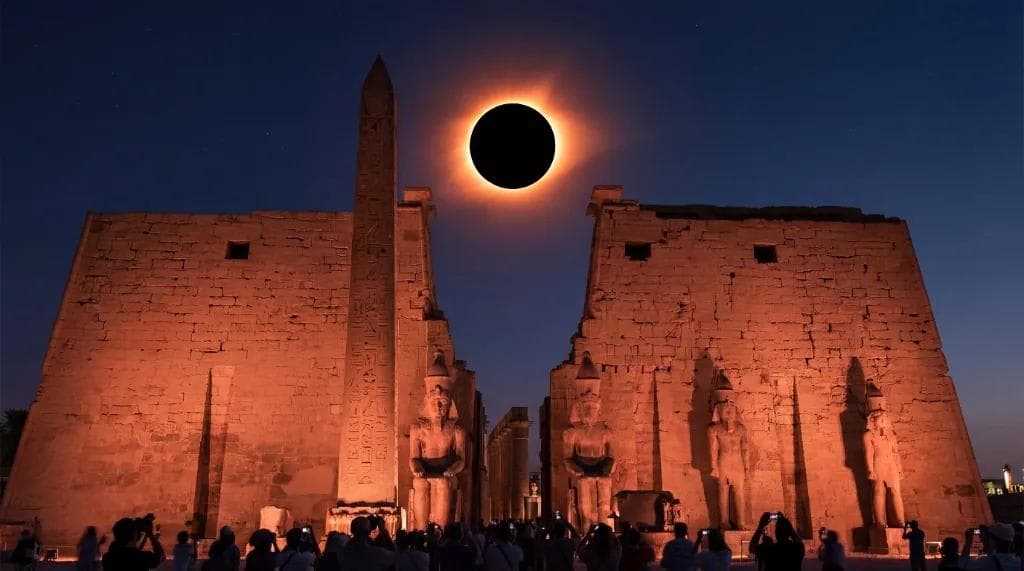
Total Solar Eclipse over Luxor
From $112 / person7 hoursLuxorIncludes 2 h 30 m at this sight
Luxor · Upper Egypt
Typical visit: 2 h 30 m
Period: 2000 BC · Middle Kingdom
The largest religious complex of the ancient world, built and enlarged by pharaohs over more than 1,300 years.
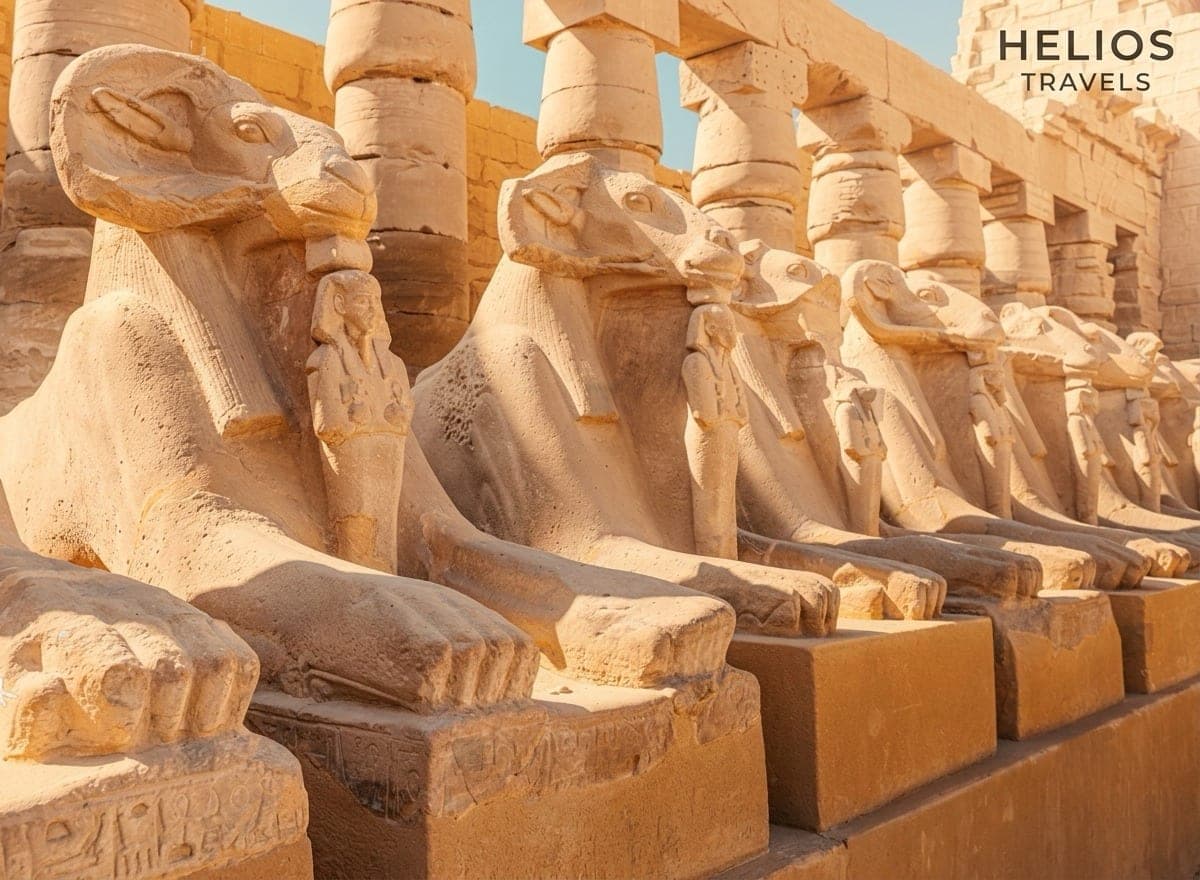


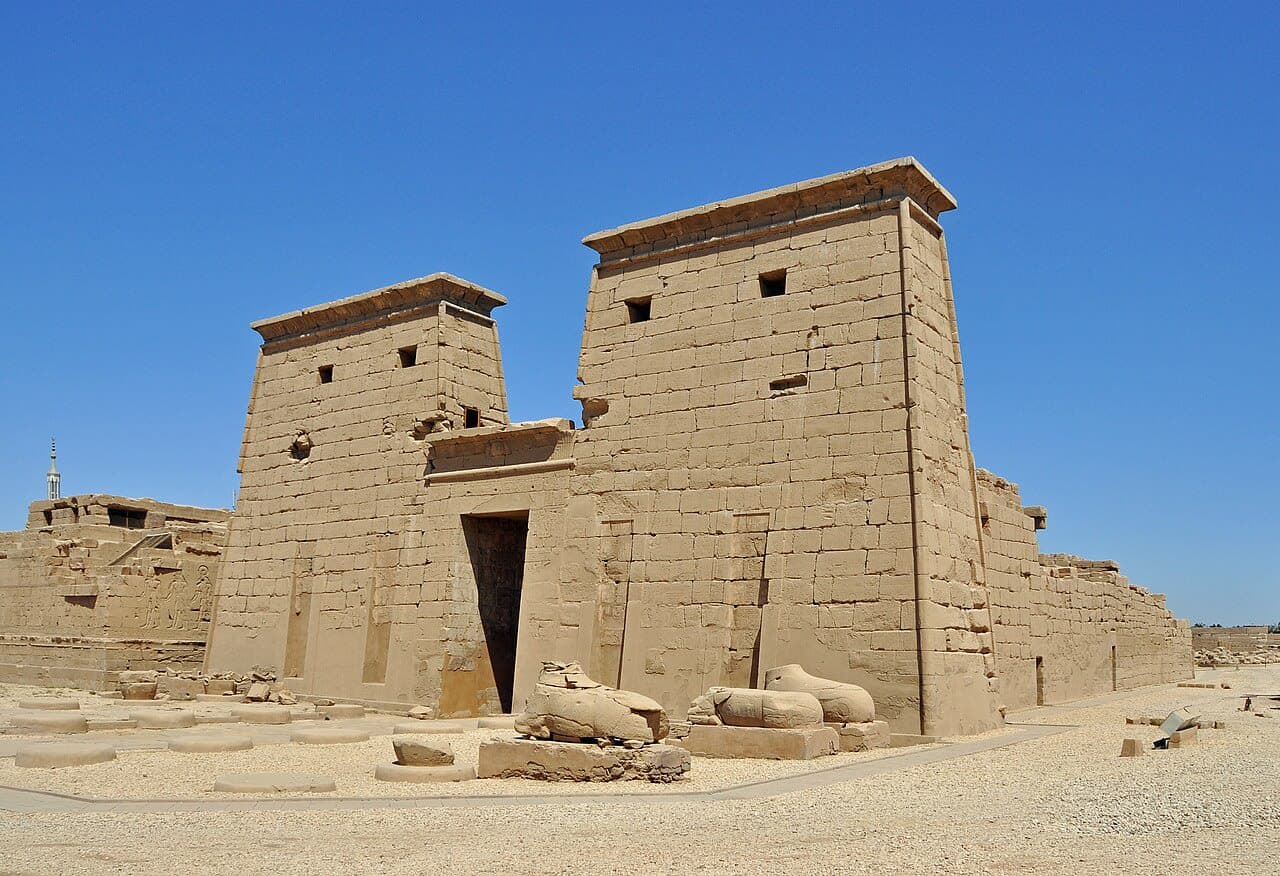
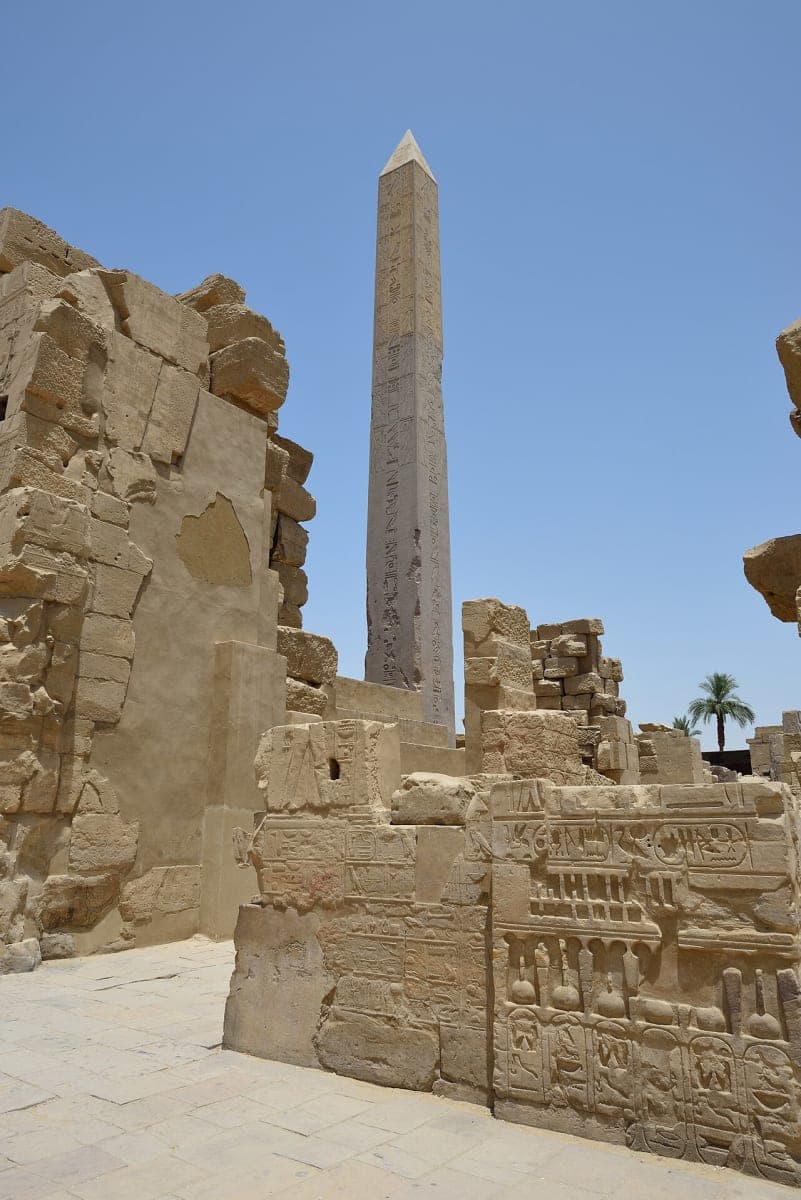
Photo credits: Vyacheslav Argenberg · CC BY 4.0; Jorge Láscar from Melbourne, Australia · CC BY 2.0; Olaf Tausch · CC BY 3.0; Gary Todd from Xinzheng, China · CC0
Karnak is not a temple but a temple city — roughly two square kilometres of precincts on the east bank at Luxor, built, demolished, rebuilt and extended by some thirty pharaohs over more than 1,300 years. Nowhere else in Egypt is so much of so many periods standing in one place.
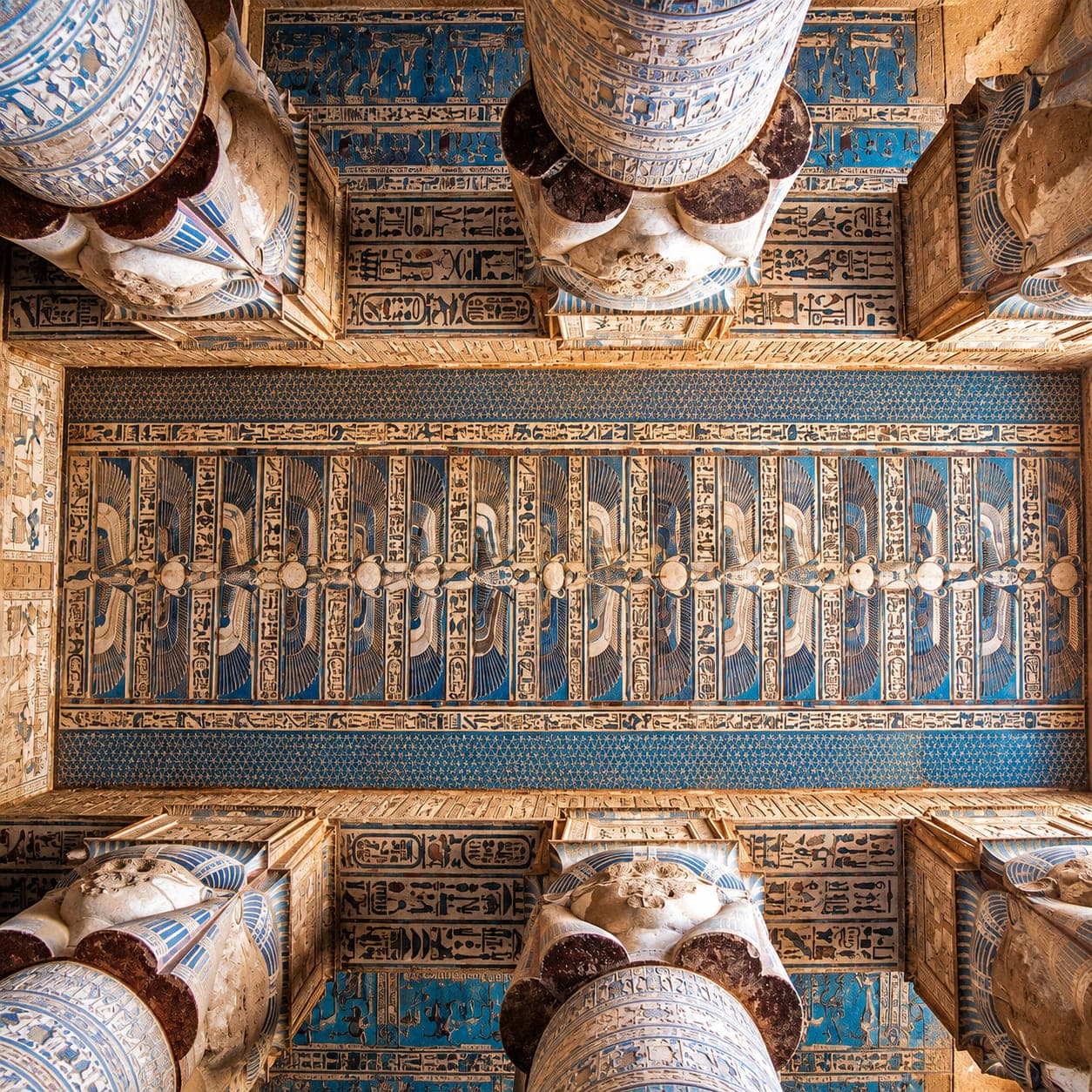
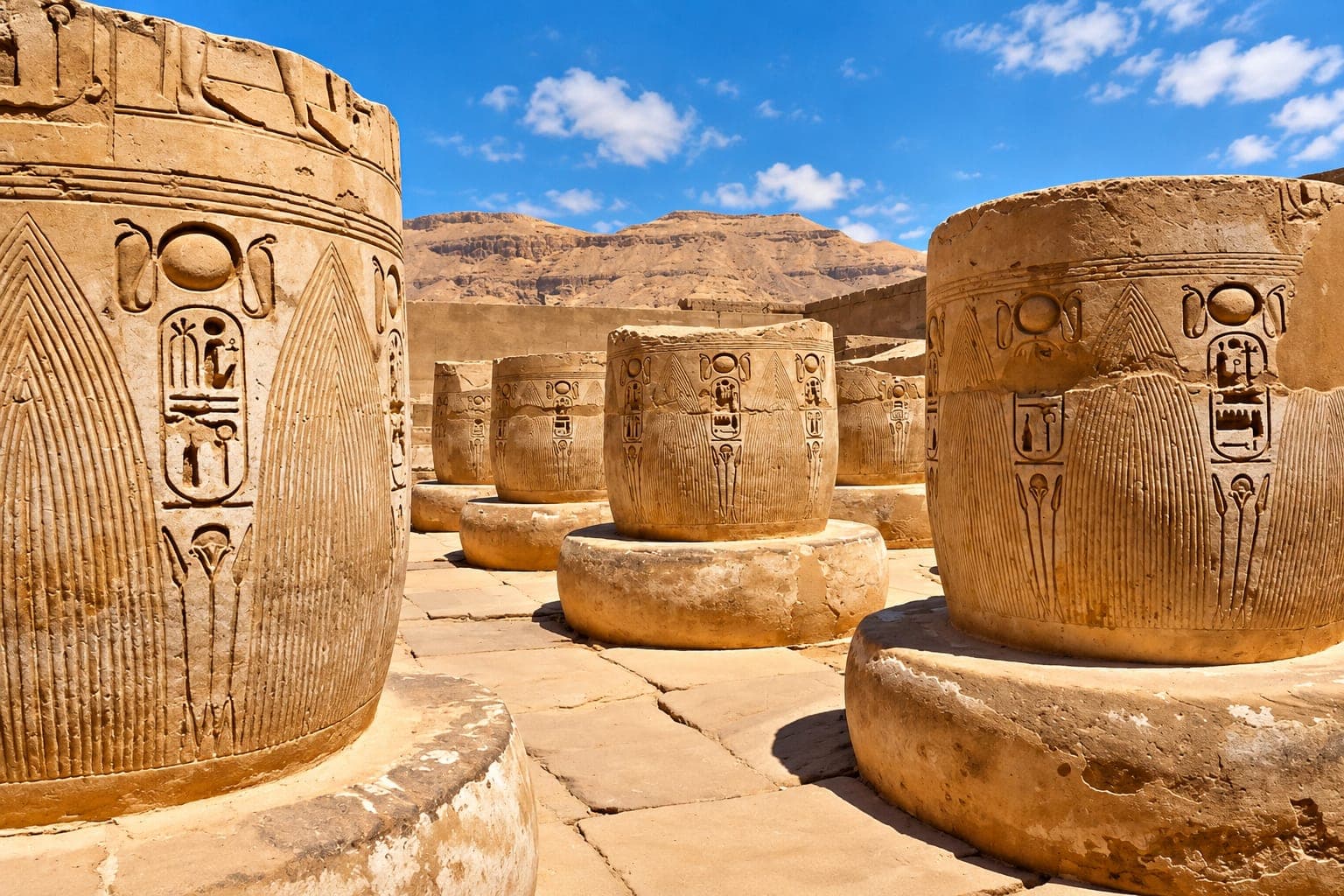
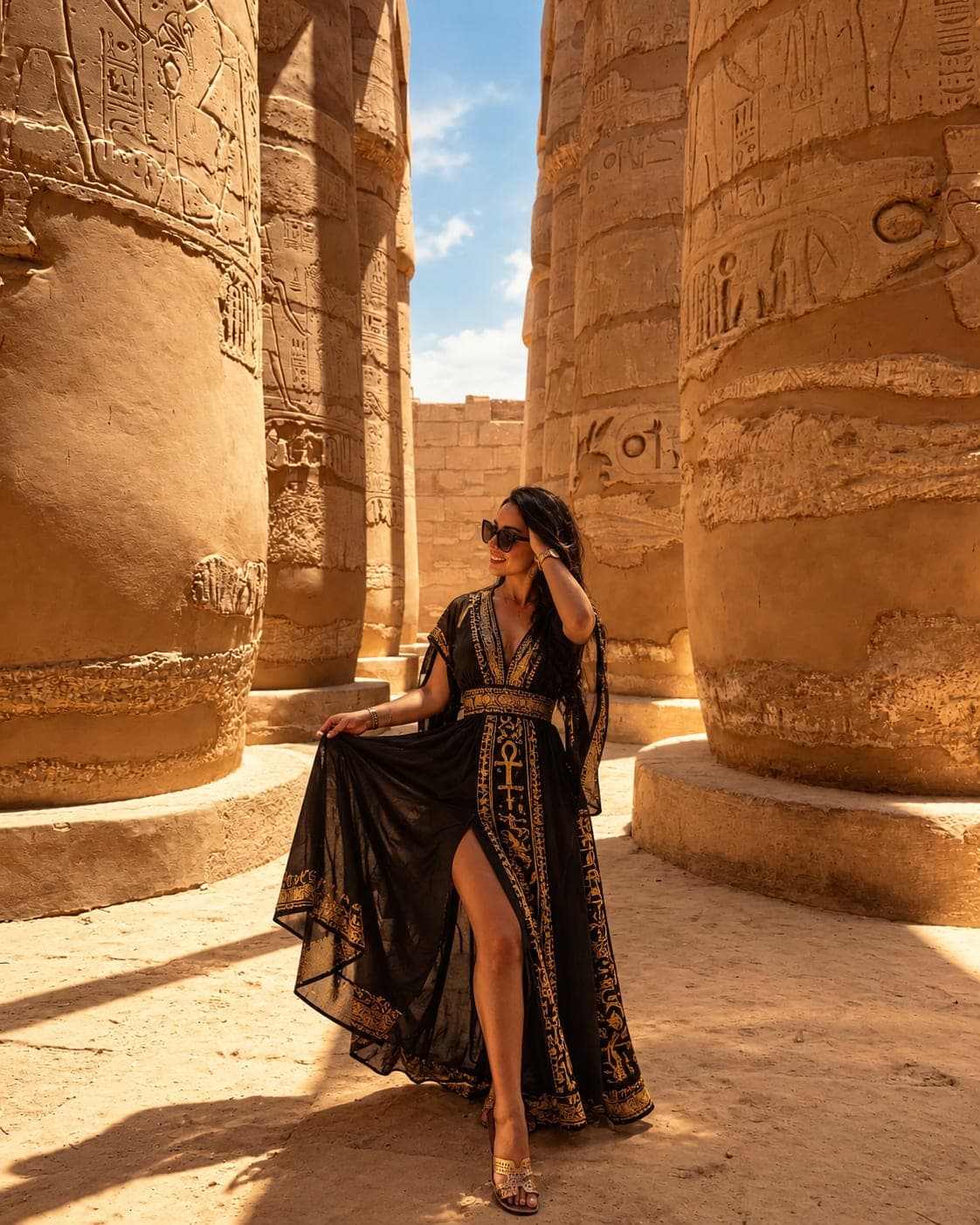
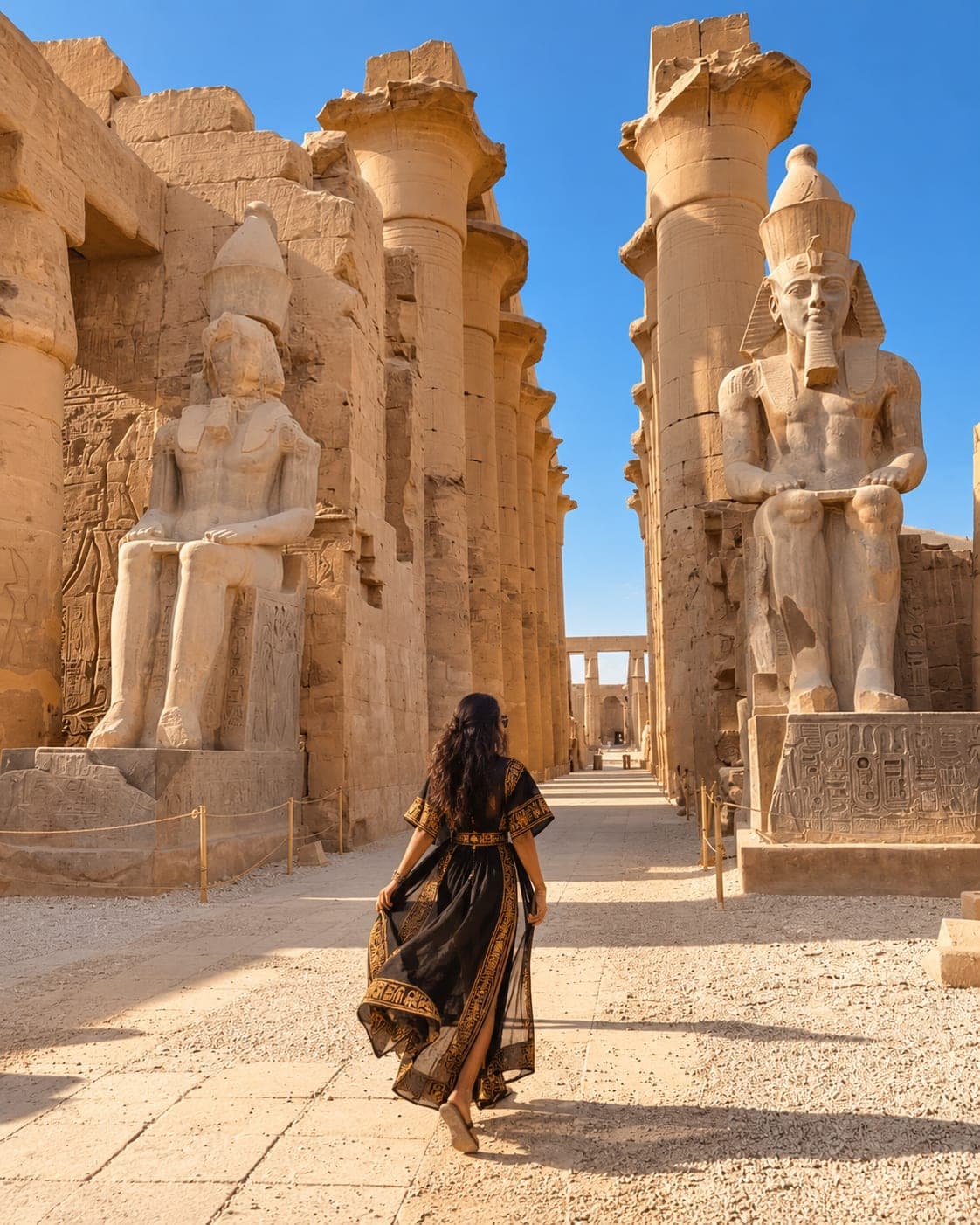
The centrepiece is the Great Hypostyle Hall: 134 sandstone columns filling an area of about 5,000 square metres, the central twelve standing over twenty metres tall with capitals wide enough for dozens of people to stand on. Much of the original paint survives high up, where the roof once shut out the light.

One hundred and thirty-four columns in sixteen rows, over five thousand square metres. The twelve down the central aisle are twenty-one metres tall with open-papyrus capitals wide enough to stand fifty people on. It was roofed: what you are walking through is the inside of a building.

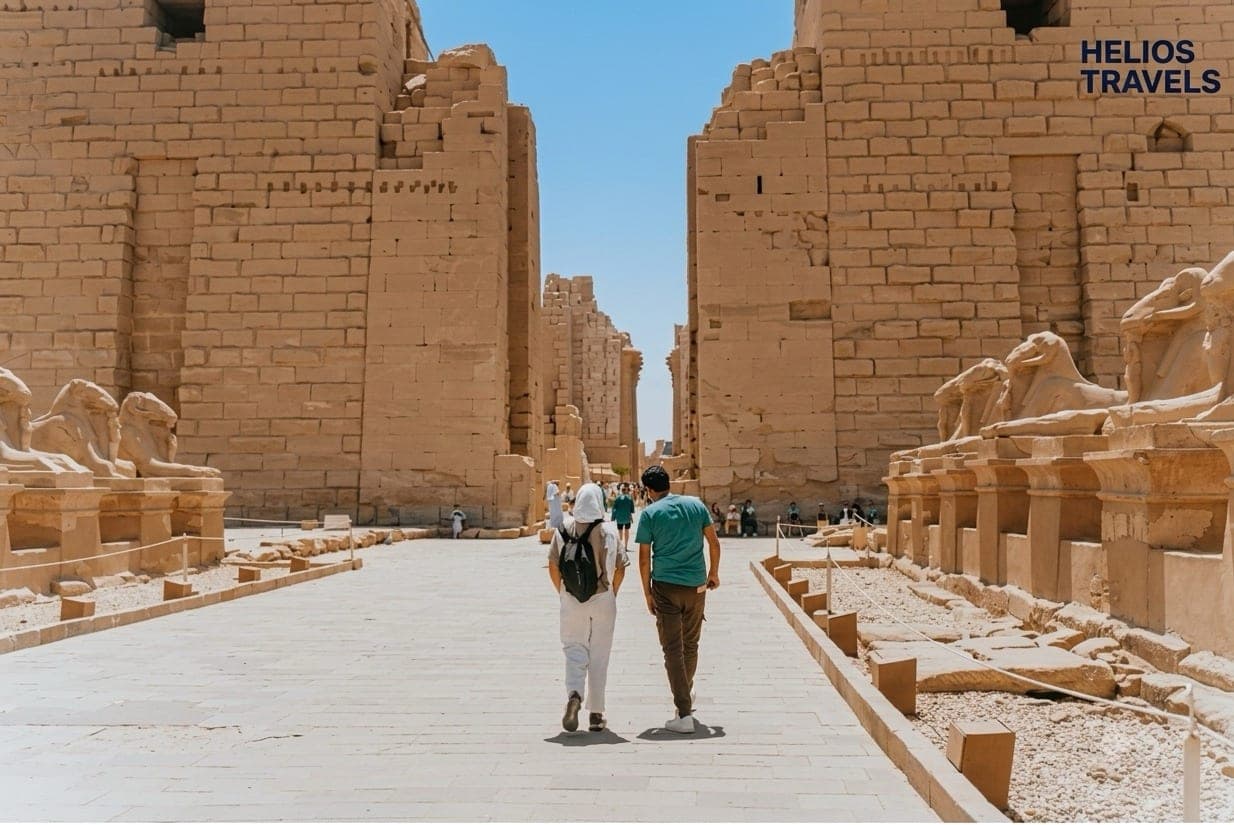
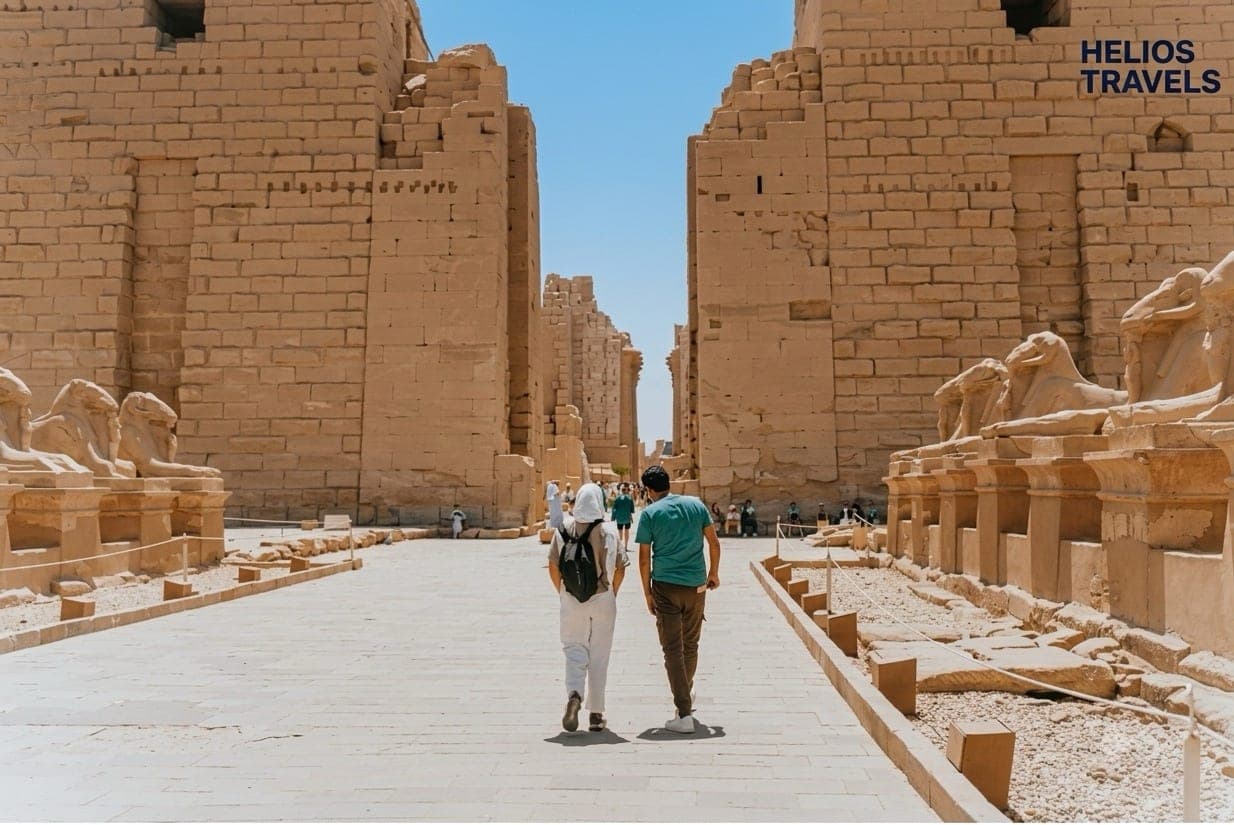
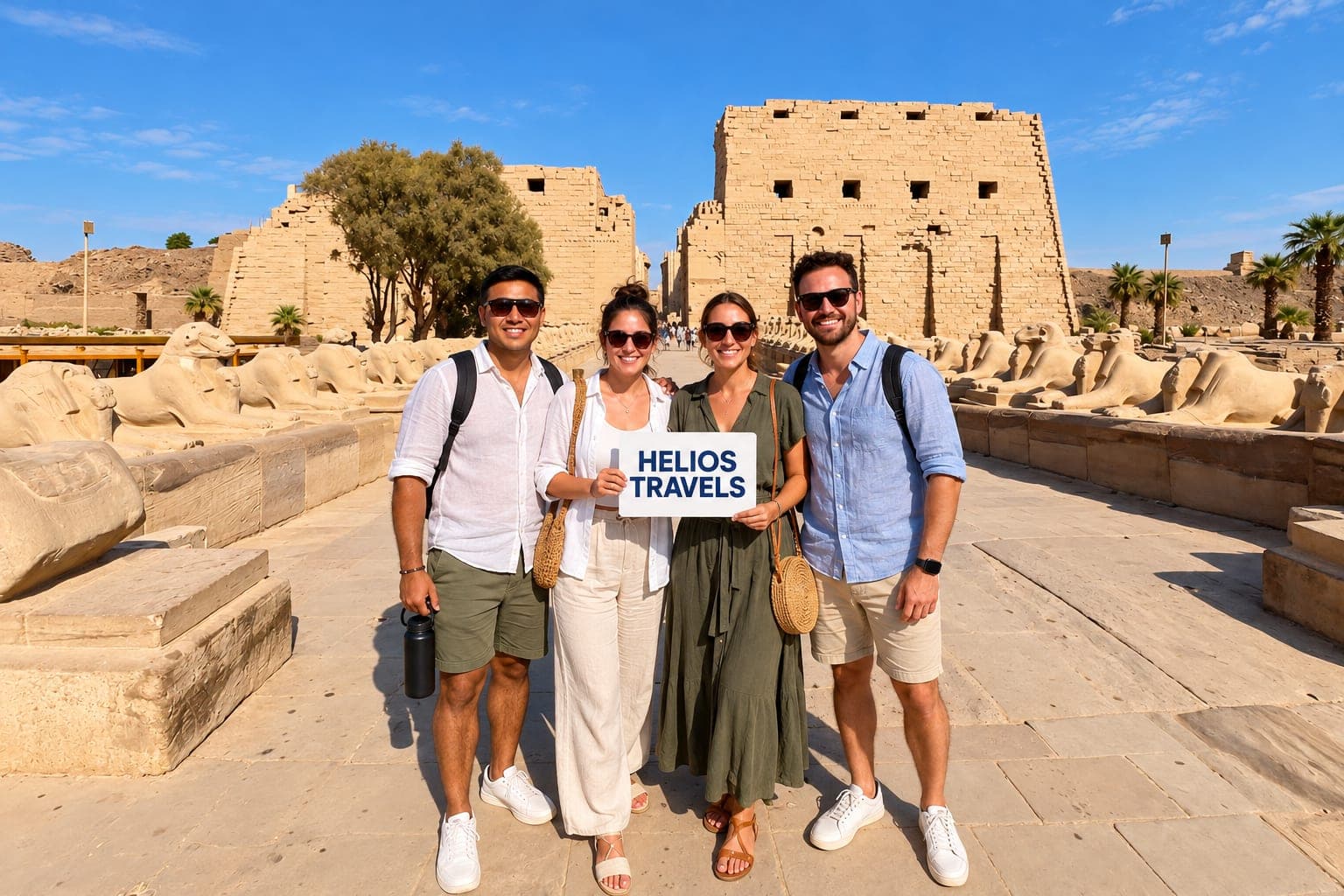
The approach to the first pylon, lined with rams — the animal of Amun — each with a small figure of the king held between its front paws. This is the Karnak end of the processional way that runs 2.7 kilometres south to Luxor Temple, fully excavated and reopened in 2021.

Twenty-nine and a half metres of single-piece red granite, quarried at Aswan and still the tallest standing in Egypt. Thutmose III could not topple it, so he walled it in up to the shoulders instead — which is why its upper inscriptions are the crispest at Karnak. The wall protected exactly what it was built to hide.

A stone-lined basin fed from the water table, where the priests washed before entering the sanctuary. The colossal fallen scarab of Amenhotep III sits beside it. This is the quietest corner of the complex and the best place to sit and look back at the scale of what you have just walked through.
A small room behind the festival hall, its walls carved with plants and animals brought back from campaigns in Syria — a stone catalogue of the world's variety, made by people who had never seen most of it before. Easy to walk past and worth turning back for.
Karnak grew the way a cathedral grows. Each king added a hall, a pylon or an obelisk in front of what already stood, so the complex reads outward from the centre in reverse chronological order: the oldest work is deepest inside, and you walk backwards through a thousand years to reach it.
It was also the richest institution in Egypt. At its height the estate of Amun held tens of thousands of workers, vast tracts of farmland, herds, ships and mines — enough that the High Priest of Amun at Thebes eventually rivalled the pharaoh himself for power, and in the Third Intermediate Period effectively ruled the south.
In 1903 the French archaeologist Georges Legrain, digging in the courtyard in front of the seventh pylon, struck the top of a buried statue. Below it was another, and another. What he had found became known as the Karnak Cachette: a pit into which the priests had carefully lowered some 800 stone statues and thousands of bronzes — around 17,000 objects in all.
They had not been dumped. As the temple filled up over the centuries, old votive statues were reverently retired, buried inside sacred ground rather than destroyed. Legrain spent years emptying the pit, working in water, and the objects he raised now form a large part of the Egyptian Museum's holdings.
Pick how many days you have, add attractions per day, and see average activity and travel times between cities.
Places that carry the same story forward, or sit close enough to take in the same day.
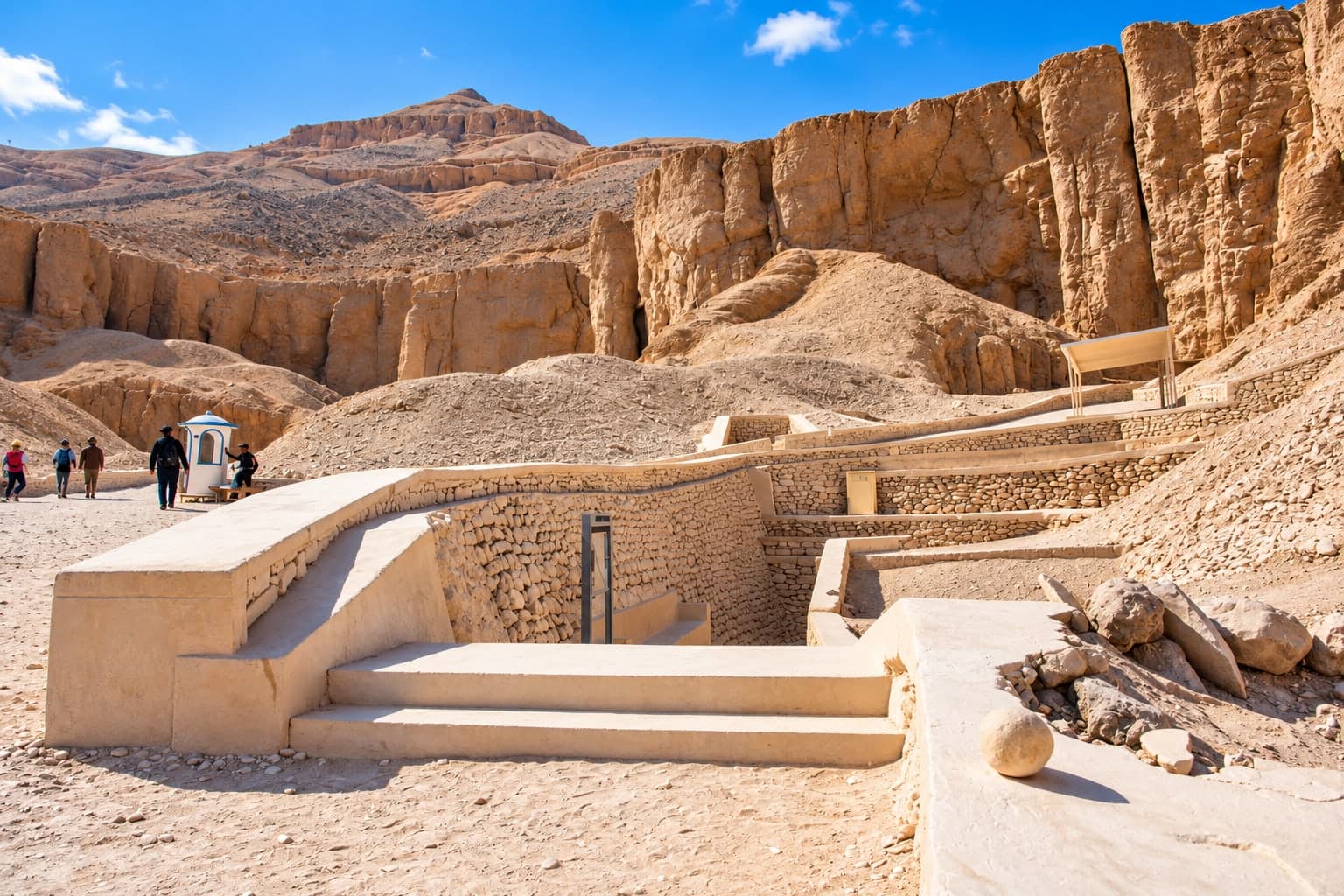
1539 BC · New Kingdom
6 km away
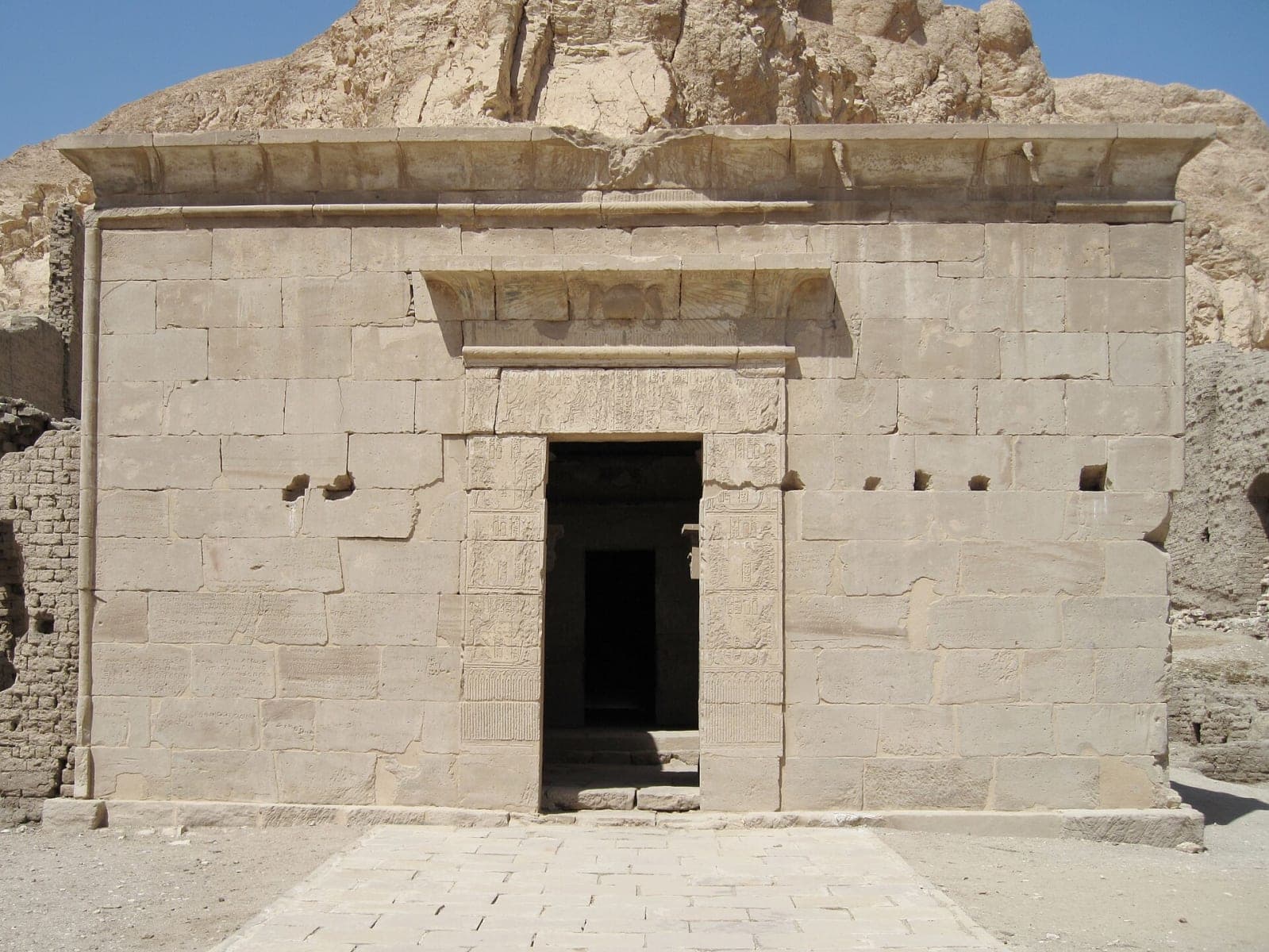
1550 BC · New Kingdom
6 km away
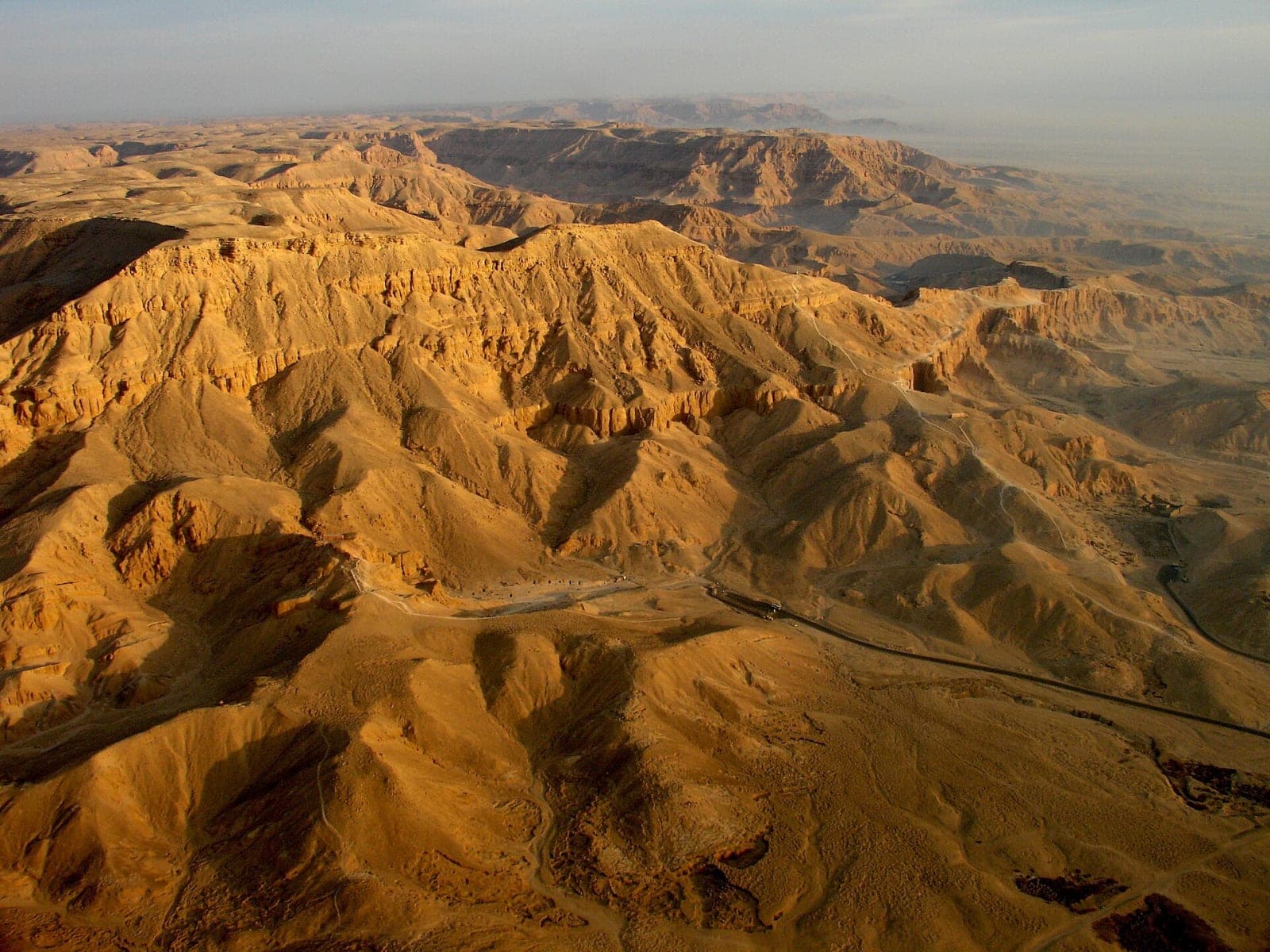
1500 BC · New Kingdom
7 km away
1470 BC · New Kingdom
6 km away
1400 BC · New Kingdom
3 km away

1350 BC · New Kingdom
5 km away
Book a ready-made tour or use the designer above to build your own plan.

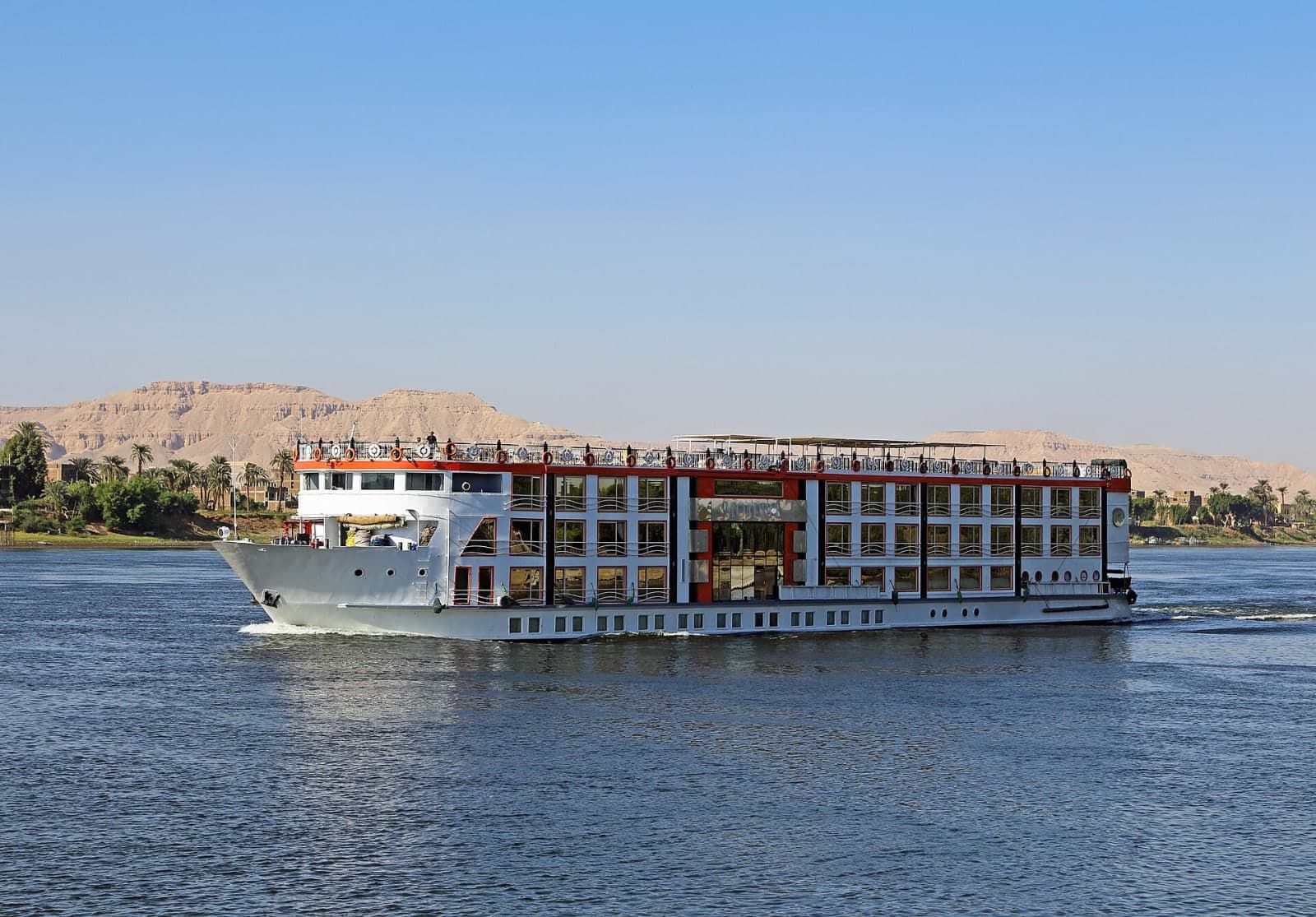


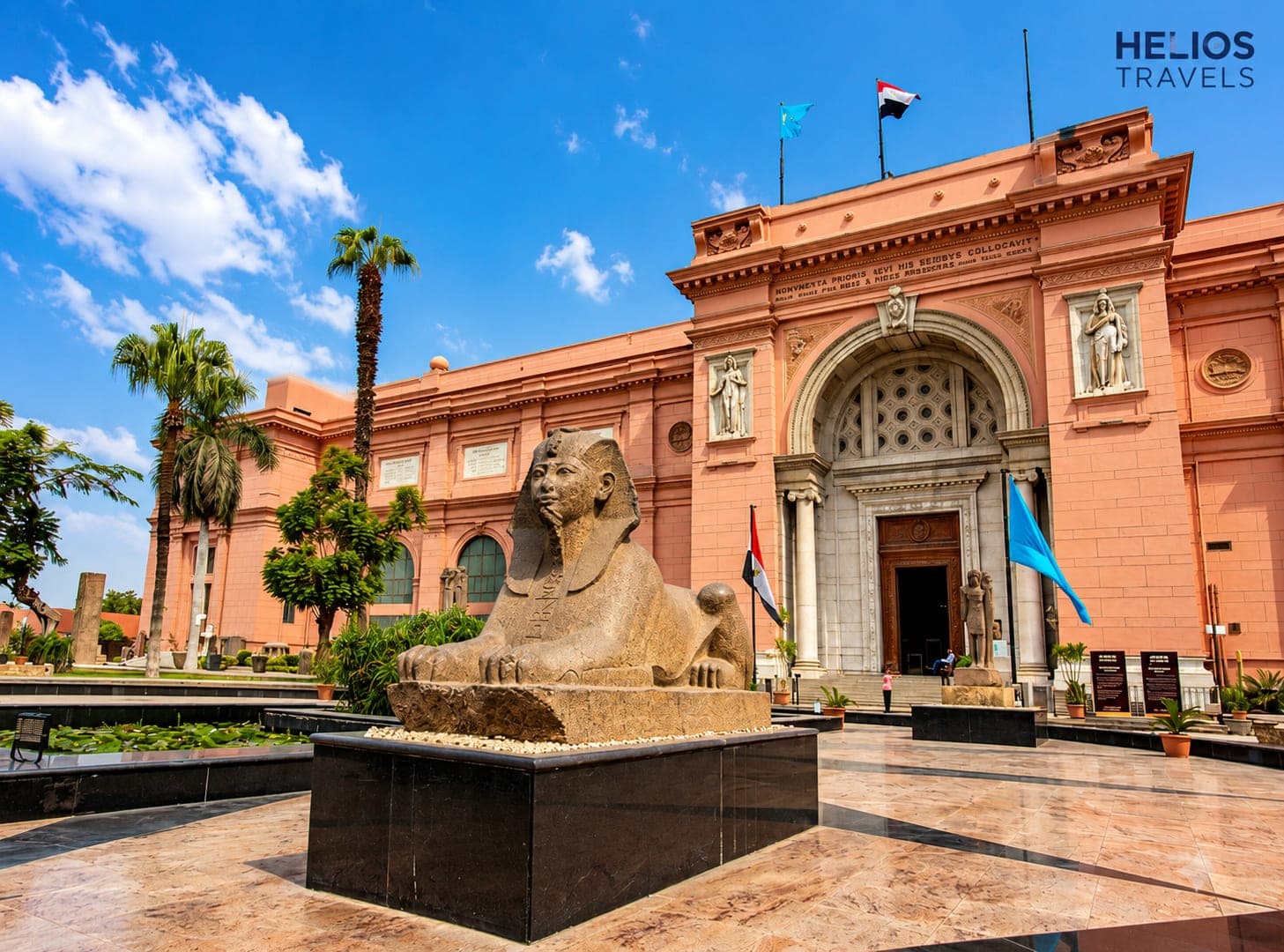












Hand-picked tours our guests love — top quality at reasonable prices, curated by Helios for your trip.