
St Anthony & St Paul
From €50 / person14 hoursIncludes 2 h 45 m at this sight
The world's two oldest Christian monasteries
Typical visit: 4 h
Period: AD 356 · Early Christian
Two fortified desert monasteries an hour apart in the Red Sea mountains — the oldest continuously inhabited in the world, and the cave of the first hermit.
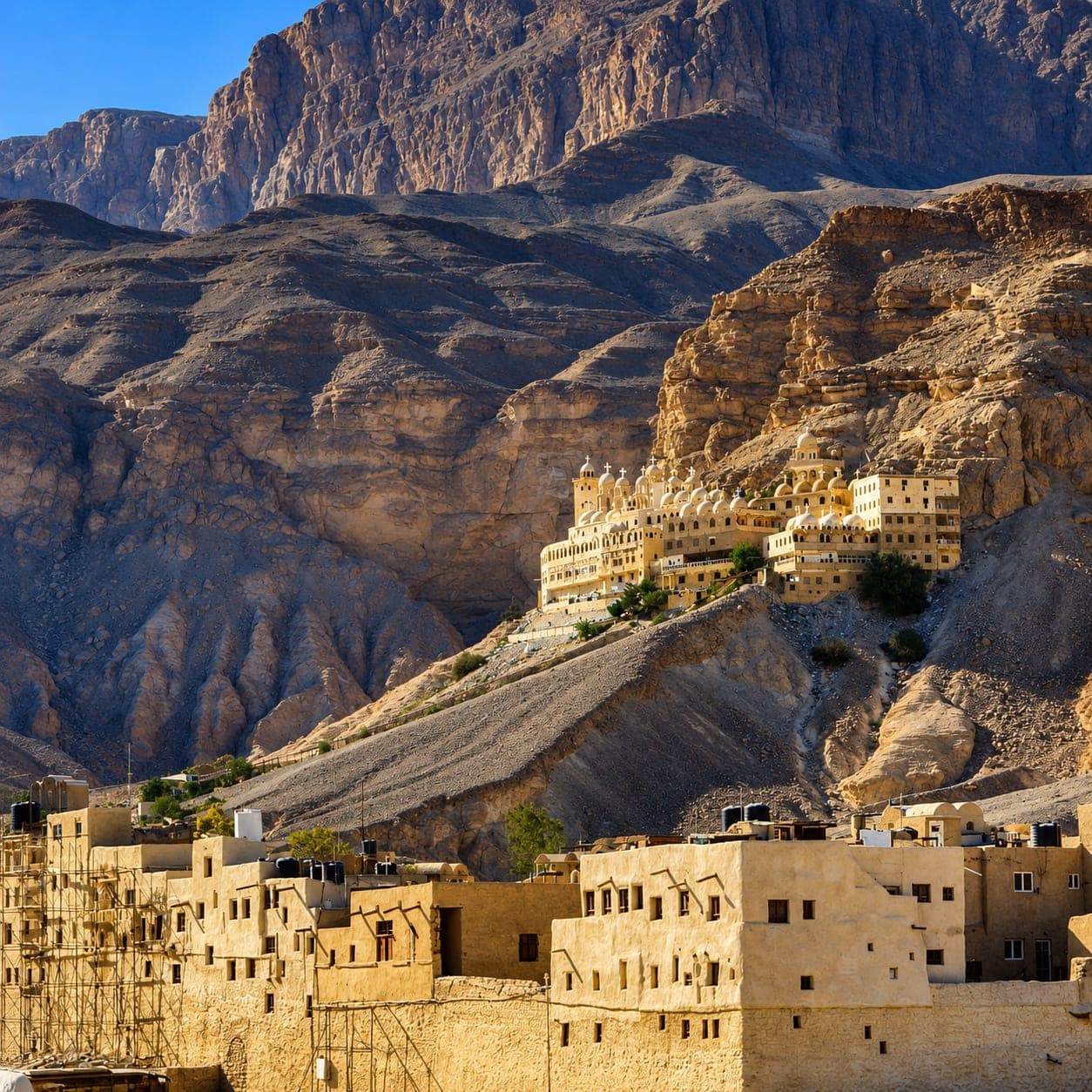
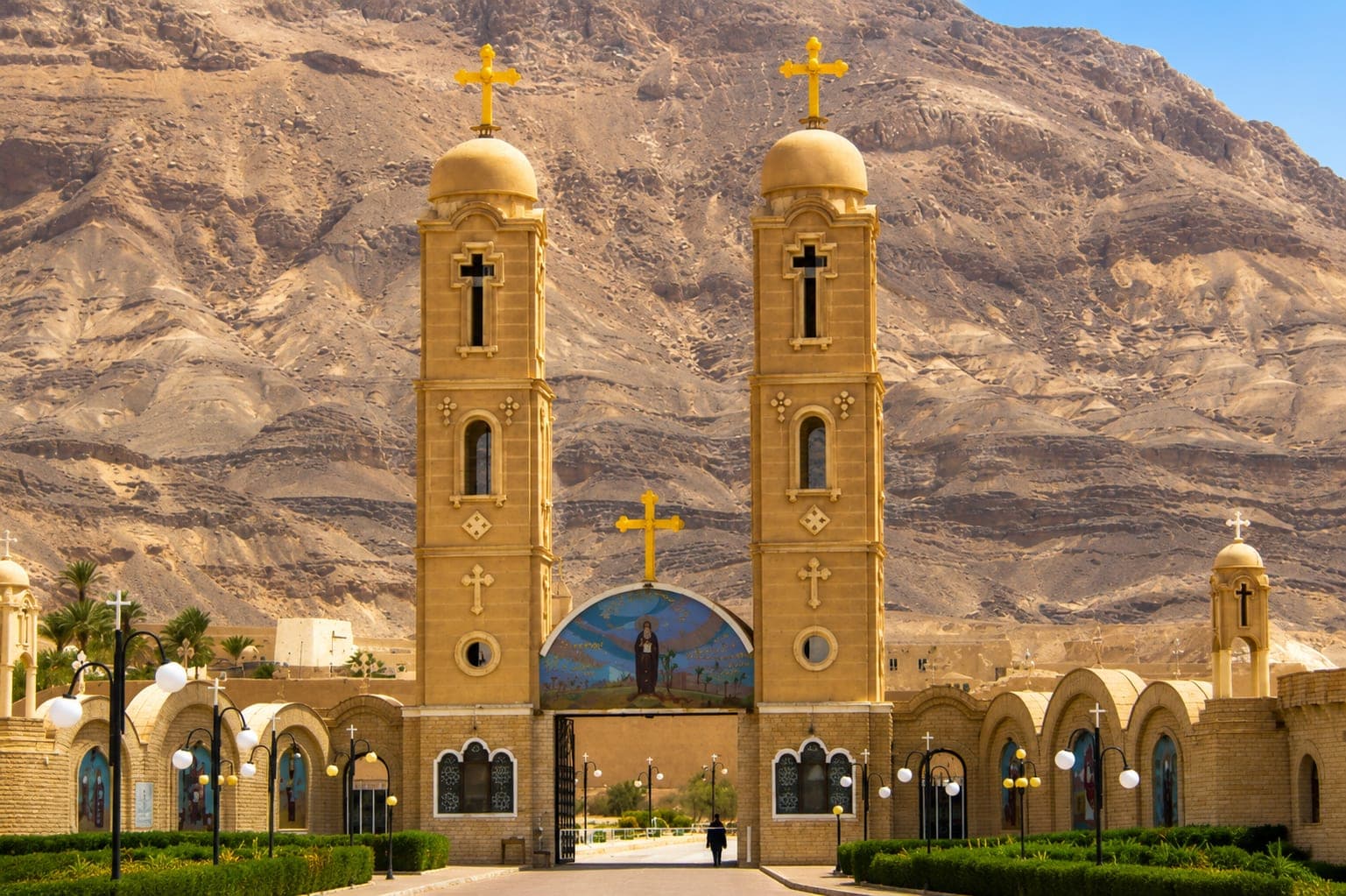
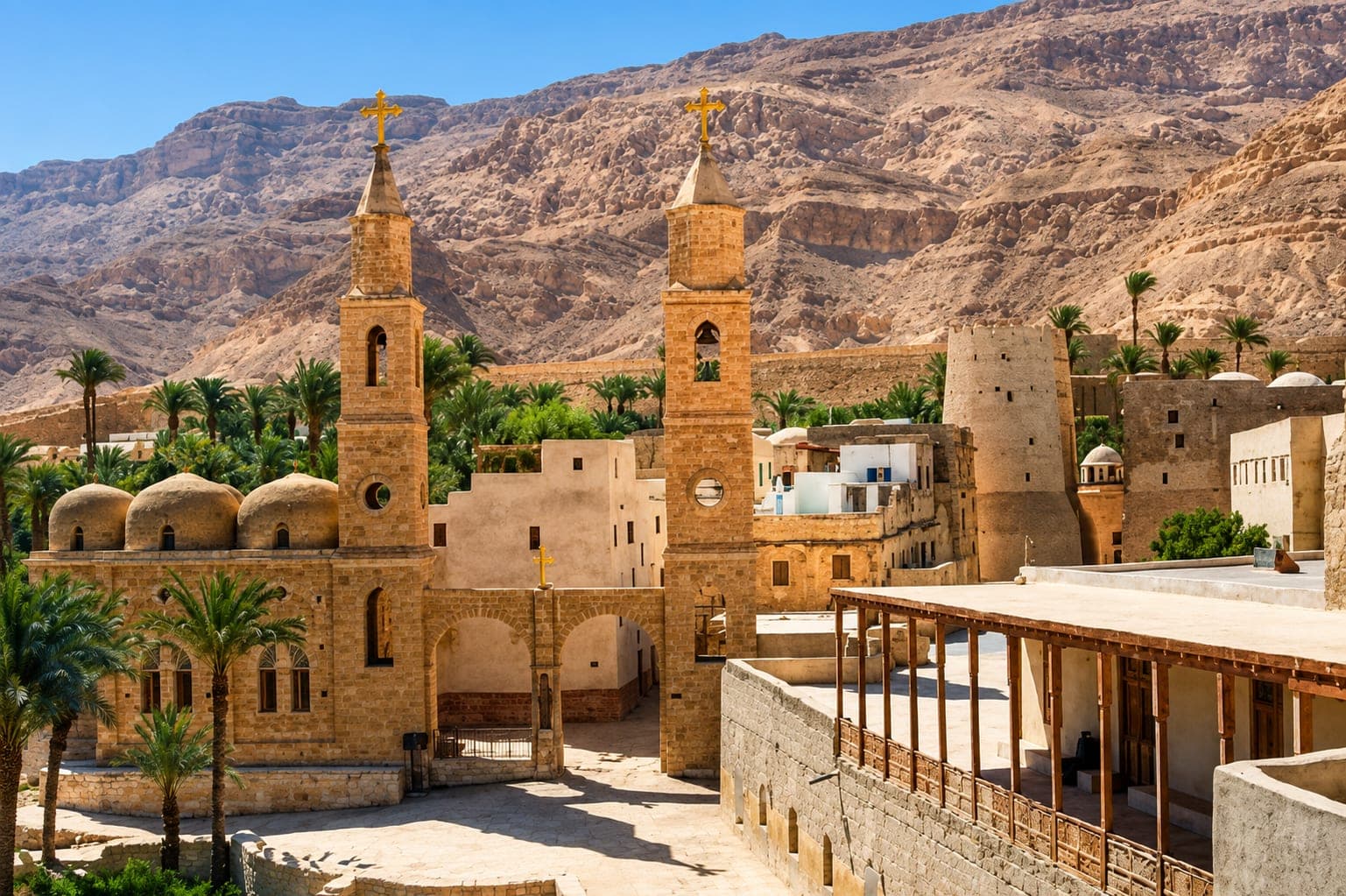
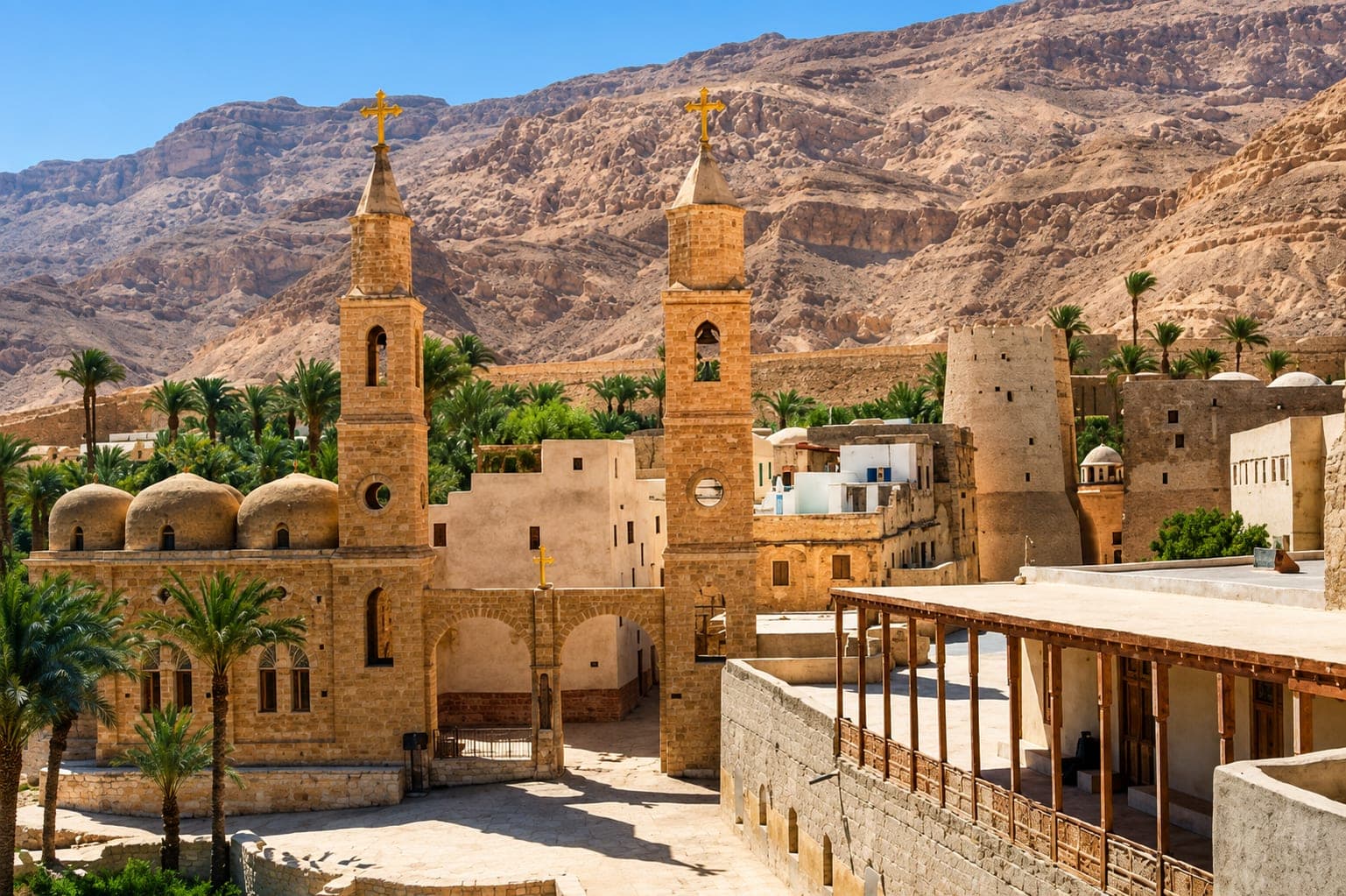
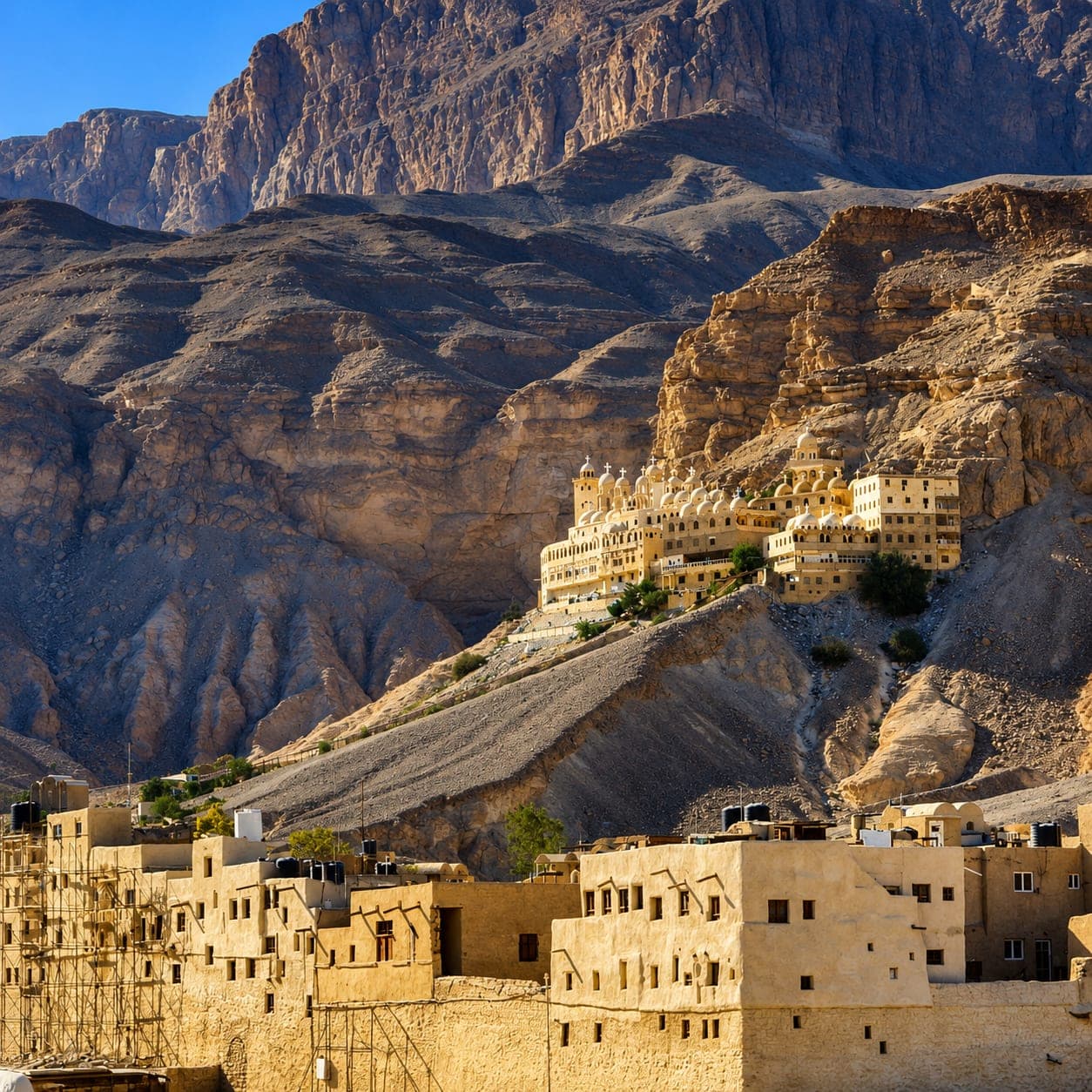
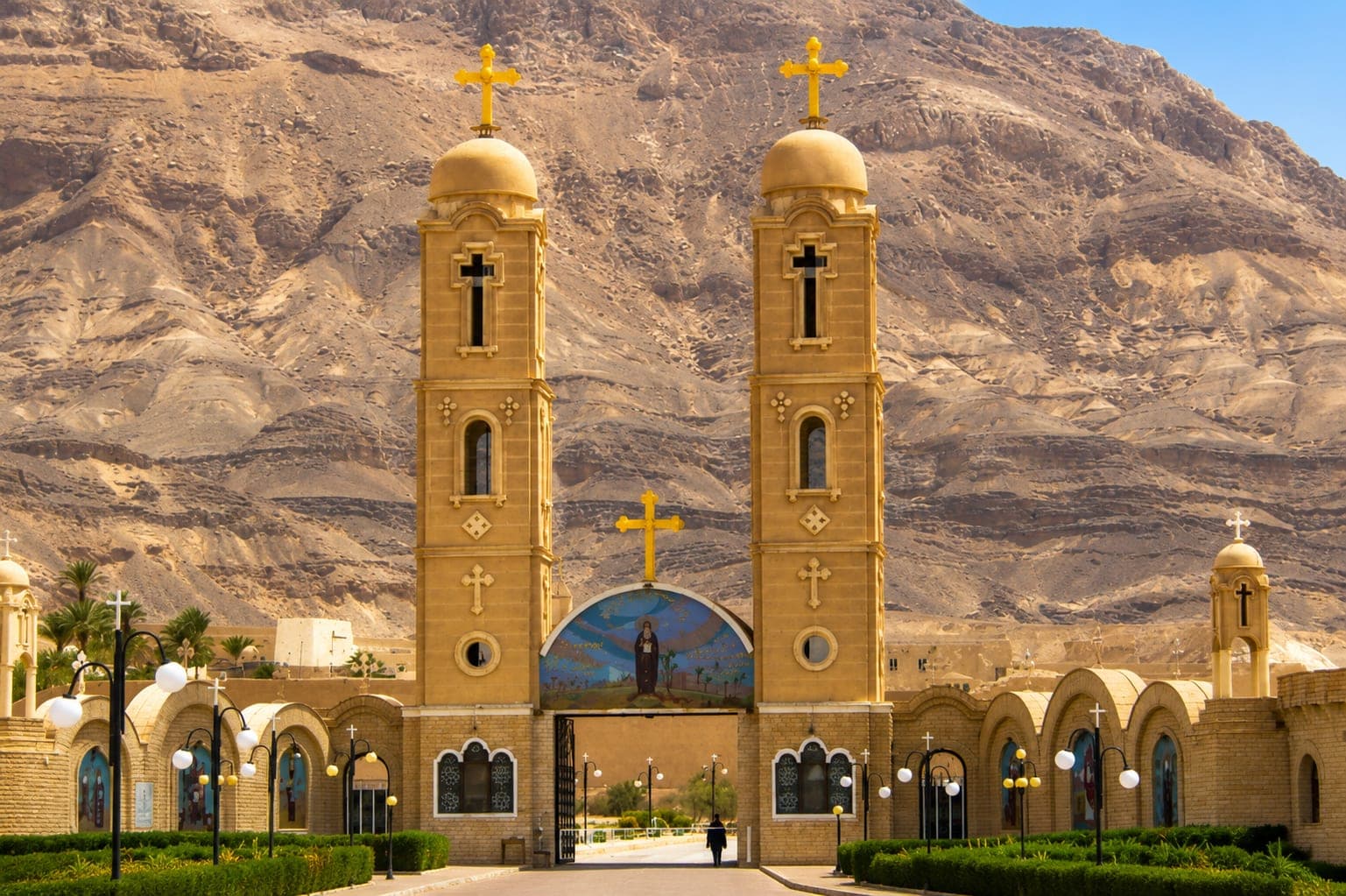
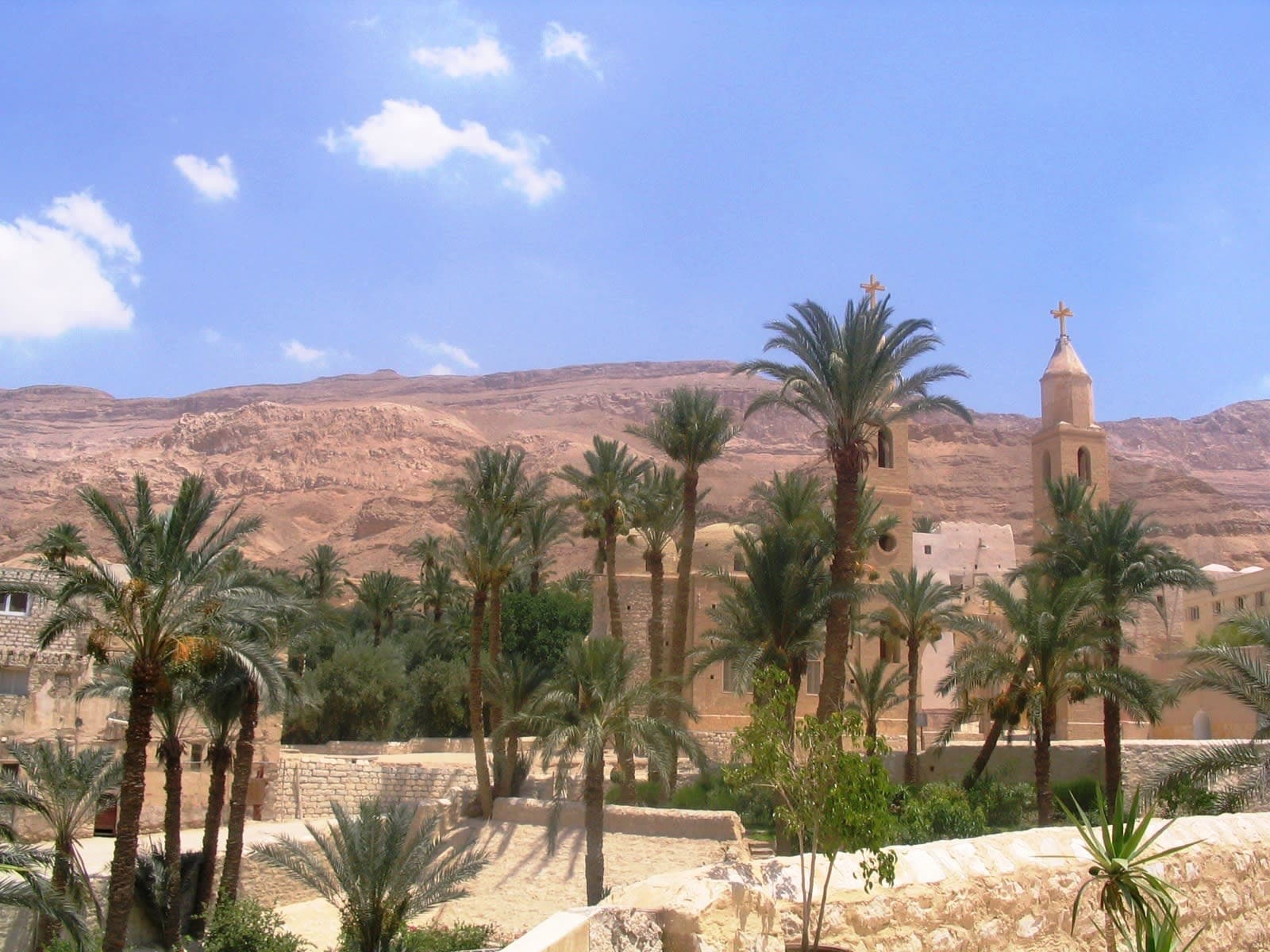
Two walled monastic settlements in the Red Sea mountains, roughly an hour's drive apart and almost always visited together as a single long day inland from Zafarana or Hurghada. Between them they hold the origins of Christian monasticism.
The larger of the two, and the oldest continuously inhabited Christian monastery in the world — monks have lived here without a break since the middle of the 4th century. Behind the walls it is less a building than a small town: several churches, a keep reached by drawbridge, a mill, a bakery, gardens and a spring that has supplied the community for sixteen centuries.
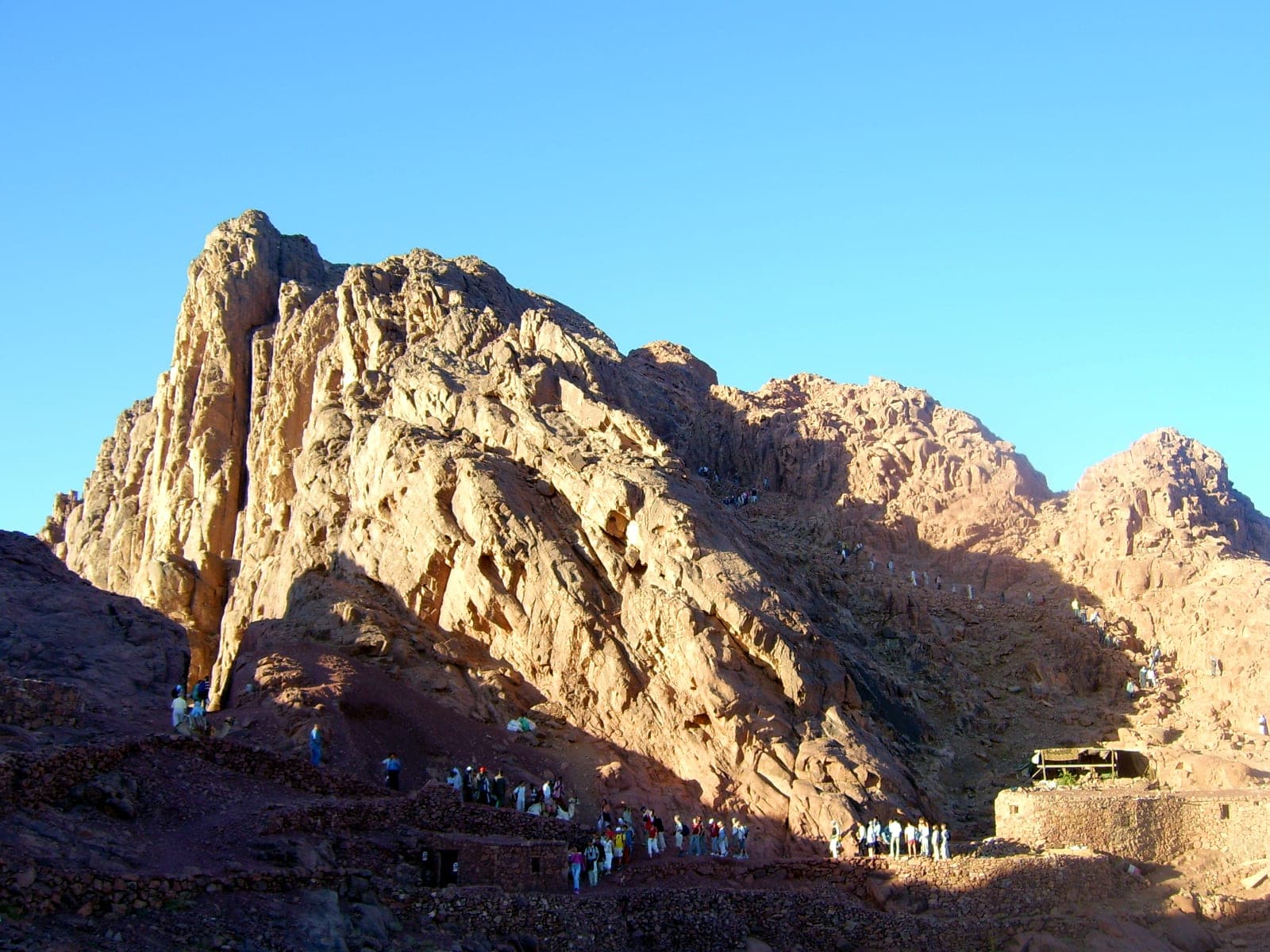
Smaller, and set dramatically against a cliff. Its heart is underground: the Cave Church is built around and into the cave where St Paul the Anchorite is said to have lived, low and irregular, blackened by centuries of candles and covered in wall paintings from several periods layered over one another.
Both are working monasteries, not museums. Dress modestly — shoulders and knees covered — and expect parts to be closed during services. Allow a full day including the driving; the road between them runs through open desert and is part of the experience.
Anthony the Great gave away his inheritance around 285 CE and went into the Eastern Desert to live alone. He was not the first Christian hermit, but the biography written after his death by Athanasius of Alexandria circulated across the Roman world and made him the model of monastic life. People followed him into the desert in numbers he had never wanted, and after his death around 356 his disciples founded a monastery at the foot of his mountain.
It has never dispersed since — through Persian and Arab conquest, Bedouin raids, plague and long stretches of poverty. Everything that Western monasticism became descends, by a traceable line, from what happened in these hills.
Coptic tradition holds that Paul of Thebes fled into the same desert during the persecutions of the 3rd century, aged about sixteen, and lived alone in his cave for some ninety years — longer than Anthony, and earlier. He is remembered as the first Christian hermit.
The best-known story is their meeting. Anthony, by then old and celebrated, was told in a vision that someone had been out in the desert longer than he had. He went to find Paul, and the two spent a day together; a raven that had been bringing Paul half a loaf each day brought a whole one for the pair. Returning later, Anthony found Paul dead and buried him.
Whether Paul existed at all has been debated since Jerome wrote his life in the 4th century. The monastery has stood at his cave since the 5th, regardless.
The walls of St Anthony's main church were black with candle smoke, and it was long assumed little survived beneath. Conservation begun in the 1990s removed the grime and revealed a nearly complete programme of 13th-century painting — mounted warrior saints, monastic founders, Christ enthroned — signed by the painter Theodore and dated 1232/33.
It is the most important surviving body of medieval Coptic painting anywhere, and it had been sitting in plain sight, invisible. St Paul's Cave Church holds a comparable sequence, from at least the 7th or 8th century through to the 18th, where conservators uncovered earlier layers without destroying the later ones — so in places two or three centuries of devotion are stacked on the same wall.
The two houses have different survival stories. St Anthony's has never been empty. St Paul's was abandoned more than once — Bedouin raids and plague emptied it, and it stood deserted for a long period in the 15th and 16th centuries until monks from St Anthony's resettled it. The two have been closely linked ever since, which is one more reason they are visited as a pair.
Pick how many days you have, add attractions per day, and see average activity and travel times between cities.
Places that carry the same story forward, or sit close enough to take in the same day.
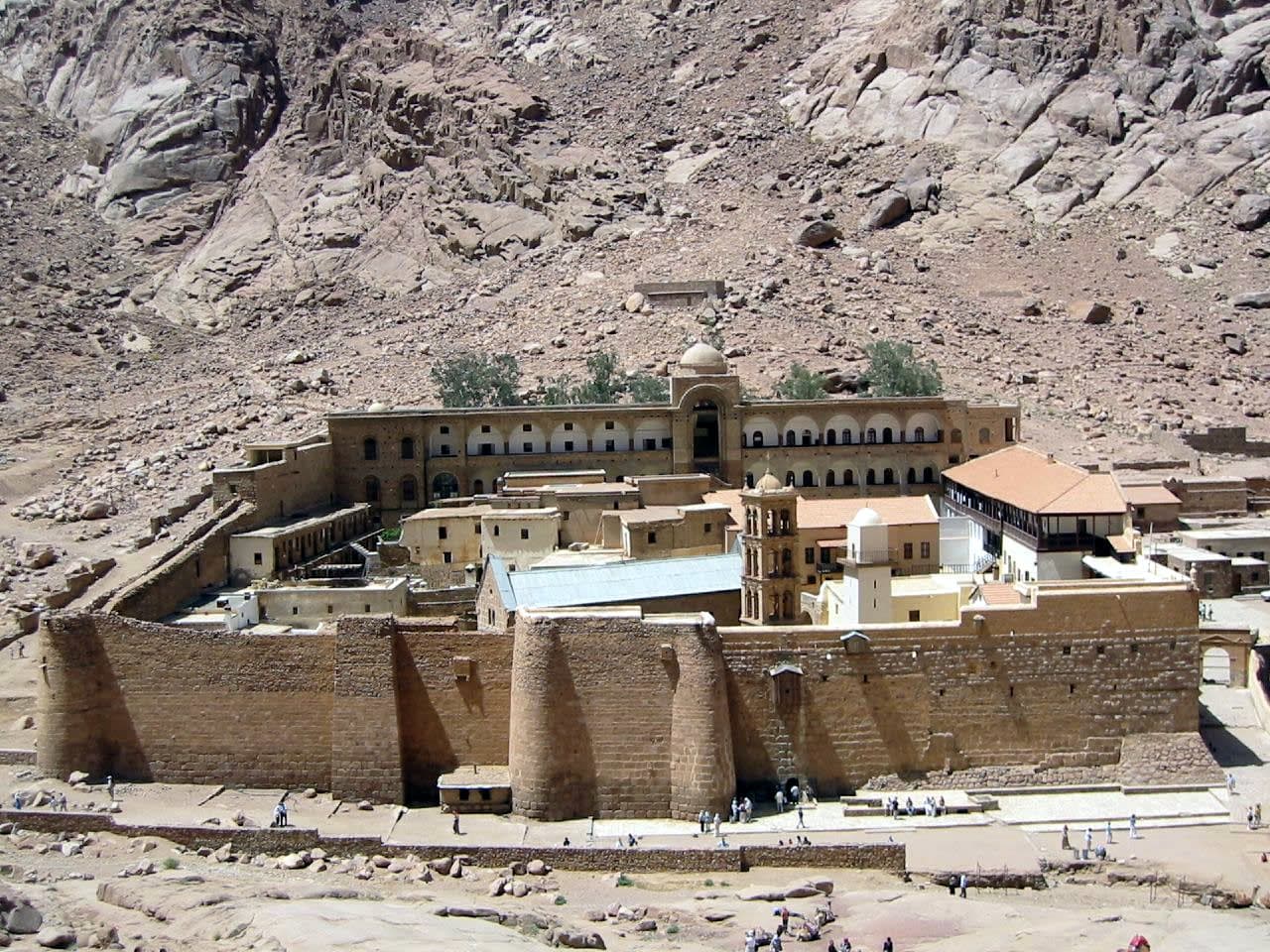
AD 548 · Byzantine
164 km away

AD 690 · Early Christian
162 km away
AD 882 · Ninth century
162 km away
1908 · Opened 1908
162 km away
AD 330 · Early Christian
164 km away

2021 · Opened 2021
161 km away
Book a ready-made tour or use the designer above to build your own plan.
Hand-picked tours our guests love — top quality at reasonable prices, curated by Helios for your trip.