Culture · Oct 23, 2026
Spain Visitor Etiquette: Customs, Dress and Guided-Tour Manners
Spain is relaxed with visitors, but a few habits around churches, mealtimes and museums are worth knowing before you land.
Spain is an easy country to visit, and nobody expects perfect manners from a traveller. A handful of habits do matter. Cover your shoulders and knees for churches, keep your voice down inside them, eat later than you would at home, and greet people before you ask them for anything. Get those right and you will pass without notice, which is the aim.
The rest of this guide covers what that looks like in practice, with examples from Barcelona and Madrid. Customs vary by region, city and venue, so treat everything below as a sensible default, not a law.
Dress: relaxed streets, stricter doors
Spanish cities are casual. Shorts, sandals and sundresses are normal in summer, and nobody dresses up for a museum. The exceptions are places of worship and the coast.
- Churches and basilicas: expect to be asked to cover bare shoulders and knees, especially at active places of worship. A light scarf or a thin overshirt in your bag solves it.
- Away from the beach: swimwear and going shirtless look out of place in city streets. Some cities, Barcelona among them, have local rules against it.
- Shoes: old town streets are cobbled and uneven. Wear comfortable shoes, not smart ones.
Time and meals: the day runs later
Lunch is typically mid-afternoon and dinner often starts after nine in the evening. Kitchens in tourist areas may open earlier, but locals eat late. Arriving at a restaurant at 6 p.m. may mean an empty room or a limited menu.
Smaller towns can still pause in the middle of the day, with some shops closing. Big-city habits are less rigid. Check opening times, and look at our guide to Spain public holidays in October and November, because a local holiday can close places you were counting on.
Greetings, language and Catalonia
A simple hola, buenos días or buenas tardes when you enter a shop or café goes a long way. Among friends, two kisses on the cheeks is common. As a visitor a handshake or a smile is fine, and you do not need to initiate kisses.
In Barcelona, Catalan is used alongside Spanish. It is a language in its own right, not a dialect, so do not describe it as one. A bon dia is appreciated, but Spanish is understood throughout the city. Politics is a live subject in Catalonia, so listen more than you opine.
Etiquette on a guided visit
Most mistakes on tours are about crowds and noise. A few habits help:
- Arrive a little early. Both the Prado and the Sagrada Família are busy, and a late arrival at a timed entry is hard to recover from.
- Stay close to your guide and keep your voice low. In a basilica, people are praying and others are looking up in silence.
- Follow staff instructions on bags, tripods and photography. Rules differ between rooms and change, so read the signs rather than assume.
- Do not touch paintings, sculptures or stonework, however close the rope looks.
Sagrada Família, Barcelona
This is a working basilica as well as a landmark. On the Sagrada Família guided tour with entry ticket, the entry ticket is included and the guided part runs about an hour and a half, from the Nativity façade through the nave to the Passion façade. After that you can stay inside as long as you like. Cover up for the door, and take your time with the stained glass rather than photographing and moving on. The towers are not part of the visit. It is a small group of up to 15 guests, shared with other travellers.
The Prado, Madrid
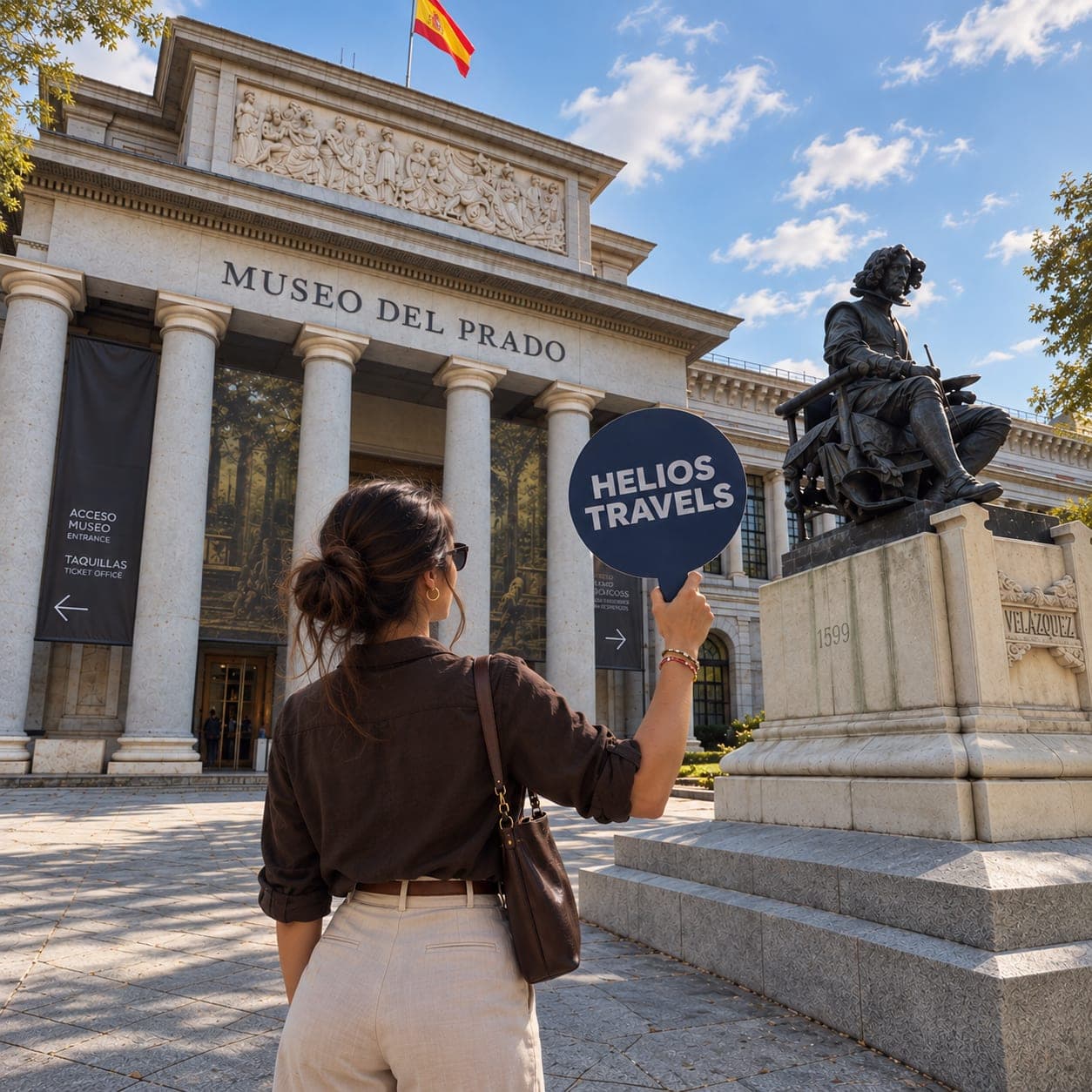
The Prado Museum masterpieces tour starts at 10:00 at the Goya statue outside. Rooms in front of Las Meninas fill up, so let people step up to the painting in turn. Headsets are included when the museum requires them, so keep your voice down and listen. It is a shared small-group tour of up to 15 guests.
The Gothic Quarter, Barcelona
The lanes are narrow and the squares are public spaces where people live and work. On the Gothic Quarter and old town walking tour, the stops are seen from outside, and cathedral entry is not included. Step aside for residents and delivery carts, and do not block doorways to take photos. Plaça Sant Jaume faces two government buildings and sometimes hosts protests, so be respectful if one is under way. As in any busy old town, keep your phone and wallet where you can see them.
Small things that avoid awkward moments
- Tipping: it is modest and not a fixed percentage. Rounding up or leaving small change for good service is common. Tips are not included on Helios tours, so tipping your guide is your choice.
- Noise: Spanish restaurants can be loud and that is normal, but churches, museums and residential streets late at night call for quiet.
- Patience: service can be unhurried. Asking for the bill is usually your job, as waiters will not bring it unprompted.
If you are still deciding where to start, our comparison Madrid or Barcelona: which city to visit first helps. If you are travelling in autumn, Spain in October covers what to wear.
Spain visitor etiquette FAQ
Do I need to cover my shoulders in Spanish churches?
Often, yes. Active places of worship, and basilicas like the Sagrada Família, commonly ask for covered shoulders and knees. Carrying a light scarf or overshirt is the easiest fix.
Is it rude to eat dinner early in Spain?
It is not rude, but local dining runs late. Tourist-area restaurants may serve earlier, while many traditional places open their kitchens in the evening, often after eight or nine.
Should I speak Spanish in Barcelona?
Spanish works everywhere. A few words of Catalan, such as bon dia and gràcies, are a friendly gesture, and treating Catalan as a language of its own is respectful.
Can I take photos on guided tours?
Usually, but rules differ by venue and room, and they can change. Follow your guide and the signs. Never use flash around paintings, and be considerate in places where people are praying.
Book what you just read about
Explore related tours and check each trip for available booking options and inclusions.