Planning · Oct 16, 2026
Nice in October and November: Is It Still Beach Weather?
Swimming is possible in early autumn on the Riviera, but only on the right day, and autumn is also the region's wettest stretch.

The short answer
Yes, you can still swim in Nice in October, but it depends on the day, and by November it is a different trip. In the first half of October the sea is still pleasantly mild and the sun on the pebbles can be properly warm, so a swim and an hour of lying down are realistic on a clear afternoon. By the second half of the month the water is noticeably cooler, and in November swimming is something only the hardy do.
The other half of the answer is less flattering: autumn is the wettest part of the Riviera's year. The summer drought ends in short, violent bursts, with sudden storms, heavy downpours and the odd red-sky evening followed by a grey week. Anyone searching for 'Nice weather October' or 'Nice en novembre' hoping for guaranteed late sun should plan for it as a bonus rather than a promise. Book a trip you would enjoy even if the beach day never happens, and treat the swim as a bonus.
October: the month that can still feel like summer
Early October is the best of it. Daytime temperatures are comfortable in a T-shirt, the evenings are mild enough for a terrace dinner, and the summer crowds have thinned. The light is lower and softer than in July, which makes the old town's ochre and pink facades look better than they do at midday in August.
But October is also the month when the weather has the widest range. You can have a week of blue sky, then a day of rain that closes the horizon, then a stormy night with thunder rolling off the hills behind the city. Forecasts a week out are unreliable. Check the forecast the evening before, and look at the Météo-France warnings if the sky turns heavy, because the Riviera does get intense rainfall episodes in autumn that make roads and river valleys inland dangerous.
Daylight shrinks quickly. At the start of the month the evening light lasts well into the evening, but the clocks go back on the last Sunday of October, and suddenly it is dark by early evening. Plan the beach for the middle of the day, not the end.
November: a city break, not a beach holiday
November on the Côte d'Azur is mild compared with northern Europe, which is exactly why people choose it. On a clear day you can sit outside in a jacket and still feel the sun. But the sea is cold, the sun sets around five in the evening, and rain is more likely than in any other month of the year. Think of it as a walking-and-eating trip with some blue-sky bonuses.
Two public holidays fall in November: All Saints' Day on 1 November and Armistice Day on 11 November. Expect some shops closed and trains and buses on holiday timetables, but the main restaurants and museums around the old town usually carry on. Check ahead if a specific museum matters to you.
| Question | Early to mid October | Late October | November |
|---|---|---|---|
| Swimming | Pleasant on a sunny day | Possible, but brisk | Cold; only for the keen |
| Sunbathing | Often yes | Sheltered and sunny spells only | Rarely |
| Rain risk | Real, in bursts | High | Highest of the year |
| Evenings | Terrace weather | Light jacket | Proper coat after dark |
| Best for | Beach plus city | City plus walks | Museums, food, quiet streets |
The beach itself: what to expect
Nice's beaches are pebble, not sand, which surprises some first-timers at any time of year. Part of the shoreline is made up of private beach clubs, with loungers, mattresses and a restaurant, and part of it is free public beach. In autumn many of the private concessions begin winding down, and the closing dates vary, so do not count on being able to rent a lounger on a particular day. The free public sections remain open, so bring a towel, a thin mat or a large bag to sit on, because the stones hold the day's cold and give back little warmth in the shade.
Supervised swimming belongs to the summer season, so once lifeguard cover ends you are on your own. Look at the flags, avoid swimming alone, and stay out of the water after heavy rain or when the waves are rolling in. The sea drops away steeply from the stones, so it deepens quickly and the shorebreak can drag at your legs. The honest advice for October: go in on a calm, sunny day, keep it short, and have a dry towel and a warm layer within reach. Water that felt fine at noon feels very different when the sun slips behind a cloud.
The Promenade des Anglais out of season
The long seafront promenade, about seven kilometres of it from the airport end to the port, is at its most pleasant in autumn. In summer it is crowded with cyclists, joggers, skaters and slow-walking families. In October and November you have room to walk, and the blue chairs facing the sea are free to sit on without competition. Locals come out on clear days to walk dogs, run, and sit with a coffee.
It is also more exposed. In a storm the sea breaks over the stones and the wind blows hard down the Baie des Anges, and on a grey day the promenade can feel empty and a little bleak. Enjoy it on the bright days, and when the weather turns, walk inland instead.
What stays open as the season winds down
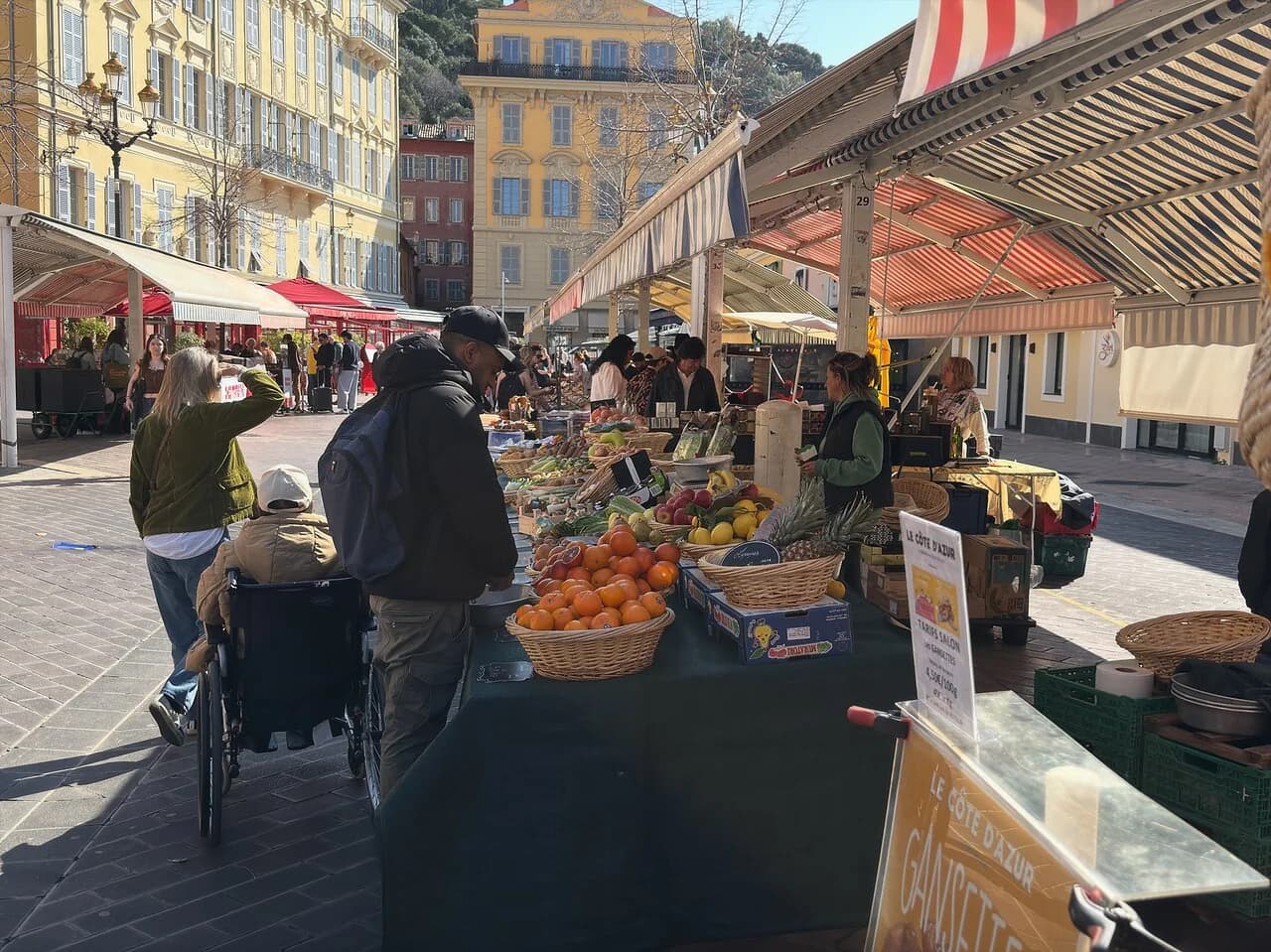
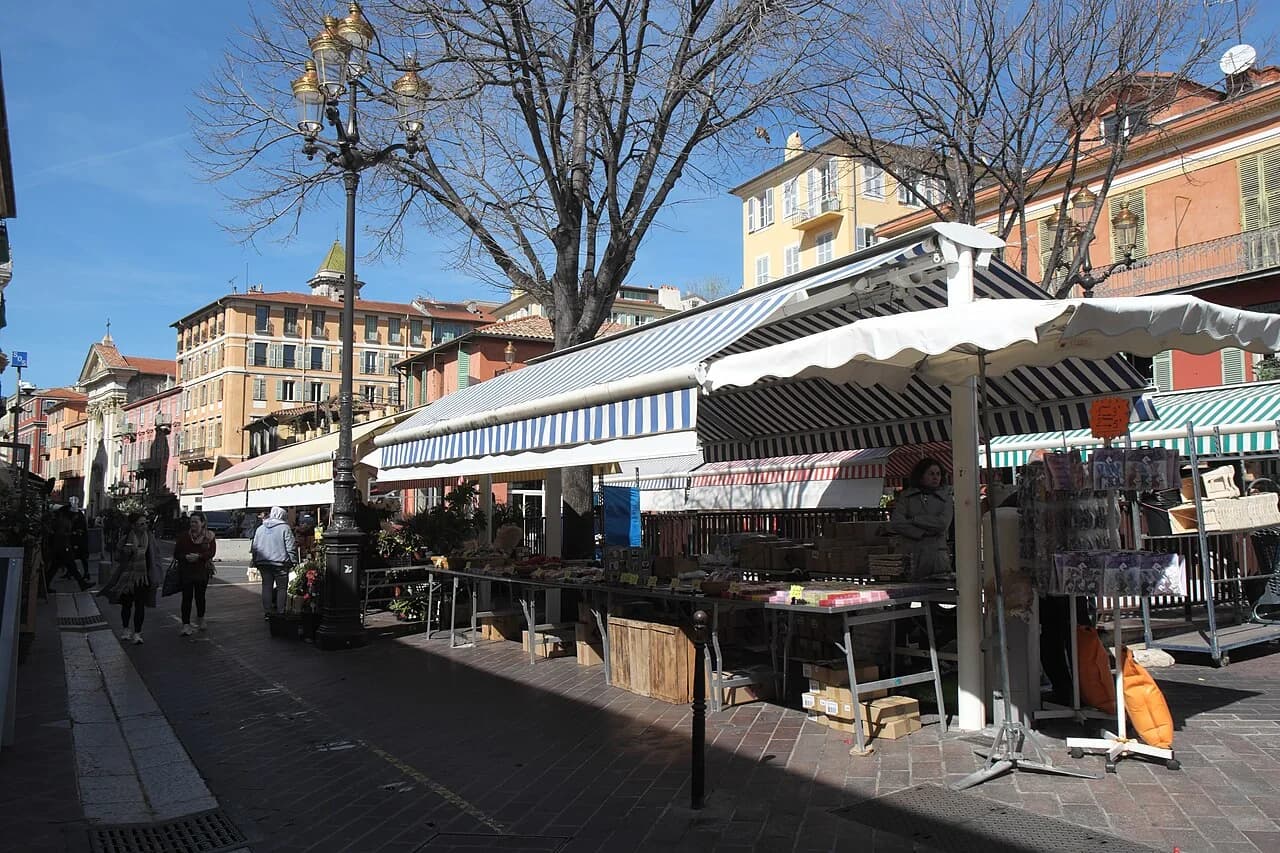
- The old town and markets. The Cours Saleya market carries on through the year, with flowers and produce most mornings and an antiques market on Mondays. Vieux Nice's narrow streets, bakeries and socca stalls stay in business because locals use them too.
- Museums. Autumn is the right season for the Matisse Museum and the Chagall Museum, and for the galleries around the old town, with fewer queues than in summer. Check each one's days of closure, as many shut on one weekday.
- Castle Hill. The climb up Colline du Château, with the view over the Baie des Anges and the port, is better in clear autumn air than in summer haze, and it is free to climb.
- Restaurants. Most of the central ones stay open, but a number of restaurants take their annual break around November, so do not plan a meal around one place without checking. Having a second choice is sensible.
- Transport. The tram, including the line from the airport, and the regional trains along the coast keep running through the year. Services are generally less frequent on public holidays and Sundays.
What closes: many beach clubs, some seasonal boat services, and a share of small shops and snack kiosks along the shore. The place has a lived-in, local feel instead of a holiday-resort feel, which is the point for many visitors.
Day trips: pick by the forecast
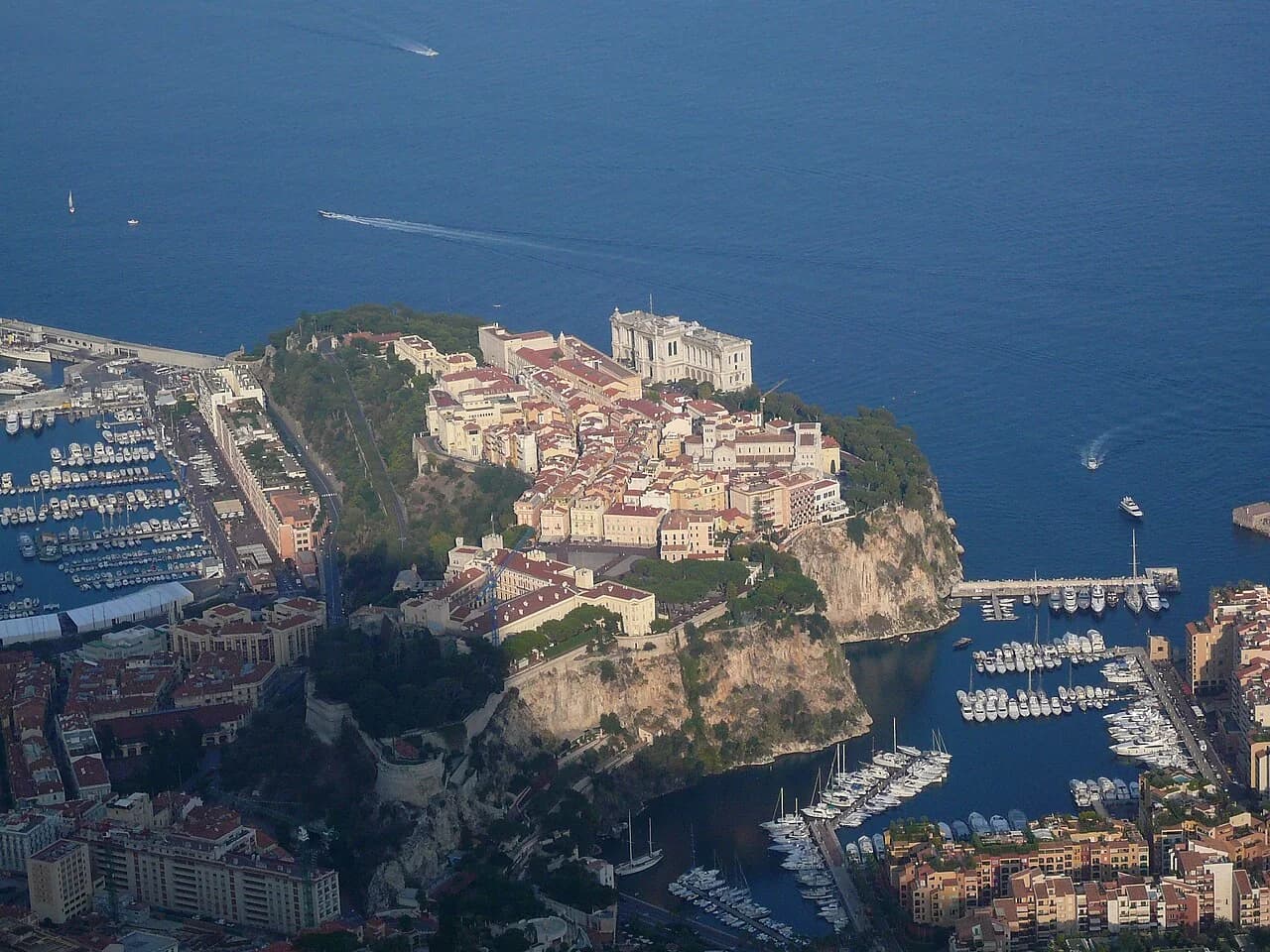
From Nice a short train or bus ride takes you to Villefranche-sur-Mer, Èze village, Monaco, Menton and Antibes. These are easier and cheaper to reach than people expect, and they are good ways to use a clear day. On a wet day, hill villages are poor value, as the views disappear in cloud and the stone lanes get slippery. A museum, a covered market or a long lunch is a better use of rain. Keep the day trips flexible, and decide the evening before.
Who should choose Nice now rather than summer
- Walkers and photographers who want soft light and space on the promenade and the hills.
- Museum and food people, for whom wet weather is not a disaster.
- Couples and solo travellers who want a quiet, comfortable city on the sea rather than a crowded resort.
- Anyone sensitive to summer heat and crowds, who finds July and August on the Riviera hard going.
- Flexible travellers who can move a beach day to the sunniest slot of the trip.
Who should not: anyone whose trip depends on guaranteed swimming and sunbathing every day. If that is you, October and November on this coast is a gamble. For reliably warm sea in autumn, the Red Sea is a more dependable choice, and our guide to Egypt in October explains what that looks like. Check the entry rules for your passport too, since visitors from outside the Schengen area may need a visa well ahead of travel.
A sample three-day shape with a wet-weather backup
Day one: arrive, walk the promenade, and have dinner in the old town. Day two: if sunny, do the morning market, then the beach in the early afternoon, and Castle Hill for the late light. If rainy, do Cimiez with the Matisse Museum and the old town, with a long lunch. Day three: keep it open for the best forecast, whether that means Villefranche and the coast path or a day indoors. If you are carrying on to Paris, our guide to Paris in October covers the weather and daylight you will meet there.
What to pack
Bring a light waterproof, a warm layer for the evening, comfortable shoes with grip for wet stone, and a swimsuit just in case. A small umbrella is useful, but the wind can wreck it on the seafront. Sunglasses matter more than people expect, as autumn sun is low and bright on the sea.
FAQ
Can you swim in Nice in October?
Yes, especially in the first half of the month, when the sea is still mild and sunny afternoons are common. It depends on the day: calm, clear weather makes it pleasant, while wind, waves or recent rain make it a poor idea. Supervised swimming ends with the summer season, so take care.
Is Nice in November worth visiting?
Yes, as a city break with mild weather by northern European standards, quiet streets, open museums and a good food scene. It is not a beach trip, it is the rainiest part of the year, and the evenings come early.
Is it rainy in Nice in autumn?
Autumn is the wettest stretch on the Riviera, often with short, intense storms rather than steady drizzle. Many days are still bright, but you should plan indoor alternatives and check the forecast and any weather warnings the day before you go out.
Are the beach clubs open in October?
Some stay open into early autumn and others close earlier, so it varies from place to place. The free public beaches remain open all year, but bring your own towel and something to sit on.
Is the Promenade des Anglais busy in autumn?
It is much quieter than in summer, with locals walking and running along it. It is at its best on clear days and can feel bleak and windy in a storm.
Book what you just read about
Explore related tours and check each trip for available booking options and inclusions.