Destinations · Oct 18, 2026
Douro Valley Day Trip from Porto: Harvest, Viewpoints, the Long Day
Is a nine-hour round trip into port wine country worth it in autumn? Mostly yes, if you accept how much of the day is spent on the road.
Short answer: yes, the Douro is worth a long day from Porto in autumn, provided you want landscape more than a packed list of sights. Helios runs its Douro Valley vineyards and viewpoints day trip as a nine-hour round trip by road, from Porto back to Porto. A large share of those hours is spent in the vehicle. In return you get the town of Amarante, a high viewpoint over the river, and a winery visit in Pinhão, the heart of the valley.
If a full day on the road sounds like too much, the shorter alternative is the three-hour Vila Nova de Gaia port wine cellars visit, which stays in Porto. It tells you how port is aged, not how it is grown. The two are different experiences, and this article should help you choose between them.
Why autumn is the right moment, and what it is not
The Douro is the oldest demarcated wine region in the world, and its stepped terraces are a UNESCO World Heritage landscape. The harvest, the vindima (German visitors will know it as Weinlese, French ones as vendanges), peaks in September and tails off through October. In the valley this means tractors and crates on narrow roads, pickers on the steep slopes, and wineries that are working rather than posing.
It also means honest caveats. A working winery in the middle of the harvest is busy, so access and tasting arrangements depend on what the producer can manage that day. Helios confirms guide, access, transport and final price in your quote before you book, so ask there what is realistic on your date. Do not assume you will see grapes being trodden or pressed. That depends on the estate and the week, and it is not something the trip description promises.
September versus October
- September: the busiest picking, the warmest weather, and vines that are still mostly green. Expect real heat in the valley, which sits in a sheltered basin and is much hotter than Porto on the coast.
- October: the picking winds down and the air cools. The leaves begin to turn, and the slopes shift from green to yellow, then to amber and red as the month goes on. The colour usually peaks late in October and into November, after most of the picking is done.
So there is a trade-off. Go in September for harvest activity and heat, and in late October for the colour and gentler temperatures. If you can only visit once, early to mid October gives you a reasonable chance of some of each, without a guarantee of either. For weather and daylight in Porto itself, our guide to Portugal in October is the place to look.
What the day involves, stop by stop
The Helios route runs through four points: the Porto departure, Amarante, a Douro viewpoint, and a winery in Pinhão. We do not set out minute-by-minute timings for the day here, because your quote confirms the plan. What we can say is the order, and what each part feels like.
1. Leaving Porto
You head inland by road, away from the granite and tiles of the city and the Atlantic light. Expect a start early enough to make a nine-hour day work, so this is not a lie-in. The first stretch is mostly motorway, then the hills close in and green gives way to forest and farmland.
2. Amarante
Amarante is the gentle first stop, a small town on the Tâmega river, a tributary of the Douro. The stone bridge, the church and monastery of São Gonçalo beside it, and the houses with wooden balconies over the water make it a good place to stretch your legs after the first leg of the drive. It is a town stop, not a vineyard stop. If you are travelling for wine alone, you may find it the least essential part of the day. If you like a break in the drive with a coffee and a bit of local context from your guide, it earns its place.
3. The Douro viewpoint
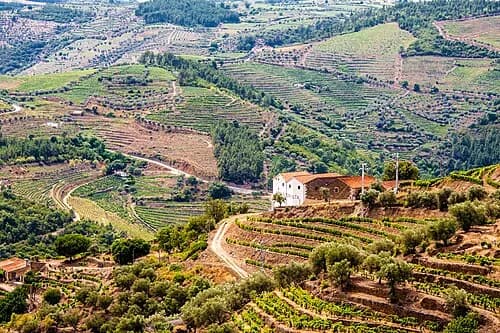
This is the moment the day is built around. From the viewpoint, the river runs far below in long bends, and the terraces climb the slopes in lines that follow the contours. Photographs help, but they flatten the scale. The schist soil, the walls holding the terraces and the sheer number of slopes are easier to understand when you are standing there. In harvest season you may see pickers or crates in the nearer rows. In late October the whole hillside takes on its autumn colours.
4. Pinhão and the winery
Pinhão is a small riverside town surrounded by some of the valley's best-known estates. Its railway station is decorated with blue azulejo panels showing the harvest and the life of the vineyards, which is a good thing to look at while you are there. The winery visit is the part of the day for those who came for wine: how the estate works, what grapes grow here, and how port and the region's table wines differ. Tastings, admission and food are not automatically part of the price. They are included only where your quote says so, so check the quote before you assume lunch or a flight of wines.
How much of the day is spent in the car
The Douro is not close. The real wine country starts roughly an hour and a half to two hours from Porto by road, and the return takes as long. Over nine hours, you should expect a good part of the day, likely around four hours or more, to be spent travelling, even with stops. The rest is split between Amarante, the viewpoint, the winery and whatever meal the plan includes.
That is the honest cost of seeing the valley in one day. The road is not unpleasant. It is varied, and the valley roads are scenic, but they are also winding, and people who get carsick should say so before the day and sit in the front. If you are a light sleeper on car rides or travel with small children, a nine-hour day is a lot.
Small group or private
The trip runs in two formats on the same route:
- Small group: a shared tour with up to 12 guests.
- Private: just your party, whether friends or family, whatever the size.
The stops are the same either way. The difference is pace and control. In a shared tour you move with the group, and photo and tasting time is a compromise. In a private tour you can ask to linger at the viewpoint, shift the order, or ask for more detail on the winery. The private format costs a good deal more per person than the shared one, so look at the quote for your party size before you decide. For two or three people who care about wine, it can still make sense. For a couple who mostly want the views, the small group is usually enough.
Douro day trip or Gaia cellars?
| Question | Douro valley day trip | Gaia port wine cellars |
|---|---|---|
| Length | 9 hours | 3 hours |
| Where | Amarante, a viewpoint, Pinhão | Dom Luís I Bridge, Gaia riverfront, a cellar, a tasting room |
| What you learn | Where the grapes grow and the landscape | How port is aged and blended |
| Harvest season | You may see vineyards at work | No harvest, but the cellars work year-round |
| Time on the road | A large share of the day | Short, within Porto |
| Best for | Landscape and wine country | A shorter outing, or a rainy or tired day |
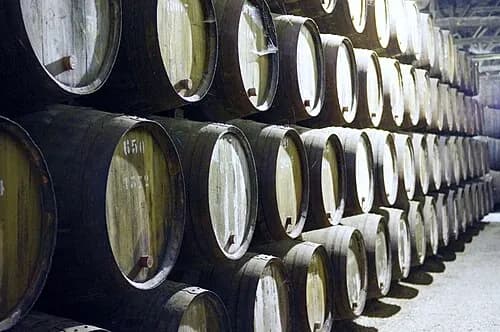
Gaia sits across the Douro from Porto's old town, and the port lodges there are where the wine from the upriver vineyards is stored and aged. The Helios Gaia visit moves from the Dom Luís I Bridge and the riverfront into a cellar and a tasting room. You do not see a single vine, so do not choose it expecting the harvest. What it offers is a few hours with a glass in your hand and no motorway at all. Some travellers also do both on separate days, which is a sensible way to see where port grows and where it ages.
Practical points before you book
- Start early and plan for a long day. A nine-hour trip suits a slow breakfast and not much else afterwards.
- Dress in layers. The valley can be hot at midday in September and cool in the morning and evening in October. Comfortable shoes matter on the terraces and in the old streets of Amarante.
- Ask about tastings and food in your request. They are not automatically included, and the quote is where you confirm them.
- Tell the team your interests. If you want more time at the winery, or you are not that interested in Amarante, say so when you request your date.
- Weather can turn. October brings occasional rain and mist. Mist on the river can be beautiful, but it can also hide the viewpoint.
If you are building a wider Portugal trip, the same planning logic applies to our Sintra day trip from Lisbon, another autumn outing where mist and early starts decide how good the day is.
For German and French wine travellers
If you already know Franconia or the Rhine, the Douro will feel both familiar and strange. The steep slopes and river bends will be familiar. The scale is larger, the heat is greater, and the wines are different: fortified port, and also the dry reds and whites now made here. For a comparison from home, our pieces on Federweisser season in Franconia and Franconian wine show how the German side of the harvest looks, and the Rhine Valley day trip from Frankfurt is the nearest equivalent in format. For readers searching in French, the idea is the same: une journée dans la vallée du Douro depuis Porto, avec vendanges en septembre et couleurs d'automne en octobre. The quote is in English, so write to the team with your date and group size.
Verdict
Take the Douro day if the landscape is the point, and you can accept long hours on the road. September gives you activity and heat, late October gives you colour. If you want a shorter, easier outing about port itself, take the Gaia cellars instead. Either way, send the team your date, group size and what you most want to see, and they will come back with a plan and a quote.
Douro Valley day trip FAQ
How long is the Douro Valley day trip from Porto?
The Helios trip is nine hours, from Porto and back to Porto, by road. A large share of that is travel, with stops in Amarante, at a Douro viewpoint and at a winery in Pinhão.
When is the Douro harvest?
The harvest peaks in September and tails off in October. Timing varies by year, weather and altitude, so it is not a fixed date. Colours on the vines turn later, usually from mid to late October and into November.
Is the Douro tour private or shared?
Both formats exist. The small-group tour is shared with up to 12 guests. The private format is just your party. Both follow the same route.
Are tastings and lunch included?
Not automatically. Admission, transport, food and tastings are included only if your quote confirms them, so check the quote before you book.
Is there a shorter option if I do not want a full day on the road?
Yes. The three-hour Vila Nova de Gaia port wine cellars visit stays in Porto and covers the bridge, the riverfront, a cellar and a tasting room. It shows how port is aged, not how the grapes are grown.
Book what you just read about
Explore related tours and check each trip for available booking options and inclusions.