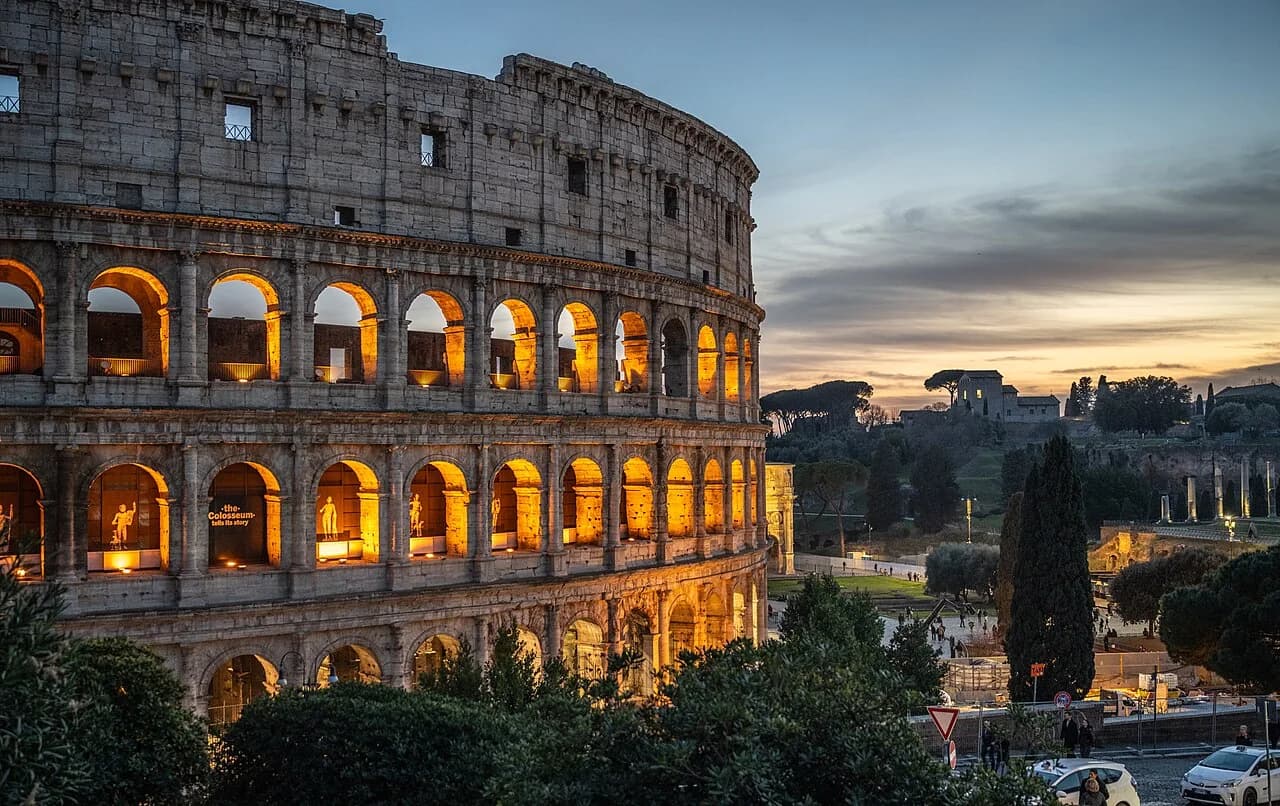
Destinations · Oct 16, 2026
Colosseum, Forum and Palatine: Which Ticket, How Long, What Order
One combined ticket covers most first visits; the real choices are the arena floor, your entry slot and which way you walk.

If this is your first visit to Rome, buy the standard combined ticket that covers the Colosseum, the Roman Forum and the Palatine Hill, and buy it from the official seller, not a reseller. Choose the earliest Colosseum slot you can face. Add the arena floor or the underground only if you care about how the building worked, not just how it looks. Otherwise the standard ticket is the better use of your money and your legs.
Be realistic about the day. The three sites together take two and a half to four hours of steady walking over uneven ancient stone, with little shade outside the Colosseum. Most people who say they did it in 90 minutes skipped the Palatine. This guide covers the ticket types, the official-versus-reseller question, a sensible order, and why autumn suits the open-air half of the site. The ticket rules are the same whichever language you use to book; check the official seller's current terms before choosing a date.
The three sites and how they fit together
The Colosseum is the enclosed amphitheatre: stairs, arched corridors, tiers of seating and a view across the arena. Entry is by timed slot, and security screening happens before you go in.
The Roman Forum lies in the valley just beside it. It is the ruined civic heart of ancient Rome: the Arch of Titus, the Via Sacra, the Basilica of Maxentius, the Curia (the Senate house), the Rostra, the Arch of Septimius Severus and the columns of the Temple of Saturn. It is open ground with a lot of fragments and not much signage, so it rewards a little reading beforehand.
The Palatine Hill rises above the Forum. This is where the emperors built their palaces, and today it is part ruin, part garden. Its payoff is height: views over the Forum on one side and the long grassy oval of the Circus Maximus on the other.
The standard combined ticket covers all three, normally as one entry to each site within a limited validity window, typically a day. Check the wording on the ticket you are buying, because the rules have been adjusted over the years.
Which ticket: the options compared
| Option | What it gets you | Who it suits |
|---|---|---|
| Standard combined ticket | Colosseum (timed slot), Roman Forum and Palatine Hill | Nearly every first-timer |
| Arena floor add-on | Standing on a section of the reconstructed arena floor, in addition to the standard visit | Photographers and anyone who wants to stand where the spectacles happened |
| Underground (and upper tiers) tickets | The corridors and chambers beneath the arena, and on some tickets the highest tier, usually in small groups and often with a guide | History and engineering enthusiasts; repeat visitors |
| Forum and Palatine only | The open-air archaeological area, without the Colosseum | Anyone who has already seen the Colosseum, or who is saving it for another day |
| Guided tour through a reseller | A guide plus entry, with a fixed start time | Anyone who wants context and doesn't mind a group pace |
Do you need the arena floor or underground?
Honestly, not on a first visit. From the standard seating tiers you already get the scale of the building and a clear view of the arena, with its exposed brick substructure. The arena floor adds a change of perspective: you look up at the tiers instead of down into the pit. The underground adds the most substance. You see the service corridors and the chambers where machinery, animals and people were held before the games. But these tickets are limited in number, tied to specific slots, and often go quickly. They also make the visit longer and more structured. If you are travelling at a busy time and it is your only day in Rome, book these early or skip them without regret.
Separate entries or combined?
Buying the three sites separately rarely makes sense, because the standard ticket is designed as the bundle. The one case for splitting your day is heat or fatigue: if you know the Colosseum in the morning will be enough, you can use the same ticket for the Forum and Palatine later, within its validity window, or on a second day if the rules for that ticket allow it. Check what the ticket says before you commit to a two-day plan.
Official tickets versus resellers
Searchers comparing sources usually discover that the same entry appears on many sites at many levels of markup. Here is the plain version.
- The official source is the website of the archaeological park that manages the Colosseum, Forum and Palatine (Parco archeologico del Colosseo) and its authorised ticketing partner. It sells the standard ticket at face value, and it is where new slots appear first.
- Resellers sell the same entry bundled with something extra, such as a guide, a fixed meeting point or a multilingual audio commentary, and charge a premium for it. That can be worth it. The premium is not worth it if all you get is the same standard ticket with 'skip the line' in the title.
- 'Skip the line' usually means 'timed entry', which every Colosseum visitor needs anyway. You still go through a security check, and that has its own queue.
- Tickets are issued in a name, and the name may be checked against ID at the gate. A ticket bought from a stranger or resold at the entrance is a bad idea.
- Look-alike websites exist. If the page does not clearly identify the park authority, or the checkout feels like a marketplace, step back.
A reseller makes sense when the official slots are sold out for your dates, when you want a guide for the history, or when you want someone else to handle the logistics. In every other case, go to the official seller and buy early. Slots for popular times are released in batches ahead of the date and fill quickly in busy seasons. Whether you explore independently or book a guided visit, compare the official ticket rules with what the tour includes.
The best order for the day
The most useful rule: book the Colosseum slot first and build the rest of the day around it. The Forum and Palatine have no such slot pressure, so they bend to fit.
- Colosseum first, at the earliest slot. You enter before the heat and the biggest crowds. The corridors and upper tiers are shaded in parts, and the arena views are best in lower morning light. Give it about an hour to an hour and a half.
- Walk out past the Arch of Constantine to the Forum entrance by the Arch of Titus. It is a short stroll, which is why the combined ticket works so well. Your ticket covers it.
- Go up onto the Palatine before you walk the Forum. You climb while your legs are fresh, you get the high view over the Forum so the ruins below make sense, and you can wander the gardens. Allow 45 minutes to an hour.
- Descend into the Forum and finish along the Via Sacra. Walk the paving toward the Arch of Septimius Severus and the Curia, then leave toward the Capitoline side. Allow an hour to an hour and a half.
Routing inside the park can change, with one-way sections or temporarily closed areas, so follow the staff and the signage on the day over any fixed plan. If you have a late-afternoon Colosseum slot instead, reverse it: Palatine and Forum in the morning, then lunch nearby, then the Colosseum.
Shade, sun and rain: what is covered and what is not
This is the part nobody mentions at the checkout.
- The Colosseum gives you partial relief. The ring corridors and stairwells are shaded, and the arches frame cooler spots. The seating tiers and viewing areas facing the arena are exposed. A light shower sends everyone into the corridors, which then feel crowded.
- The Roman Forum is almost entirely open to the sky. Stone paving and pale marble reflect the sun back at you. There is little shade beyond a few trees and the odd wall. In wet weather the old paving is slippery.
- The Palatine is also exposed, though it has more trees and gardens than the Forum, plus a few shady corners and the pines. Climbing in the sun is the hardest stretch of the day.
In high summer, that makes the Forum and Palatine a poor midday choice. In autumn it is a different story.
Why autumn suits the Forum and Palatine
The open-air half of the site is where the season matters most. In October and November the sun is lower and the paving does not hold the heat the way it does in July. A morning that would be punishing in summer becomes a pleasant walk. The light on the stone is softer, the Palatine gardens look less scorched, and the crowds, while still large, are usually less intense than at the summer peak. You do trade something away: days are shorter, showers are possible, and you should have a layer and a light rain jacket. For the broader picture on weather and crowds, see our guide to Italy in October and November. For the Forum and Palatine, autumn is one of the best times you can pick. Also check the park's closing days for your dates, because a small number of days a year it shuts completely, and holidays can alter hours.
What the combined visit really costs you
The ticket price is not the whole bill. The real cost is time and legwork.
- Time: two and a half hours if you move briskly and skip details, closer to four if you read the signs, climb the Palatine properly and take a break. Add time for the security queue and for arriving early at your slot.
- Walking: a lot of it, on uneven stone, cobbles and slopes, with stairs in the Colosseum and a real climb onto the Palatine. Step-free access exists in parts of the sites but is limited, so check the official accessibility information before you go if it matters.
- Stamina: carry water, wear shoes with grip, and bring sun protection even in autumn. Refilling a bottle from Rome's public drinking fountains is easy once you are out of the park.
- Facilities: toilets and cafés are limited inside the archaeological area. Plan a lunch stop afterwards, not mid-site.
Do not stack the Colosseum day with another timed ticket the same afternoon. If you also want the museums at the Vatican, give them their own day, and read our guide to Vatican Museums tickets and timing to avoid queuing.
Quick checklist before you book
- Pick your date, then pick the Colosseum slot first.
- Buy the standard combined ticket from the official seller unless you want a guide.
- Add the arena floor or underground only if you want them, and book early.
- Enter the name exactly as it appears on your ID.
- Pack water, a hat, comfortable shoes and a layer for autumn.
- Bring only a small bag, because security is strict.
FAQ: Colosseum, Forum and Palatine tickets
Do I need a separate ticket for the Roman Forum and the Palatine Hill?
Not if you buy the standard combined ticket, which covers the Colosseum, the Forum and the Palatine. Check the validity window on the ticket, as it is normally one entry to each site within a limited period.
Is it safe to buy from a reseller?
Reputable resellers do exist, usually selling guided visits, but you will pay a premium for something the official seller offers at face value. Be wary of sites that do not clearly identify the park authority, and remember that tickets are issued in a name.
How long should I allow for all three sites?
Two and a half to four hours is realistic. The Colosseum takes about an hour to an hour and a half, the Forum about the same, and the Palatine 45 minutes to an hour. Add time for the security queue and the walks between sites.
Is the arena floor or underground worth adding?
On a first visit, usually not. The standard ticket already gives you the scale and the views. The underground is the better add-on for history and engineering enthusiasts, but it is limited, slot-based and tends to sell out, so book early if you want it.
Should I visit the Forum and Palatine in the morning or afternoon?
In autumn either works, because the heat is mild. In summer, go early or late, because both sites are exposed with little shade. Book the timed Colosseum slot first and fit the rest around it.
Book what you just read about
Explore related tours and check each trip for available booking options and inclusions.