Planning · Oct 20, 2026
Cancún in October: Hurricane Risk, Warm Sea and Whether Tours Run
October and November sit in the tail of hurricane season: the sea is at its warmest, rain can be heavy, and boat days are the first to move.
The short answer: book it, but build in slack
Cancún in October is a reasonable choice if you accept three things. It is humid. Heavy downpours are likely on some days. And the Atlantic hurricane season officially runs to the end of November, so a storm is possible, though rarely the thing that actually spoils a week. The sea is at its warmest, and many visitors enjoy the quieter beaches.
Treat the weather as a scheduling problem, not a verdict. Keep one spare day, put the weather-dependent boat trip early in your stay, and read the rebooking terms before you pay. November is generally calmer than October, though the season is not over.
What the weather is really like
October is usually one of the most active months of the season for the western Caribbean, and the humidity is heavy. A typical day is hot and sticky, with bright spells broken by short, sharp showers. Some days bring a longer grey, wet spell. Rain often passes within a few hours, but not always.
Direct hits on Cancún are rare in any single year, though the area has a history of serious ones, including Wilma in October 2005. The more common disruption is a tropical system passing somewhere in the Caribbean. That brings rougher water, cloud and a day or two of unsettled weather, even with no storm nearby.
By November the heat and humidity ease a little. Northerly winds, called nortes, start to arrive and can make the sea choppy on some days. The official season still runs to 30 November, so keep checking forecasts.
The sea: warm, but not always calm
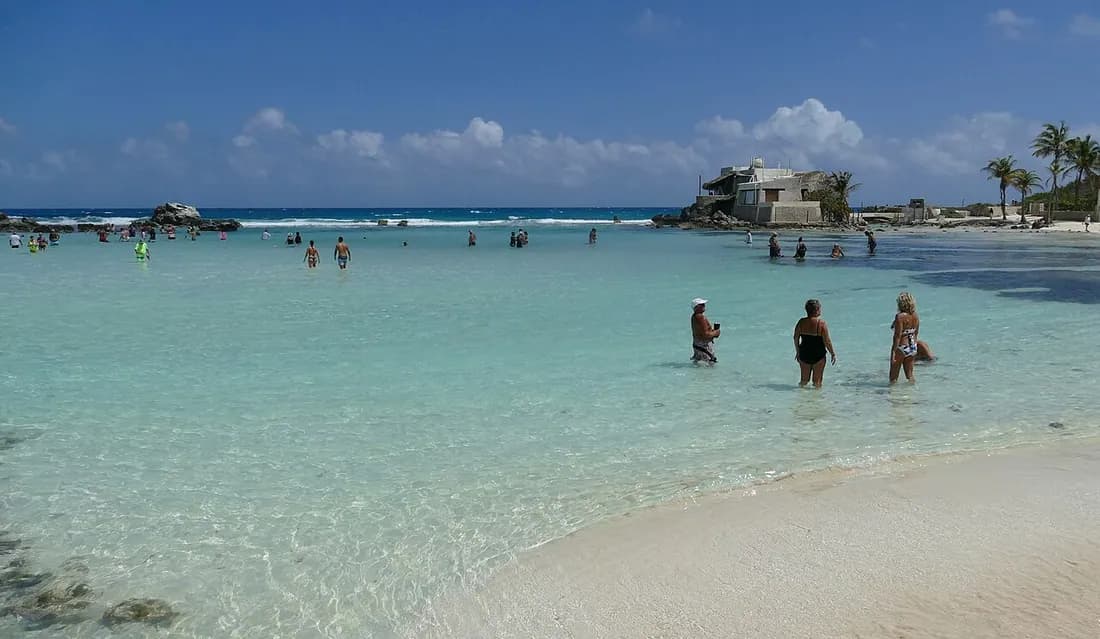
The water is bath-warm, which makes snorkelling pleasant. Visibility, however, depends on recent wind and rain. After a squally day it can be cloudy near the shore. Seaweed (sargassum) varies by year and tends to be a bigger problem in spring and summer than in autumn, but check recent beach reports rather than assuming.
What happens to sailing days when weather turns
Boat days are the first to change. Port authorities can restrict small-boat departures when winds or swell rise or a storm warning is issued, and the decision is made on the day. Crews and guides also stop for lightning or a rough crossing.
The Isla Mujeres sailing day is an 8-hour trip by road and boat: Cancún marina, the Caribbean crossing, Isla Mujeres, then a snorkel stop. It is the most weather-dependent of the three trips here. It runs as a small group of up to 12 guests, or as a private booking for your own party. If the sea is poor, the crossing or snorkel stop may be altered or called off.
What to ask before you book
- What happens if the port is closed or the trip is cancelled for weather: a new date, a credit or a refund?
- Who decides, and how far ahead will you be told?
- Whether you can move the date if a forecast turns bad, and by when.
- Whether the route can change if only the snorkel stop is affected.
Helios confirms your guide, access, transport and final price before booking. Ask for the weather and rebooking terms in the same message, and have them confirmed in your quote.
Two trips that hold up in rain
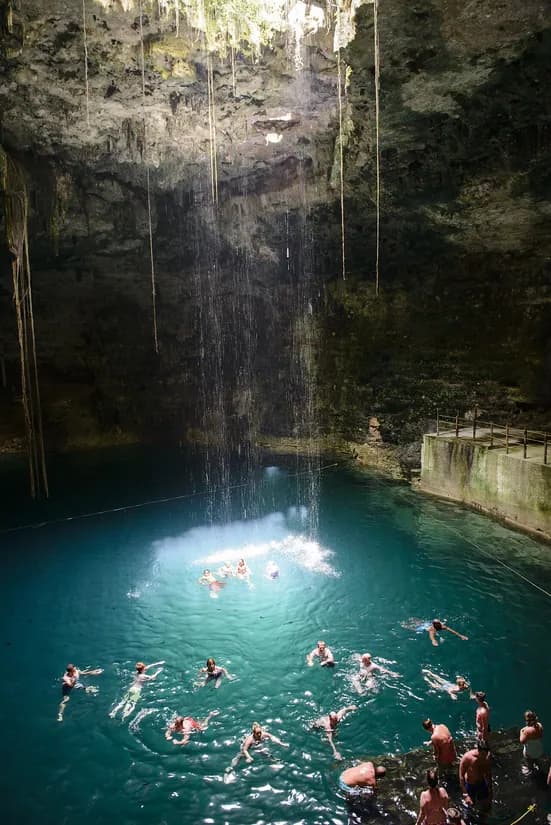
The Yucatán cenote swim is a 6-hour road trip with a cenote entrance, a swim stop and jungle trails. Swimming in a freshwater sinkhole is no worse for a shower, and the jungle canopy takes some of the rain. The trails can be muddy, so bring shoes that cope with that. It also runs as a small group or private.
The Chichén Itzá and Valladolid day is 12 hours by road: Cancún departure, Chichén Itzá, Valladolid and a cenote. It is long, and the site is mostly open-air with little shade, so expect heat and humidity as well as possible showers. Valladolid and the cenote stop give you somewhere to slow down. Showers pass, and the overall day usually still works. It runs as a small group of up to 12 or privately.
None of the road trips will run safely through a named storm. In that case the plan is to rebook, not to push on.
A sensible plan
- Do the Isla Mujeres sailing day early in your stay, so a bad day can be moved.
- Use the cenote swim as your wet-weather fallback.
- Save Chichén Itzá for a day when the forecast is steadier, and leave early to beat the heat.
- Check forecasts from the national meteorological service and your airline in the days before you travel.
If you are continuing to Mexico City around 1–2 November, read Day of the Dead in Mexico City.
FAQ
Is Cancún safe to visit in October?
Usually, yes. Storms are tracked days ahead, and most October days have no storm threat. Check forecasts before you fly, and buy travel insurance that covers weather disruption.
Is November better than October?
Generally calmer and slightly less humid, but the hurricane season officially lasts until 30 November, and northerly winds can roughen the sea.
Will the Isla Mujeres sailing day run if it rains?
A passing shower alone is not necessarily a problem. Strong wind, rough swell, lightning or a port closure can change or cancel the trip. Ask for the rebooking terms before you book.
Which tour is best on a rainy day?
The cenote swim is the most rain-tolerant. Chichén Itzá also usually works in showers, but it is a long, hot day.
Book what you just read about
Explore related tours and check each trip for available booking options and inclusions.