
Egypt in 16 Days · special
$2,690From $2,152 / person-20% Summer16 daysIncludes 1 h at this sight
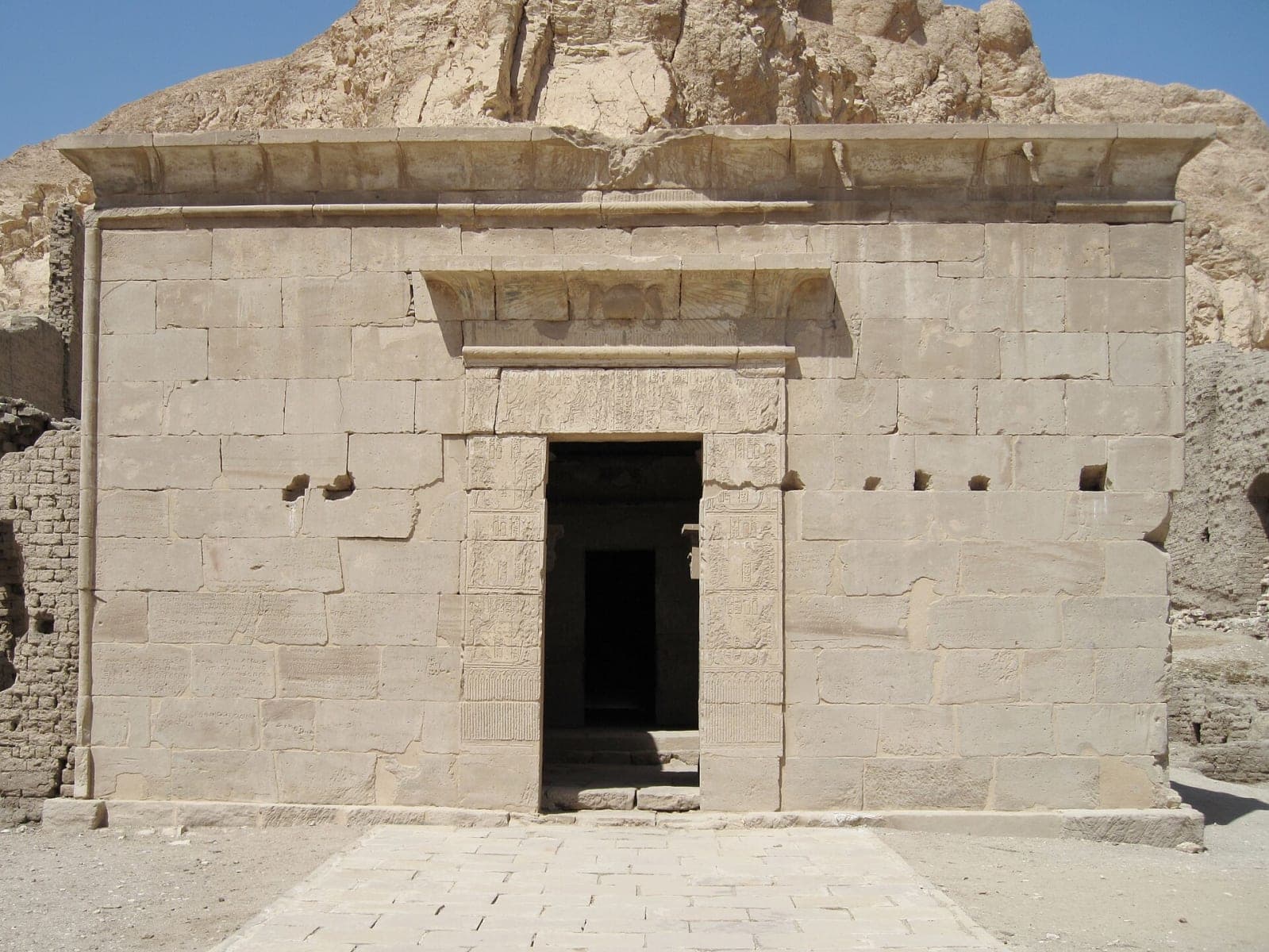
Village of the tomb-builders
Typical visit: 1 h
Period: 1550 BC · New Kingdom
The remarkably preserved village of the artisans who cut and painted the royal tombs.


A walled village of some seventy small houses on the Theban west bank, tucked in a hollow between the Valley of the Kings and the Valley of the Queens. This is where the men who cut and painted the royal tombs lived, with their families, for roughly four hundred and fifty years.
You can walk the single main street and step into the roofless houses — front room, living room, cellar, stairs to a roof terrace, a kitchen at the back. It is the most completely understood ancient settlement in Egypt, and standing in it after visiting the tombs is what makes both make sense.
Above the village, the workers cut tombs for themselves — miniature versions of what they built for kings, decorated to a standard they were not obliged to reach.
Because the villagers wrote things down and threw the writing away in a rubbish pit that never got wet, Deir el-Medina is the best-documented community in the ancient world. Tens of thousands of ostraca — limestone flakes and pottery shards used as notepaper — have come out of the site.
They are not state records. They are workplace and household paper: pay lists, tool inventories, contracts, wills, court cases between neighbours, letters, school exercises, medical prescriptions, love poems, and a register of who missed work and why. The recorded reasons include illness, a funeral, brewing beer, being bitten by a scorpion, and "his wife was menstruating".
In year 29 of Ramesses III the grain rations stopped arriving. The workmen downed tools, walked out of the village and staged a sit-in at the mortuary temples, refusing to move until they were paid. The scribe Amennakht recorded it as it happened.
It is the earliest documented labour strike in history, and it worked — the rations were delivered. It also happened repeatedly over the following years, because the state was running out of money.
Literacy in ancient Egypt is usually estimated at a very small percentage. In this village it was far higher — draughtsmen had to read to lay out tomb texts, and the volume of casual writing suggests it went well beyond the professionals. Women here also appear in the record buying, selling, lending, owning property and testifying in court in their own names.
Pick how many days you have, add attractions per day, and see average activity and travel times between cities.
Places that carry the same story forward, or sit close enough to take in the same day.
1539 BC · New Kingdom
1 km away
1500 BC · New Kingdom
1 km away
1470 BC · New Kingdom
1 km away

1400 BC · New Kingdom
5 km away

1350 BC · New Kingdom
1 km away
1250 BC · New Kingdom
1 km away
Book a ready-made tour or use the designer above to build your own plan.
Hand-picked tours our guests love — top quality at reasonable prices, curated by Helios for your Egypt trip.