
Cairo & White Desert · 7 days
From $1,150 / person7 daysIncludes 4 h at this sight
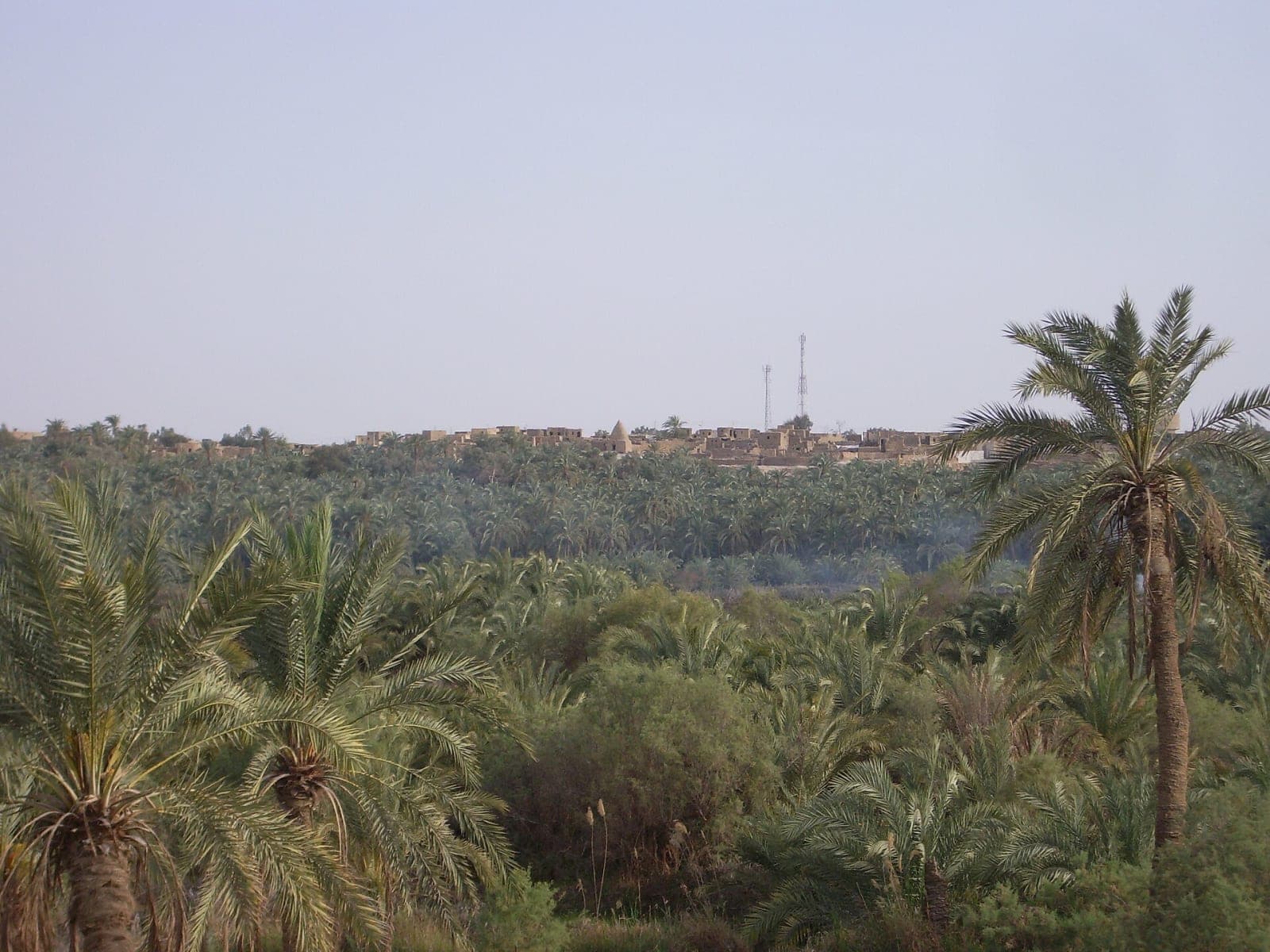
Green desert oasis and gateway to the sands
Typical visit: 3 h
A palm-filled oasis ringed by black volcanic hills — the launch point for White Desert safaris.


A green depression in the Western Desert about 360 kilometres south-west of Cairo, and the usual base for White Desert trips. Some thirty thousand people live here among date palms, olive groves and hot springs, in a bowl ringed by black volcanic hills.
The main town is Bawiti. It is small, unpolished and easy to walk, and the main pleasures are simple: the palm gardens, a hot spring at the end of the day, and the view from the ridge above the town at sunset.
Bahariya has been inhabited for thousands of years, and unusually for a remote oasis it was wealthy — a producer of wine that was shipped to the Nile valley, and a station on the desert roads linking Egypt to the oases and beyond.
In 1996 a guard's donkey put its leg through a hole in the ground near the temple of Alexander. The hole opened into a tomb, and the tomb opened into a cemetery.
The Valley of the Golden Mummies is a Greco-Roman burial ground that may hold as many as ten thousand people, of whom only a few hundred have been excavated. Many are covered in gilded cartonnage — moulded and painted plaster masks and chest-pieces, faces rendered in a mixture of Egyptian and Roman style. They are not royalty. They are the middle class of a prosperous provincial oasis, buried in family groups with a level of decoration nobody expected this far from the Nile.
Bahariya holds the only known temple in Egypt bearing the cartouche of Alexander the Great. Whether he actually came here is unresolved — the oasis lies on a plausible route to or from the oracle at Siwa, which he famously did visit, and some have taken the temple as evidence he passed through. The building is badly weathered, and the question is likely to stay open.
Pick how many days you have, add attractions per day, and see average activity and travel times between cities.
Places that carry the same story forward, or sit close enough to take in the same day.
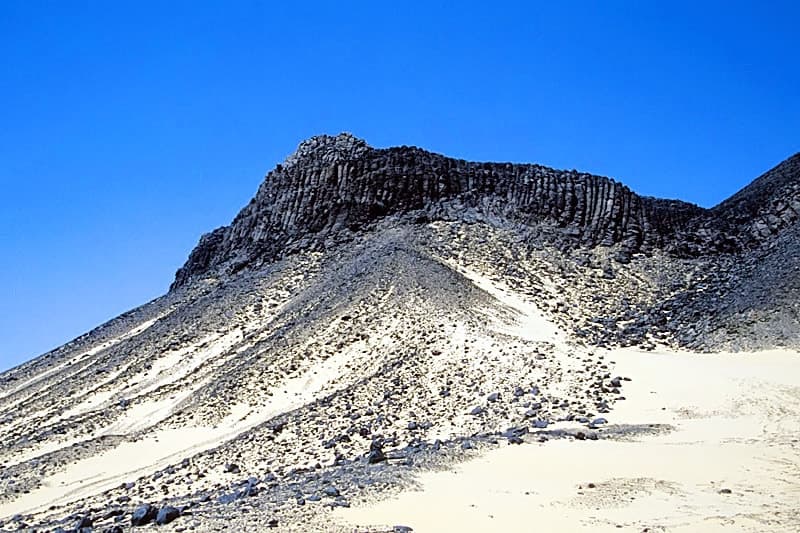
Volcanic hills capped with black stone
26 km away
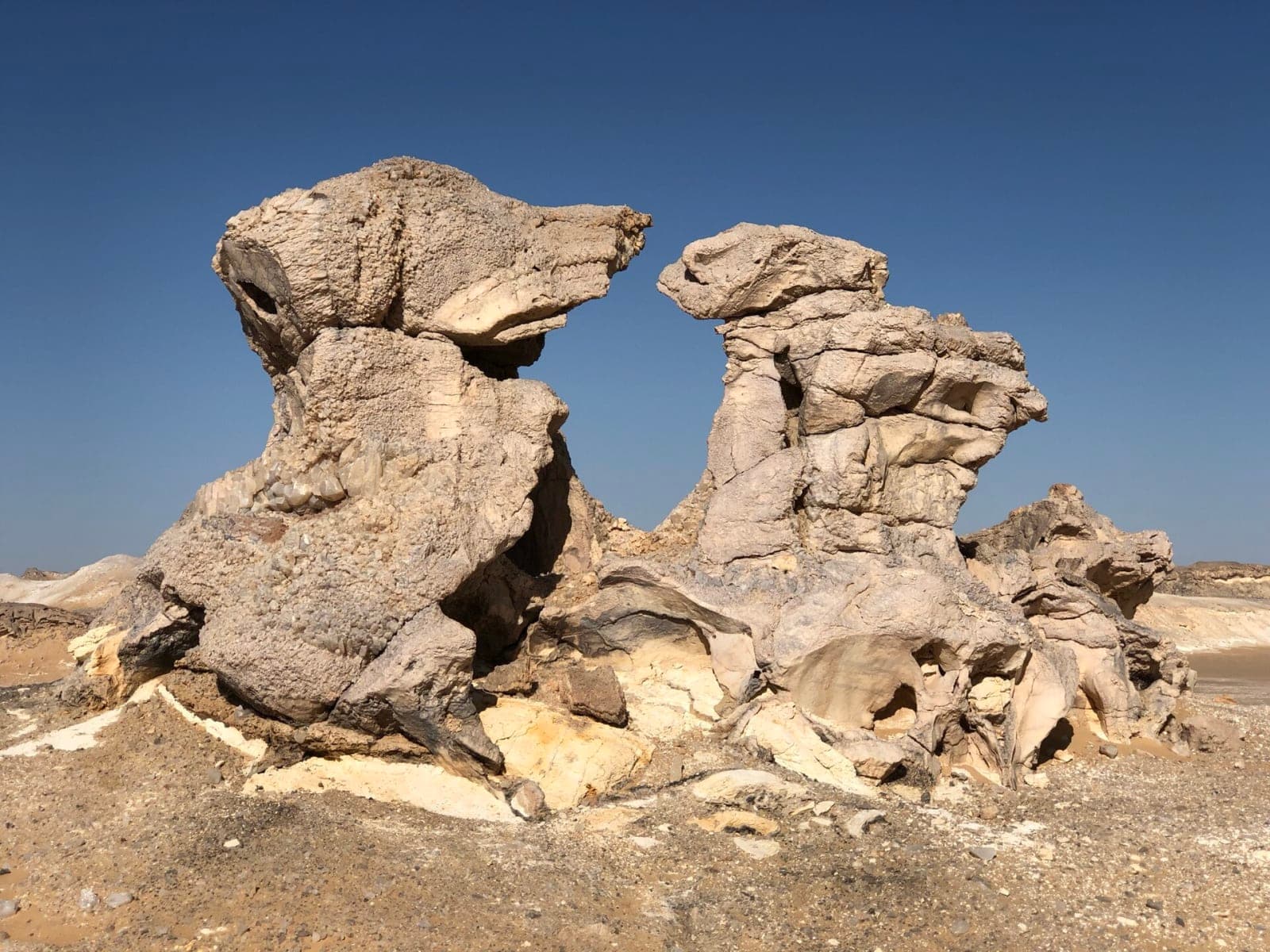
Glittering ridge of natural quartz crystals
88 km away
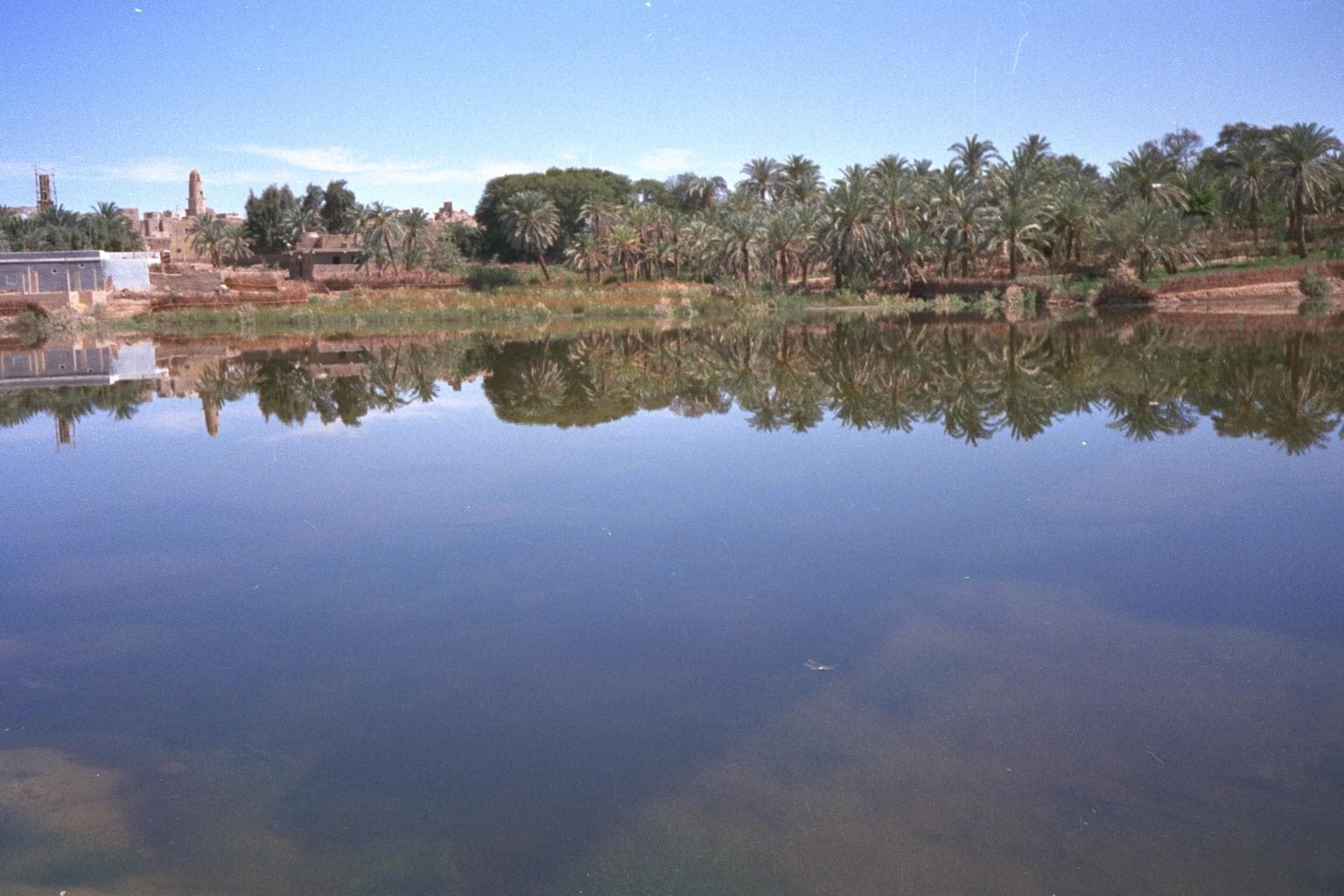
Green oasis with a medieval Islamic town
318 km away
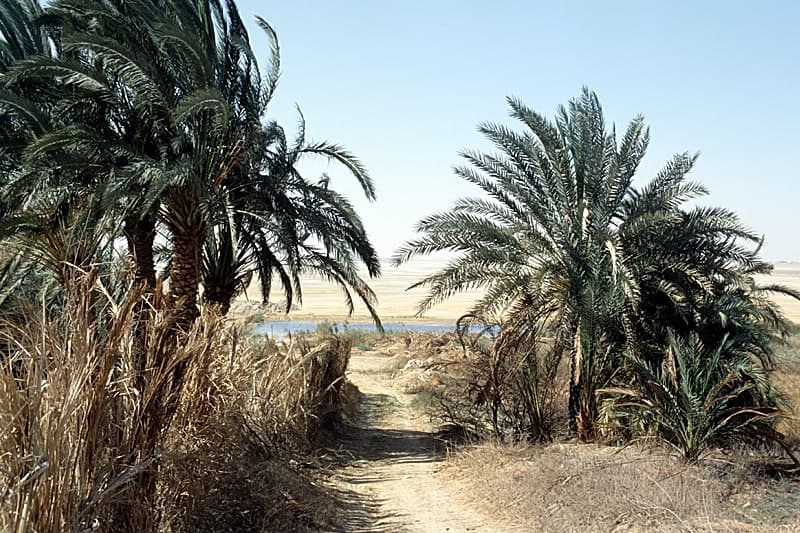
Sleepy oasis and gateway to the White Desert
169 km away
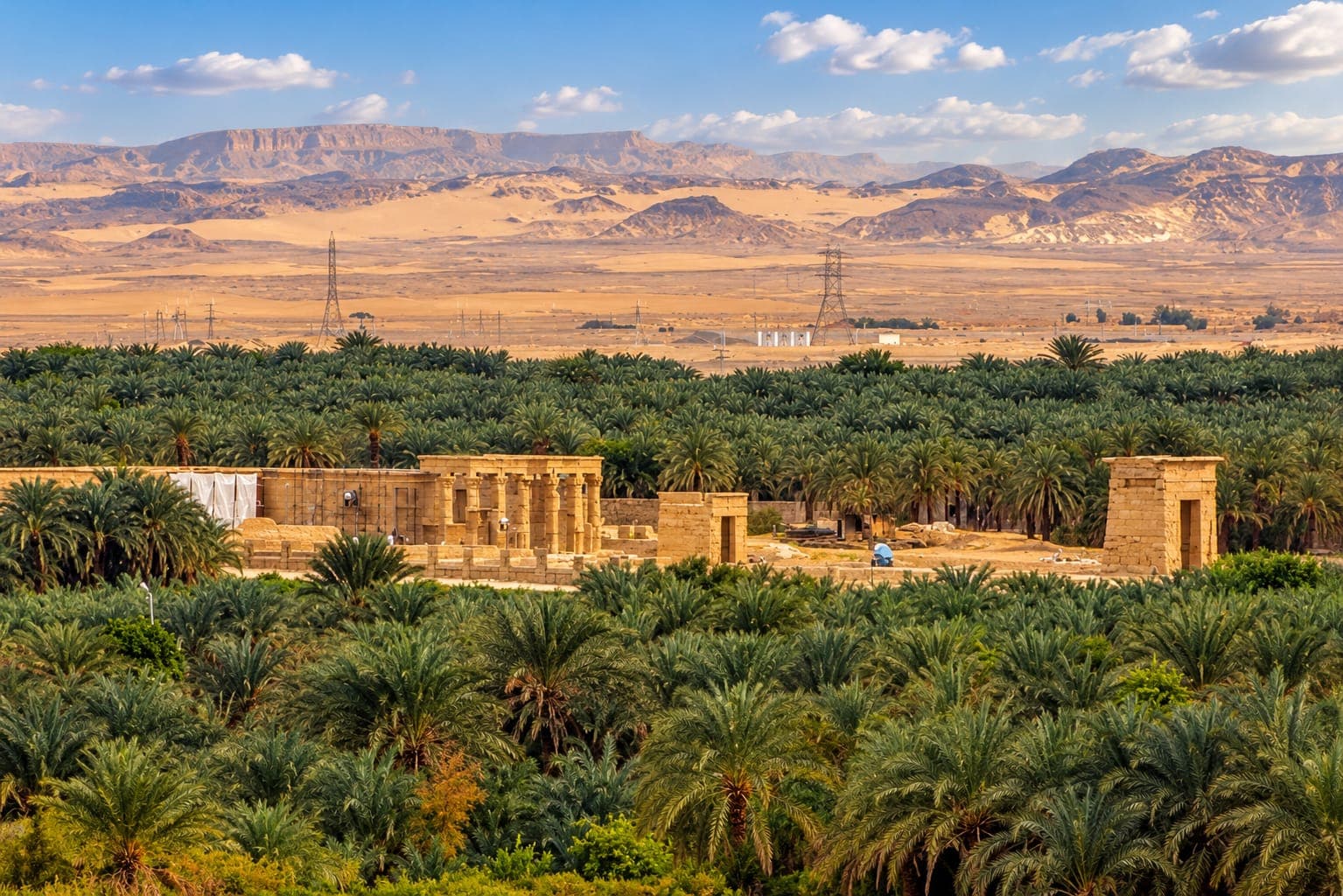
Desert oasis with temples and ancient forts
363 km away
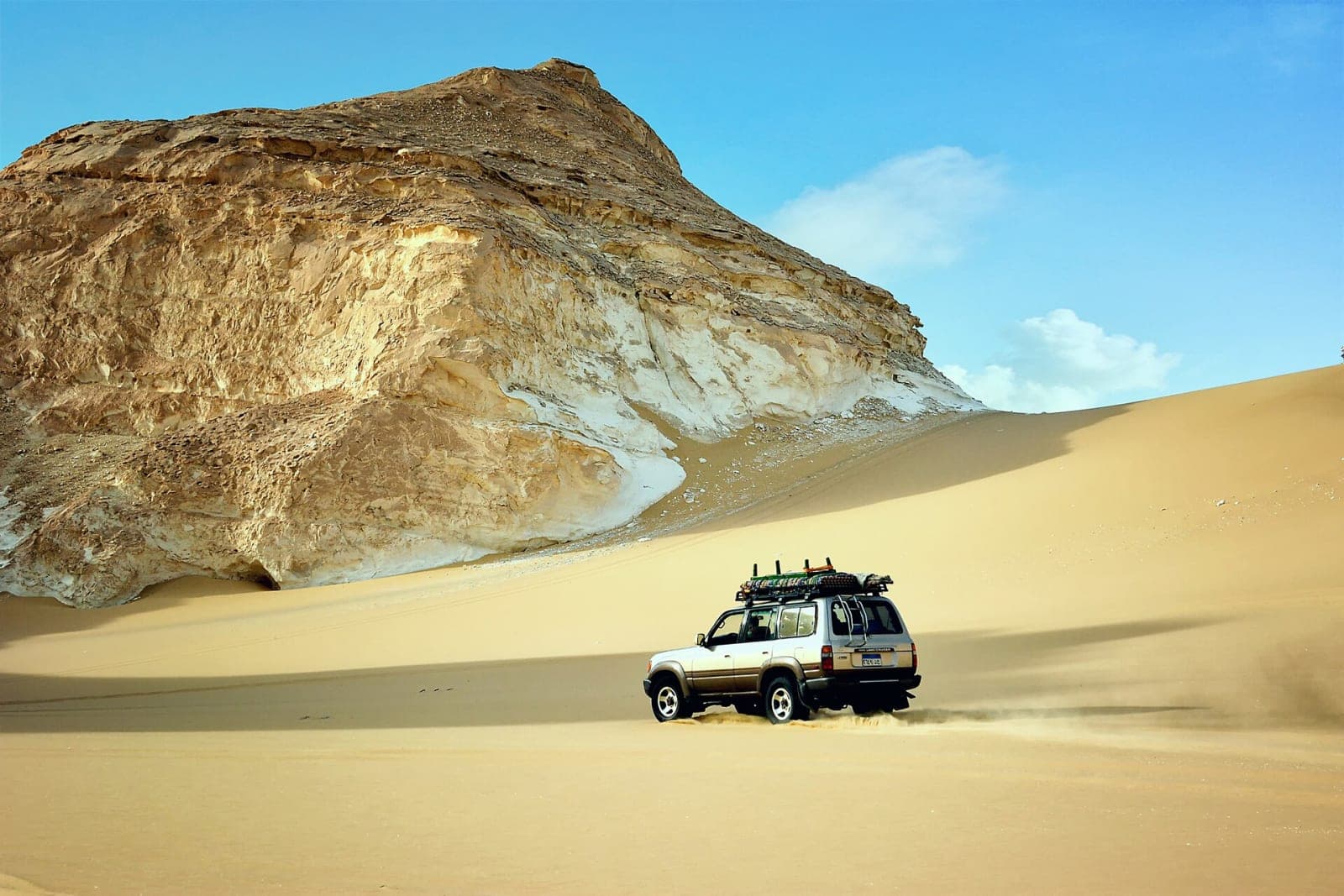
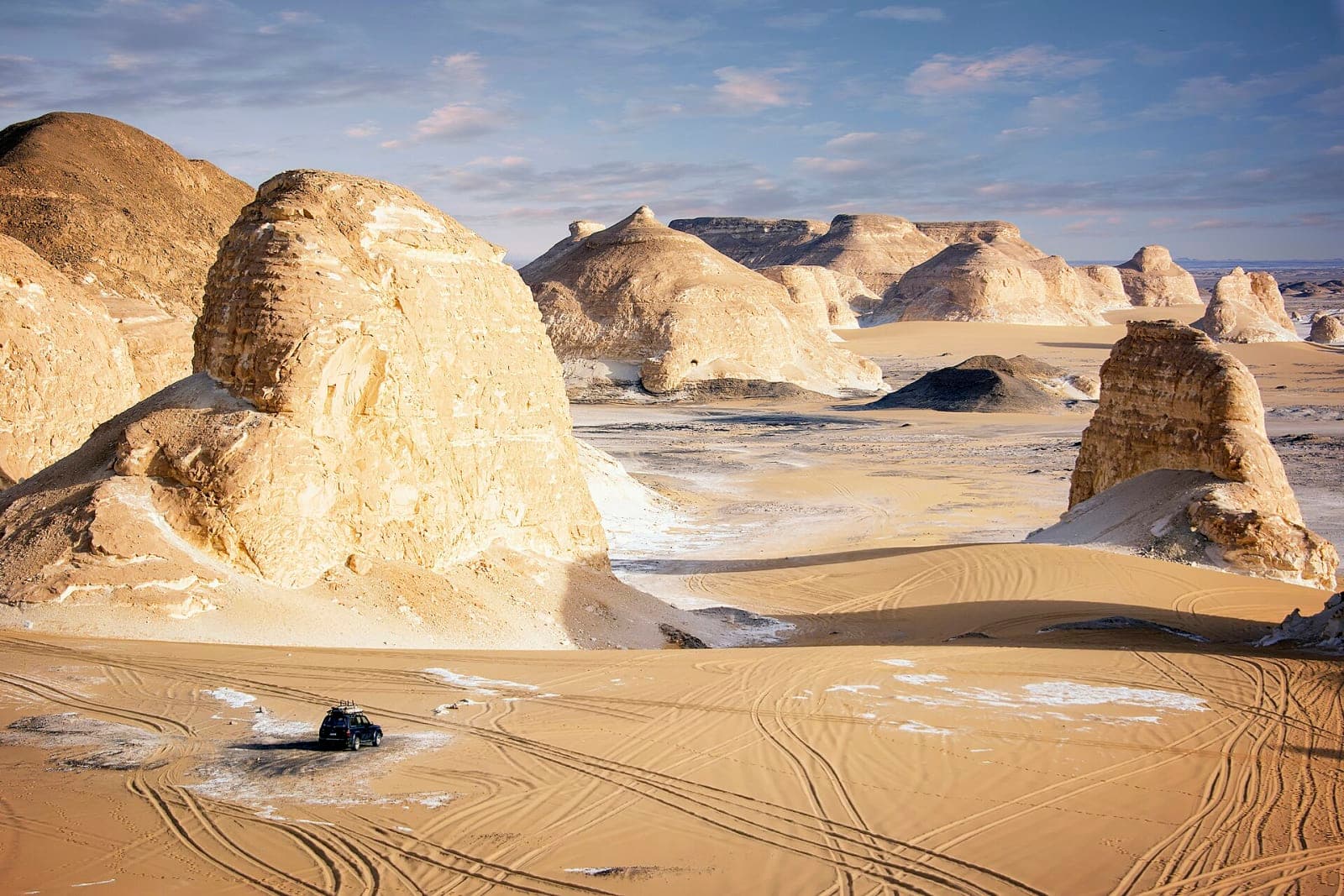
Surreal chalk rock formations
136 km away
Book a ready-made tour or use the designer above to build your own plan.




Hand-picked tours our guests love — top quality at reasonable prices, curated by Helios for your trip.