Nile & Luxor · Sep 3, 2026
Valley of the Kings: which tombs are worth the extra ticket
Your ticket admits you to three tombs. Everything famous costs extra, and only one of the supplements is unarguable.
Helios Travels Team

Your ticket to the Valley of the Kings admits you to three tombs. Not the valley — three tombs, chosen from whichever are open that week. Everything famous costs extra, and the extras are not equally worth it.
This is the decision the guidebooks fudge and the tour desks skip. Here is how to spend your three, and which supplement is actually worth paying.
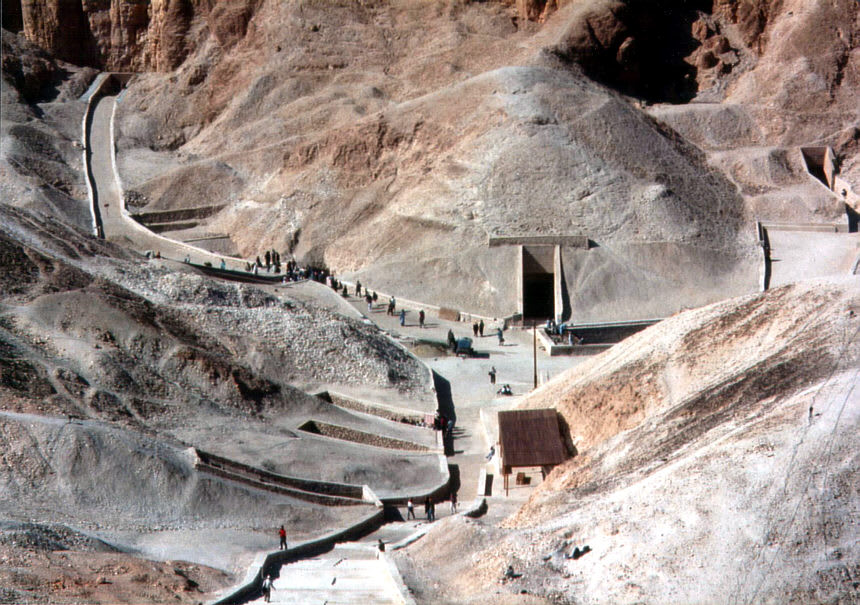
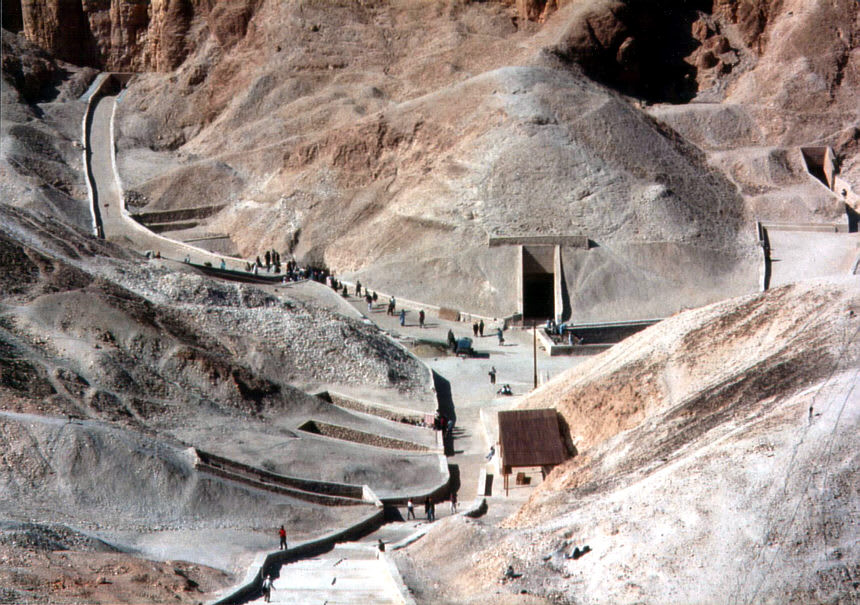
The dry limestone valley and tomb entrances at the Valley of the Kings
How the ticketing actually works
There are over sixty tombs cut into this valley. Roughly eight to ten are open at any time, and the set rotates — partly for conservation, partly for restoration work. Your general ticket covers any three of the open tombs.
Three tombs are then separately ticketed and never included:
- KV62 — Tutankhamun
- KV17 — Seti I
- KV9 — Ramesses V and VI
A photography ticket is also separate if you want to use a camera inside the tombs. Buy all of this at the main ticket office before you take the shuttle in — there is no ticket desk at the tombs themselves, and walking back is a real and avoidable misery in the heat.
The three worth paying extra for, ranked
1. KV9 — Ramesses V and VI. Pay this one. If you buy exactly one supplement, buy this. It is a long, wide, straight corridor descending into the rock with the decoration essentially intact from floor to ceiling, and the ceiling is the thing: the sky goddess Nut stretched the full length of the tomb, swallowing the sun each evening and giving birth to it each morning, painted on a deep blue field. It is the best-preserved painted ceiling in the valley and there is usually room to stand and look at it. Best value in Luxor by a distance.
2. KV17 — Seti I. Extraordinary, and expensive. The finest tomb ever cut in Egypt: over a hundred metres of corridor, relief carving of a delicacy nothing else here matches, astronomical ceilings, and a burial chamber that repays fifteen slow minutes. The supplement is by far the steepest of the three. Worth it if this is a once-in-a-lifetime trip and the budget can take it; skippable if it would mean cutting something else.
3. KV62 — Tutankhamun. Manage your expectations. The most famous tomb in the world is small, plain, and largely undecorated — it was cut for someone else and pressed into service when a teenage king died unexpectedly. The treasure is in Cairo, at the Grand Egyptian Museum. What is here is the outer sarcophagus, one decorated wall, and the mummy itself in a climate case. That last item is the reason to go in: this is Tutankhamun, in the room he was buried in. Whether that is worth the supplement is a genuinely personal question, and no guide can answer it for you.
Painted decoration on a tomb wall in the Valley of the Kings
How to spend your three included tombs
Because the open set rotates, don't arrive with a fixed list — arrive with a strategy. Ask at the gate which tombs are open today, then pick for variety rather than fame:
- One long, deep tomb — a Ramesside corridor tomb. These are the ones that give you the sense of descending into the earth. KV11 (Ramesses III) and KV2 (Ramesses IV) are frequent, accessible and excellent.
- One tomb with strong colour — a smaller, tighter tomb where the paint survives brilliantly because less air has moved through it.
- One unusual one — whatever the guard says has just reopened, or the odd one out on the day's list. The valley's pleasure is partly in the tombs nobody photographs.
Do not try to see more by rushing. Three tombs looked at properly beat six glanced at, and the heat will make that decision for you anyway.
What the decoration is actually saying
These are not decorative pictures. Every wall is a functional text — a map and a manual for getting a dead king through the twelve hours of the night and out the other side as the reborn sun.
Once you know that, the repetition stops being repetitive. The recurring registers of figures are the hours. The boat is the sun's boat. The enormous serpent is Apophis, who attacks it every night and must be defeated every night. The king is shown at each stage because the text has to name him to work. A tomb is machinery, and the paint is the instruction set.
That single idea does more for a visit here than any amount of memorising dynasties.
Why the tombs are here at all
For a thousand years Egypt's kings advertised their burials with pyramids, and for a thousand years those burials were robbed. By the New Kingdom the strategy changed completely: hide the tomb, and put the temple somewhere else entirely.
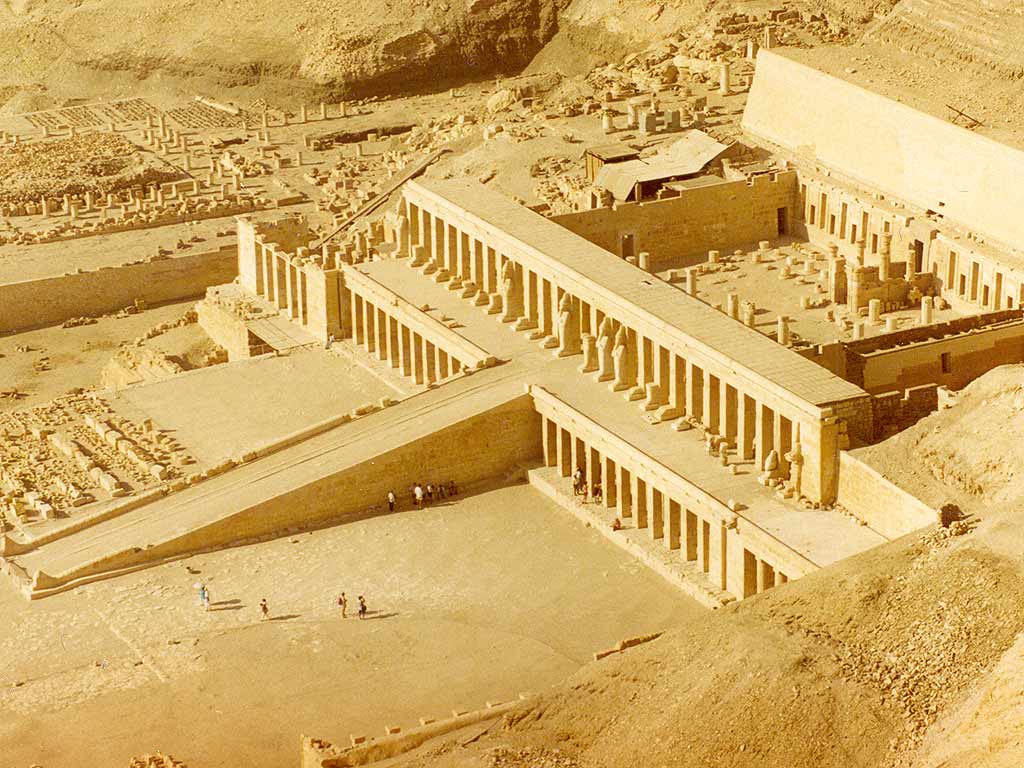
So the mortuary temples — Hatshepsut's terraces, the Ramesseum, Medinet Habu — sit out on the flood plain where the offerings and the priests could be, while the actual burials went into a dry, remote wadi behind the cliff. The valley is overlooked by el-Qurn, a natural pyramid-shaped peak, which almost certainly was part of the choice: the pyramid form without the advertisement.
It did not work. Nearly every tomb here was emptied in antiquity, much of it during the collapse at the end of the New Kingdom, and priests eventually gathered the surviving royal mummies into two caches to keep them safe from the robbers. That is why the kings of Egypt were found in the wrong tombs — and why KV62 mattered so enormously in 1922. Tutankhamun was not a great king. He was simply the one nobody had finished robbing.
The valley's modern history is worth a moment too. Giovanni Belzoni, a former circus strongman turned excavator, found Seti I's tomb in 1817. Howard Carter spent six seasons finding nothing before opening KV62 in November 1922. Excavation continues; tombs are still being identified, which is part of why the open list changes.
The practical part, which matters more than usual
- Go at opening. The valley is a limestone bowl with no shade whatsoever. It is a genuinely different place at 6 am than at 11 am, in temperature and in crowding.
- Buy every ticket at the entrance. Tickets, supplements, photo permit — all of it, before the shuttle.
- Water, hat, closed shoes. The tomb corridors are ramped or stepped and the dust is slippery.
- Inside the tombs it is hot and airless, not cool. Humidity from visitors' breath is the main threat to the paint, which is why some tombs close and why you shouldn't touch a wall — the oil from one hand is enough.
- Tipping for a "special" door being opened is not the deal you think it is. Buy the ticket for the tomb you want.
- Combine with the west bank, don't isolate it: Hatshepsut's terraces and Medinet Habu are minutes away and make a coherent morning.

The terraces of Hatshepsut's temple at Deir el-Bahari, near the valley
The short answer
Buy the general ticket. Add KV9 (Ramesses V/VI) — it is the best thing in the valley for the money. Add Seti I if this is your one trip to Egypt and the budget allows. Treat Tutankhamun as a pilgrimage rather than a sight, and decide accordingly.
Then use your three included tombs on variety, go early, and give yourself permission to sit in the shade at the rest house for twenty minutes in the middle. This is not a valley to speed-run.