
Culture · Oct 9, 2026
Umm El Howeitat: the Ghost City near Safaga, explained
A Scottish mining town of 16,000 people, abandoned around 2001 — what is left, which stories are true, and how to visit safely

About an hour south of Hurghada, and roughly half an hour inland from the port of Safaga, a whole town stands empty in a desert valley. Umm El Howeitat — also written Umm Huwaytat or Umm al-Huwaytat — was built for phosphate miners in 1910 and abandoned around the turn of the millennium. Locals call it the Ghost City. We drive guests out there several times a month, and this is what we tell them before they get in the car: what the place was, what is actually left, which stories are history and which are just stories, and how to visit without getting hurt.
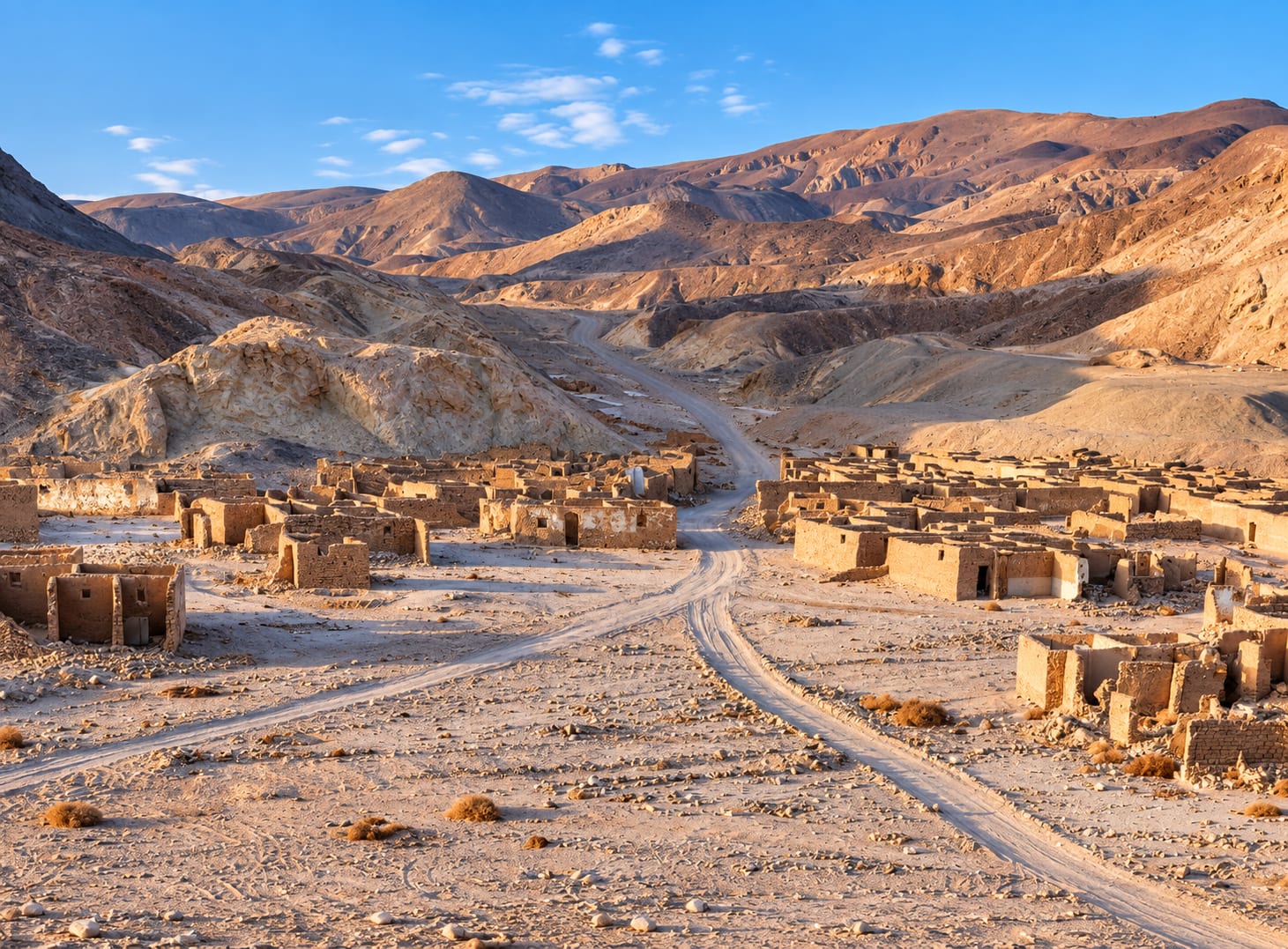
Ghost City Umm El Howeitat, the abandoned phosphate-mining town inland from Safaga
Where is Umm El Howeitat?
The old mining town lies in a side valley of Wadi Gasus in the mountains of the Eastern Desert, about 27 kilometres south-south-west of Safaga, at roughly 200 metres above sea level. The usual approach is by an asphalt road that leaves the coastal highway about 12 kilometres south of Safaga and runs some 15 kilometres inland. There is also a desert track through Wadi Gasus that needs a high-clearance vehicle.
Do not confuse it with the newer village of the same name. A modern settlement called Umm El Howeitat exists separately; the ghost town is the old one, the one the miners left.
Why was there a town here at all?
Phosphate. The hills between Safaga and Quseir hold layers of phosphate rock laid down in the Cretaceous sea, roughly 80 million years ago — usually between half a metre and one and a half metres thick. Phosphate is the raw material for agricultural fertiliser, and in the early twentieth century Europe wanted a great deal of it.
Geologists working for the government's survey department mapped these deposits in the first years of the century and published them in 1905. What followed was industry in a place with no water, no shade and no town.
A Scottish company, a railway and 16,000 people
The company that built Umm El Howeitat was not Egyptian and not Italian. It was the Egyptian Phosphate Co. Ltd., incorporated in Glasgow in 1910. Its business records still sit in the University of Glasgow's archives. The company laid a narrow-gauge railway, about 28 kilometres long, down to the coast, and from 1911 phosphate was shipped from Safaga to Britain.
You will sometimes read that Italians ran these mines. There was an Italian phosphate company on this coast, founded in 1912 — but it worked the deposits around Quseir, further south. Safaga and Umm El Howeitat were the British company's patch.
At its height the settlement is reported to have housed around 16,000 people. Sources describe schools, a small hospital, shops, mosques and a water network. Workers lived in simple single-storey houses of stone and mud brick; the engineers' quarters were better built. Former residents interviewed by the Egyptian press remember it as a place where doors were left open and neighbours ate together.
From British mine to Egyptian company
After the 1952 revolution, the mines were nationalised in 1956 and run by the Egyptian Safaga Phosphate Company, later restructured as the Red Sea Phosphate Company. The customer changed too. Once the Aswan High Dam stopped the Nile's annual flood and the silt it brought, Egyptian farming came to depend on artificial fertiliser, and much of the phosphate stayed in the country.
Why was Umm El Howeitat abandoned?
Two things ended it. The first was water: in 1996 a severe flash flood after a storm tore through the valley and badly damaged the settlement. The second was economics: the easily worked seams were running down. Production stopped entirely around 2000–2001, and the remaining families were moved out.
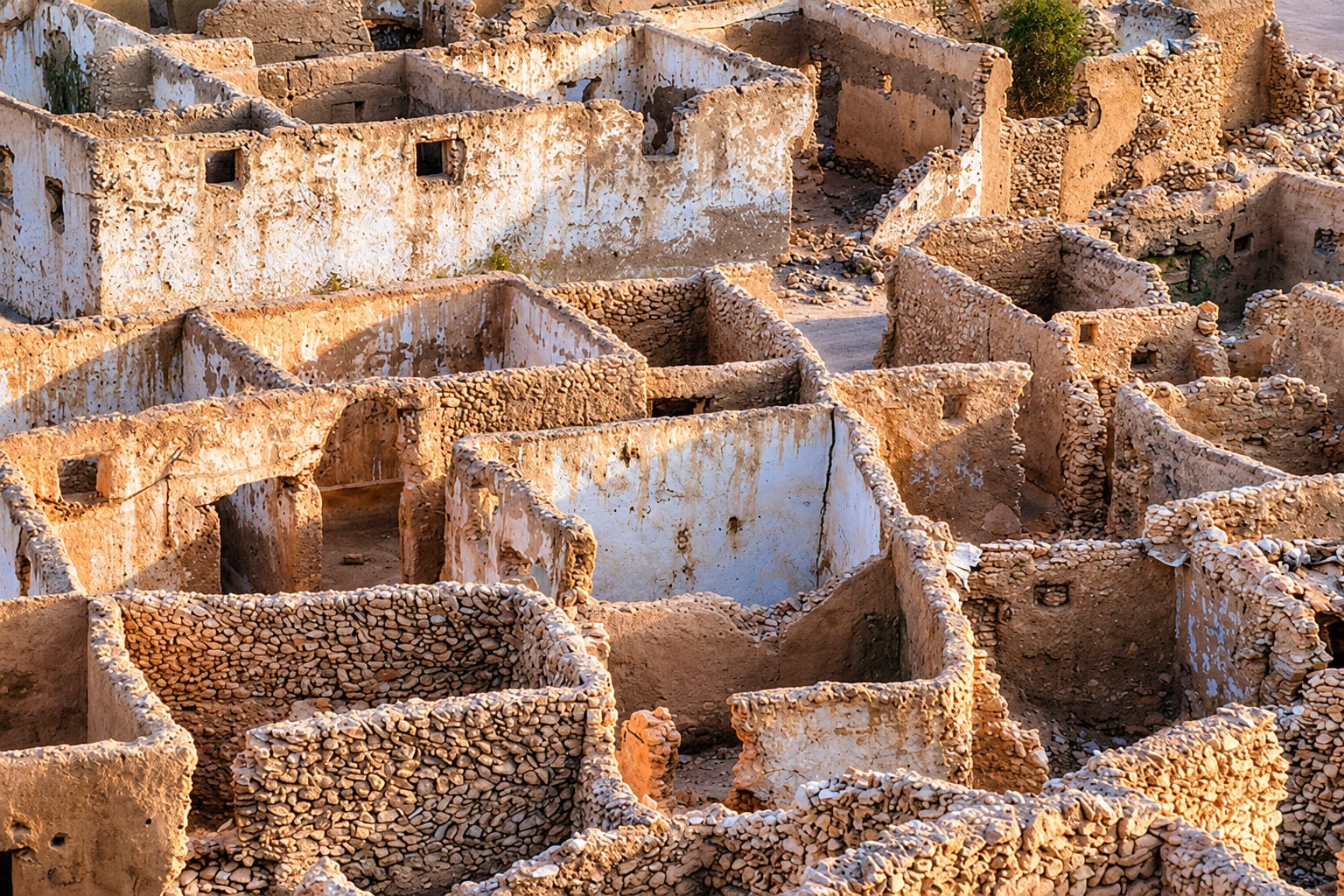
Afterwards, scrap collectors stripped the empty houses of anything that could be carried — doors, window frames, metal. That is why the town looks older than it is: most of these buildings were lived in within living memory.
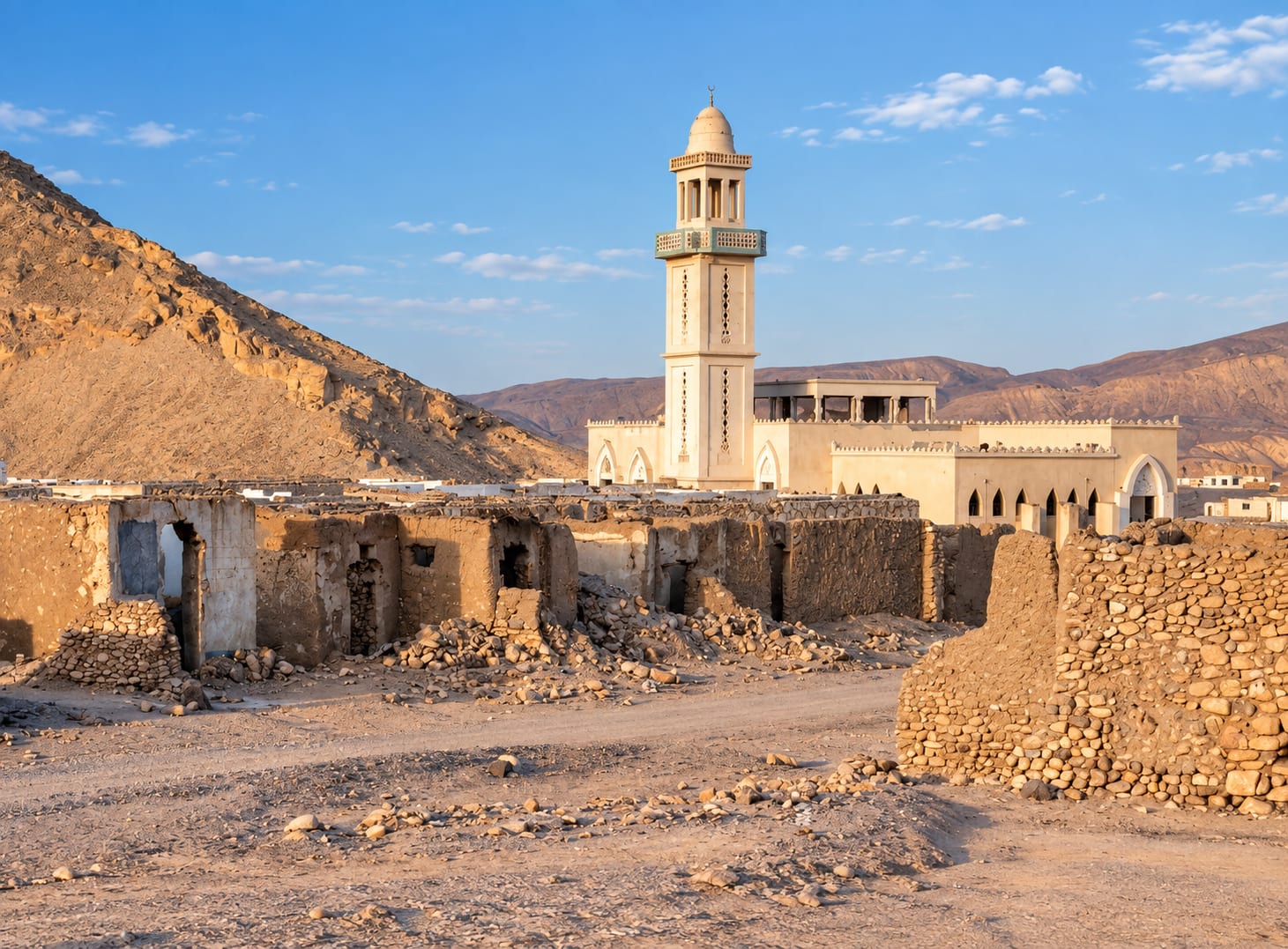
Ghost City Umm El Howeitat in the Eastern Desert mountains
Book what you just read about
Explore related tours and check each trip for available booking options and inclusions.

