How to tell a good guide from a bad one
Egypt licenses its guides. The Ministry of Tourism issues the card, licensed guides have studied Egyptology — usually a full degree — and they are the only people permitted to lecture inside the sites. A man who attaches himself to you at the gate is not a cheaper version of the same thing. He is someone with opinions and a fee.
What separates a good licensed guide from an adequate one:
- He says "I don't know". Egyptology is full of open arguments. Somebody with a confident answer to everything is reciting.
- He tells you what is disputed — whose face the Sphinx wears, what the ramp at Deir el-Bahari looked like, whether anything else lies behind Tutankhamun's wall. You get the argument, not a verdict.
- He asks what you are interested in before the day starts, and then changes the day for it.
- He does not take you shopping.
- He tells you what to skip. Anyone who thinks everything is unmissable has not thought about your feet.
If somebody recommends a private guide by name, book that person. The gap between a guide and a good guide is wider than the gap between having one and not.
Three cases people ask us about
Women travelling alone. Egypt is travelled solo by women constantly, and the accounts are consistent: staring and comment are common, real danger is rare. A guide or a driver removes most of the friction, which is why a lot of solo travellers book one for the sites and do the cities by themselves.
Families with small children. Guided, nearly always. The sites are hot, shadeless and long, and having somebody else hold the logistics is the difference between a holiday and a march.
Nile cruises. Guided by construction — the excursions are built into the boat's schedule and the Egyptologist comes with the ship. You can book a cabin and skip every excursion, and some people do exactly that.
The three things people actually worry about
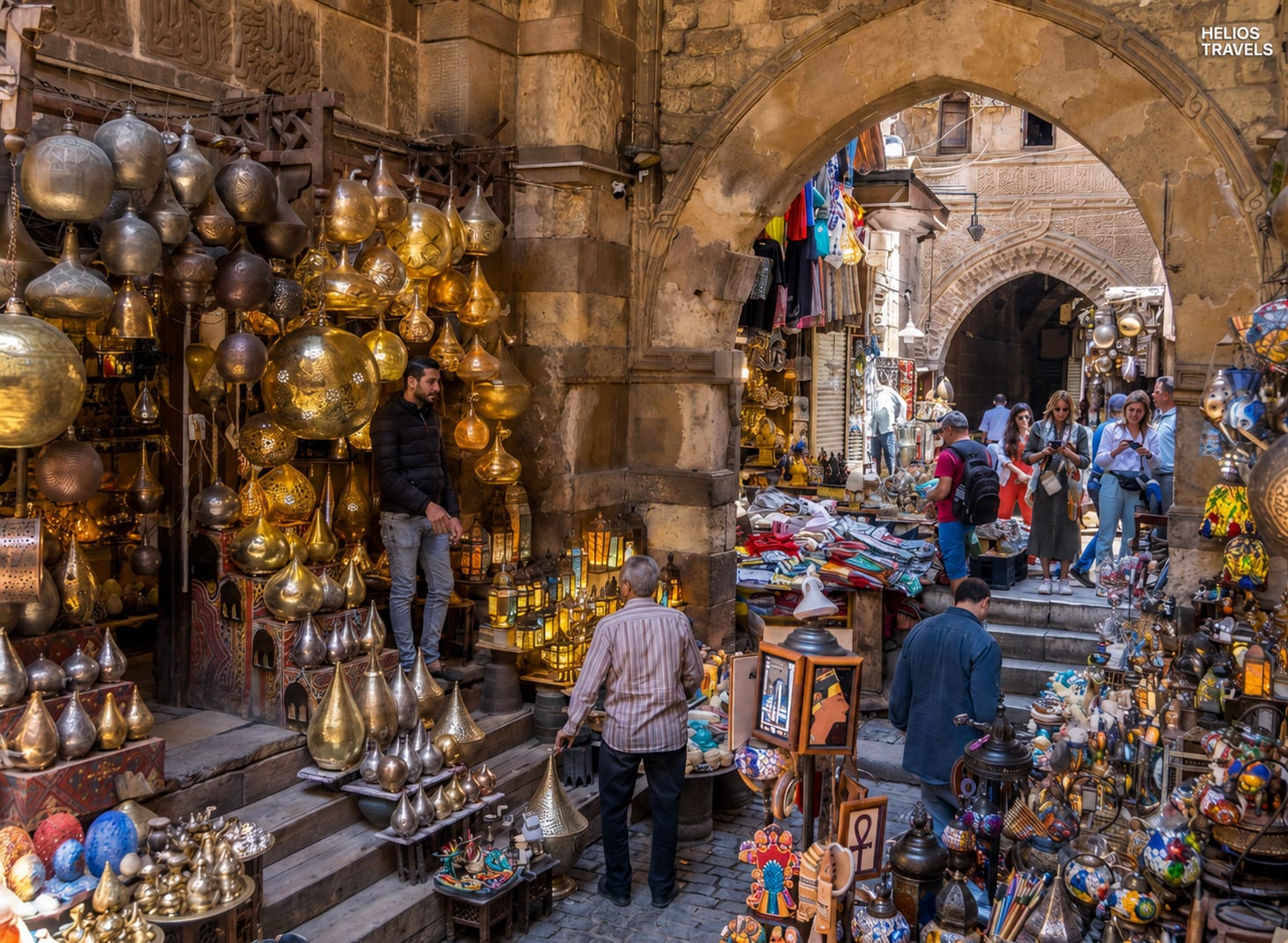
Getting ripped off. Real, and smaller than the internet suggests. Agree taxi fares before getting in, expect to haggle in markets, and accept that a few pounds over the local price is the tourist tax everywhere in the world. It is not a reason to buy a guided trip.
Hassle. Also real, mostly at the big sites and mostly persistent rather than threatening. A guide absorbs a great deal of it, which is a genuine benefit people are sometimes embarrassed to admit mattered.
Safety. Egypt is a country where families walk out after dark and the streets are busy at midnight. The honest risks are traffic and the sun, in that order, and neither is solved by a guide.
The shapes that actually work
It is not either/or, and the best version of most trips is a mix.
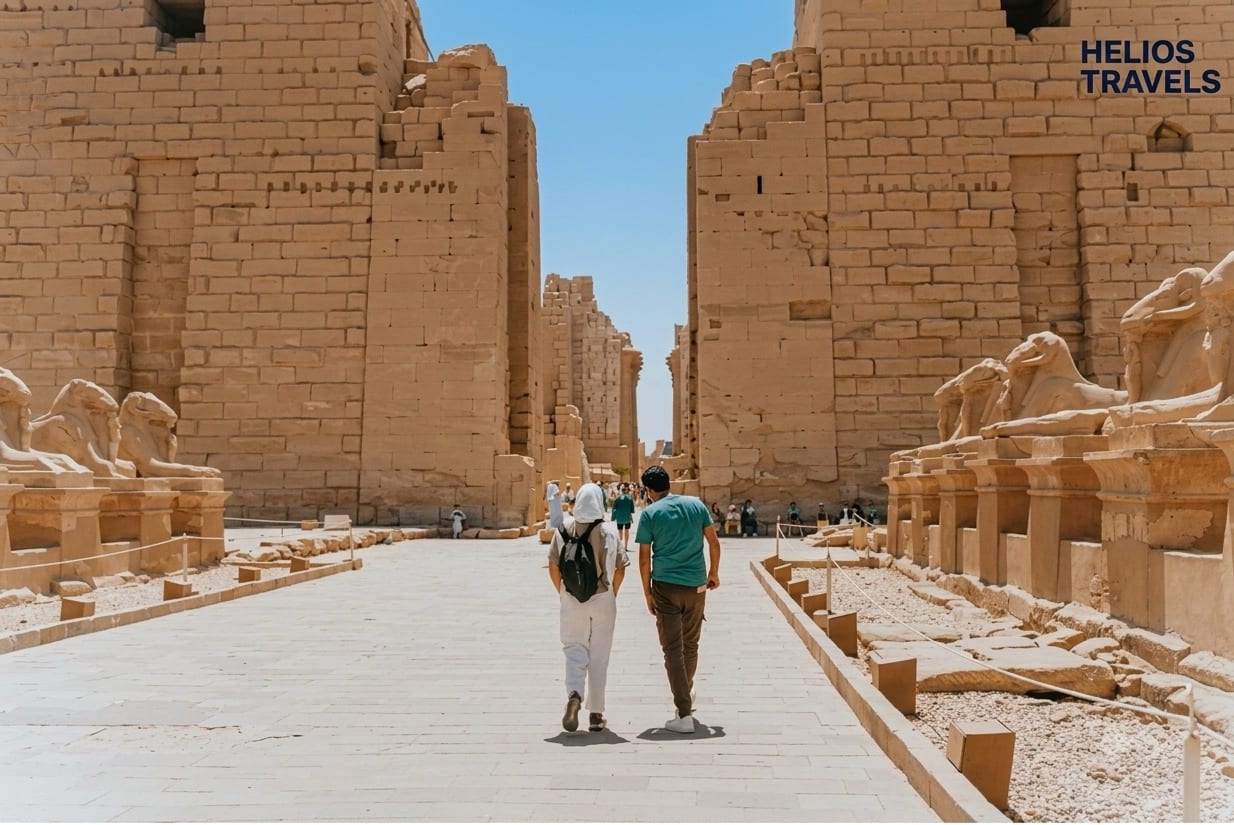
- Guided for the ancient sites, independent for the cities. This is what we build most often and what we would book ourselves. A guide for Luxor's west bank and Karnak; Cairo's markets and quarters on your own.
- Private driver, no guide. Underrated. You get the logistics — the distances in Egypt are the real difficulty — without anybody talking while you look. Cheaper than a full guided day and it suits people who read up beforehand.
- Guided days bolted onto an independent trip. Book the hotel and the flights yourself, add two or three guided days where they earn it.
What a guided day actually costs you
Money, obviously — and two other things worth naming.
Time you do not control. A guided day has a shape, and if you want forty minutes in one room the schedule may not have forty minutes. Private guiding fixes this; a group tour does not.
The shopping stop. Papyrus institutes, alabaster factories, perfume houses. On a cheap group tour these are not a bonus, they are how the price is that low — the operator takes a commission. Ask before you book whether there are shopping stops and how many. We do not put them in, and the price says so.
If you go independent, the five things to know
- Distances are the difficulty. Hurghada to Luxor is four to five hours each way. Cairo to Luxor is 650 kilometres. Egypt is much bigger than the map suggests.
- Domestic flights are cheap and change everything. Cairo–Luxor and Cairo–Aswan take an hour and turn an impossible itinerary into a comfortable one.
- Trains are fine. The sleeper between Cairo and Luxor or Aswan is a real option, book ahead, and the day trains are cheap and slow.
- Ride-hailing apps work in Cairo and remove the fare negotiation entirely. They do not work everywhere else.
- Tickets are cash or card at the gate, and the extra-ticket tombs and chambers are bought on the spot, not online.
What we would tell a friend
First trip, two weeks, wants to see the famous things: guided for Luxor and Aswan, independent in Cairo, beach at the end. That is the shape that goes wrong least often.
Second trip, or a confident traveller: private driver, no guide, and read something before you go. You will have a better time than on any group tour and spend less.
Short on time — a week or less with Cairo and Luxor both on the list: guided, and use the flights. There is no slack in that week and logistics will eat it.
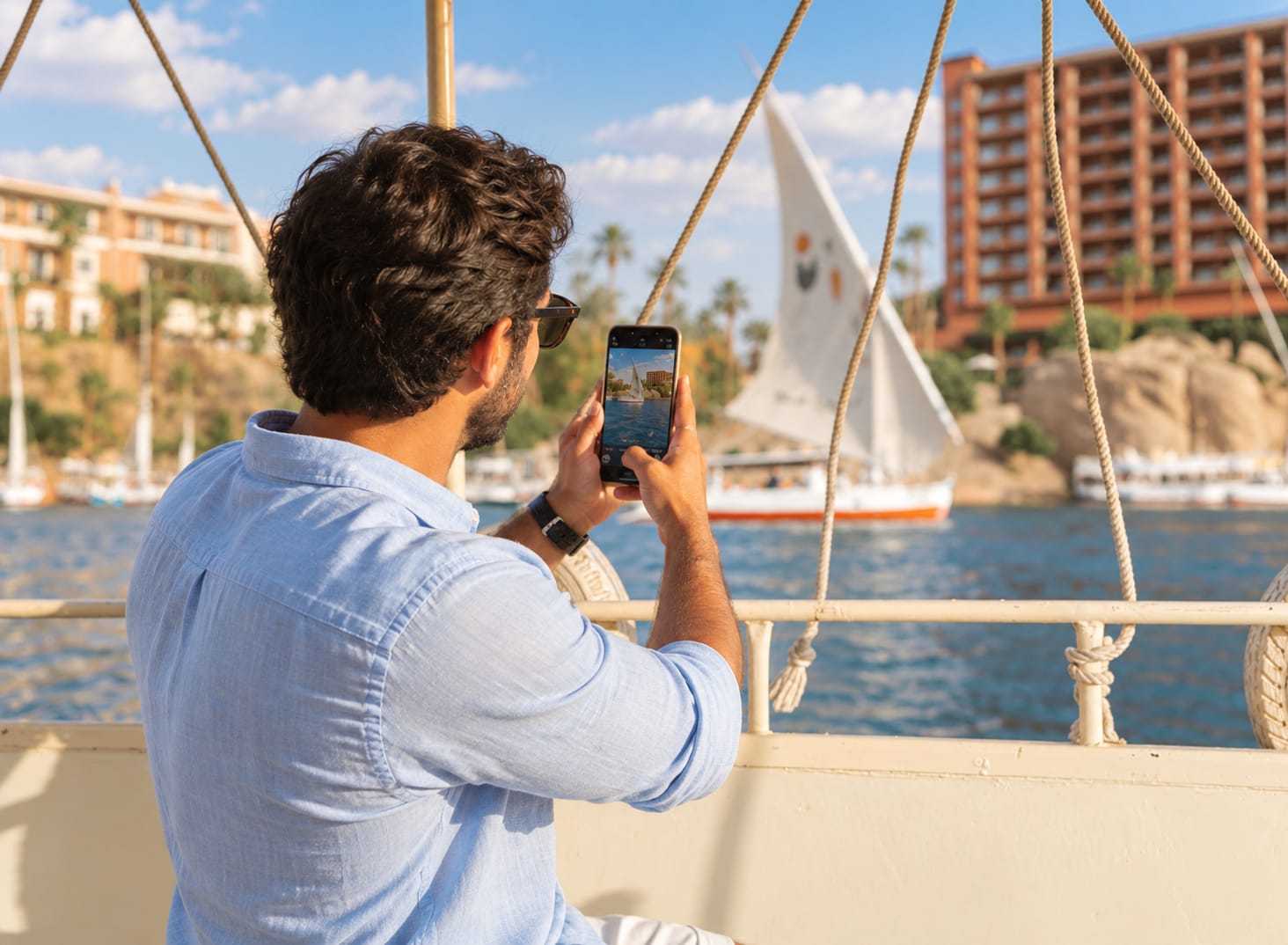
A Nile cruise ship moored at Luxor