Culture · Oct 15, 2026
Things to Do in Manila: Intramuros, Binondo and Beyond
How to spend one or two days in the capital: the walled city, the oldest Chinatown, museums, food and sunset over the bay

If you have one day in Manila, spend the morning in Intramuros, the old walled Spanish city with San Agustin Church and Fort Santiago, eat your way through Binondo, the world's oldest Chinatown, at lunchtime, visit the National Museum in the afternoon and finish with the sunset over Manila Bay. With a second day, add Quiapo, the Ayala Museum in Makati and an evening in Bonifacio Global City.
Manila has a reputation as a city to escape quickly, mostly because of traffic. But its historic core is compact, and a little planning turns a layover into one of the most interesting days of a Philippines trip.
Intramuros: the walled city
Built by the Spanish from the late 16th century, Intramuros was the seat of colonial government for more than 300 years. Much of it was destroyed in the Battle of Manila in 1945, but the walls, several churches and a growing number of restored houses survive.
San Agustin Church
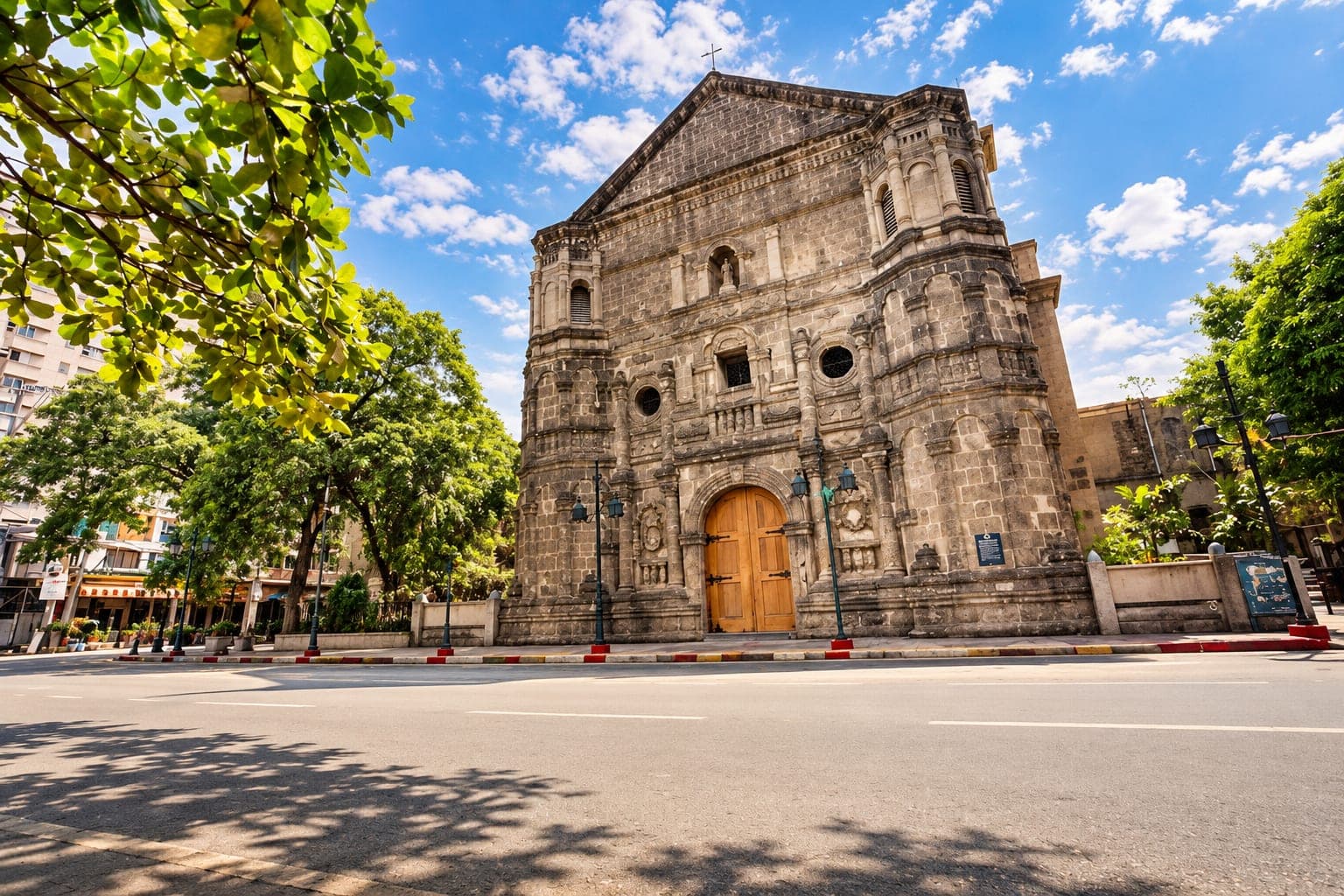
Completed in the early 17th century, it is the oldest stone church in the Philippines and the only building in Intramuros to survive 1945 largely intact. It is one of the four Baroque Churches of the Philippines inscribed as a UNESCO World Heritage Site. The adjoining museum has religious art, colonial furniture and a peaceful cloister.
Fort Santiago
The citadel at the mouth of the Pasig River, where national hero José Rizal was held before his execution in 1896. Bronze footsteps trace his last walk, and a small shrine museum tells his story.
Manila Cathedral, Casa Manila and the walls
The cathedral, rebuilt several times after earthquakes and war, faces Plaza Roma. Casa Manila recreates a wealthy 19th-century home. A walk along the walls, or a ride on a horse-drawn kalesa or a bamboo bike, shows the scale of the old city.
A private guide brings Intramuros to life and saves you from Manila's traffic between sights. The private Intramuros and historic Manila tour with hotel pickup covers the essentials in about four hours.
Binondo: the world's oldest Chinatown
Founded in 1594 as a settlement for Chinese merchants across the river from Intramuros, Binondo is still a busy trading district. Its streets are best explored by eating: dumplings, hopia (flaky pastries with bean filling), fried siopao buns, lumpia and Chinese-Filipino noodle dishes, in small family-run places that have been open for decades. Binondo Church and the shops of Ongpin Street anchor the area, and nearby Escolta was Manila's prewar commercial avenue, now home to art spaces in restored buildings.
To see how Binondo, Intramuros and the working-class district of Tondo fit together, join the old Manila half-day tour of Tondo, Binondo and Intramuros.
Quiapo
Quiapo Church houses the Black Nazarene, a dark wooden statue of Christ venerated by millions; its January procession is one of the largest religious events in the world. The streets outside are chaotic, full of stalls selling herbal remedies, candles and religious items. Visit with a guide or keep your belongings secure.
Museums
- National Museum of the Philippines: three grand buildings near Rizal Park dedicated to fine arts, anthropology and natural history. Highlights include Juan Luna's huge painting Spoliarium and finds from shipwrecks and early Philippine cultures. General admission has been free in recent years; check the current hours and any booking requirement before you go.
- Ayala Museum in Makati: well-designed dioramas of Philippine history and a gold collection from pre-colonial cultures.
- Bahay Tsinoy in Intramuros: the story of the Chinese in the Philippines.
Rizal Park and Manila Bay
Rizal Park (Luneta) is the city's largest open space, with the Rizal Monument and its ceremonial guard. A short walk away, Manila Bay is famous for its sunsets; the promenade along Roxas Boulevard is the classic place to watch them.
Eat like a local
Manila is the best place to understand Filipino food. Try adobo, sinigang (sour soup), kare-kare (oxtail in peanut sauce), lechon kawali (crispy pork belly), halo-halo, and street snacks like fish balls and isaw (grilled skewers). The Manila street food walk with more than 15 tastings is a safe way to try what Filipinos eat every day, with a guide who knows which stalls to trust.
Modern Manila: Makati and BGC
Makati is the financial district, with malls, the Ayala Museum and many of the city's best restaurants. Bonifacio Global City (BGC) is a planned district with walkable streets, public art, cafés and nightlife. Both are good places to stay if you prefer a calmer, more modern base.
One-day itinerary
| Time | Plan |
|---|---|
| Morning | Intramuros: San Agustin, Fort Santiago, Manila Cathedral |
| Lunch | Binondo food crawl |
| Afternoon | National Museum, Rizal Park |
| Evening | Sunset on Manila Bay, dinner in Makati or BGC |
Getting around
Traffic is the main challenge. Plan sights by area rather than criss-crossing the city. Ride-hailing apps are the easiest option; the LRT light rail helps for some routes; a car with driver is most efficient for a sightseeing day. Allow at least one hour, often more, between the airport and the historic centre.
Safety
Manila is generally safe for visitors who take normal city precautions: keep phones out of sight in crowded areas like Quiapo and Divisoria, use registered taxis or apps, and be wary of strangers who offer help or invite you for drinks. Intramuros, Makati and BGC are comfortable to walk around during the day.
Markets and shopping
Divisoria is Manila's sprawling wholesale market district next to Binondo, crowded, cheap and fascinating for an hour if you keep your bag in front of you. Salcedo Saturday Market and Legazpi Sunday Market in Makati are relaxed weekend food markets with regional dishes, fresh fruit and crafts. For souvenirs with a story, look for woven textiles from the Cordillera and Mindanao, capiz-shell items, Philippine chocolate (tablea) and coffee from Batangas or Benguet. Manila's giant malls are useful for air-conditioned breaks, pharmacies and SIM cards.
FAQ
Is Manila worth visiting?
Yes, for at least a day. Intramuros, Binondo and the National Museum explain the history behind everything you will see in the rest of the country.
How many days do I need in Manila?
One full day covers the historic highlights. Two days let you add museums, Quiapo and an evening in Makati or BGC.
Where should I stay in Manila?
Makati or BGC for comfort and walkability, Ermita or Malate to be close to Intramuros, or near the airport for a short layover.
Can I visit Intramuros on a layover?
With at least eight to ten hours between flights, yes, though traffic makes timing unpredictable. A guided tour with transport is the safest option.
What is Binondo famous for?
It is considered the oldest Chinatown in the world, founded in 1594, and is famous for Chinese-Filipino food: dumplings, hopia, siopao and noodles.
Book what you just read about
Explore related tours and check each trip for available booking options and inclusions.