Red Sea · Sep 10, 2026
Swimming with wild dolphins — and when you shouldn't
They come into the lagoon to sleep. Almost nobody tells you that, and it changes everything about how to behave.
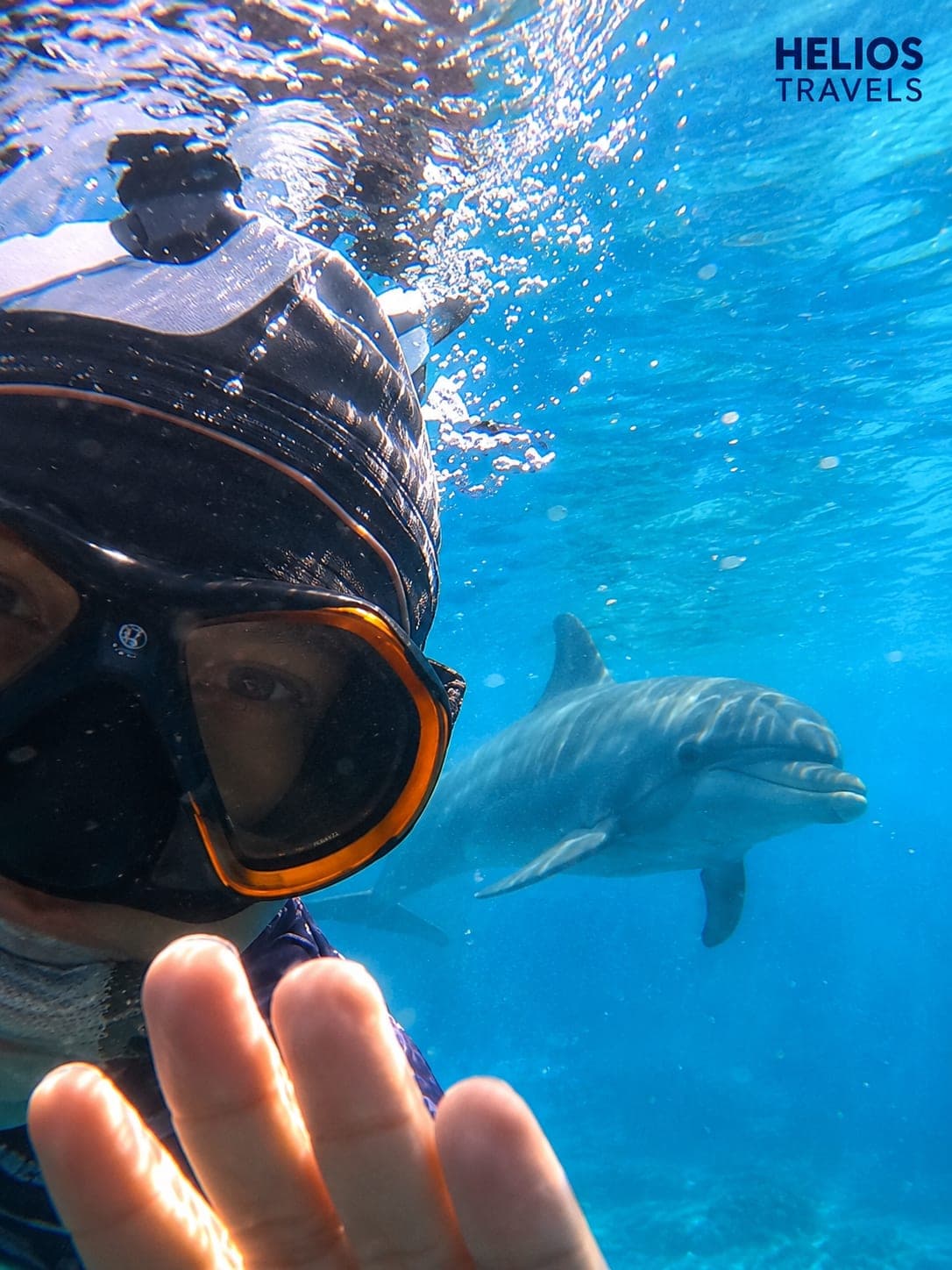
Swimming with wild dolphins is one of the few things that lives up to the photograph. It is also an activity where the difference between a good boat and a bad one is not comfort or lunch — it is whether the animals are still there in five years. This is the honest version, including the days you should not get in the water at all.
Wild, not captive — and why that is the whole question
There are two completely different products sold under similar words in Egypt, and they are not comparable.
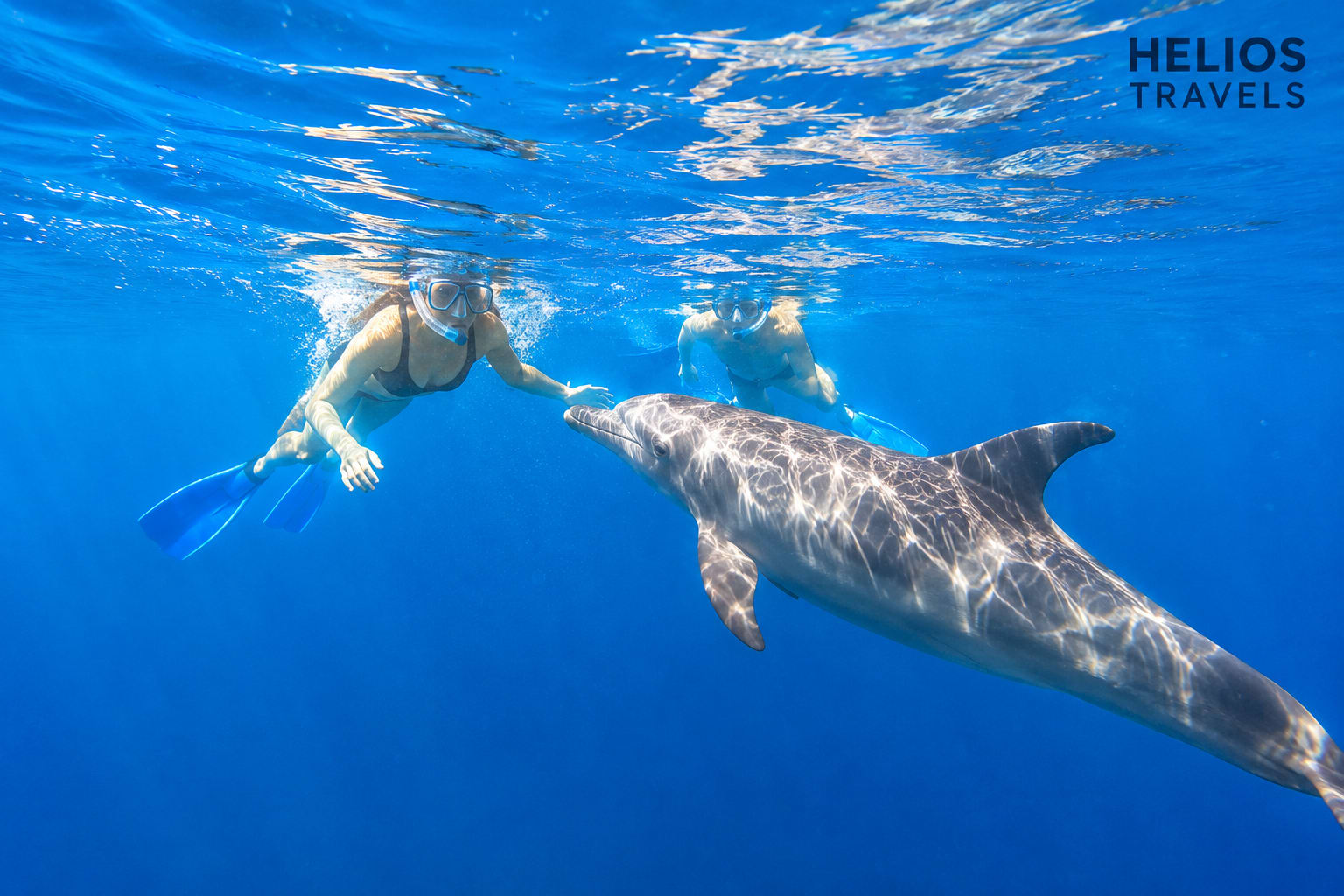
Wild dolphins in their own habitat. Spinner dolphins rest during the day in sheltered reef lagoons — Samadai near Marsa Alam is the best-known, and there are others. You go to them by boat, you enter the water quietly at a distance, and they either come to look at you or they do not. Nothing is fed, nothing is trained, and nothing is contained.
Captive dolphins in a pool. Animals in tanks, performing, with paid swim-with sessions. These exist in Egypt as they do elsewhere. Spinner dolphins in particular travel long distances and dive deep; a pool cannot provide either, and the welfare case against keeping them is strong enough that we will not book them and would rather say so than stay quiet about it.
If a listing mentions a show, a trainer, or a guaranteed encounter, it is the second thing. In the wild there are no guarantees, and a guarantee is the clearest signal you are not looking at wild animals.
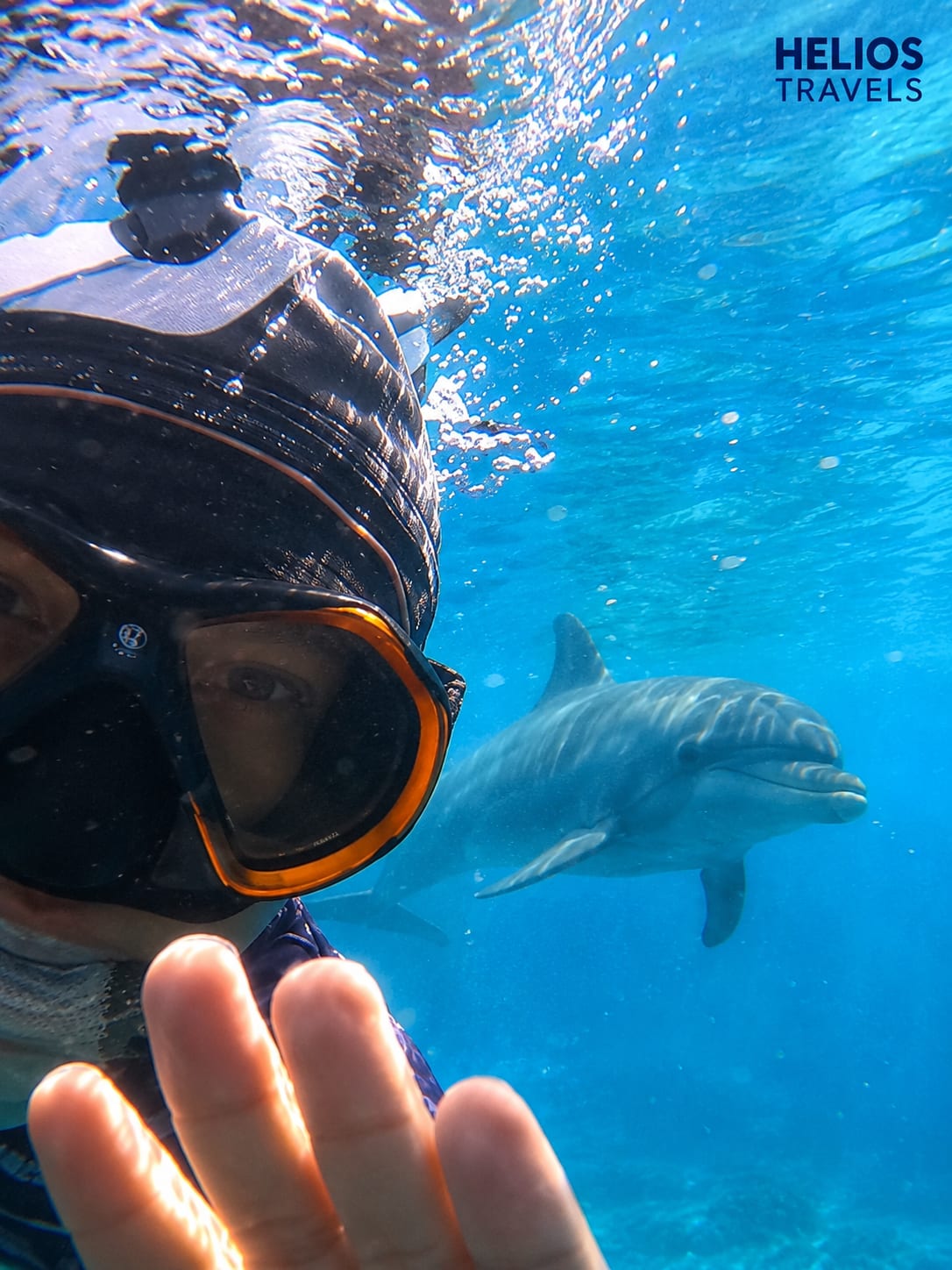
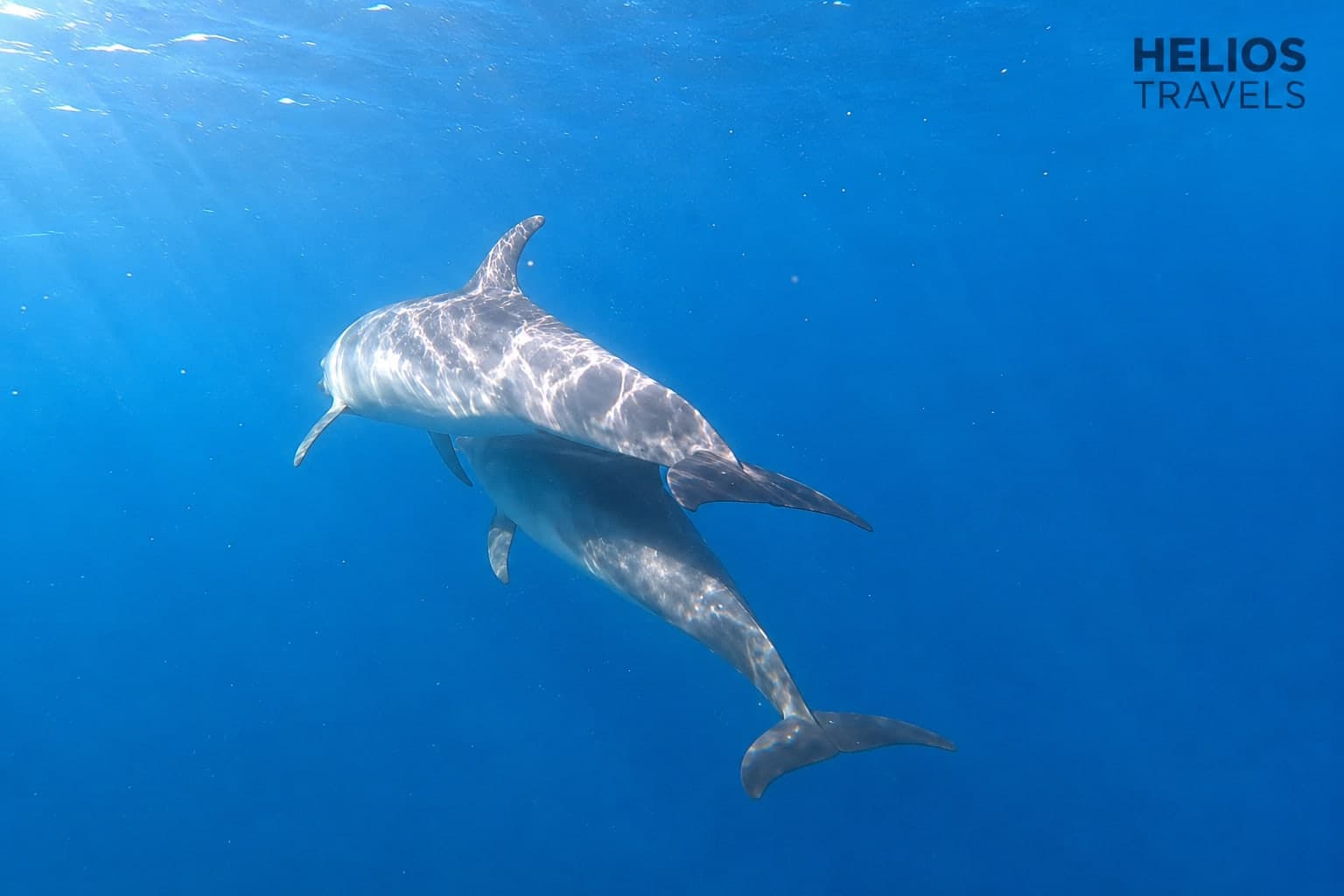
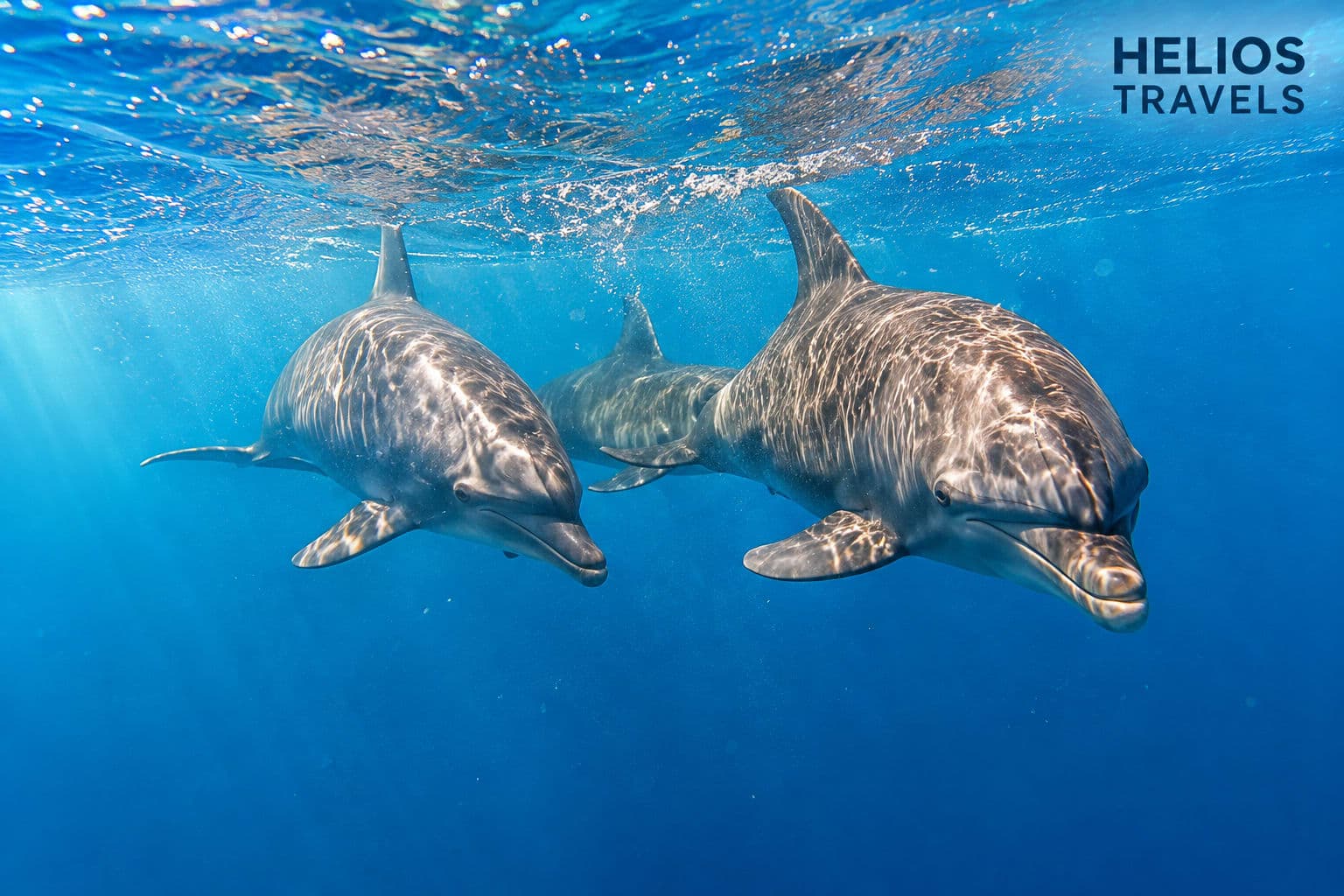
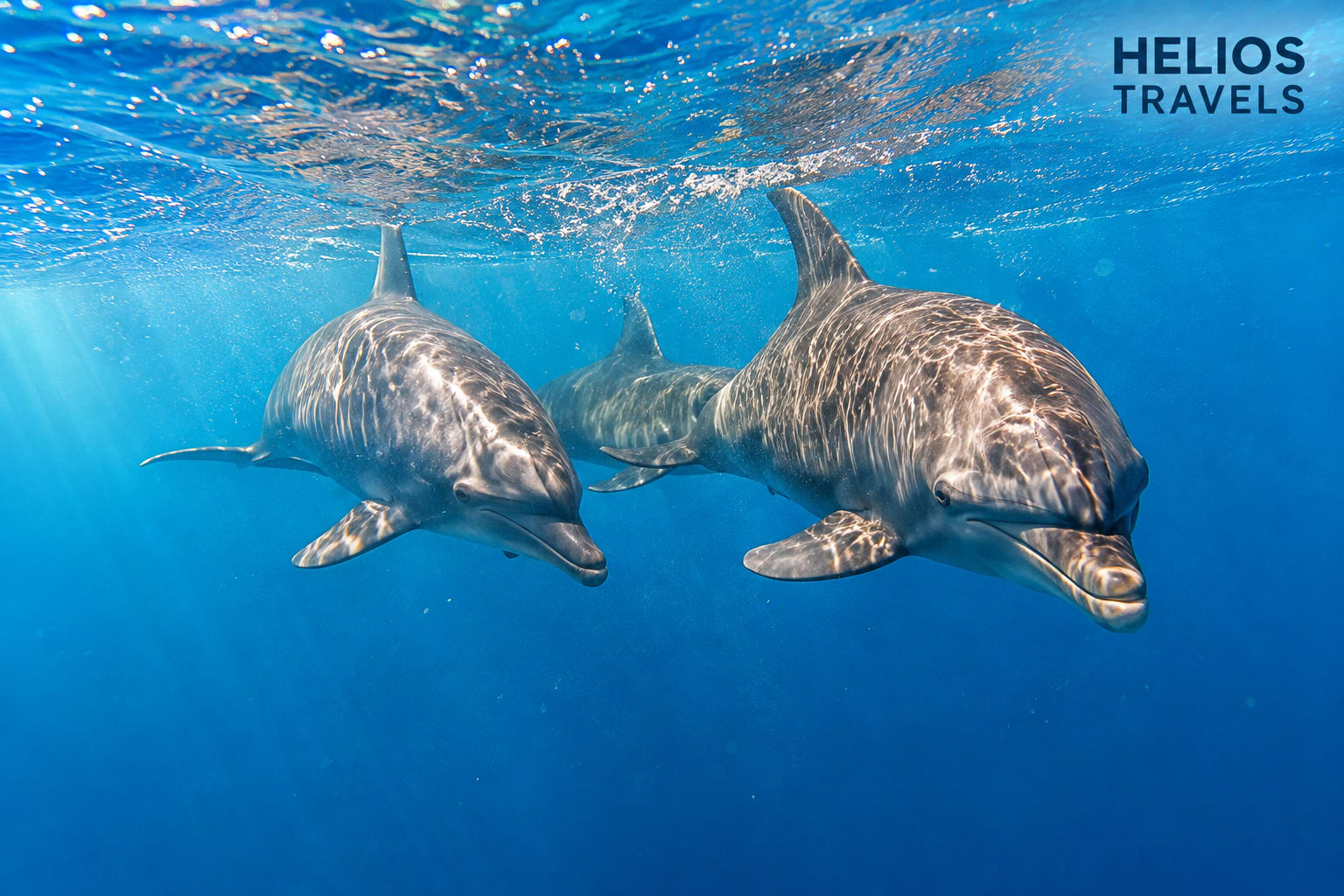
Spinner dolphins in open water off the Red Sea coast
What the animals are actually doing
This is the part that changes how you behave, and almost nobody explains it.
Spinner dolphins hunt at night, in deep water offshore. They come into shallow reef lagoons during the day to rest. They are not playing and they are not feeding — they are doing the dolphin equivalent of sleeping, swimming slowly in a group with half the brain shut down at a time.
That single fact reframes the whole encounter. A boatload of swimmers crashing into a resting group is an interruption of sleep, repeated daily, by a different boat each time. Where that has been allowed to happen without limits, the dolphins have eventually stopped using the lagoon — which is why the good sites now have rules.
At Samadai, the lagoon is zoned: a core area the boats may not enter at all, a middle zone for swimmers at set times, and an outer area for boats. Daily numbers are capped. It works, and it exists because the alternative was watched happening.
Book what you just read about
Explore related tours and check each trip for available booking options and inclusions.