Destinations · Sep 9, 2026
Saqqara: the first pyramid anyone ever built
Twenty minutes south of Giza, and about eighty years older — the place where the whole idea was worked out.
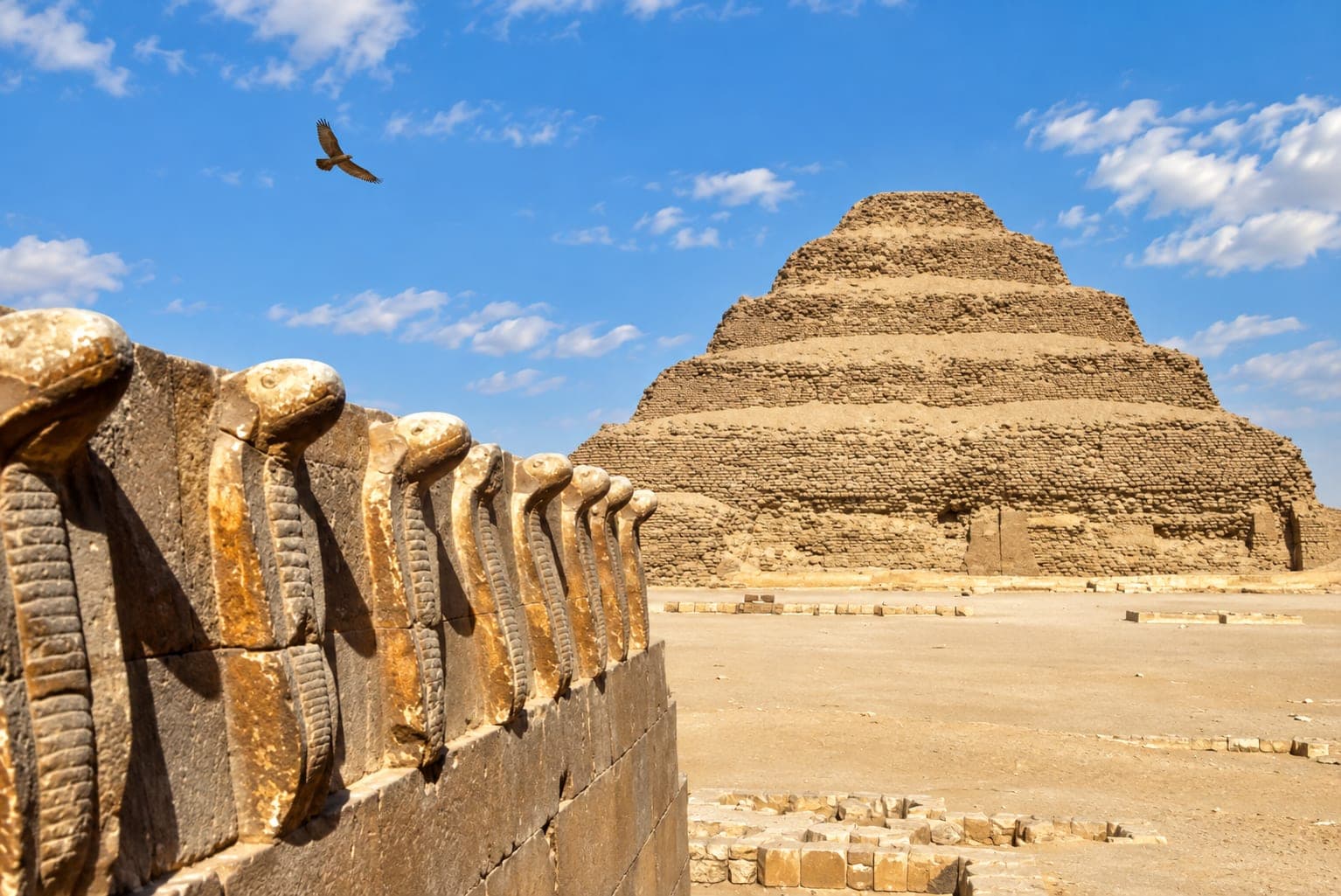
Everyone goes to Giza. Almost nobody with a day in Cairo goes twenty minutes further south, which is where the whole idea of a pyramid was invented — by a man whose name we actually know, roughly eighty years before the Great Pyramid was begun.
The oldest large stone building on Earth
Around 2670 BC, the pharaoh Djoser was buried under a structure that had never been attempted before. Until then, Egyptian kings went into mastabas — low rectangular mudbrick boxes, impressive by the standards of the time and utterly unremarkable at a distance.
What happened at Saqqara was that somebody stacked six of them, each smaller than the one below, and built the result in cut limestone rather than mud. The finished thing stood about sixty-two metres high and was visible from a very long way off, which was rather the point.
It is worth sitting with the numbers for a second. The Step Pyramid is older than Stonehenge's great sarsen circle. It is older than the Great Pyramid by about the distance between us and the invention of the aeroplane. And it is the first time anyone anywhere put up a monumental building in stone — before this, stone was for small things, and everything large was mud, reed and timber.
The visual grammar of the whole later tradition starts here, and you can watch it being figured out.
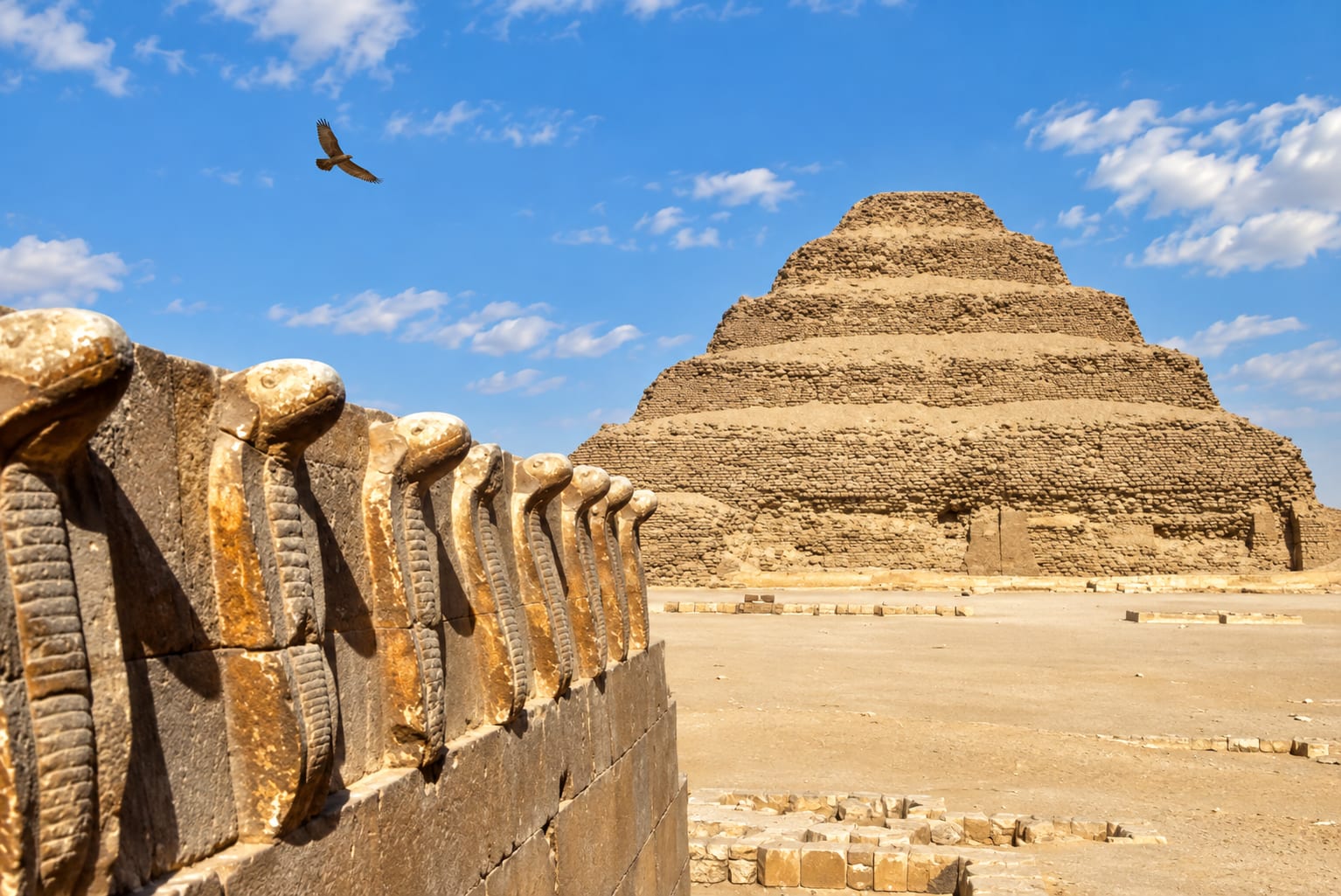
The Step Pyramid of Djoser at Saqqara, six stacked terraces of pale limestone
Imhotep, the first architect anyone remembered
The design is credited to Imhotep, Djoser's chief official, and this is one of the very few cases where we can attach a name to an ancient building at all.
He was not royal. He was, in the surviving titles, something like a chancellor, high priest of Heliopolis, chief carpenter and sculptor — an administrator and a builder rather than a nobleman. And the Egyptians remembered him: two thousand years later he was being worshipped as a god of healing and wisdom, one of only a handful of non-royals ever promoted that far. The Greeks eventually identified him with Asclepius.
What makes the site so peculiar to walk around is that Imhotep was working in stone with no stone tradition to copy from. So he copied everything else. The columns in the entrance colonnade are carved to look like bundled reeds, complete with the ribbing. The enclosure wall has a series of doorways that are not doorways — solid stone carved into panelled wooden gates that will never open. There is a stone fence imitating a timber fence.
He was translating a world made of plants and mud into a material that had never been asked to do it, and he did it by imitation, because there was nothing else to imitate. Once you notice this, you cannot stop noticing it, and it is the single most interesting thing on the site.


Book what you just read about
Explore related tours and check each trip for available booking options and inclusions.