Planning · Sep 9, 2026
Round trip, or a beach base with day trips?
The same country, the same budget, two completely different holidays. Choosing wrongly ruins more trips than the weather does.
There are two ways to spend a fortnight in Egypt, and choosing wrongly is the single biggest cause of a disappointing trip — bigger than the hotel, the weather or the guide.
Either you move, on a round trip that changes city every night or two. Or you stay, on a beach base, and take day trips out. They produce very different holidays from the same country and the same budget.
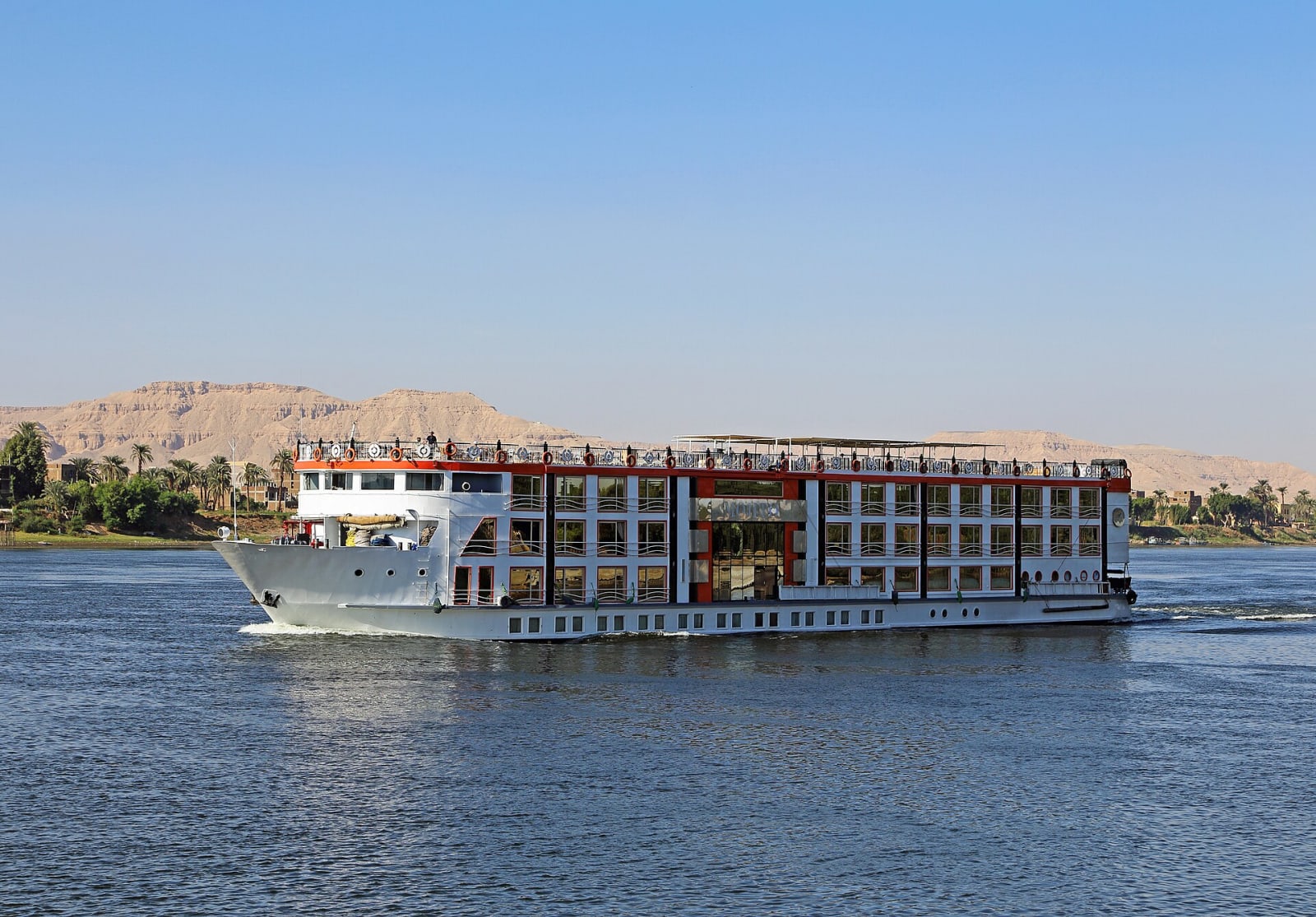
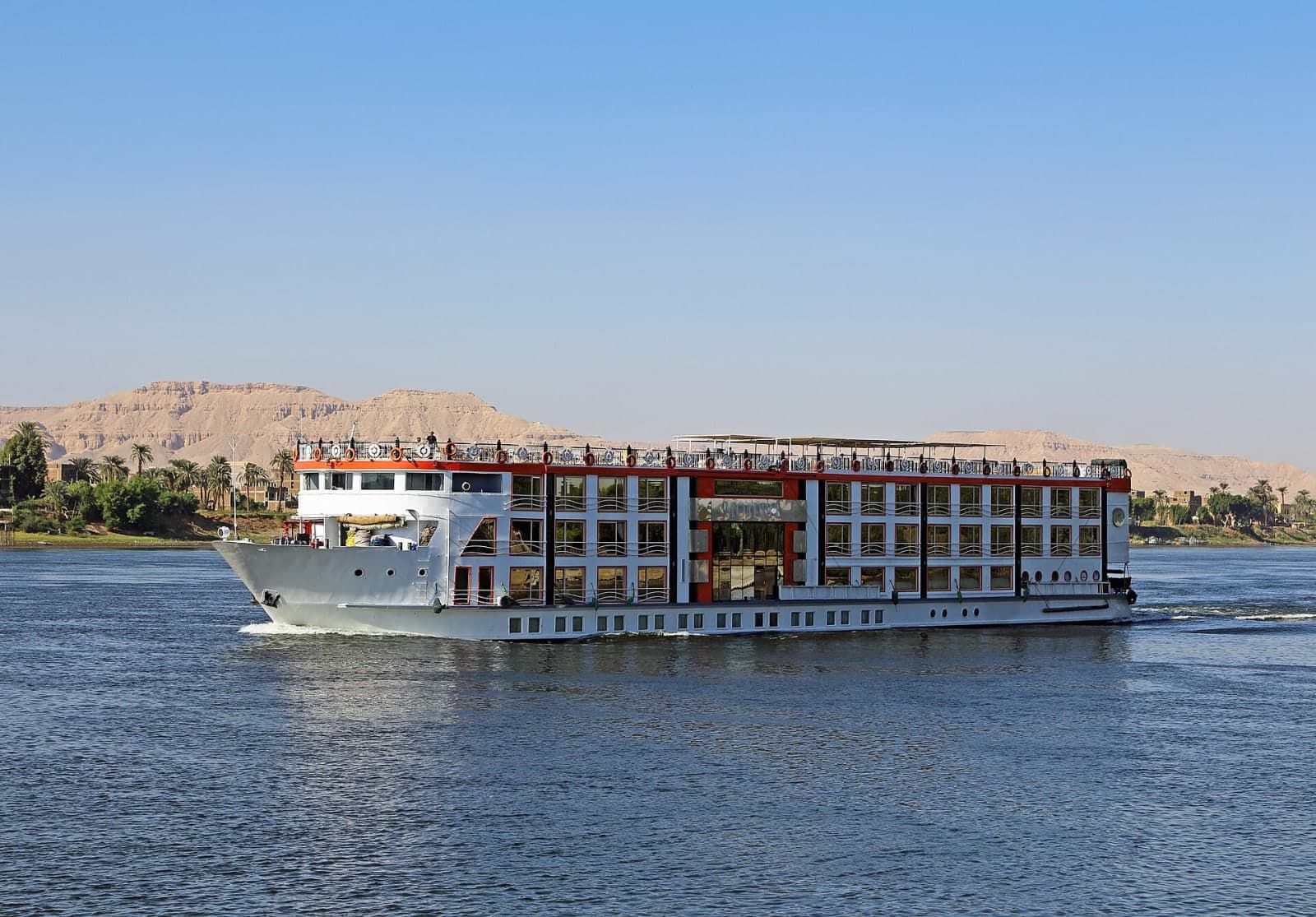
A Nile cruise boat moored on the river between Luxor and Aswan
The round trip
Cairo, then south to Luxor and Aswan, usually with a Nile cruise in the middle, sometimes with Abu Simbel and a few days on the coast at the end.
What it gives you: the whole country, in sequence, in the order the history happened. You see the pyramids, the temples, the tombs, the Nile and the desert, and you leave with a coherent picture rather than a set of day-trip snapshots. For anyone whose reason for coming is Egypt itself, nothing else compares.
What it costs you: rest. You pack and unpack repeatedly, you are on a schedule set by internal flights and cruise departures, and you will have several 5 am starts. Two weeks of it is genuinely tiring, and the fatigue accumulates — by day ten, people who were thrilled on day three are moving through temples without absorbing them.
The beach base
One hotel in Hurghada, Makadi, El Gouna or Marsa Alam for the whole stay, with excursions from it.
What it gives you: one unpacking, a pool, a room that is yours all fortnight, and days of genuine rest between the effort. Snorkelling and diving are on your doorstep rather than being a special trip. It is also markedly cheaper, and far easier with children, older parents, or anyone in the group with limited stamina.
What it costs you: transit, and depth. Luxor is four hours each way, Cairo six. Every cultural site is a long day out and back, and the day after each one is largely written off. In practice a fortnight on the coast gives you two, maybe three big cultural days — not the ten a round trip delivers.
The other cost is subtler: you experience Egypt's history as a series of visits rather than a journey. That suits many people perfectly well. It does not suit everyone.

The reef wall off Giftun Island dropping into deep blue water
The same fortnight, two ways
| Round trip | Beach base | |
|---|---|---|
| Hotels in 14 nights | 5–7 | 1 |
| Early starts | Most days | 2–3 days |
| Big cultural sites seen | Most of them | 2–3 days' worth |
| Days genuinely resting | 1–2 | 7–9 |
| Hours in vehicles | High, spread out | High, concentrated |
| Snorkelling / diving | A few days at the end | Any day you like |
| Typical cost | Higher | Lower |
| Suits | History, first-timers with energy | Families, mixed groups, repeat visitors |

Who each one actually suits
Take the round trip if: the pyramids and temples are why you booked; you are reasonably fit and travelling with people who are; this is a one-off trip to Egypt and you want to see it properly; or you have already had a beach holiday here and want the other half.
Take the beach base if: you are travelling with children under about twelve; anyone in the party tires easily or has mobility limits; the group wants different things — one wants temples and one wants a lounger, and a base lets both happen; diving is a serious part of the plan; or the budget is the binding constraint.
Take the beach base also if you are honest with yourself about how you actually holiday. Plenty of people book a round trip because it sounds like the serious choice, and then spend it exhausted and privately wishing for a pool. There is no prize for the harder itinerary.
The hybrid, which is what we book most
The two are not exclusive, and the best fortnight in Egypt is usually a compromise built in a specific order:
- Days 1–3, Cairo. Giza and the Grand Egyptian Museum, Saqqara and Dahshur, one day of the old city. Get the hardest travelling done while you are fresh.
- Days 4–8, the Nile. Fly to Luxor, then a cruise down to Aswan. This is the crucial move: a cruise is a round trip that does not tire you, because the hotel moves while you sleep. You wake up at the next temple with nothing packed and no bus.
- Day 9, Abu Simbel, then fly north.
- Days 10–14, the Red Sea. One snorkelling day, one diving or island day, and three doing nothing at all.
That gives you close to the round trip's coverage and close to the beach base's rest, and the reason it works is the ordering: the effort is front-loaded, and the recovery is at the end where you can actually use it. A trip that puts the beach first and the temples last is the same components in the wrong order, and people come home shattered.

The pyramids of Giza on the edge of Cairo
Three mistakes worth avoiding
Doing the round trip on a one-week holiday. Seven days is not enough to move through Cairo, Luxor and Aswan and see anything. In a week, pick one: Cairo and Giza, or Luxor, or a beach base with two day trips. A one-week round trip is four days of transport wearing a nice name.
Booking the cultural days back to back from a beach base. Luxor on Monday and Cairo on Tuesday is twenty hours of vehicle in two days. Put a rest day between them — not as a luxury, as the thing that lets you enjoy the second one.
Assuming a beach base means no culture. It does not. Two well-chosen days — a two-day Luxor trip with an overnight, and Cairo by air — cover most of what a first-time visitor actually wants, from a hotel you never leave otherwise.
What a week looks like, since most people have seven days not fourteen
Everything above assumes a fortnight. Most holidays are a week, and at seven days the calculation changes sharply — because a round trip needs a minimum length below which it stops working.
Seven days, round trip: possible, but only as Cairo plus a short Nile cruise, flying between them. Cairo two nights, fly to Luxor, three nights on the boat to Aswan, fly home. It is a real trip and it is relentless — five moves in seven days, and no rest at all. Book it only if you are certain that seeing the sites matters more to you than sleeping.
Seven days, beach base: the more common answer, and usually the better one. One hotel, one long cultural day to Luxor with an overnight, one sea day, and the rest yours. You will not see Aswan or Abu Simbel. You will come home rested and having seen the Valley of the Kings properly.
Seven days, the compromise: three nights Cairo, four nights Red Sea, flying between. You get the pyramids and the Grand Egyptian Museum without the Nile, and a proper beach half. For a first visit with only a week, this is the version we would book ourselves.
What does not work in a week is a full round trip with the Nile and the Red Sea. People try to fit all three and spend the week in transit. Pick two.
The short answer
Egypt is the point, you have two weeks, and you have the energy — round trip, ideally with a cruise doing the middle.
Rest is the point, or the group is mixed — beach base, with two properly planned cultural days rather than five rushed ones.
You want both, which is most people — Cairo, then a Nile cruise, then the Red Sea, in that order. The order is not a detail; it is what makes the fortnight work.
Book what you just read about
Tours from this article — private, with a licensed guide, and priced per person.

7-Day Private Egypt Tour — Cairo, Nile Cruise, Luxor & Abu Simbel
7 days · Hurghada
$1861/ person
See the tour
9-Day Egypt Round Trip from Hurghada — Nile Cruise, Aswan & Cairo
9 days · Hurghada
$1900/ person
See the tourLuxor Day Tour — Karnak, Valley of the Kings & Free Nile Cruise
14 hours · Hurghada
$90/ person
See the tourPyramids, Sphinx & Grand Egyptian Museum
17 hours · Hurghada
$105/ person
See the tour