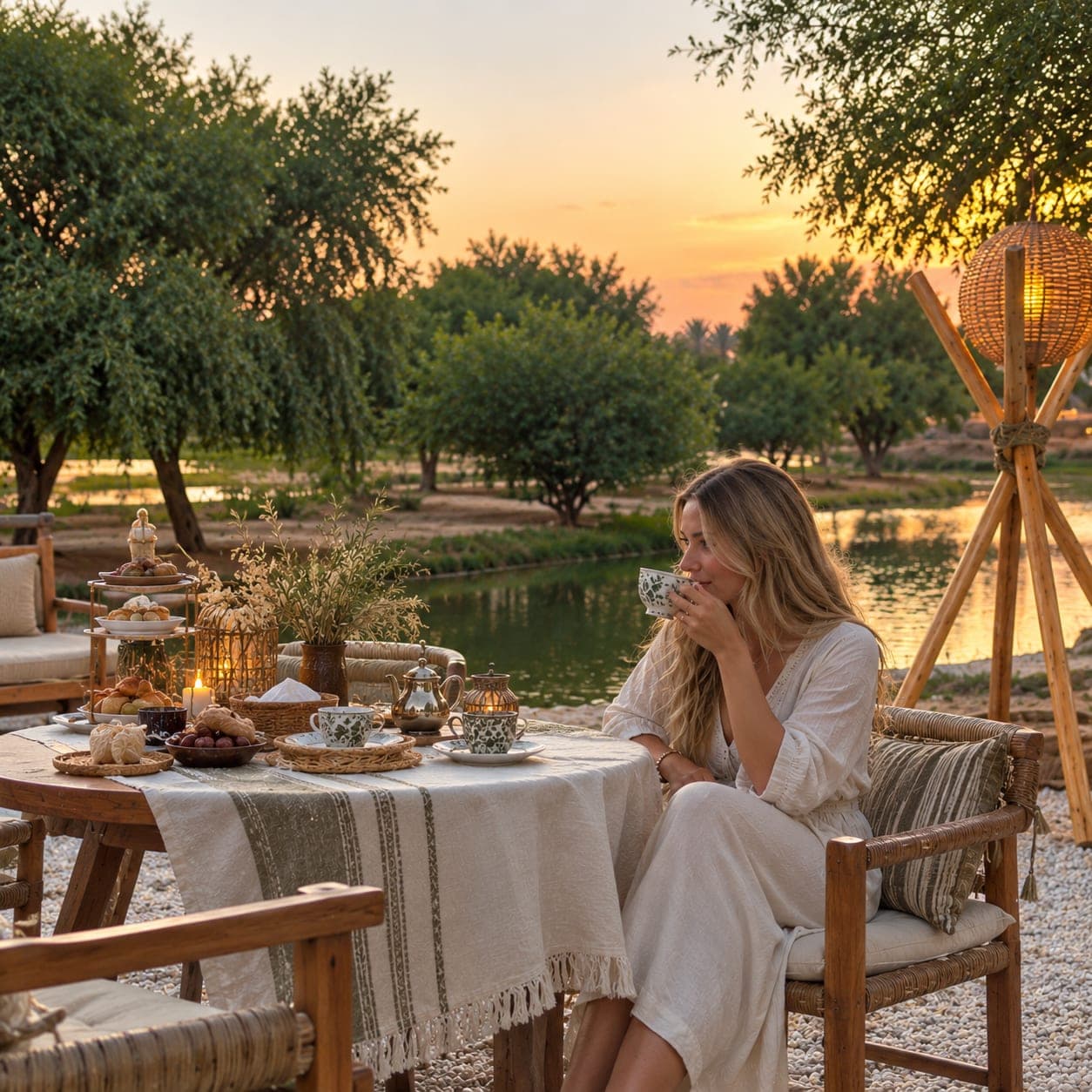
Iftar and suhoor: the two meals of the day
The rhythm of Ramadan is set by two meals. Iftar is the meal that breaks the fast at sunset. Traditionally it opens with dates and water, followed by prayer and then a fuller meal. Suhoor is the meal eaten before dawn, often late at night, before the next day of fasting begins.
For a visitor, iftar is the moment to be out. In Dubai the sunset is still marked by cannon fire at several places across the city; Dubai Police announce the locations each year, and watching the shot at dusk is a small, public tradition that families come out for. Many hotels set up iftar buffets or Ramadan tents, and plenty of restaurants offer special iftar menus. Non-Muslims are welcome at all of them, and sharing iftar is one of the most hospitable experiences the month offers. Expect dates, soups, rice dishes, grilled meat and sweets such as luqaimat, the small fried dumplings with date syrup.
Two practical points. First, the hour before sunset is the busiest time on the roads, as everyone heads home or to a gathering. Do not plan a tight transfer or a taxi ride for that hour. Second, popular iftar venues fill up, so reserve ahead, especially on weekends. After iftar the city stays up late; suhoor gatherings and evening markets run well past midnight, and the mood is relaxed and sociable.
Opening hours during the holy month
Working hours shorten across the country during Ramadan. Government offices work reduced hours, and the private sector cuts its working day by two hours. For visitors this mostly shows in two ways: daytime services can close earlier than usual, and many shops and malls stay open later into the night.
Attractions, museums and theme parks set their own Ramadan schedules each year, and they change from one year to the next. We do not print exact times here because they would be out of date by the time you travel. Check the official website of each sight the week before you go, and plan the main sightseeing for the morning and the evening rather than the late afternoon.
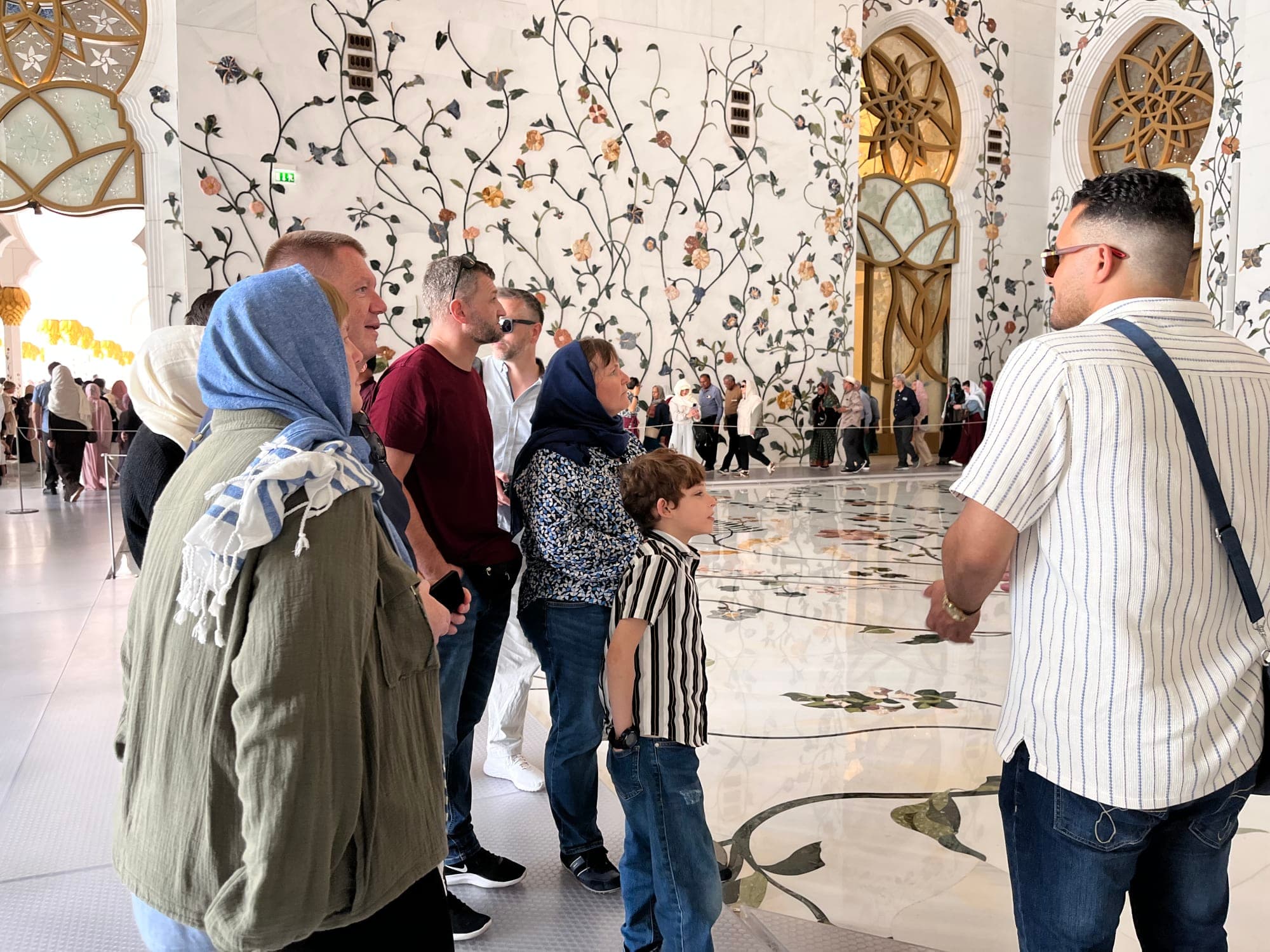
This matters most for Sheikh Zayed Grand Mosque in Abu Dhabi. The mosque stays open to tourists in Ramadan, but on shorter hours: it closes to visitors in the evening around iftar, and in the last ten days of the month, when the nights are given over to prayer, it closes to non-worshippers after sunset. The official mosque website publishes the Ramadan timetable shortly before the month begins. Dress code rules are the same as the rest of the year: loose, ankle-length clothes with long sleeves and a headscarf for women, long trousers and sleeved tops for men, and shoes off before the prayer halls.
Our Sheikh Zayed Grand Mosque Half Day from Dubai collects you from your Dubai hotel or cruise terminal, drives about one and a half to two hours to Abu Dhabi, and gives you time in the courtyards, colonnades and main prayer hall before driving you back, about five hours in all. It runs with a morning or an afternoon departure. In Ramadan the morning departure is the safer choice, as it reaches the mosque well before the visitor hours narrow. If you travel in the holy month, tell us your dates and we will check which departure fits.
Desert trips and tours in Ramadan
Desert safaris continue through Ramadan, and the timing of an evening safari fits the month naturally: you reach the dunes in the afternoon light, and dinner at the camp falls after sunset. Some things do change. Alcohol is not served at desert camps during the holy month, and the entertainment is toned down; belly dancing, for example, is not performed. Which shows run can vary from camp to camp and from year to year, so if a particular show matters to you, ask before booking.
Our Dubai Red Dunes Safari and BBQ Evening is the classic version. You travel in a shared four-wheel drive with no more than six guests, spend 30 to 45 minutes driving the red dunes, stop to sandboard, and then reach a camp where Arabic coffee, dates and sweets are waiting. You can ride and feed the camels, hold a falcon and try henna, before a buffet of Emirati, Moroccan and Arabian dishes with barbecue. The 14:30 departure runs into the evening and adds a fire show and telescope stargazing. Alcohol is not included on this trip at any time of year. Children are welcome from age three; the dune drive is bumpy and not recommended for pregnant women or people with back or heart problems. Keep your lunch light before pickup, which is sensible advice whether you are fasting or not.
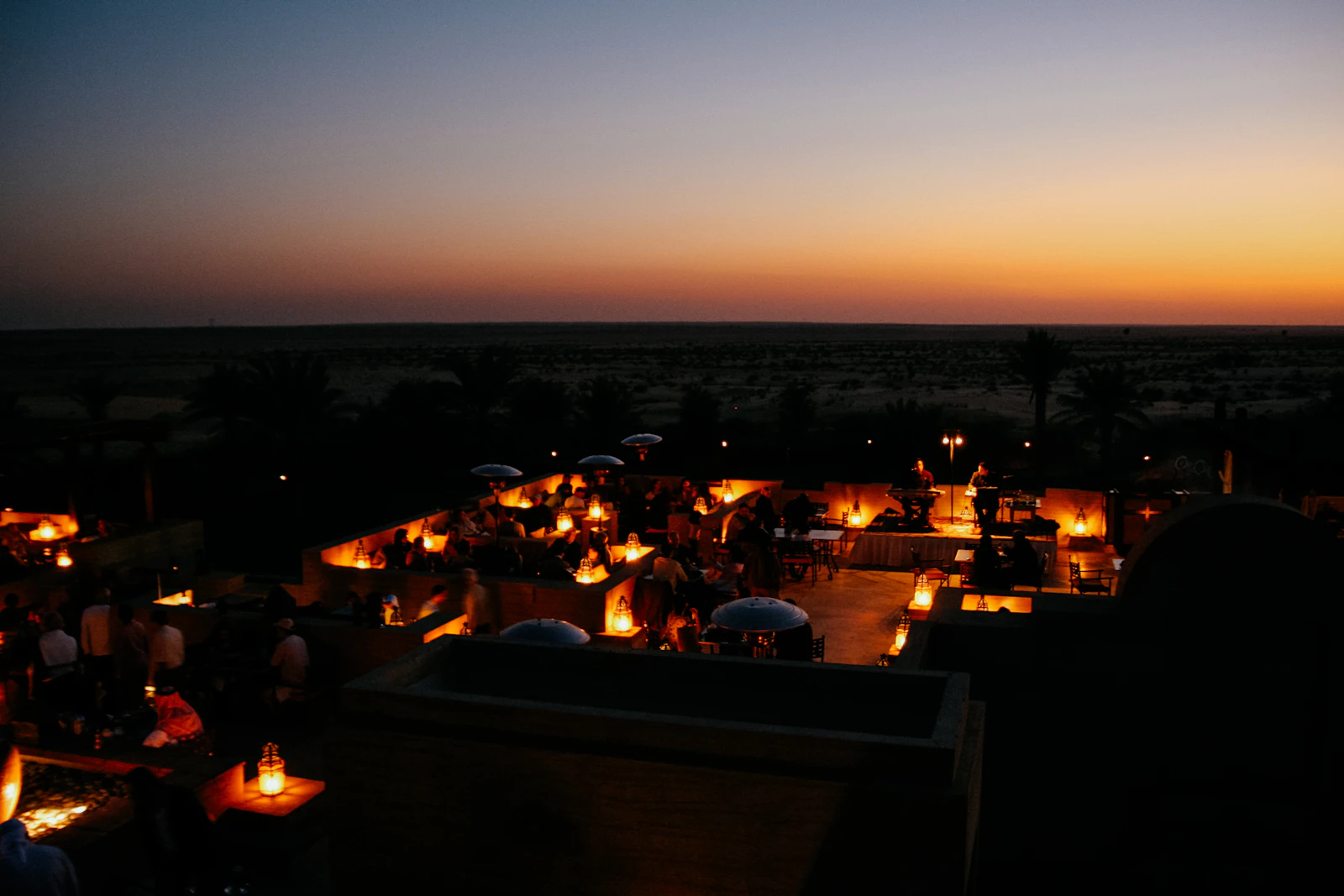
A desert camp near Dubai at dusk, when the evening meal begins — Photo: Unsplash
If you prefer a calmer afternoon, the Dubai Desert High Tea at an Oasis is built around food and quiet rather than driving. You make your own way to an oasis in the desert south of Dubai, as transfers are not part of this option, and sit on low Bedouin-style cushions with a traditional Emirati tea set, including luqaimat, regag bread with cheese, Um Ali, dates and Omani halwa, or an international set. Both come with karak tea and red tea and have vegetarian choices. There is a short camel ride, a falcon to meet, henna and photos with Arabian horses, and you can stay on for the sunset. Sunset moves through the month, so if you book during Ramadan we confirm the slot with you.
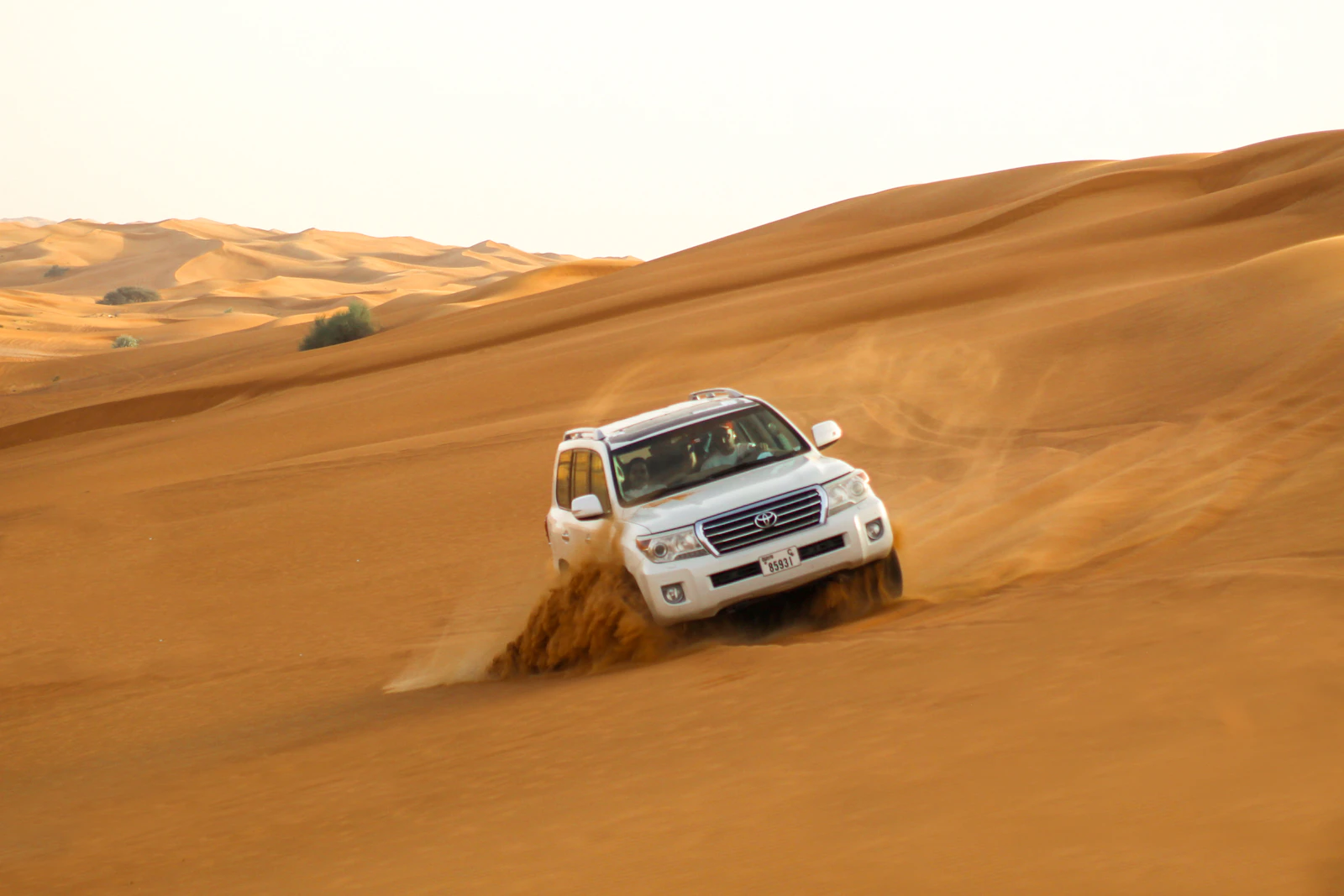
A four-wheel drive on the red dunes outside Dubai — Photo: Unsplash
A few general tips for touring in Ramadan. Your driver or guide may well be fasting, so be patient around sunset, when they will want to break their fast. Carry water, but drink it in the vehicle or at the camp rather than in a public street. And book a little earlier than usual for the last weekends of the month, when residents also head out to the desert.
Eid al-Fitr: the end of the month
When the new moon is sighted at the end of Ramadan, the country moves into Eid al-Fitr, a public holiday of several days. The day starts with Eid prayers early in the morning, and then families visit relatives, children receive gifts and new clothes come out. The usual greeting is Eid Mubarak, and you will be wished it often.
For visitors, Eid is lively and busy. Restaurants, malls and beaches fill up, many residents travel, and hotels in the Emirates and the desert camps are in demand. If your trip falls over Eid, book tours and the desert early and expect crowds at the big attractions. The rules of Ramadan no longer apply once Eid begins, and the city returns to its usual rhythm within a few days.
Who Ramadan suits, and who it does not
Ramadan suits travellers who are curious about local life, who enjoy long evenings outdoors, and who like the idea of sharing an iftar meal. It also suits anyone who wants to see the desert and the Grand Mosque in mild late-winter weather. Families with young children manage well, provided they keep snacks and drinks for indoors or the car.
It suits travellers less well if the trip is built around nightlife, beach clubs or loud entertainment, which are restrained for the month. If you need to eat and drink outdoors throughout the day, for medical reasons for example, the city is still workable, but you will spend more time indoors in cafés and malls.
A short checklist for visiting Dubai during Ramadan
- Check the expected dates, and keep a day of flexibility around the start of Ramadan and Eid.
- Eat, drink and smoke indoors or in designated areas during fasting hours, never in public view.
- Dress a little more modestly in town; beachwear stays at the beach and pool.
- Avoid tight transfers in the hour before sunset.
- Check opening hours on official websites the week before; take the morning for the Grand Mosque.
- Reserve iftar and desert trips early, especially for the last weekends and Eid.
- Say Ramadan Kareem during the month and Eid Mubarak when it ends.
Handled with a little thought, Ramadan is not a month to avoid. It is a month when the Emirates show their hospitality most openly, and when an evening in the desert or at an iftar table tells you more about the country than any skyline view.