Nile & Luxor · Sep 5, 2026
Nefertari's tomb costs extra. Here's whether to pay it
The finest painted tomb in Egypt, a few minutes inside, and a capped daily list. Worth it for some travellers and genuinely not for others.
Nefertari's tomb carries the steepest ticket of any single room in Egypt, you are allowed inside for a matter of minutes, and the number of visitors admitted each day is capped.
People ask us constantly whether it is worth it. The answer is genuinely yes for some travellers and genuinely no for others, and the deciding factor is not money.
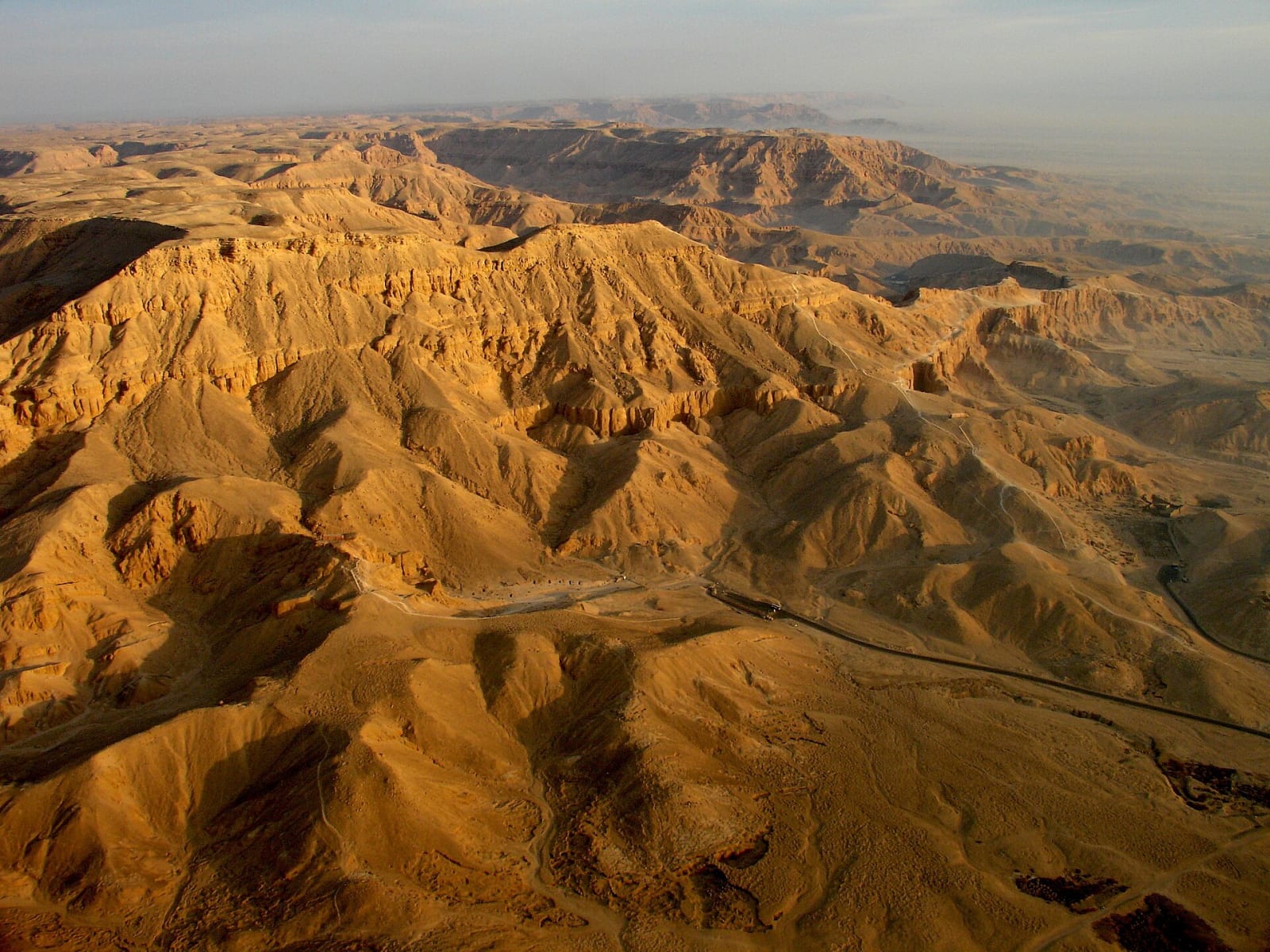
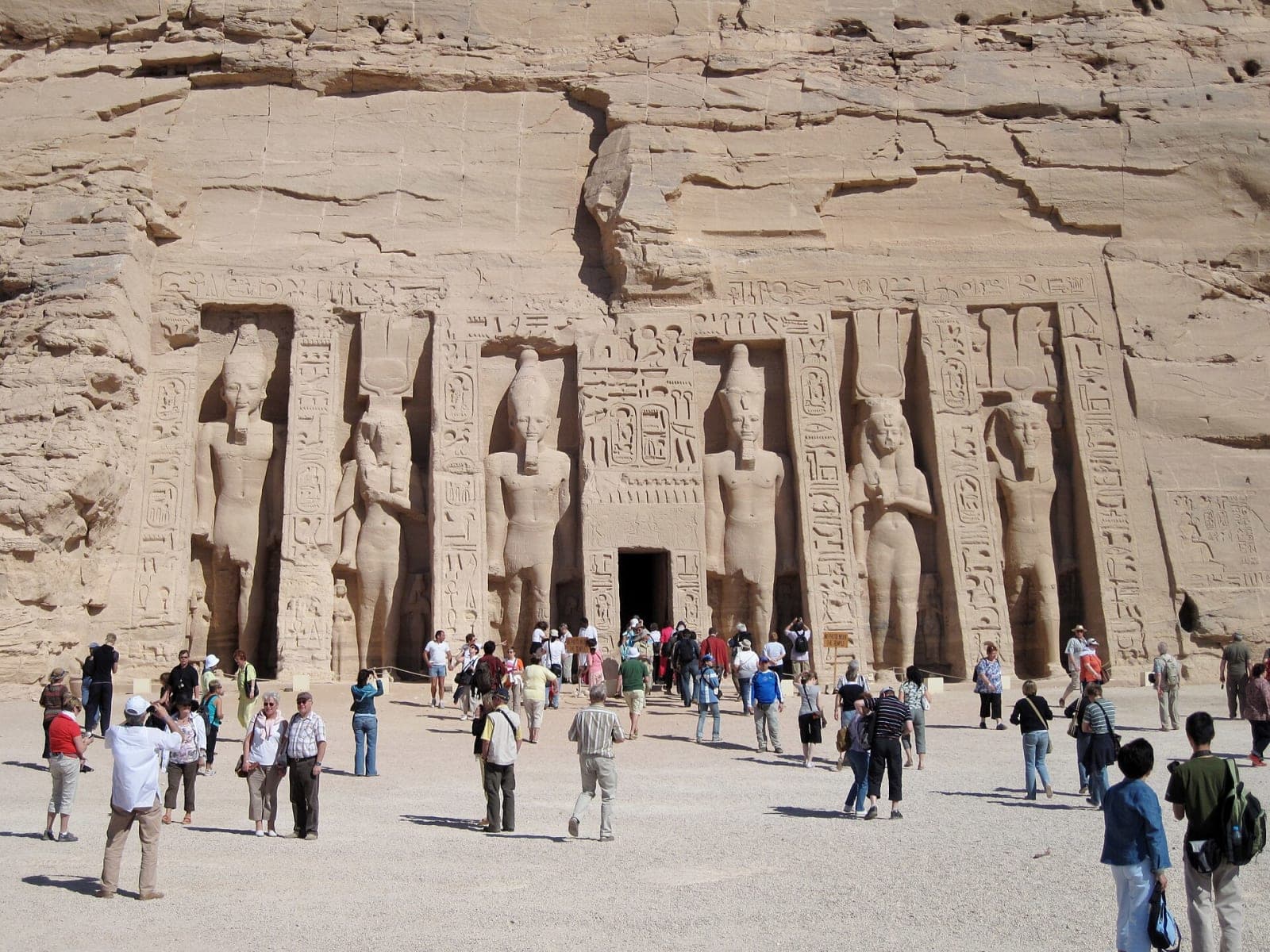
The dry valley and tomb entrances at the Valley of the Queens
First, a correction that matters for planning
Nefertari's tomb is not in the Valley of the Kings. It is QV66, in the Valley of the Queens, a separate site about two kilometres away with its own entrance and its own tickets.
This trips up a surprising number of itineraries. If a tour promises the Valley of the Kings and you were expecting Nefertari, you are going to the wrong valley. Ask specifically, and check that the extra ticket is either included or that there will be time and cash to buy it.
What is actually in there
Nefertari was the Great Royal Wife of Ramesses II, and the tomb he built for her around the thirteenth century BC is, by common agreement among people who study this material, the finest painted tomb in Egypt.
What makes it different from the royal tombs across the hill:
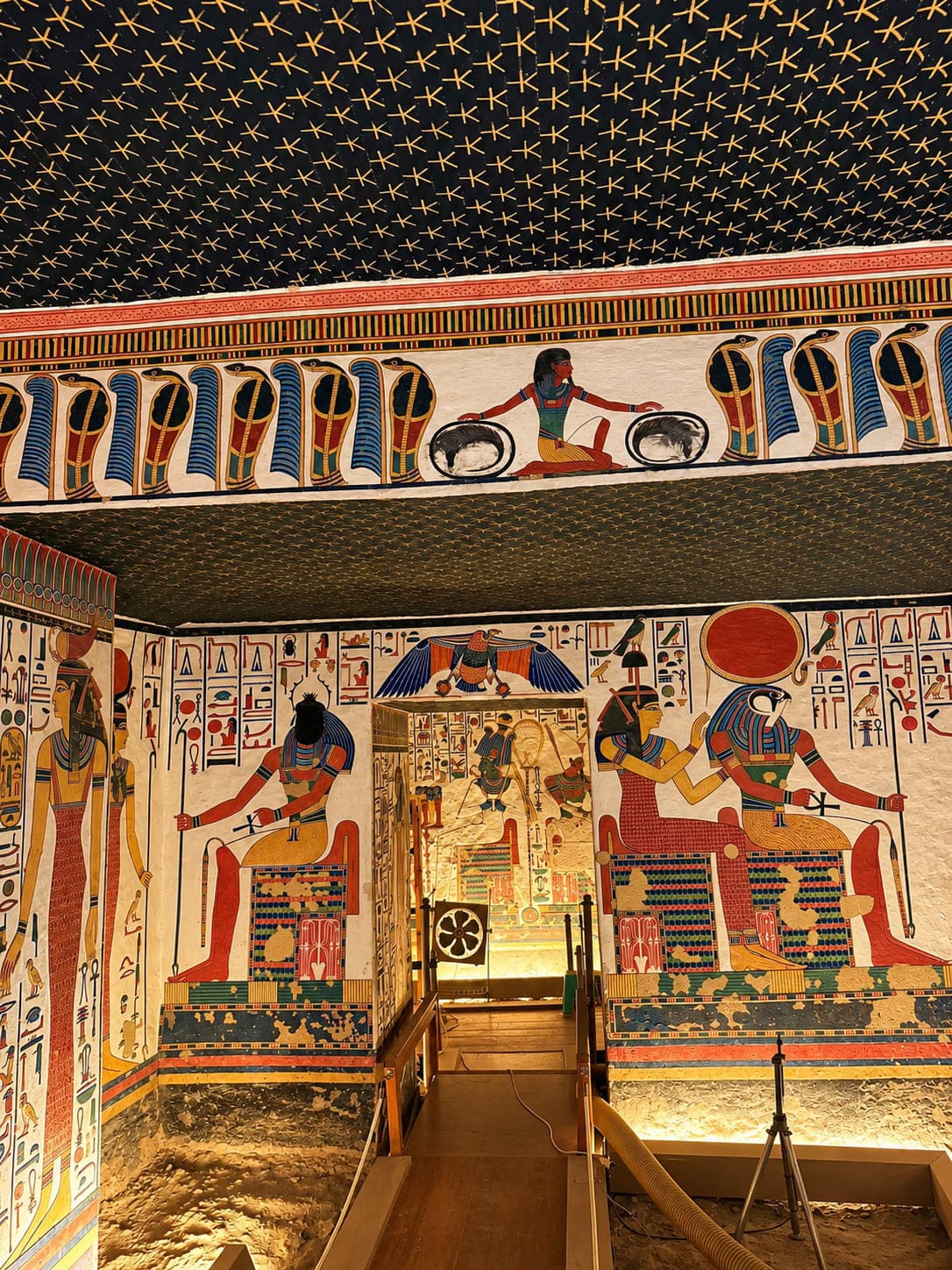
- The colour is intact. Not faded, not partial — deep blues, gold, dense reds and greens across the walls and ceilings, at a saturation nothing in the Valley of the Kings matches.
- It is painted, not carved-and-painted. The limestone here was poor, so the artists laid plaster over it and painted onto that, which produced a softer, more fluid line than relief allows.
- Nefertari herself is everywhere, in a fine linen dress and a vulture headdress, being led by the hand through the underworld by one god after another. The figures have a delicacy that reads as portraiture rather than convention.
- The ceilings are night skies — gold stars on deep blue, over every chamber.
It was found by Ernesto Schiaparelli in 1904, already robbed. The tomb's problem afterwards was not looting but salt: moisture moving through the rock crystallised behind the plaster and lifted the paint. The Getty Conservation Institute worked on it from 1986 to 1992, and the reason your visit is short and the daily numbers are limited is that humidity from human breath is exactly the thing that damaged it.
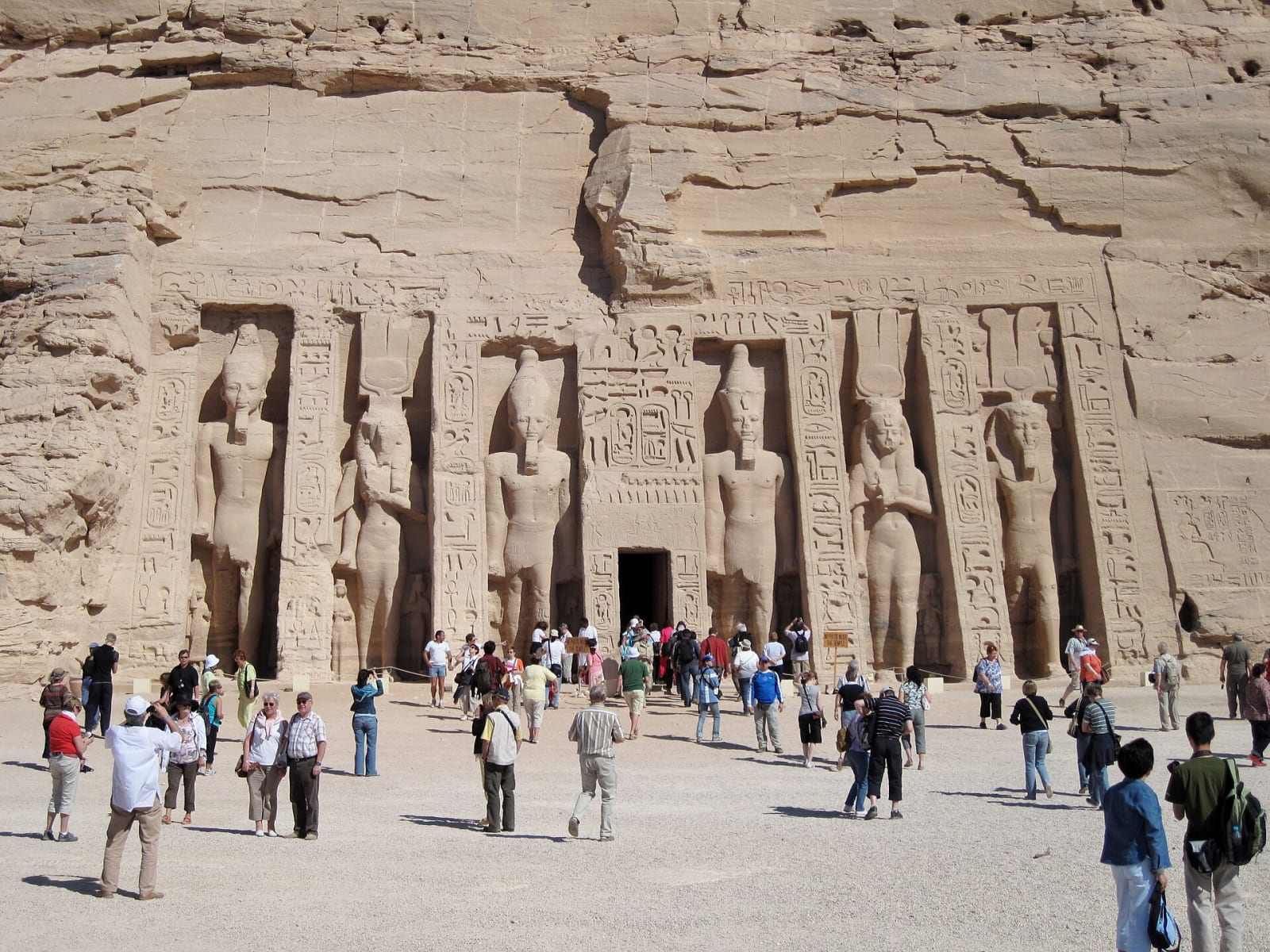
Painted wall decoration in the tomb of Nefertari, Valley of the Queens
Book what you just read about
Explore related tours and check each trip for available booking options and inclusions.