Aswan: the one where the river is the point
Aswan has fewer monuments and a better time. That is the honest summary, and whether it sounds appealing tells you most of what you need to know about which town is yours.
The Nile at Aswan is the most beautiful stretch of the river in Egypt — wide, scattered with granite islands and sandbanks, with desert dunes coming down to the water's edge on the west side. Feluccas actually sail here, because the prevailing wind runs against the current, which is why the Egyptians could sail south and drift north for four thousand years.
The sights are quieter and more spread out:
- Philae, the temple of Isis, on an island — and one of the great rescue stories. When the High Dam flooded its original site, the temple was cut into blocks and rebuilt on higher Agilkia island. It carries the last dated hieroglyphic inscription anywhere, from 394 AD: the exact end of a writing system that had run for three and a half thousand years.
- The Unfinished Obelisk, still lying in the granite quarry where it cracked. Had it been raised it would have been the largest ever cut. You can see the tool marks. It is the best place in Egypt to understand how rather than what.
- Elephantine Island and the Nubian villages, where the houses are painted in blues and ochres and the culture is visibly not the same as northern Egypt's.
- Kitchener's Island, a botanical garden, which sounds like filler and is genuinely one of the pleasantest hours on the Nile.
What Aswan gives you is atmosphere. It is slower, softer, several degrees more relaxed in its dealings with visitors, and the evenings on the water are the thing people remember years later.
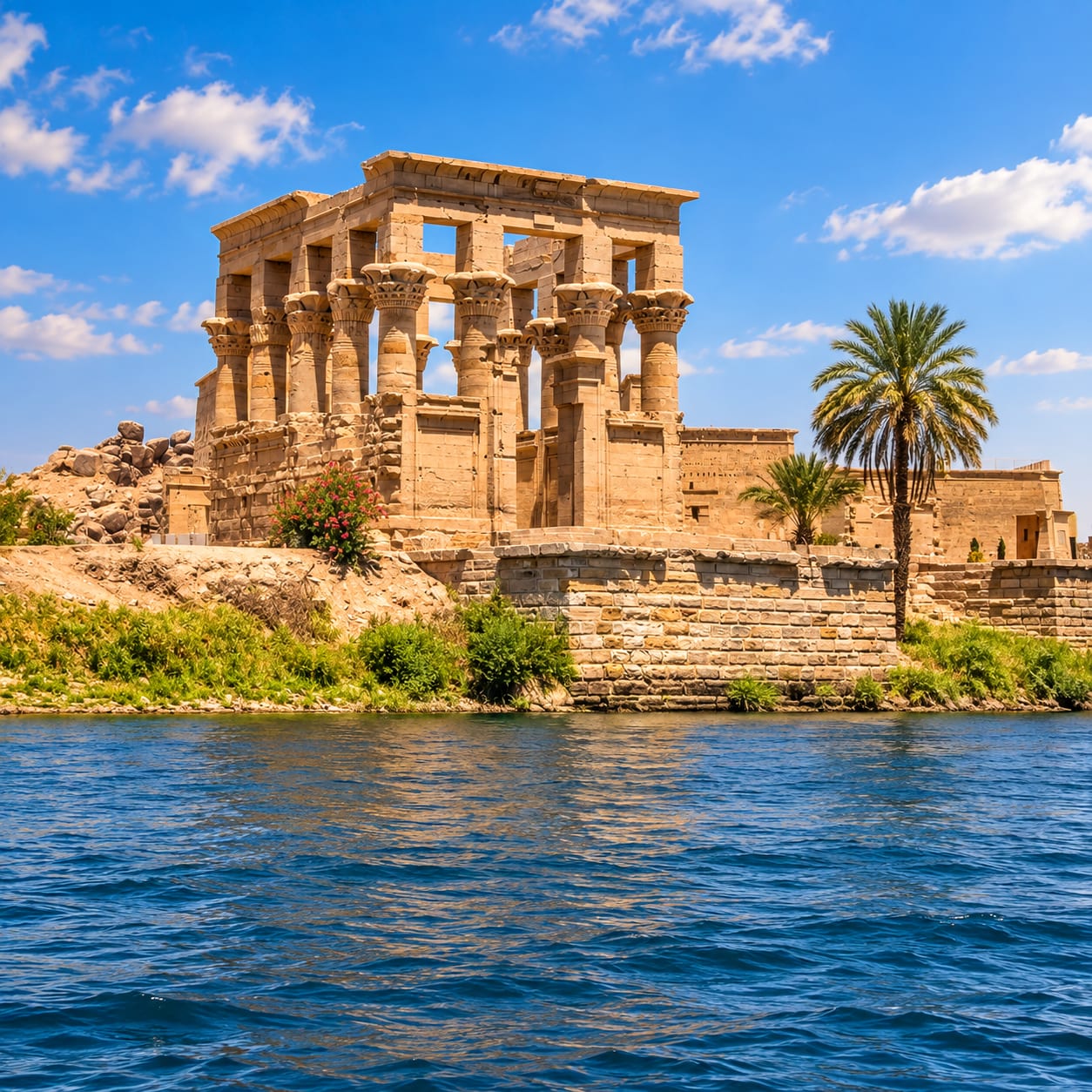
The temple of Isis at Philae, rebuilt on Agilkia island
Straight comparison
| Luxor | Aswan |
|---|
| Best for | Monuments, tombs, scale, history | The river, atmosphere, Nubian culture |
| Minimum worth doing | Two full days | One and a half days |
| Pace | Hard work, early starts | Slow, sit-down, boat-based |
| Heat | Brutal in summer | Hotter still, but more shade and water |
| Crowds | Heavy at the headline sites | Noticeably lighter |
| Hassle | The most persistent in Egypt | Present but gentler |
| Abu Simbel | Not practical from here | 3 hours each way, or a short flight |
| Evenings | Luxor Temple floodlit | A felucca at sunset |
Abu Simbel, which decides it for some people
Abu Simbel is roughly 280 km south of Aswan — about three hours by road each way, or a short flight — and it is not realistically reachable from Luxor as a day trip.
Four colossal seated figures of Ramesses II, twenty metres high, carved into a cliff face, with a second temple beside it for Nefertari. And like Philae, it was moved: in the 1960s the entire mountain face was cut into more than a thousand blocks and reassembled sixty metres higher and two hundred metres back, ahead of the rising water. Twice a year, on 22 February and 22 October, sunrise still reaches down the length of the sanctuary to light the statues at the back — the alignment survived the move.
If Abu Simbel is on your list at all, that settles the argument. It has to be Aswan.
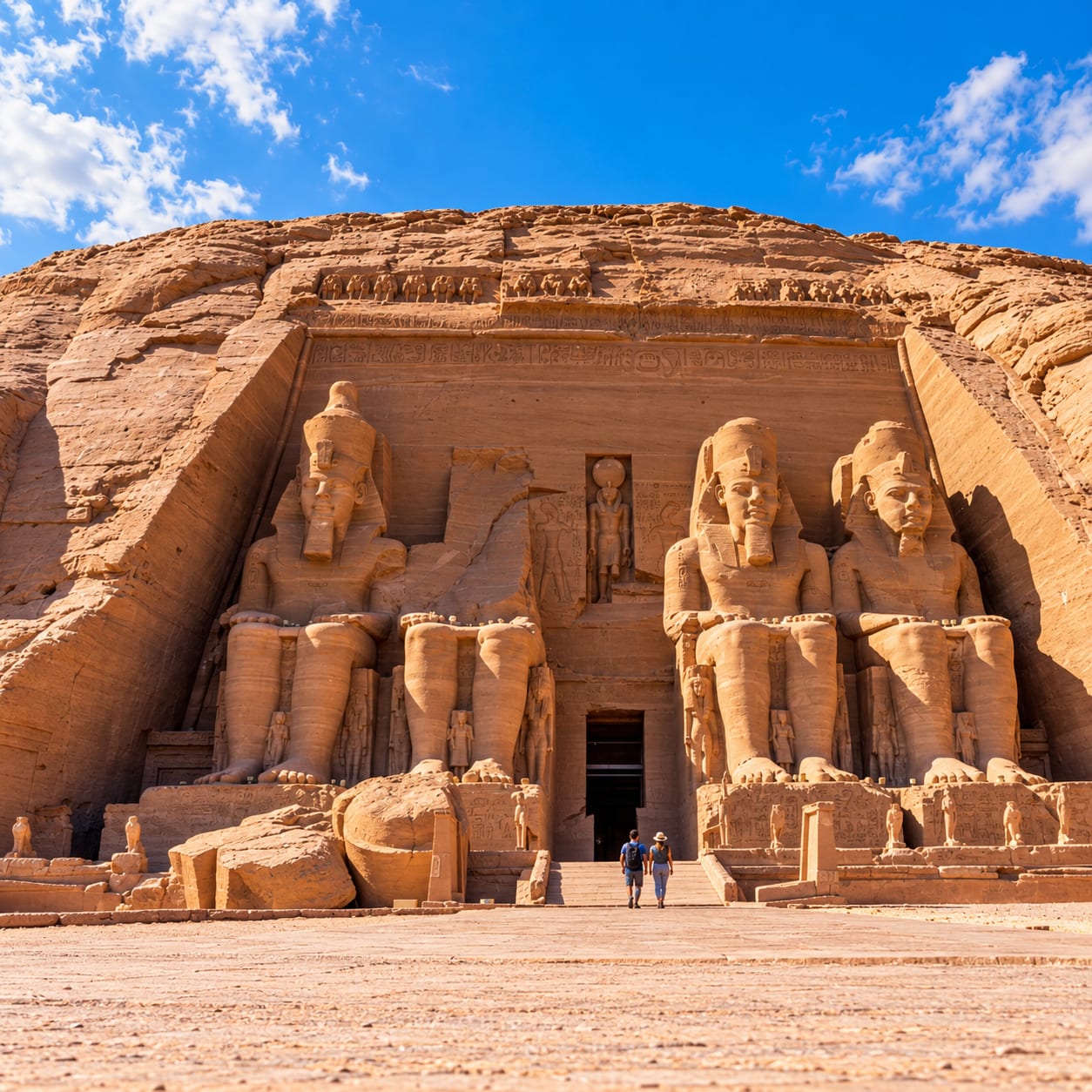
The colossal seated figures of Ramesses II at Abu Simbel
So which one, if you only get one
Take Luxor if:
- You are coming to Egypt primarily for ancient Egypt. This is not close — Luxor has more of it, and better.
- You want painted tombs. Aswan has essentially none of this.
- You have exactly one day. A Luxor day trip is a complete, satisfying thing; an Aswan day trip spends too much of itself travelling.
- You are travelling with someone whose interest in this is historical rather than atmospheric.
Take Aswan if:
- You want the trip to be restful as well as interesting. It genuinely is the more pleasant place to spend time.
- Abu Simbel matters to you.
- You have already seen Luxor, or you have already seen Giza and want something that is not more of the same.
- You are travelling in high summer and want somewhere with more water and shade in the day.
- You find persistent selling wearing. The difference here is real.
And if you are honestly undecided, the tiebreaker is this: Luxor is the one you would regret not seeing; Aswan is the one you would rather be in. Most first-time visitors should take Luxor. Most second-time visitors say Aswan was their favourite.

The path between tomb entrances in the Valley of the Kings
The answer we actually give
Do both, and do them in one movement rather than as two separate trips.
Three days gets you Luxor's east and west banks and Aswan's river and Philae without rushing either. A Nile cruise does the same thing while moving you between them overnight, which removes the transfer from the itinerary entirely and adds Edfu and Kom Ombo on the way, both of which are genuinely good and neither of which anyone plans a trip around.
The order matters more than people expect. Go Luxor first, Aswan second. Luxor is the demanding one and you want it while you still have the energy; Aswan is where you want to be by day three, on a boat, with the hard work behind you. Done in the other order, Luxor arrives as an exhausting anticlimax at the end of a relaxing week.
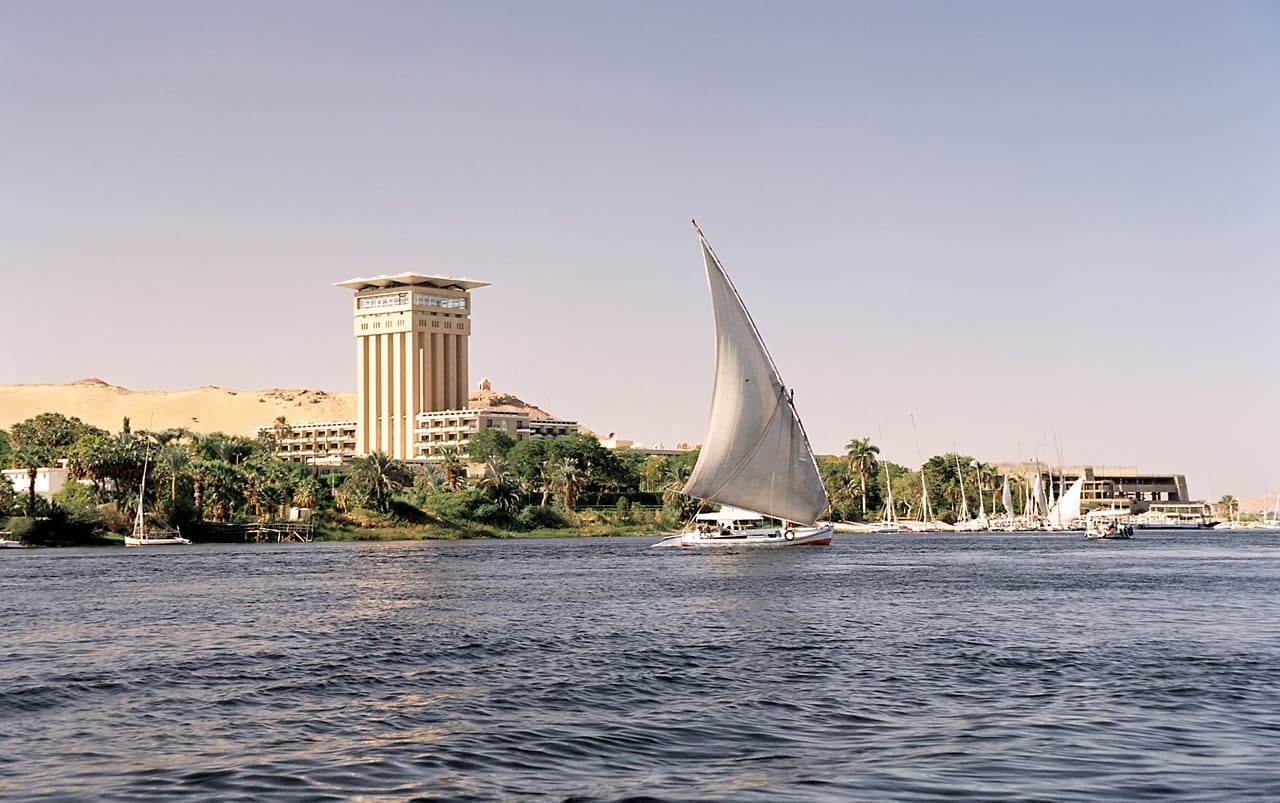
Feluccas and granite islands on the Nile at Aswan
Practical notes
- Getting between them: about three hours by road, roughly the same by train, or a short flight. The train along the Nile is scenic and cheap, and worth doing once in daylight.
- Start early in both. Aswan is hotter than Luxor on paper; the difference is that Aswan gives you water and shade to retreat into and Luxor mostly does not.
- Two days is the floor for Luxor. One day means the west bank at eleven in the morning, which is the wrong way to see it — see our piece on one day versus two.
- Aswan rewards doing less. Book Philae and the obelisk, then leave a half-day genuinely empty for the river. Everybody who over-schedules Aswan comes back saying they wished they had not.
- Carry cash for both — tomb supplements at Luxor and boat hire at Aswan are cash transactions.
Painted houses in a Nubian village on the Nile at Aswan