Nile & Luxor · Sep 3, 2026
Luxor by bus or by plane — the real cost, counting the day you lose
The plane costs about twice as much and does not make the day shorter. Here is what it actually buys.
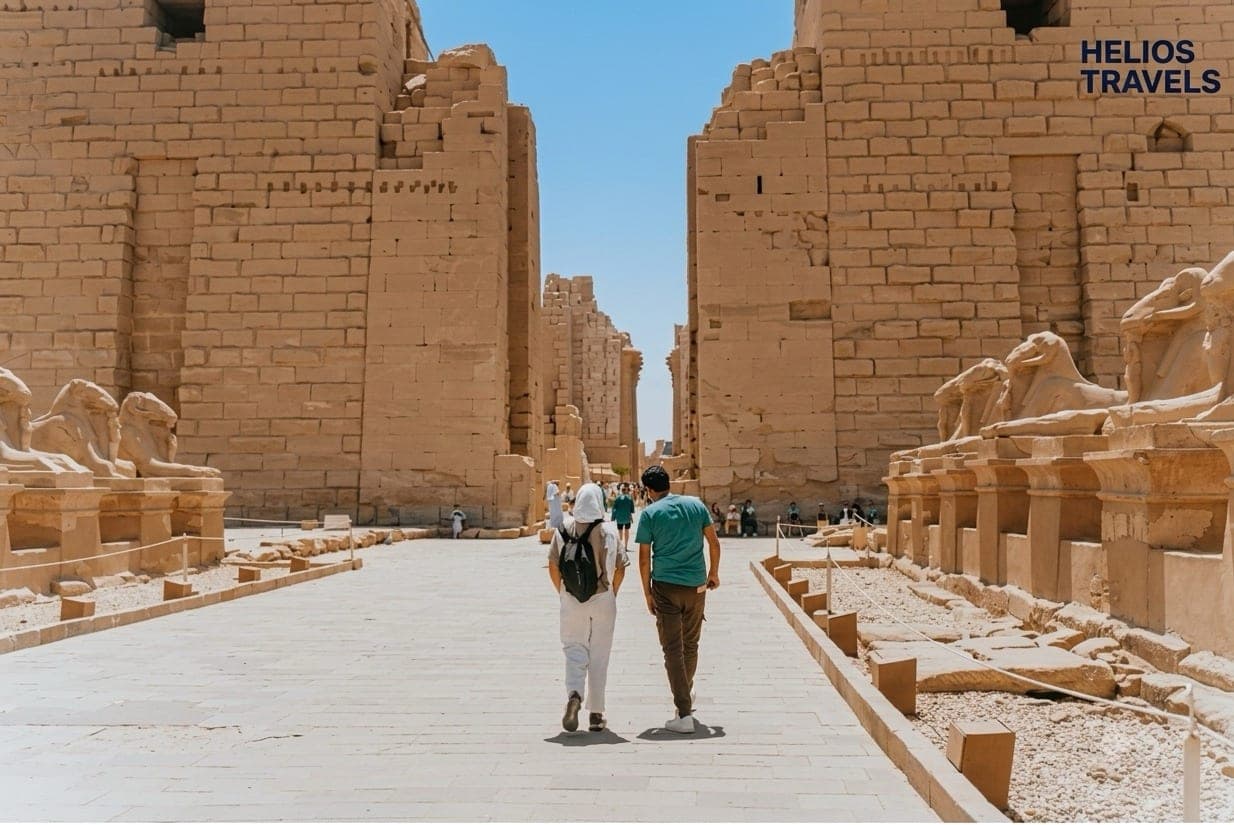
Luxor from Hurghada is sold two ways: by road, or by plane. The plane costs roughly twice as much, and the assumption is that it buys you time.
It doesn't. Look at the actual door-to-door hours on our own itineraries and the flying day trip is not shorter than the driving one. What the extra money buys is something else entirely — and for some travellers it is worth every cent, while for others it is money thrown at the wrong problem.
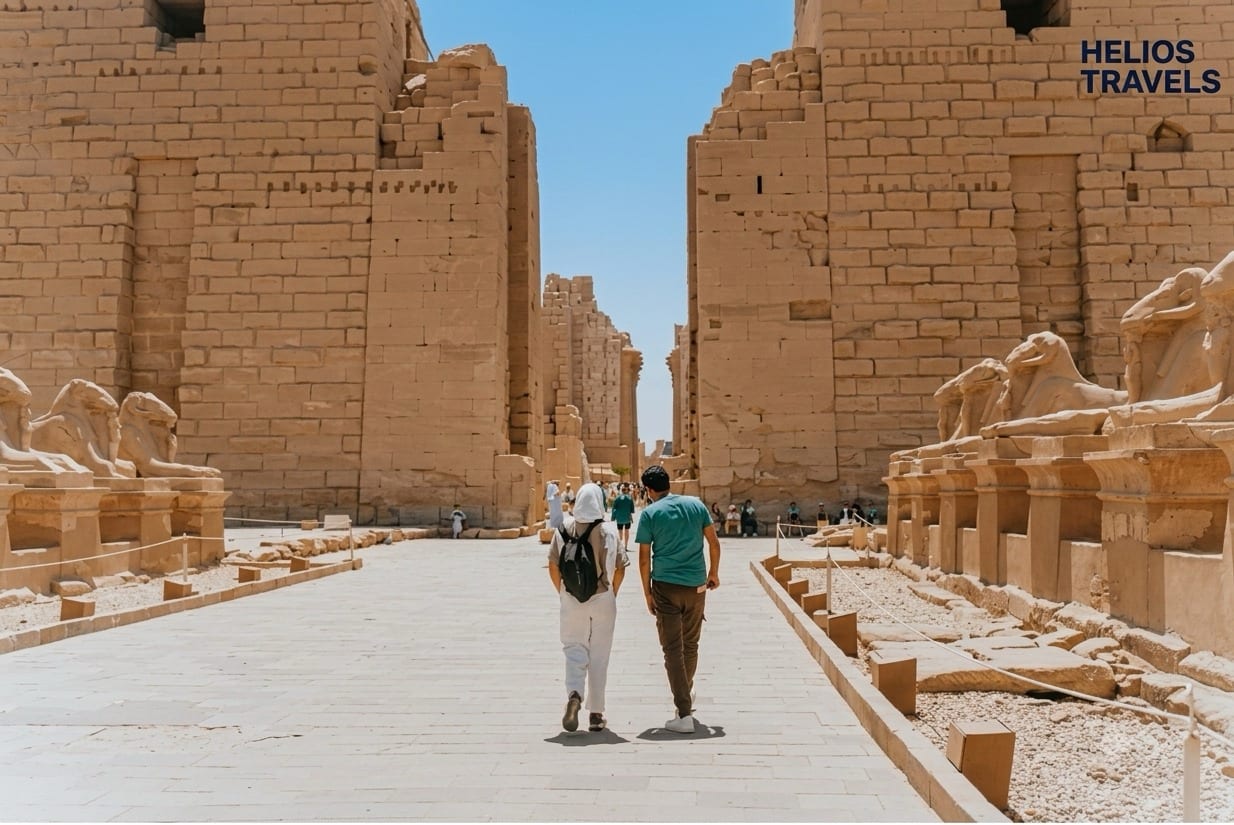
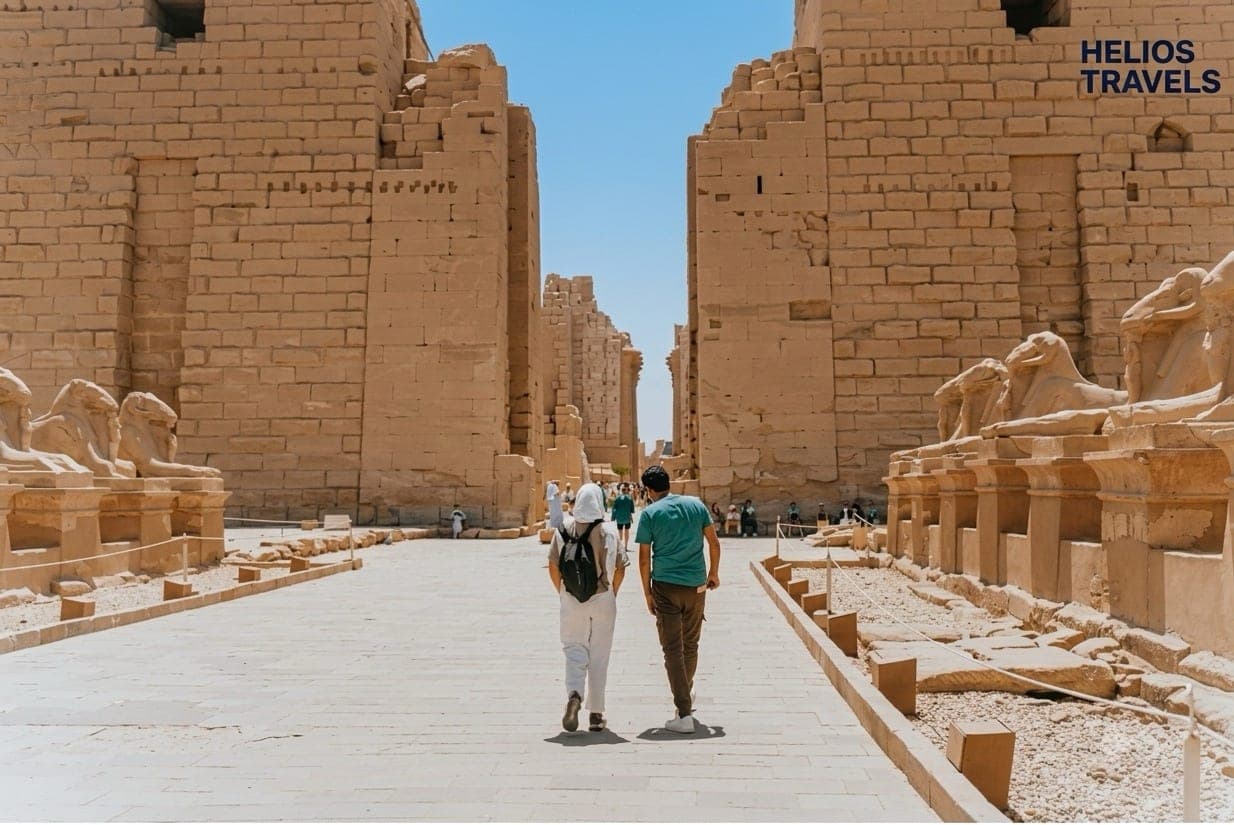
The Great Hypostyle Hall at Karnak, the anchor of any Luxor day trip
The road trip, honestly
It is roughly 290 kilometres from Hurghada to Luxor, inland across the Eastern Desert and down to the Nile. On a clear run that is about four hours each way.
Add a pick-up between two and four in the morning, convoy timings, a stop, and the same again on the way back, and you have a day of around fourteen hours of which eight are in a vehicle.
What you get for that: Karnak, the Valley of the Kings, usually Hatshepsut or the Colossi of Memnon, lunch, and on many itineraries a short Nile crossing. It is a genuinely full day of sightseeing at the best-value price in Egyptian tourism.
What it costs you, beyond money: you will be tired. Not "a bit tired" — you will sleep on the bus back and you will not want to do anything the following morning. Budget the next day as a rest day and the trip is excellent. Plan a boat trip for the morning after and you will hate both.
The flight, honestly
The flying version replaces eight hours of road with a short hop each way. But the day does not shrink, because the flight schedule dictates the timings rather than your itinerary: on our own programmes the flying day trip runs a comparable total length to the driving one.
So do not buy the plane to save hours. Buy it to change what those hours are made of. Eight hours in a coach seat versus two short flights and a great deal more standing time in Luxor is not the same day in any way that matters to your body.
The plane is the right choice if:
- You have a back, hips or knees that eight hours in a coach will punish.
- You are travelling with older parents or very young children.
- You get carsick — the desert road is long and straight, but it is not flat.
- You have exactly one free day and want to arrive at Karnak able to concentrate.
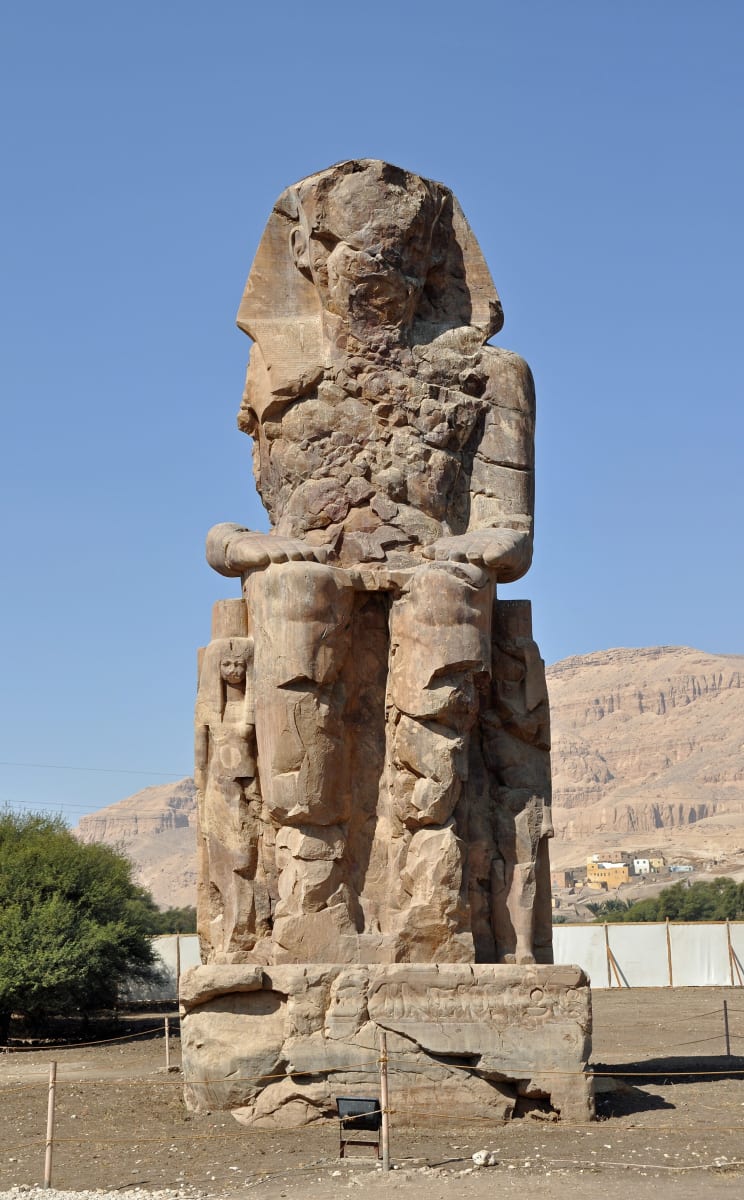
The Colossi of Memnon on the Theban west bank
The option most people should actually take
There is a third answer, and it is the one we give most often when someone asks which day trip to book: don't do it in a day.
Two days in Luxor changes the trip completely. You drive over in the morning, see the east bank — Karnak and Luxor Temple — in the afternoon light, sleep in Luxor, and take the west bank at dawn when it is 15 °C cooler and empty. The Valley of the Kings at seven in the morning and the Valley of the Kings at eleven are not the same place.
It also unlocks the things a day trip can never include: the balloon at sunrise, Luxor Temple lit at night, Medinet Habu, Dendera, an evening on the corniche when the town belongs to the people who live in it.
Per hour of actual sightseeing, two days is the cheapest way to see Luxor. The day trip is only cheaper if you count the ticket and ignore the coach.

Luxor Temple lit after dark — only reachable on an overnight trip

Book what you just read about
Explore related tours and check each trip for available booking options and inclusions.