Nile & Luxor · Sep 10, 2026
The Luxor balloon flight: 5 am, and worth it
The best hour available to a visitor in Luxor — and the one most likely to be cancelled or misunderstood before you book it.
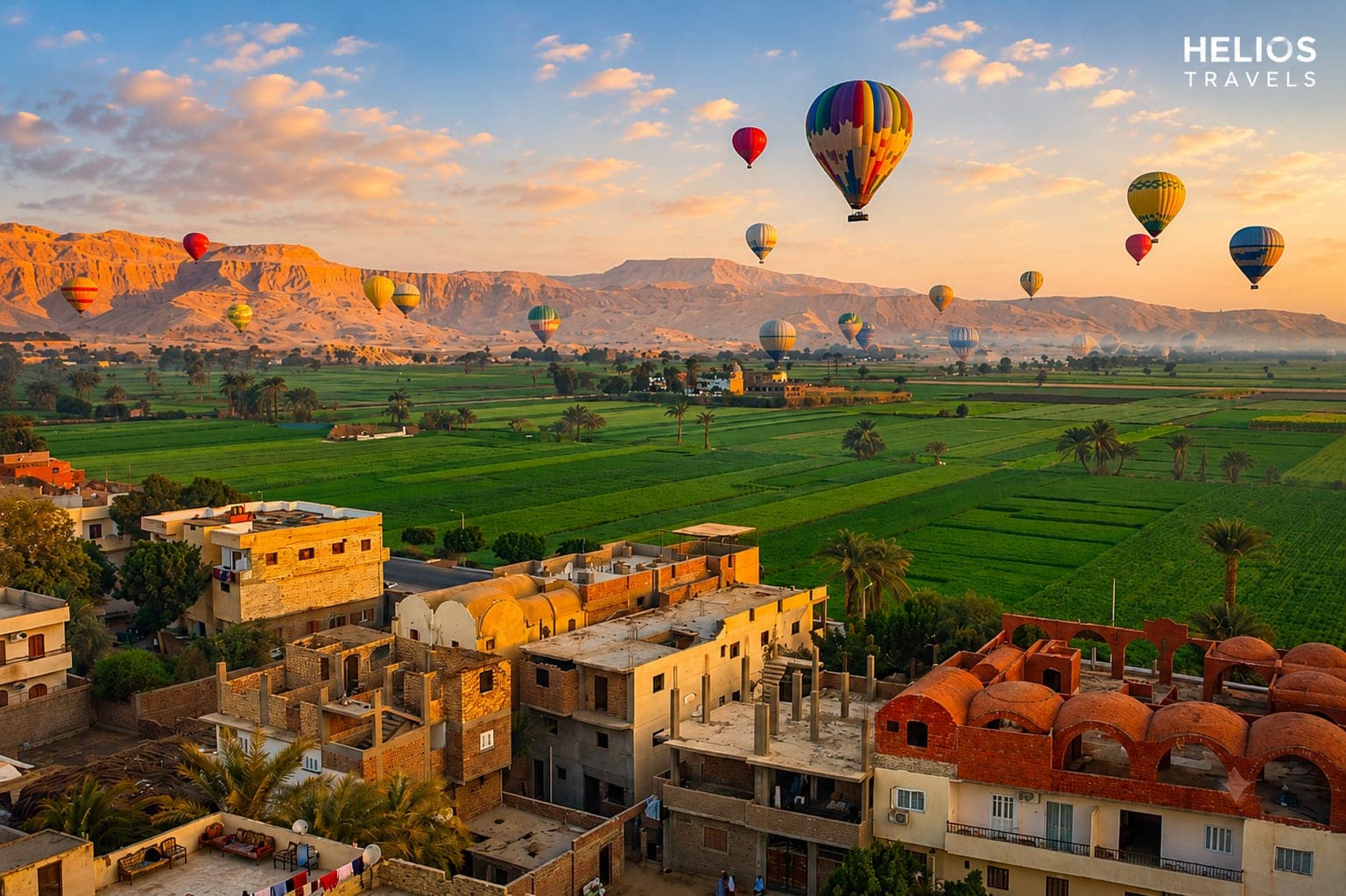
The alarm goes at four. You are collected in the dark, ferried across the Nile, and stood in a field while several tonnes of nylon are inflated by roaring burners. An hour later you are six hundred metres above the Valley of the Kings watching the sun come up over the eastern desert. It is the single best hour available to a visitor in Luxor — and it is also the one most likely to be cancelled, oversold, or misunderstood before you book it.
Why it has to be that early
This is not the operators being cruel. Hot-air balloons fly in stable air, and over the Nile valley the air is only stable in the short window between first light and the moment the ground starts to warm. Once the sun is properly up, thermals rise off the desert and the flying becomes rough and then unsafe.
So the schedule is fixed by physics: pick-up between 3.30 and 4.30 depending on the season, launch at first light, land an hour or so later, back at the hotel for a late breakfast. Any operator offering a mid-morning balloon flight over Luxor is either not flying or not being careful, and neither is a reason to book with them.
The compensation is that you are done by eight, with the whole day still ahead of you — and the west bank sites you fly over are at their coolest and emptiest precisely then.
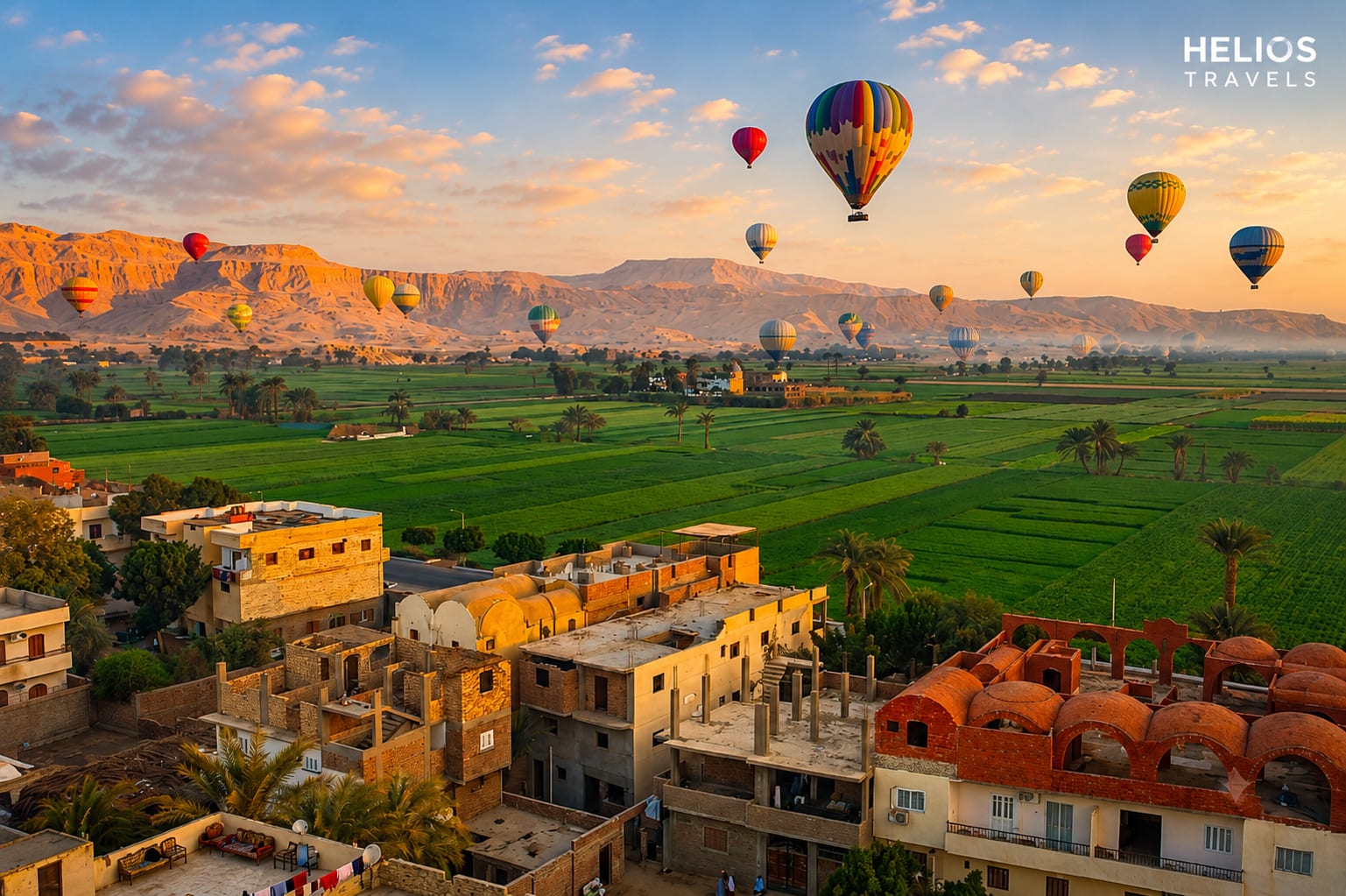
Balloons over the Theban west bank at first light
What you actually see
The flight path depends entirely on the wind, which is the part nobody controls. On a typical morning you drift north-west over the cultivated strip and out towards the desert edge, which means:
- The Colossi of Memnon, from directly above — the only angle from which their scale against the flat plain makes sense.
- The Ramesseum and Medinet Habu, whose ground plans read like architectural drawings from the air in a way they never do on foot.
- Hatshepsut's temple at Deir el-Bahari, set into the cliff, usually seen at a distance rather than overhead.
- The Valley of the Kings — the bowl of it, the paths, and how tightly the tombs are packed into one small wadi.
- The line where the green stops. This is the thing people do not expect and remember most. The cultivated Nile floodplain ends and the desert begins, not gradually, but at a line you could walk along. Four thousand years of Egyptian civilisation is explained by that line, and from a balloon you see it as a single fact.
What you do not get is a tour. There is commentary, but the balloon goes where the wind goes, and any operator promising to fly you over a specific monument is promising something they cannot deliver.

Book what you just read about
Explore related tours and check each trip for available booking options and inclusions.