Nile & Luxor · Sep 3, 2026
Karnak: how to walk two thousand years in two hours
Not a temple — two square kilometres built by thirty pharaohs. It only makes sense once you know it grows backwards in time.
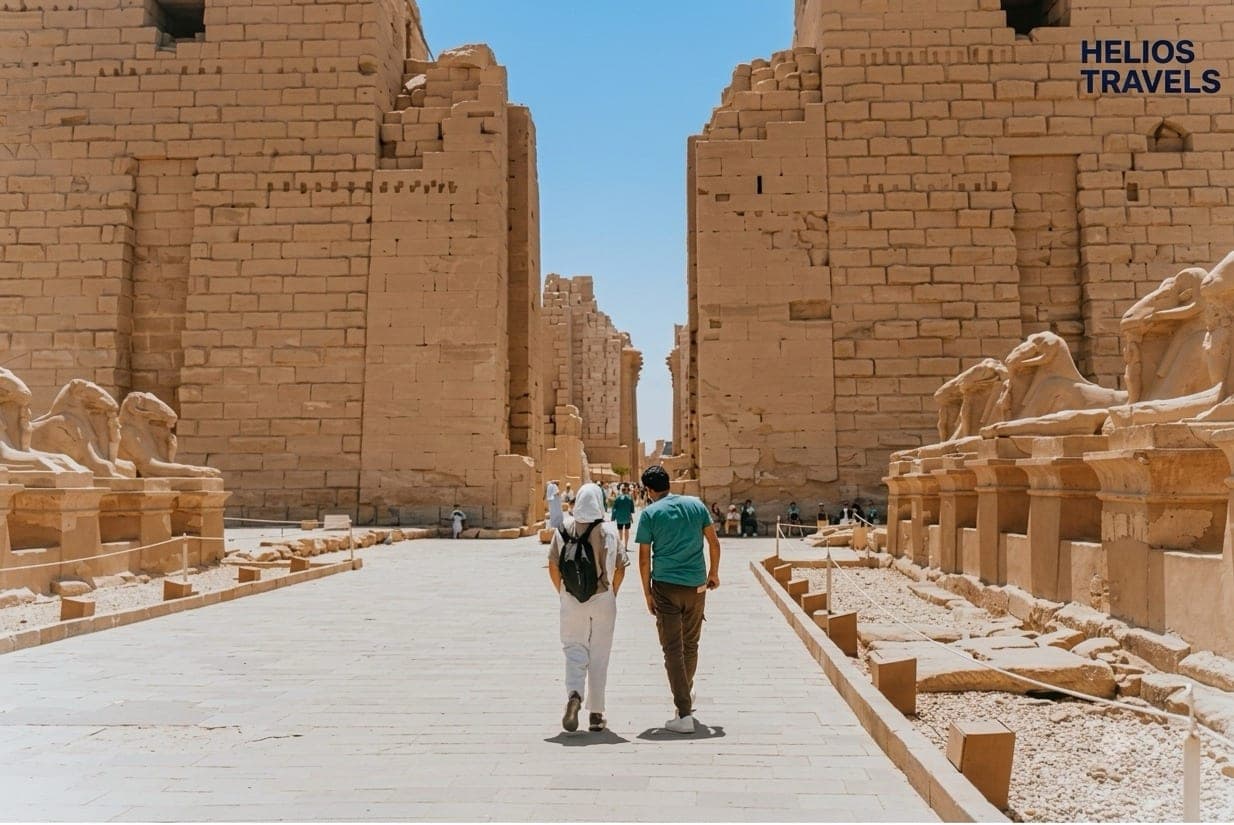
Karnak is not a temple. It is roughly two square kilometres of temples, chapels, pylons, obelisks and courts, built and rebuilt by something like thirty pharaohs across two thousand years — which is a longer span than separates us from the Roman empire.
Nobody sees it all, and trying is how people leave remembering only that it was big. Here is how to walk two thousand years in two hours.
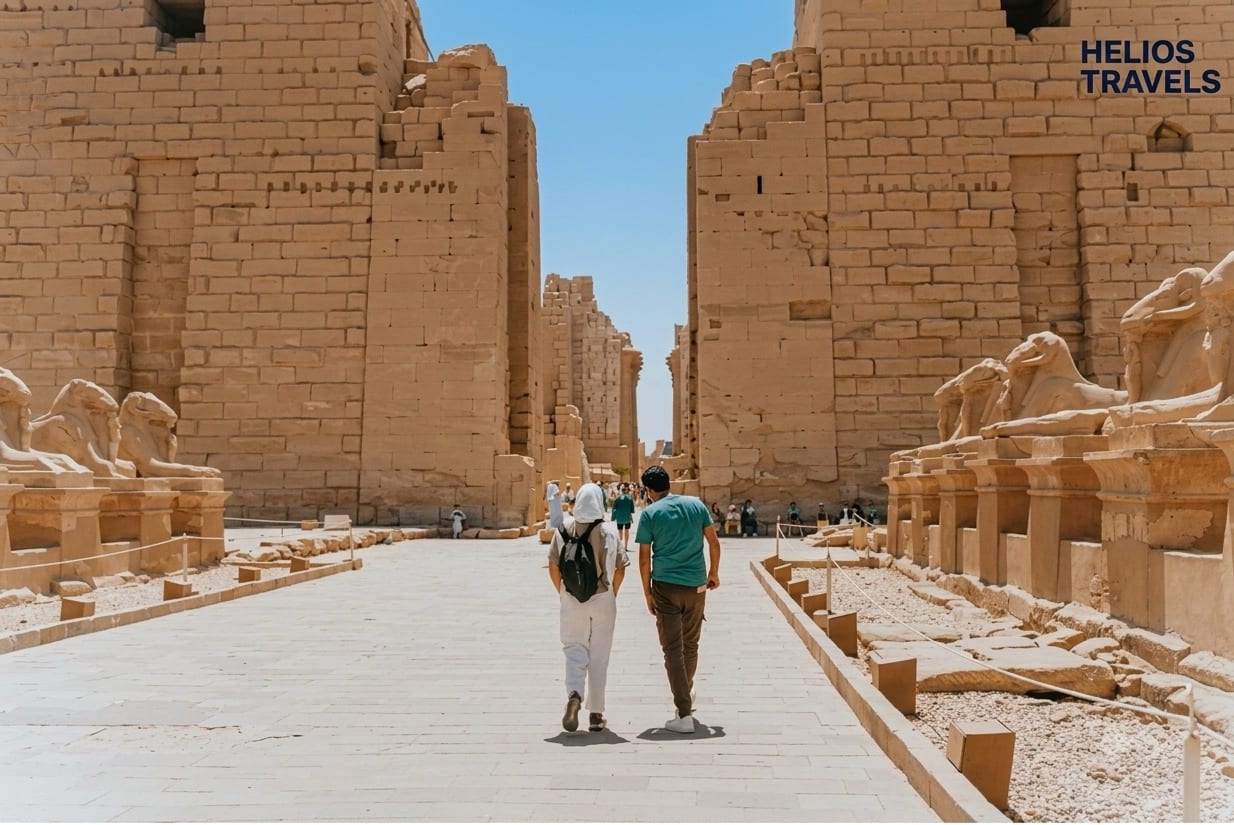
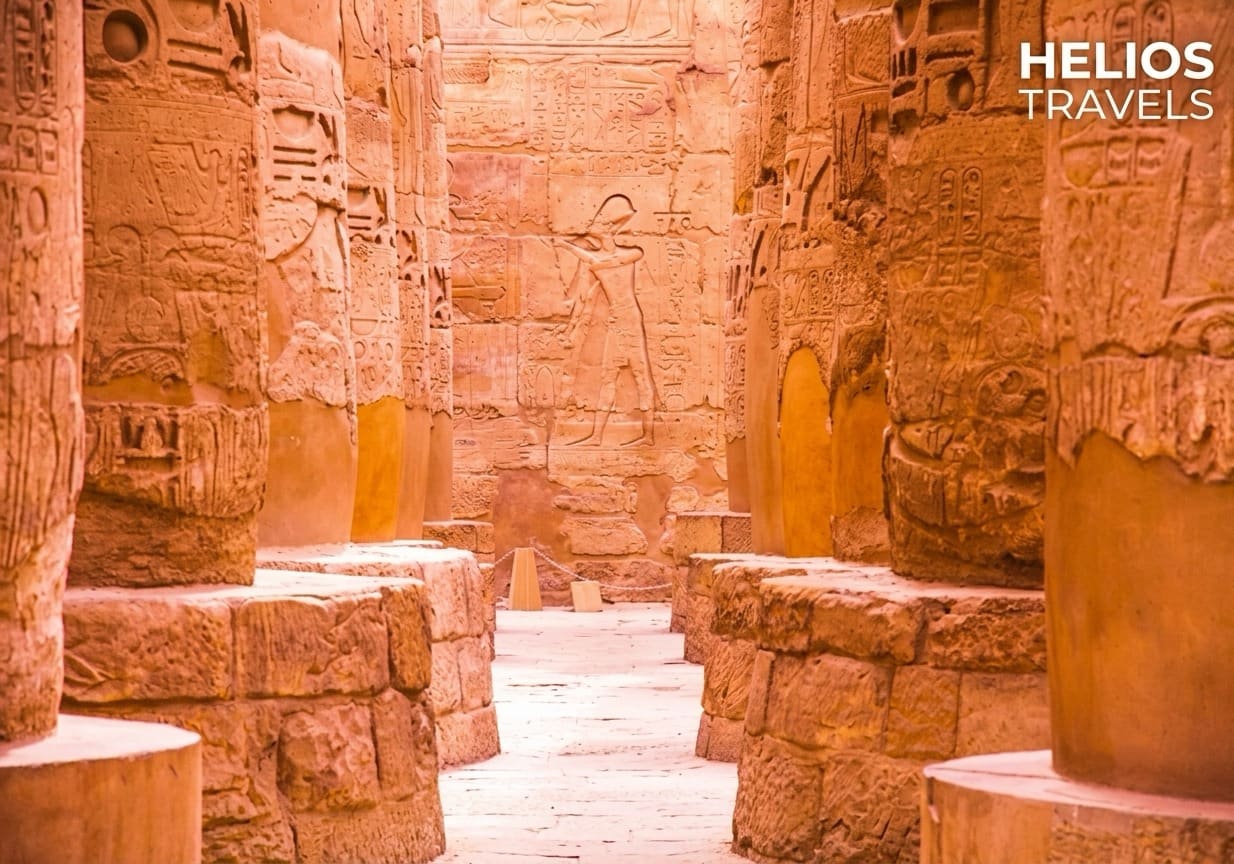
The Great Hypostyle Hall at Karnak with its massive sandstone columns
The one idea that makes Karnak legible
Karnak was never designed. It accumulated.
Each pharaoh added to the front of it, building outward towards the Nile, so the temple grows backwards in time as you walk inwards. The pylon you enter through is among the newest and is unfinished; the small, plain rooms at the far end are the oldest. You are walking from roughly the Ptolemies back towards the Middle Kingdom, and the further in you go the earlier it gets.
Hold that one idea and the site stops being an overwhelming pile of stone and becomes something you can read.
The six things to actually stop at
1. The first pylon, and the ramp behind it. The entrance pylon was never finished, and behind its northern wing the ancient mudbrick construction ramp is still standing. This is the single most interesting object at Karnak and almost every group walks straight past it. It answers, physically and immediately, the question everyone asks about how the blocks got up there.
2. The Great Hypostyle Hall. 134 columns in sixteen rows, the twelve down the central aisle standing about twenty-one metres tall, built chiefly under Seti I and Ramesses II. It was roofed, and the only light came through clerestory windows at the top of the central aisle. Stand in the middle and look up: the design intent was a stone papyrus marsh, dark and dense, with light falling in shafts.
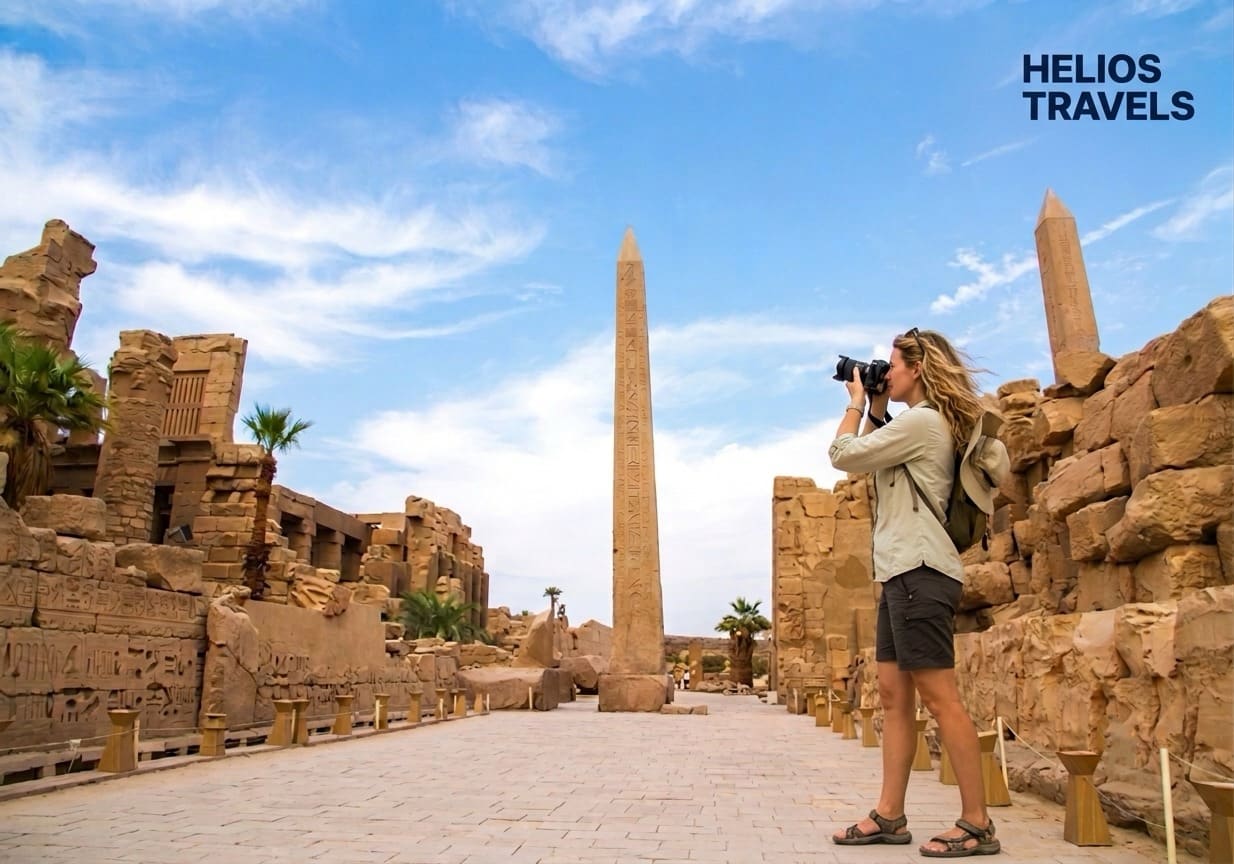
3. Hatshepsut's obelisk. About twenty-nine metres of single-piece red granite and the tallest ancient obelisk still standing in Egypt. Her successor could not easily topple it, so he walled the lower part in — which had the accidental effect of preserving the inscriptions better than anything left exposed.
4. The sacred lake. Where the priests purified themselves. It is also the best place to sit down, which after an hour of Karnak is not a small consideration.
5. The scarab. A granite scarab of Amenhotep III beside the lake, which visitors circle for luck. Join in; it costs nothing and it is a nice moment.
6. The Avenue of Sphinxes. The processional way running about 2.7 kilometres from Karnak to Luxor Temple, excavated over decades and reopened in November 2021. Twice a year the god's statue travelled down it. You can now walk it.
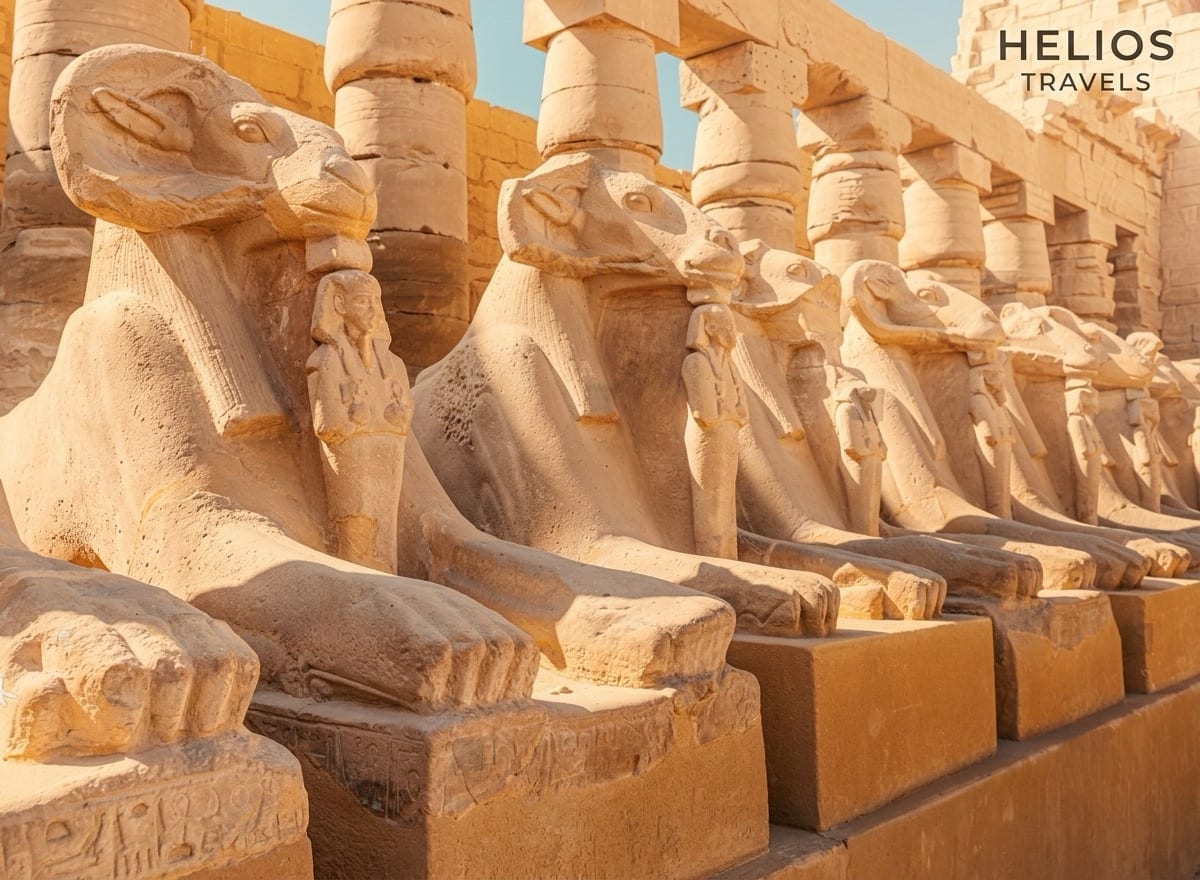
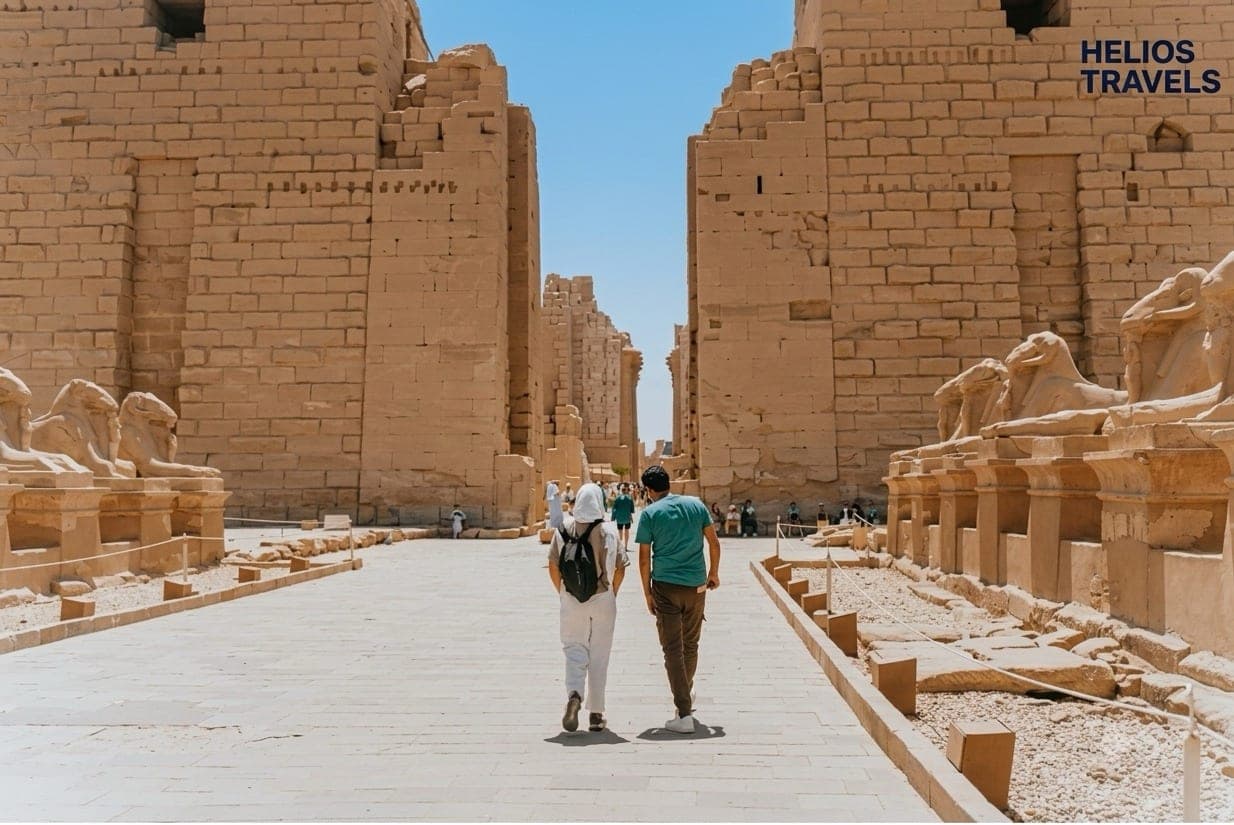
Ram-headed sphinxes lining the processional avenue at Karnak
Book what you just read about
Explore related tours and check each trip for available booking options and inclusions.