
Culture · Sep 11, 2026
Al-Muizz Street: a thousand years of Cairo on one road
Walk it north to south, late in the afternoon
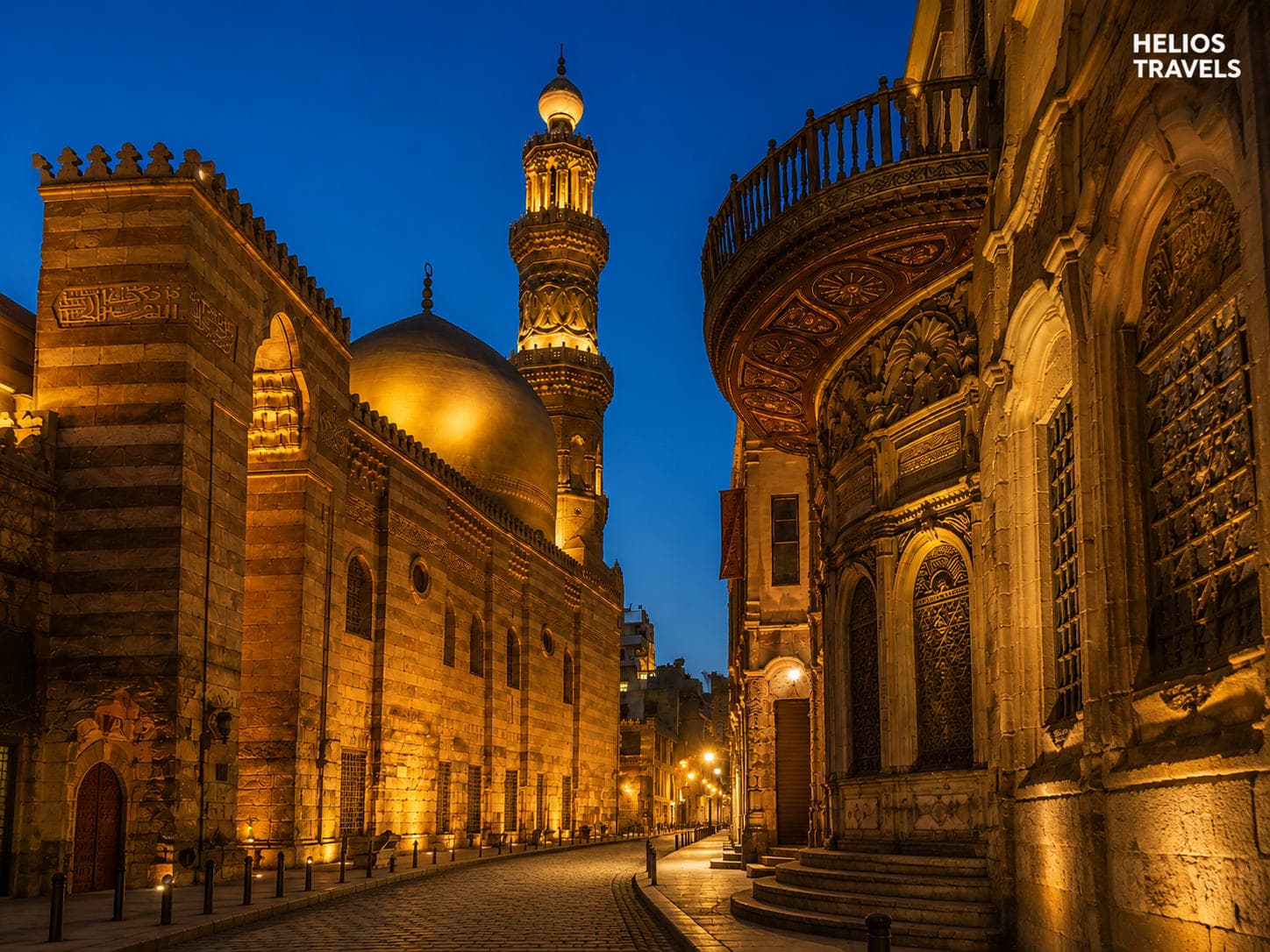
Al-Muizz Street is about a kilometre long and holds more standing medieval Islamic architecture than any comparable stretch anywhere. It runs from Bab al-Futuh in the north to Bab Zuweila in the south, it is closed to traffic through the middle, and it is best walked in the two hours before sunset. That is the whole practical answer. What follows is why it is worth doing properly instead of as twenty minutes tacked onto the bazaar.
What the street is
When the Fatimids founded Cairo in 969 they laid out a walled royal city, and this was its main avenue. It is named after the caliph al-Muizz li-Din Allah, in whose name the city was founded. Every dynasty that followed built along it — Ayyubid, Mamluk, Ottoman — because it was the address that mattered.
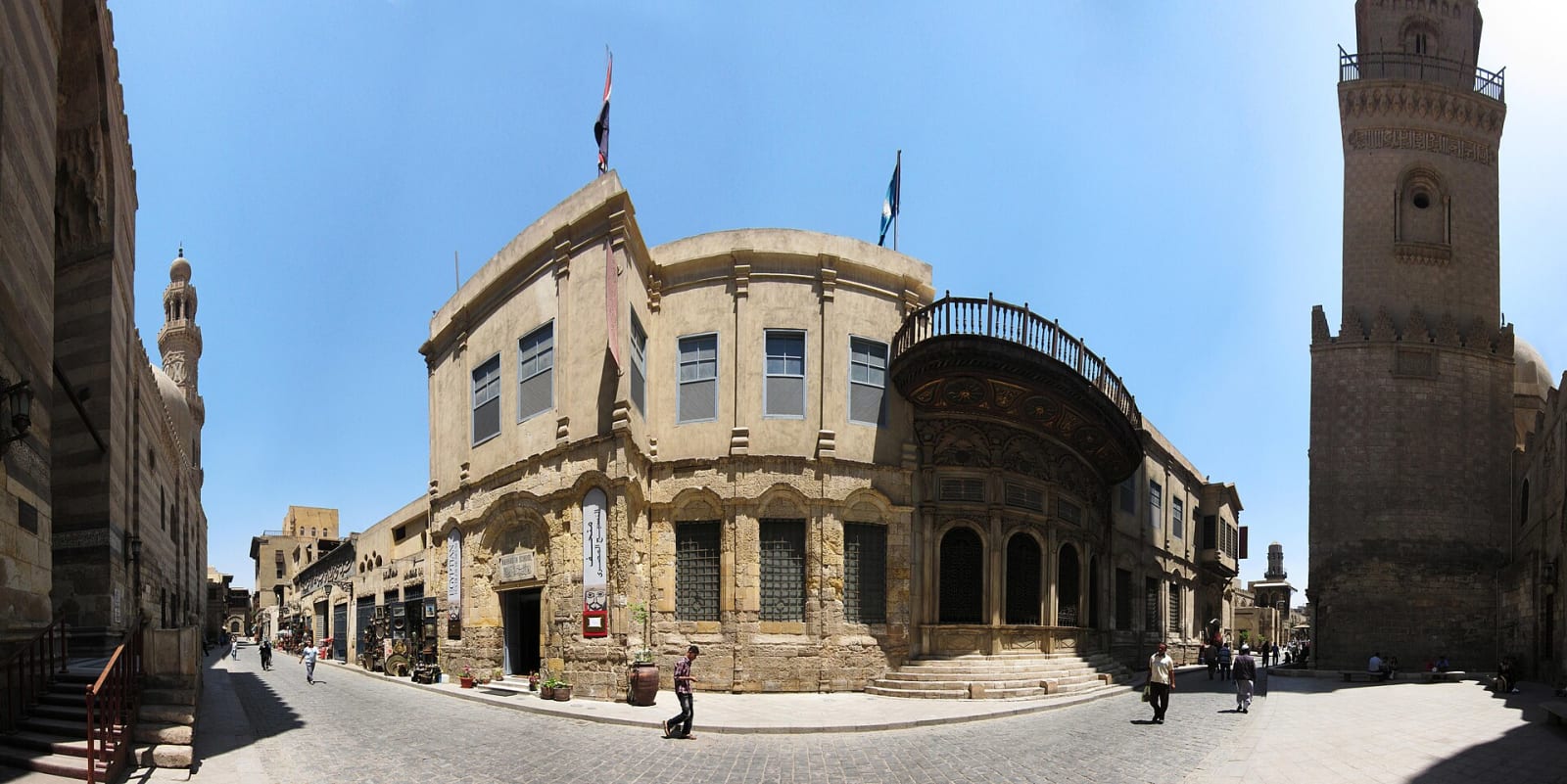
The result is a street where the buildings are stacked by century rather than by plan: a Fatimid mosque, a Mamluk complex of madrasa, mausoleum and hospital, an Ottoman merchant's house, a nineteenth-century sabil, all in a few hundred metres. Restoration and pedestrianisation in the 2000s made it walkable, and it is now lit at night.
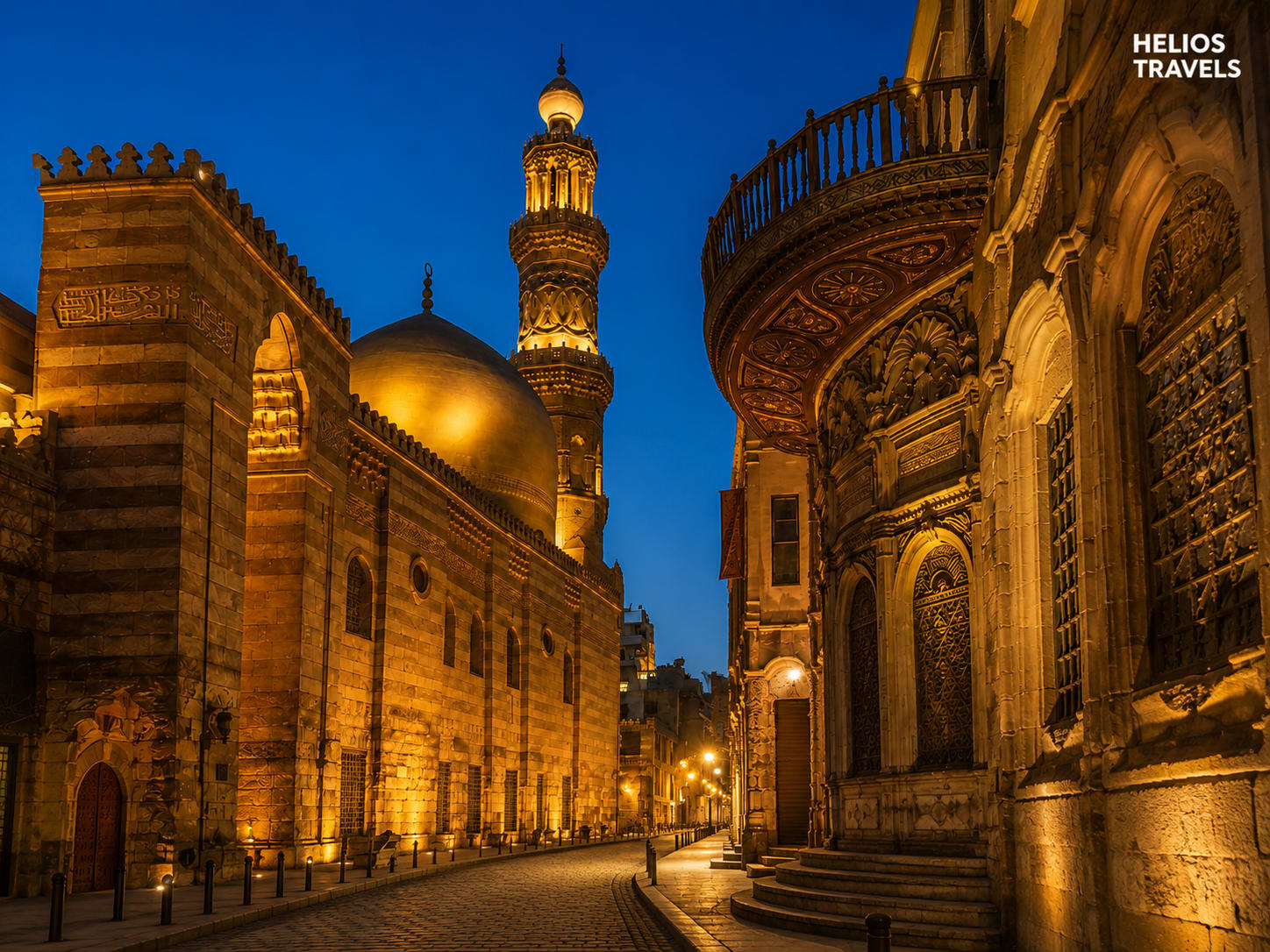
Al-Muizz Street in the evening, Islamic Cairo
Walk it north to south
Start at Bab al-Futuh, the northern gate, and walk towards Bab Zuweila. This matters: north to south puts the sun behind you in the late afternoon, and it ends you at the bazaar rather than starting you there, which is the difference between a walk and a shopping trip that eats the afternoon.
Along the way, in order:
- Al-Hakim Mosque, immediately inside the gate — enormous, austere, and its courtyard is the quietest large space in the quarter.
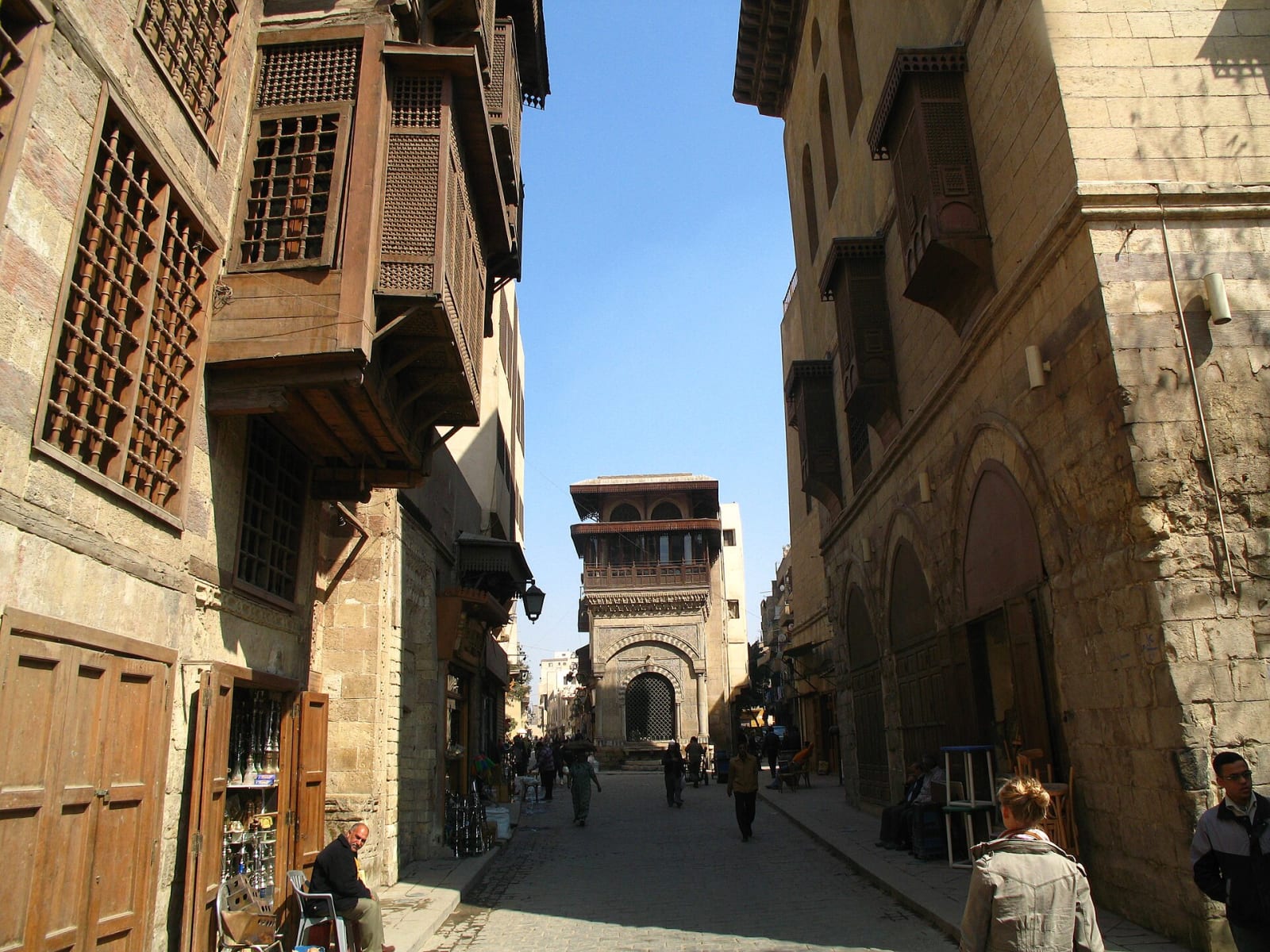
- Bayt al-Suhaymi, a seventeenth-century merchant's house down a side alley, with a courtyard, a mashrabiya screen and rooms arranged around the cool. It is the single best answer to "what was living here actually like".
- The Qalawun complex, the Mamluk showpiece: madrasa, mausoleum and hospital as one block, with an interior most people photograph badly and remember well.
- Al-Aqmar Mosque, small, Fatimid, with a carved stone facade that is one of the oldest of its kind still standing.
- Sabil-Kuttab of Abd al-Rahman Katkhuda, where the street forks — a fountain below, a Quran school above, and the building people mean when they say "the one in the middle of the road".
- Bab Zuweila, the southern gate. You can climb the minarets, and the view along the roofs is the one photograph of Cairo worth queueing for.
Medieval facades along Al-Muizz Street
Book what you just read about
Explore related tours and check each trip for available booking options and inclusions.
