Planning · Sep 5, 2026
Is Egypt safe? An honest answer from people who live here
The real risks are traffic, heat, stomach upsets and money scams — roughly in that order, and none of them is what people worry about.
We live here, so treat what follows accordingly — but an operator with an obvious interest can still give you a useful answer, provided it is specific rather than reassuring.
So: Egypt is a safe country to travel in, and the things that actually go wrong for visitors are almost never the things they were worried about before arriving. The real risks are traffic, heat, stomach upsets and money scams, roughly in that order. Here is the honest version of each.
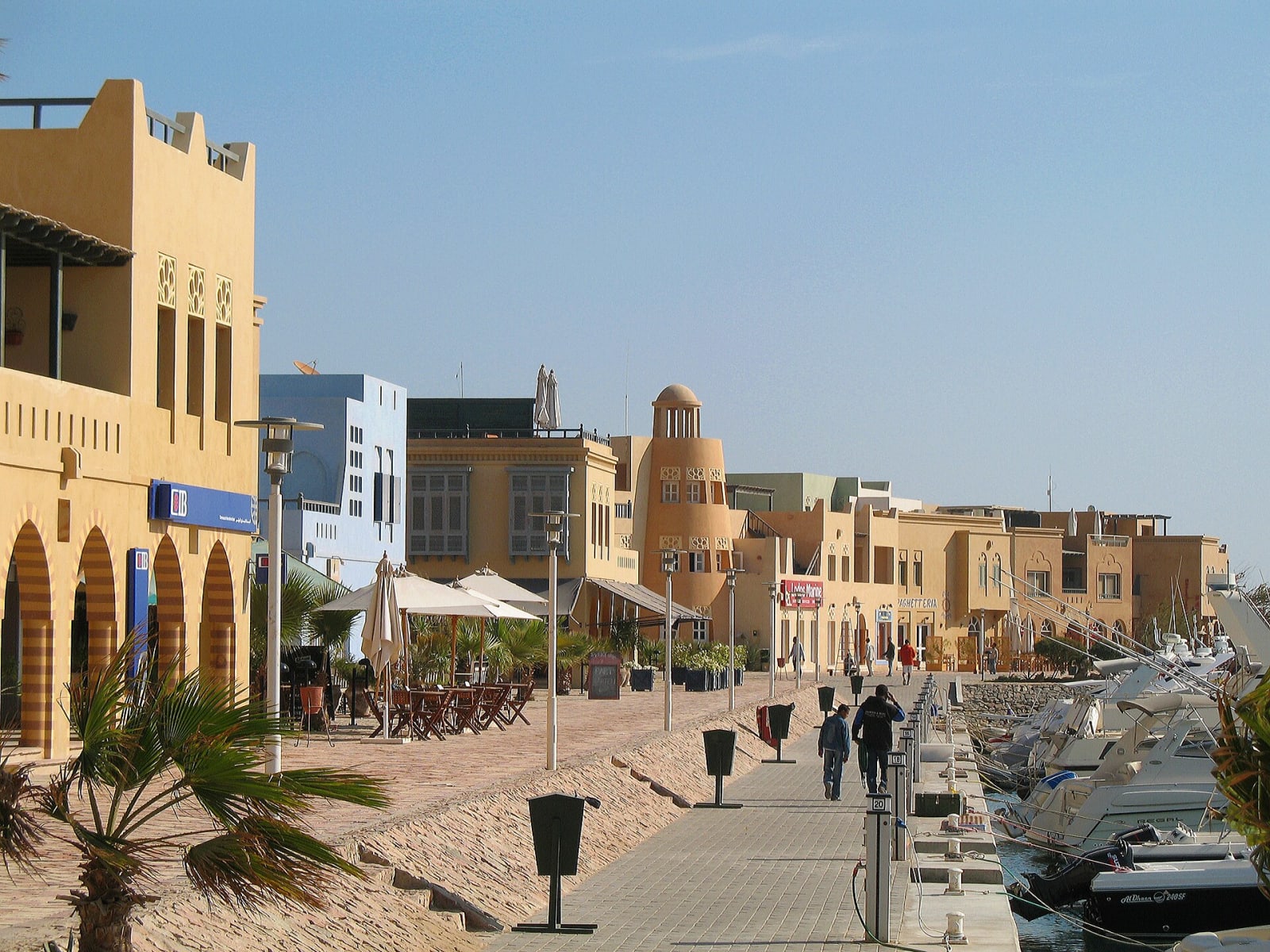
Boats and the waterfront promenade at Hurghada Marina
Start with the official answer, not ours
Before anything else: read your own government's current travel advice. The British, German, American, Canadian and Australian foreign ministries all publish country pages, they are updated as things change, and they are the only source that is authoritative for you.
What those advisories have consistently singled out is regional rather than national: North Sinai, the western desert border area with Libya, and parts of the far south near the Sudanese border. None of those is anywhere a tourist would ordinarily go. The Red Sea resorts, the Nile valley, Cairo and South Sinai are not what the warnings are about.
That distinction matters, because "Egypt" appearing in a headline about Sinai leads people to cancel a Hurghada holiday that is seven hundred kilometres away from what happened.
The risk nobody worries about, which is the biggest one
Traffic. Egyptian roads are the genuine hazard of an Egyptian holiday, and it is not close. Lane discipline is loose, speeds are high on the desert roads, and pedestrians cross where they like.
What to do about it:
- Use a seatbelt, including in the back. They exist and people skip them.
- Do not hire a car and drive yourself unless you have driven in this kind of traffic before. A driver costs very little and is the single best safety purchase of the trip.
- Cross roads with locals, not alone. It is a skill and you do not have it.
- Say something if a driver is going too fast. Politely, early, and it works. Long transfers on the Cairo and Luxor roads are where this matters.
- Quad bikes and buggies: helmet on, stay in the convoy line. Most safari injuries come from people riding wide to escape the dust.
Heat, which is the second biggest
Between June and September, Upper Egypt regularly passes 40 °C and the sun is directly overhead. People underestimate it because the air is dry and they never feel sweaty.
The failure mode is predictable: a long morning at the Valley of the Kings with one small bottle of water, then a headache, then a wasted afternoon. Drink far more than feels necessary, add salt to food, wear a hat, and treat the middle of the day as time indoors. That is not caution, it is what everyone who lives here does.
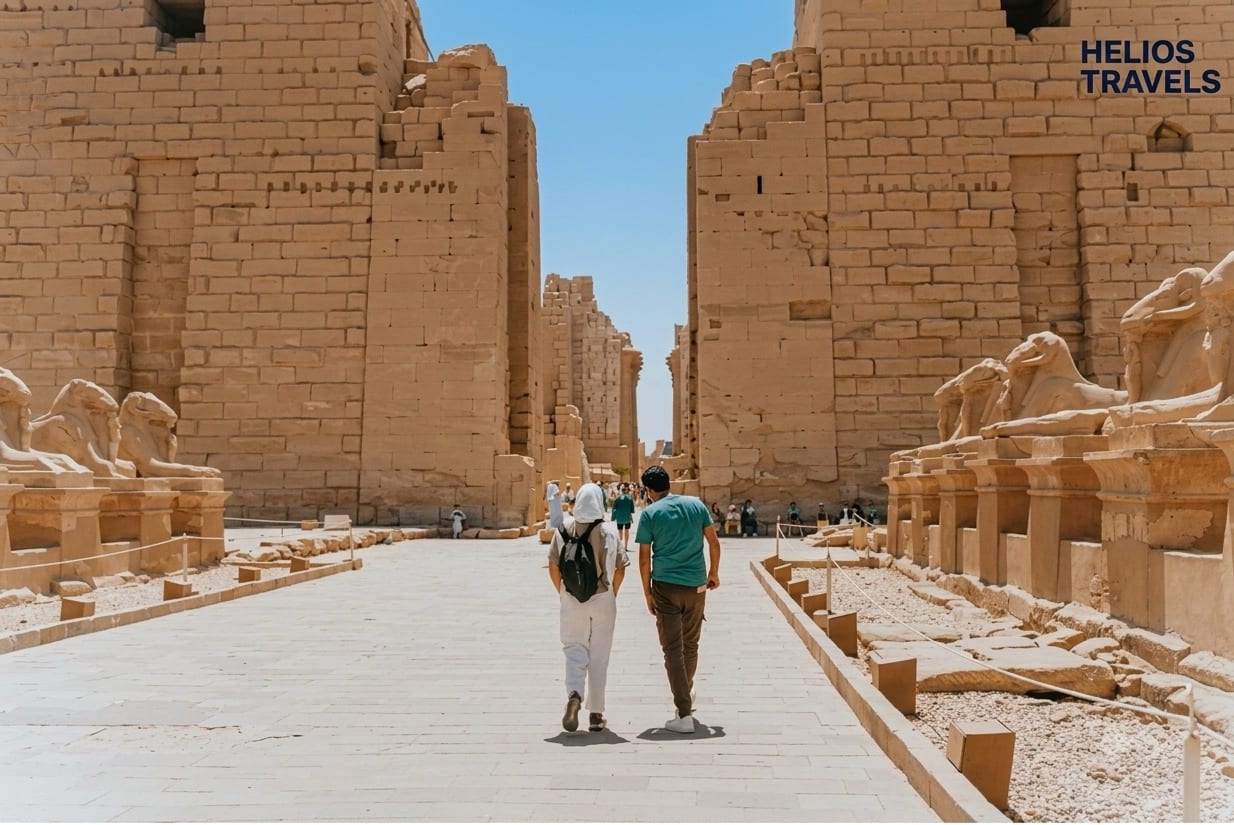
Sunlight between the columns of the Great Hypostyle Hall at Karnak
Book what you just read about
Explore related tours and check each trip for available booking options and inclusions.