Destinations · Sep 9, 2026
Going inside a pyramid: which chamber is worth the climb
There is no decoration inside any of them. Knowing that in advance is the difference between delight and a bad review.
Going inside a pyramid costs a separate ticket at every site, and it is the decision visitors most often make badly — either paying the most for the least, or skipping it entirely on the strength of a warning that did not apply to them.
Here is what is actually inside, which one to choose, and the honest list of reasons not to go in at all.
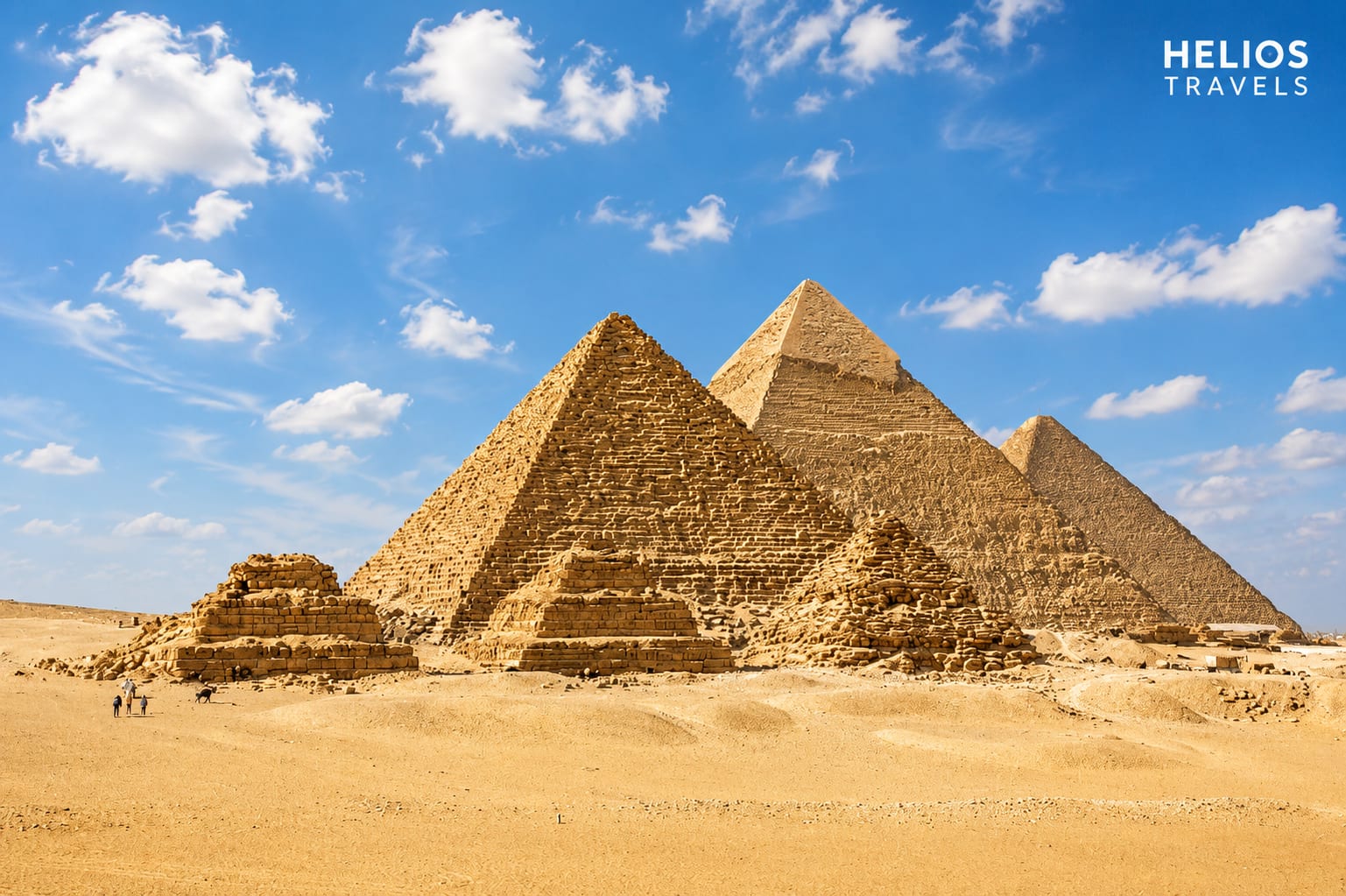
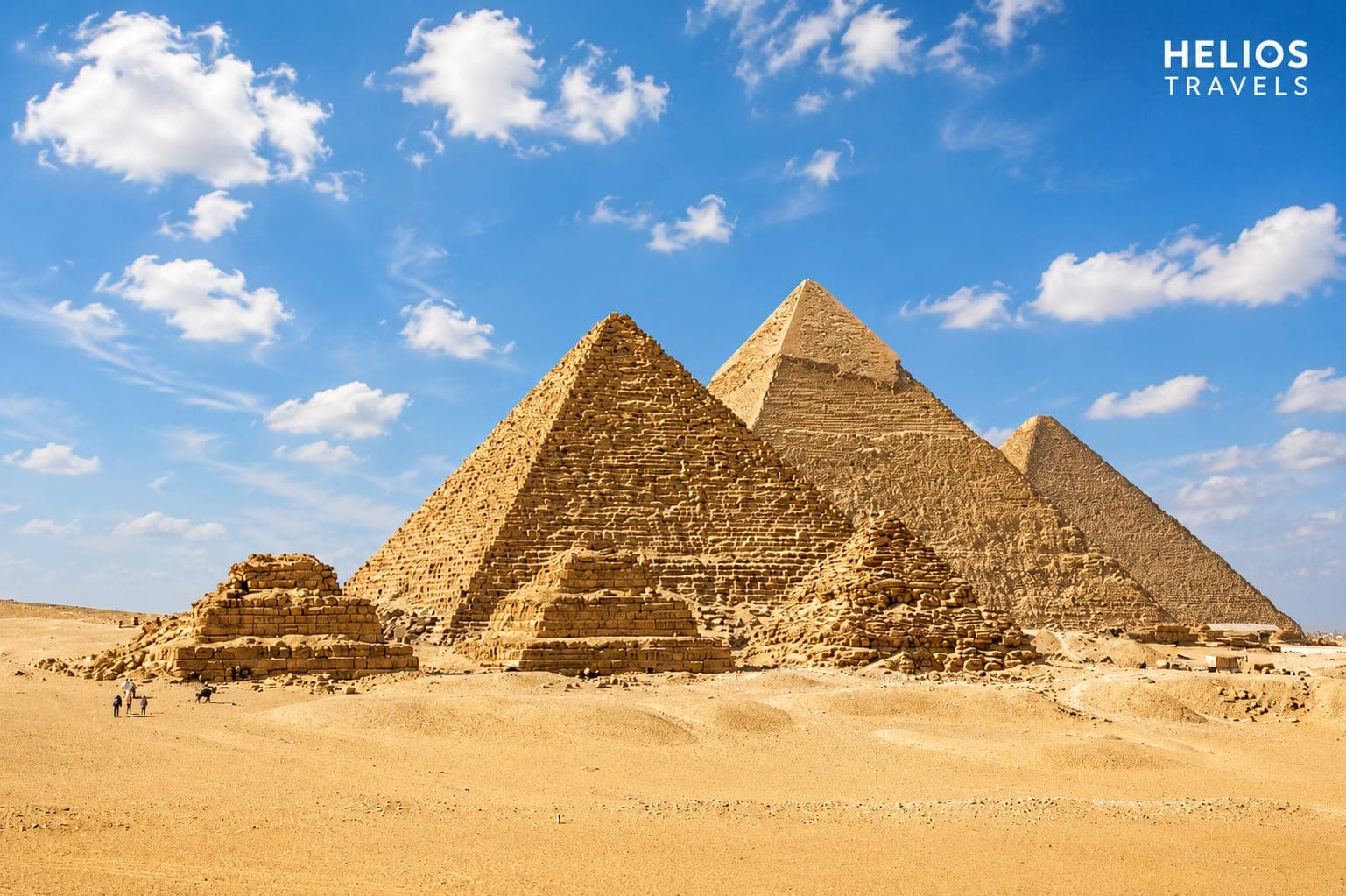
The three pyramids of Giza seen across the desert plateau
The thing to understand first: there is nothing to see
Not in the sense of disappointment — in the literal sense. The Giza pyramids have no decoration inside. No paintings, no hieroglyphs, no reliefs, no treasure, no sarcophagus lid propped open with gold spilling out.
What there is: a very steep, low, hot passage leading to an empty stone room. That is the whole offering, and every disappointed review comes from someone who expected a tomb like the ones in the Valley of the Kings, where the walls are the point.
So the reason to go in is not what you will look at. It is what it feels like to be inside a mountain of stone that was stacked by hand forty-five centuries ago — the weight of it, the air, the sheer improbability of the passage existing at all. Set that expectation and people come out delighted. Set the other one and they come out cross.
The Great Pyramid (Khufu)
The most expensive ticket at Giza, with a daily limit on numbers.
What makes it worth it: the Grand Gallery. After a long, cramped ascending passage that has you bent almost double, the space suddenly opens into a corbelled hall nearly nine metres high, its walls stepping inward course by course towards a narrow roof. It is astonishing, it is entirely unexpected after the crawl, and there is nothing else like it in the ancient world.
Above it, the King's Chamber: bare red granite, a lidless granite box, and five hollow chambers stacked above the ceiling to spread the load of the mass overhead. That is engineering you can stand under.
What it costs you: the climb is genuinely steep and low in places, the air is hot and still, and in high season the passage is two-way with people passing shoulder to shoulder.
Khafre — the sensible compromise
Cheaper, far quieter, and a much easier visit. A long descending passage leads to a burial chamber cut into the bedrock rather than built in the masonry, with a granite sarcophagus still in place.
It has no Grand Gallery, so it is less spectacular. But you will often have it nearly to yourself, the descent is less punishing than Khufu's ascent, and it delivers the essential experience — deep inside, alone, in silence, under an unimaginable weight of stone.
There is also a small piece of history on the wall: Giovanni Belzoni's graffiti from 1818, left when he became the first modern person to enter. Two hundred years old, and itself now part of the monument.
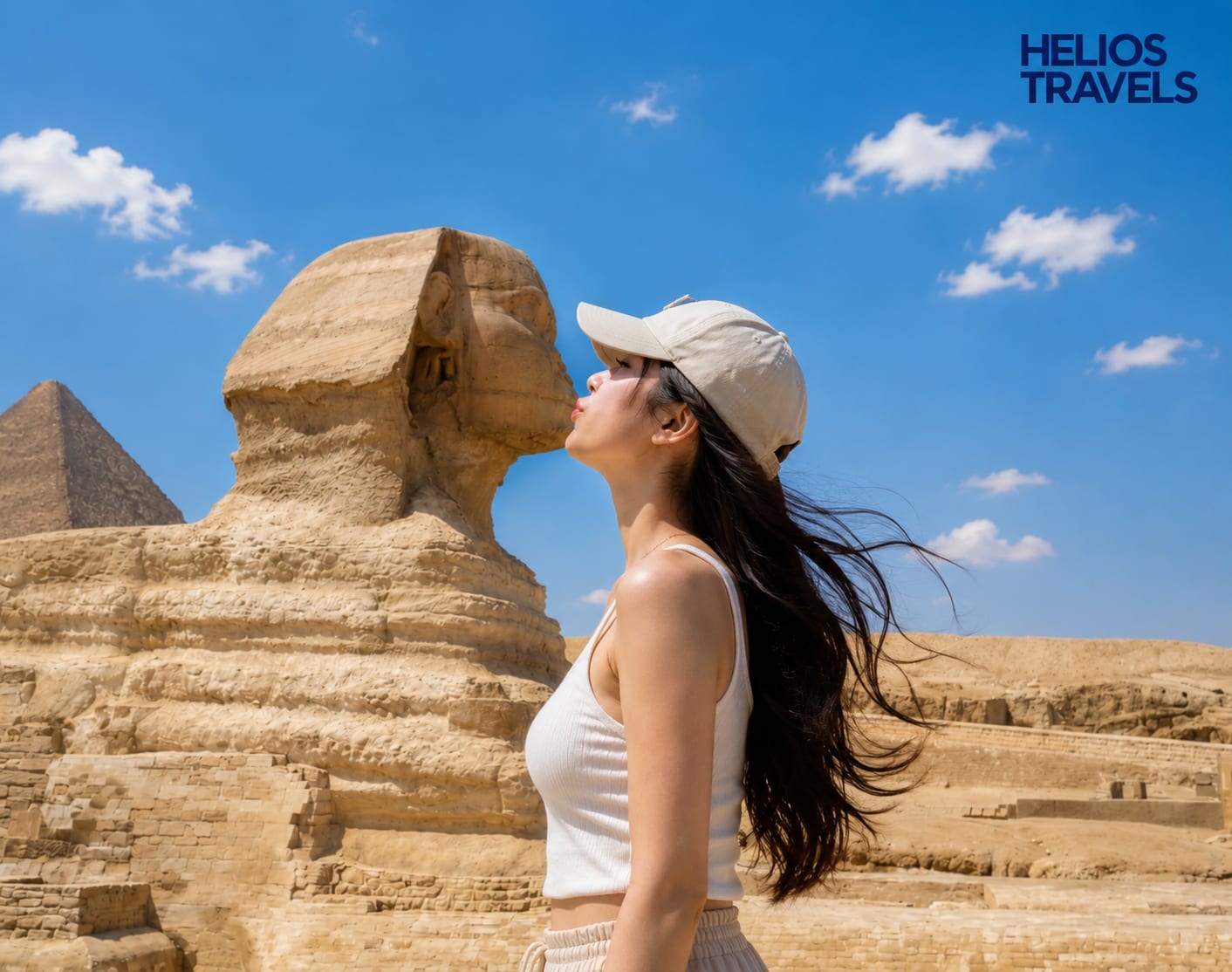
The Great Sphinx of Giza with the pyramid of Khafre rising behind it
The one most people should actually choose
Not at Giza at all. The Red Pyramid at Dahshur.
It is the best pyramid interior in Egypt for the money and almost nobody knows it. The chambers inside are vast and corbelled — two of them stepping up into darkness in the same technique as the Grand Gallery, but as whole rooms rather than a corridor. The descent is long but steady. And because Dahshur is off the standard Cairo day-trip route, you will frequently be the only people in there.
The catch is honest: it smells. The ammonia in the still air is noticeable and some visitors find it genuinely unpleasant. It clears as you move through, and for most people it is a fair trade for having a 4,600-year-old chamber to yourself.
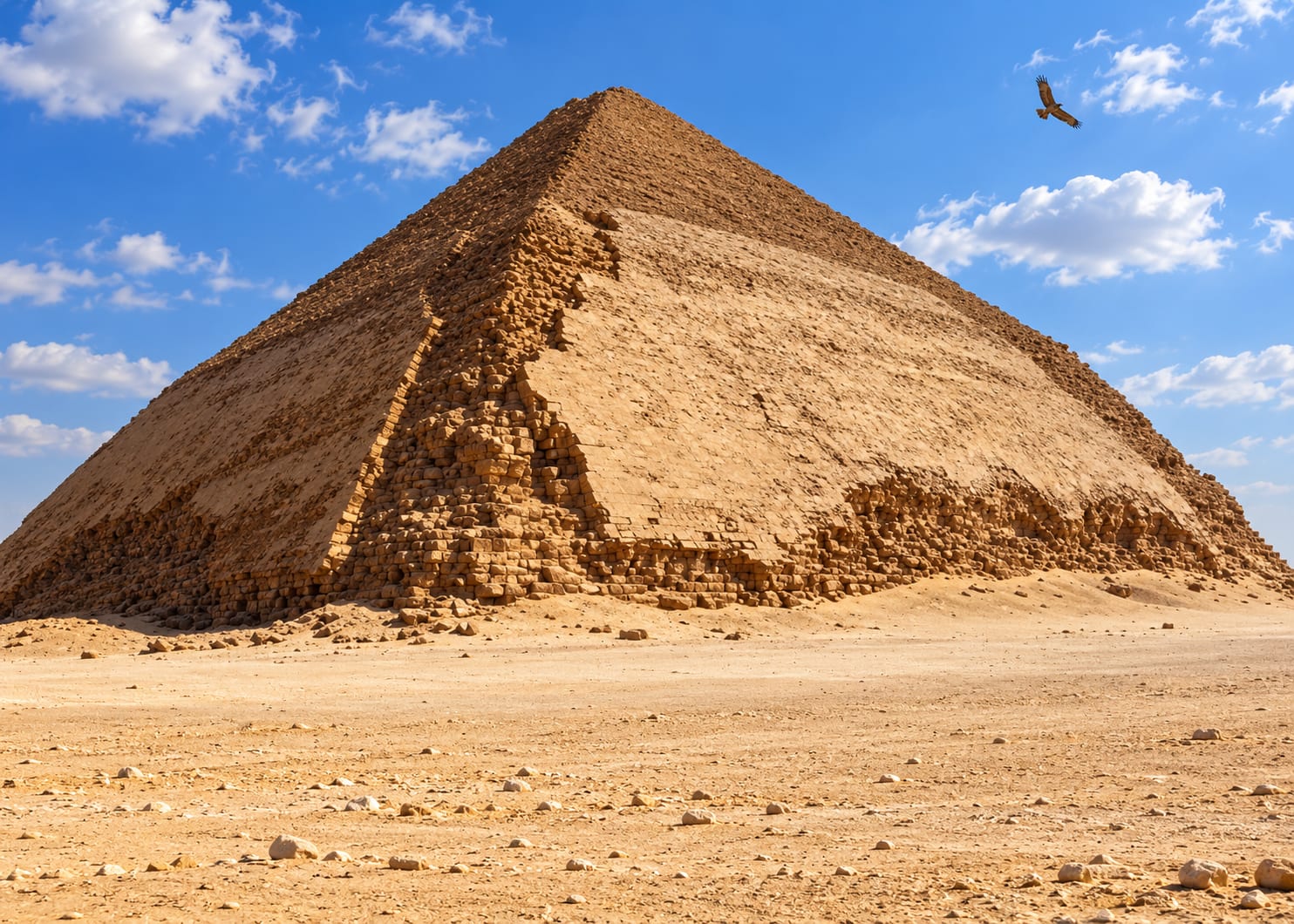
Dahshur also has the Bent Pyramid, opened to visitors relatively recently, and the two together tell the story that Giza cannot: a pyramid that changes angle halfway up because the builders realised mid-construction it would not hold, standing next to the one they built once they knew. That is worth more than a third interior at Giza.

The Red Pyramid at Dahshur, with the Bent Pyramid beyond
The honest reasons not to go in
Skip it, without regret, if any of these apply:
- Claustrophobia. The ascending passage in the Great Pyramid is about a metre high in places, with people coming the other way. This is not the place to find out how you feel about that.
- Knees, hips or back. The angle is steep, the ramps have cleats rather than steps, and you will be bent over. Going down is harder than going up.
- Heat. In summer the inside is hotter than the outside and there is no moving air. Genuinely uncomfortable, occasionally dangerous for anyone with a heart condition.
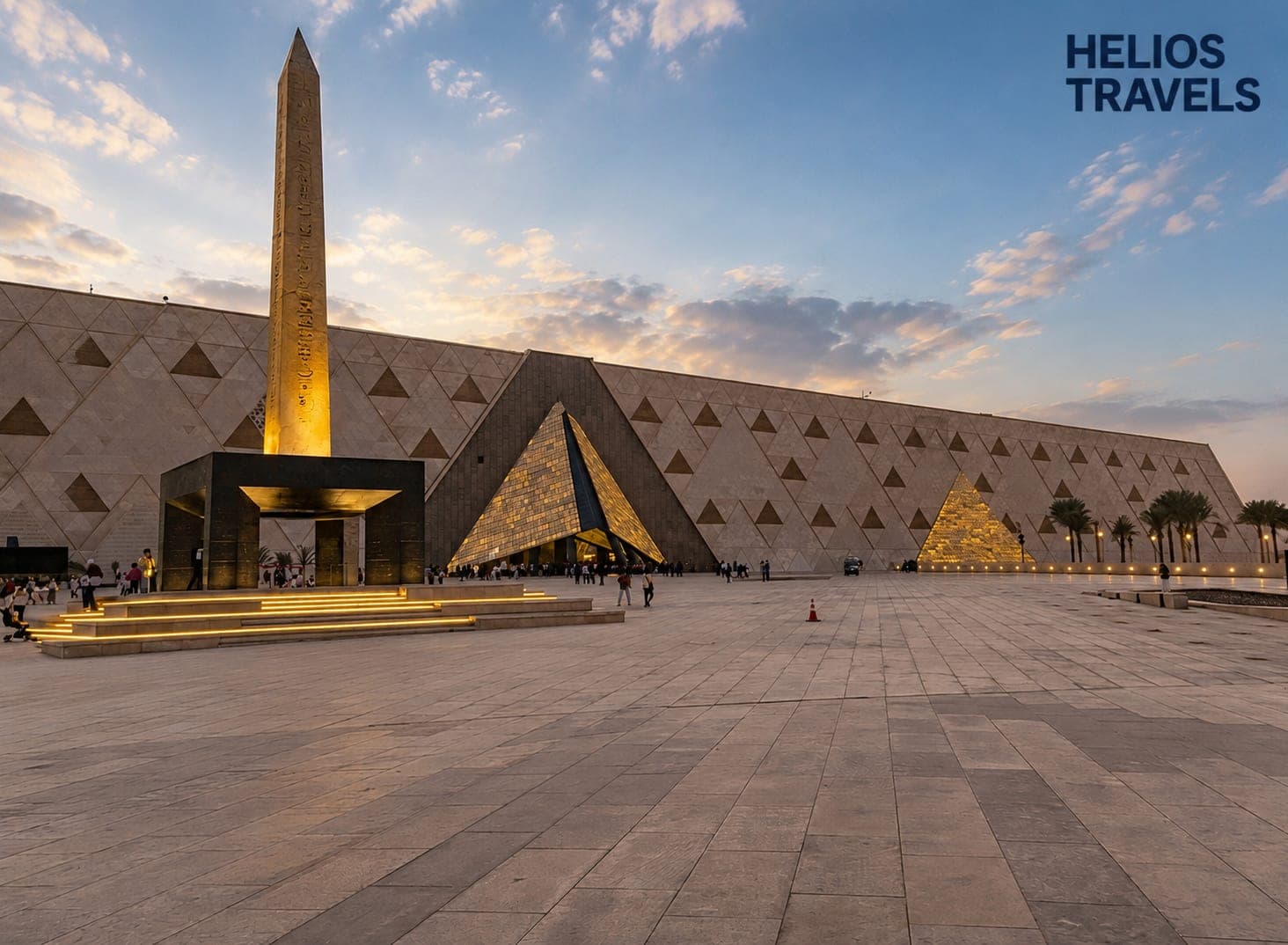
- Limited time. An hour spent queueing and climbing is an hour not spent at the panorama, the Sphinx, or the Grand Egyptian Museum. Many people find the outside is the better hour, and they are not wrong.
- You want pictures. Photography inside is restricted or prohibited depending on the pyramid and the day.
There is no shame in standing outside. The interiors are the least essential part of Giza, and plenty of Egyptologists would tell you the same.
How they got the stone up there — the question everyone asks
Standing at the base, the question is unavoidable, and the honest answer is that we do not fully know. But we know far more than the television documentaries suggest, and none of it involves anything exotic.
Ramps, certainly. The debate is about their shape — a single straight ramp, a spiral wrapping the pyramid, an internal ramp, or several methods combined at different heights. Nobody has found a complete one at Giza, which is why the argument persists. What we do have is a surviving mudbrick construction ramp behind the first pylon at Karnak, left in place when work stopped. It is the single most useful object in Egypt for this question, and almost every tour walks past it.
Levers, sledges and water. A wall painting from a Middle Kingdom tomb shows a colossal statue on a sledge with a man pouring liquid onto the sand in front of the runners — long dismissed as ritual, and since shown experimentally to cut the friction of dragging heavy loads over sand roughly in half.
Organisation, above all. The workers' settlement excavated near Giza shows bakeries, breweries, a medical presence and cattle brought in from the delta. These were fed, housed, organised crews on a state project — not slaves, which the evidence has not supported for a long time.
What you cannot get from a book, and can get by going inside, is the sense of scale that makes the question feel urgent in the first place.
Practical notes
- Buy interior tickets at the main entrance, before the shuttle. They are not sold at the pyramids and walking back is a miserable way to learn that.
- Go early. Cooler, emptier, and the daily cap on the Great Pyramid means late arrivals are sometimes turned away.
- Leave bags where you can. The passage is narrow and a rucksack catches on everything.
- Water before, not during. There is nowhere to put a bottle down.
- Do not touch the walls more than the handrails require.
- Come out slowly. The temperature change at the entrance is sharp and the light is blinding.
The short answer
One interior, at Giza, and money is no object — the Great Pyramid, for the Grand Gallery.
One interior, at Giza, sensibly — Khafre. Quieter, easier, cheaper, and it delivers the feeling.
Best interior in Egypt — the Red Pyramid at Dahshur, and take Saqqara and the Bent Pyramid with it.
Claustrophobic, hot, or short of time — stay outside and spend the hour at the panorama point instead. You will not have missed the thing you came for.

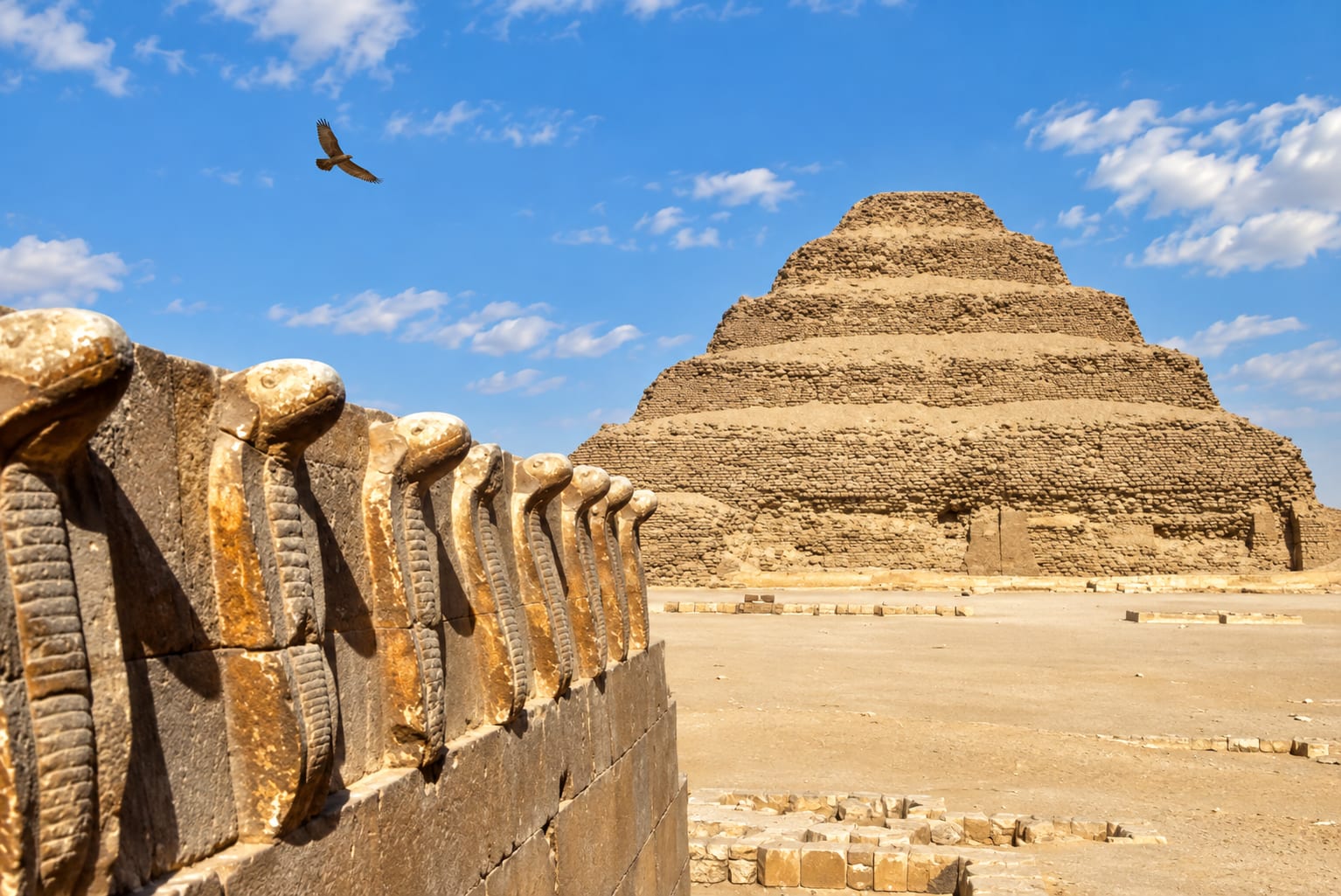
The step pyramid of Djoser at Saqqara, the first monumental stone building
Book what you just read about
Tours from this article — private, with a licensed guide, and priced per person.
Giza Pyramids, Sphinx, Saqqara & Dahshur — Exclusive Private Tour
18 hours · Hurghada
$85/ person
See the tour
Cairo 2-Day Tour by Plane — Saqqara, Dahshur, Giza & GEM
2 days · Hurghada
$440/ person
See the tourPyramids, Sphinx & Grand Egyptian Museum
17 hours · Hurghada
$105/ person
See the tourCairo in a Day by Plane — Pyramids, GEM & Old Cairo
17 hours · Hurghada
$285/ person
See the tour