Planning · Sep 9, 2026
How far is Luxor from Hurghada, really
290 kilometres, four hours each way, and a desert crossing most people sleep through.
Look at a map of Egypt and Hurghada and Luxor appear almost adjacent — two towns either side of a thin strip of desert, apparently a short hop apart.
They are about 290 kilometres apart, and roughly four hours by road each way. That number governs every Luxor plan made from the Red Sea, and underestimating it is the most common scheduling mistake we see.
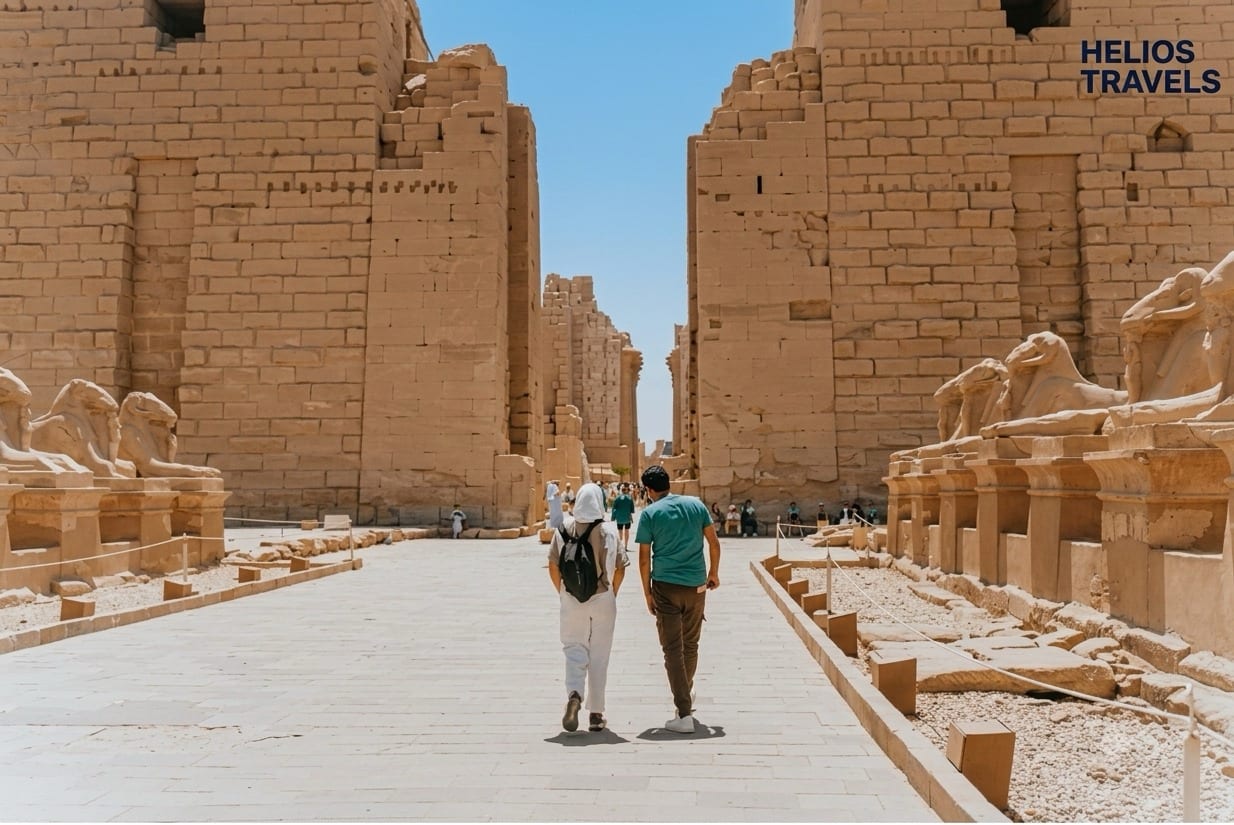
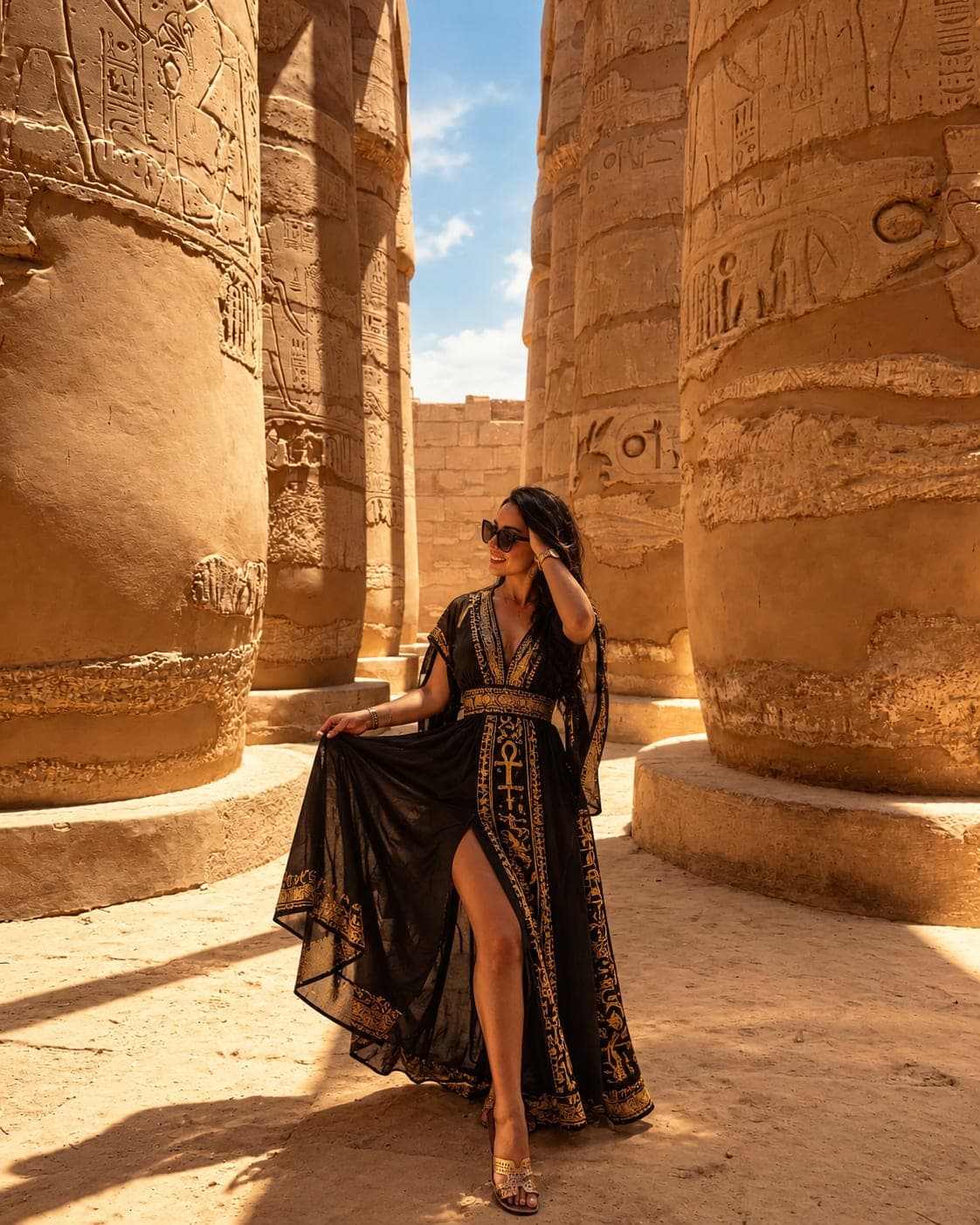
The Great Hypostyle Hall at Karnak Temple, Luxor
The distance, and why it takes four hours
The road runs inland from Hurghada, south along the coast to Safaga, then west across the Eastern Desert to Qena on the Nile, then south along the valley to Luxor. It is a good road for most of its length and largely empty.
So why four hours for 290 kilometres? Three reasons, none of them dramatic:
- It is not flat. The crossing runs through the Red Sea Hills, and the climbs and descents keep average speeds down more than the map suggests.
- There are checkpoints. Routine, usually quick, and part of the journey. Vehicles slow, sometimes stop, occasionally wait.
- The last stretch is the Nile valley. Once you drop off the desert into the green, you are on roads shared with agricultural traffic, villages, and everything else that lives there. The final fifty kilometres take disproportionately long.
Four hours is the realistic planning figure in good conditions. Build in more if you are travelling on a Friday or during a holiday.
What the drive is actually like
Better than people expect, and worth staying awake for at least once.
The desert crossing is genuinely dramatic — bare mountains, wide gravel plains, and an emptiness that is hard to convey until you are in it. There is nothing for long stretches, which is itself the point. Then, quite abruptly, the road drops into the Nile valley and the world changes colour: sugarcane, palms, canals, donkeys, children, green. That transition is one of the more memorable twenty minutes of a Red Sea holiday and most people sleep through it because it happens at dawn.
If you are prone to motion sickness, the desert section is long and gently winding, which is the worst combination. Take something before you set off, not when you start to feel it, and sit as far forward as you can.
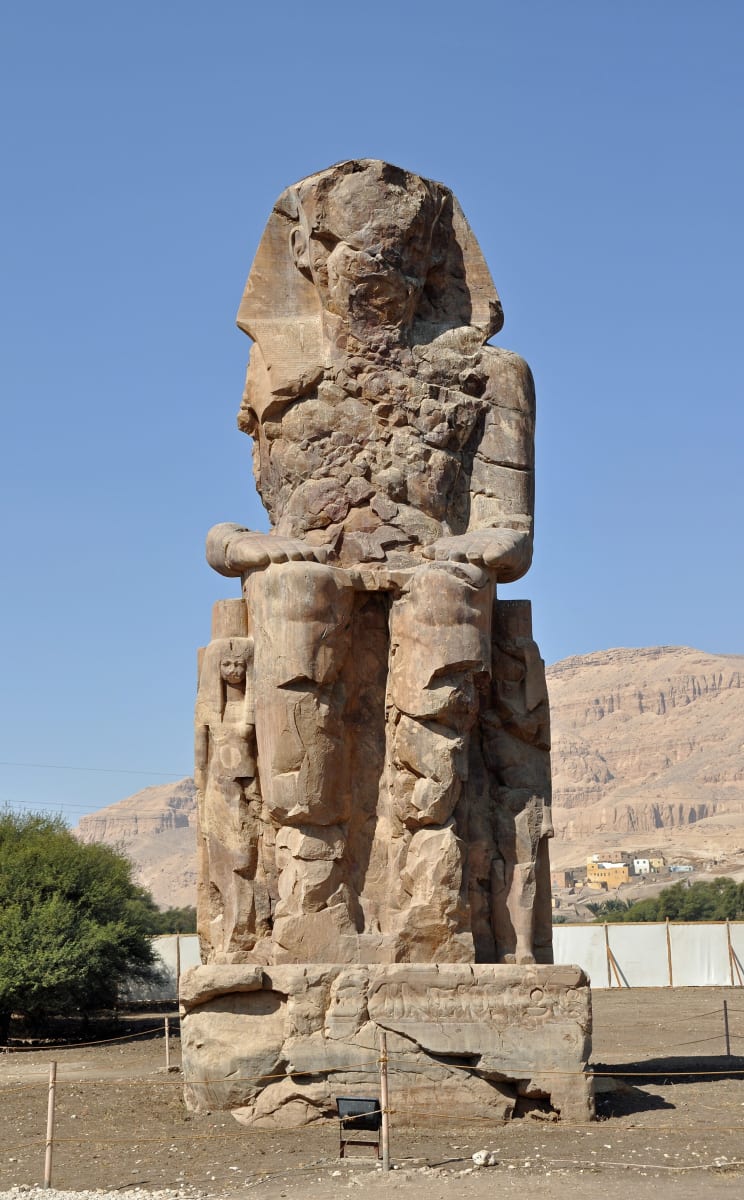
The Colossi of Memnon on the Theban west bank near Luxor
Every way to cover it
Group coach day trip. Pick-up between two and four in the morning, back around midnight. Cheapest by a distance, and the most tiring excursion on this coast. See our full comparison of the day trip by road and by air for the detail.
Private car with a driver. The same road, at your pace, leaving when you choose. You can stop at the viewpoint, break the journey, and shorten the day at the Luxor end by not waiting for thirty-nine other people. Costs more than a coach seat and considerably less than most people assume once there are three or four of you.
By air. A short domestic hop. For Luxor specifically the flight does not shorten the day much — the flight schedule dictates the timings — so you are buying comfort rather than hours. That is a good purchase for some travellers and a poor one for others.
Two days, staying over. The one we recommend most often. The same eight hours of road, split across two days, with a night in Luxor in between — which unlocks the dawn west bank, Luxor Temple lit after dark, and the balloon, none of which a day trip can include.
By train. Worth addressing because people ask: there is no useful Hurghada–Luxor rail link. Egypt's main line runs along the Nile from Cairo to Aswan, not across the desert from the coast. Reaching Luxor by train from Hurghada would mean going north to Cairo first, which is absurd for this journey.
By Nile cruise. Also asked, also no. Cruises run between Luxor and Aswan, inland. Hurghada is on the sea, not the river.
What the four hours means for your plan
The arithmetic is unforgiving and worth doing before you book:
- A day trip is eight hours of road and roughly five hours in Luxor. That is a real day at the monuments, and it is also the least efficient ratio in Egyptian tourism.
- You will lose the following day. Not "feel a bit tired" — most people sleep on the coach back and want nothing the next morning. Plan a rest day after it. The single most common planning error we see is a snorkelling boat booked for seven the morning after Luxor.
- Two days changes the ratio completely. Same road time, roughly double the sightseeing, and the two best hours in Luxor — dawn on the west bank and the lit temple at night — become available.
- Do not attempt Luxor and Cairo in consecutive days. People try. It is twenty hours of vehicle in forty-eight hours and it ruins both.

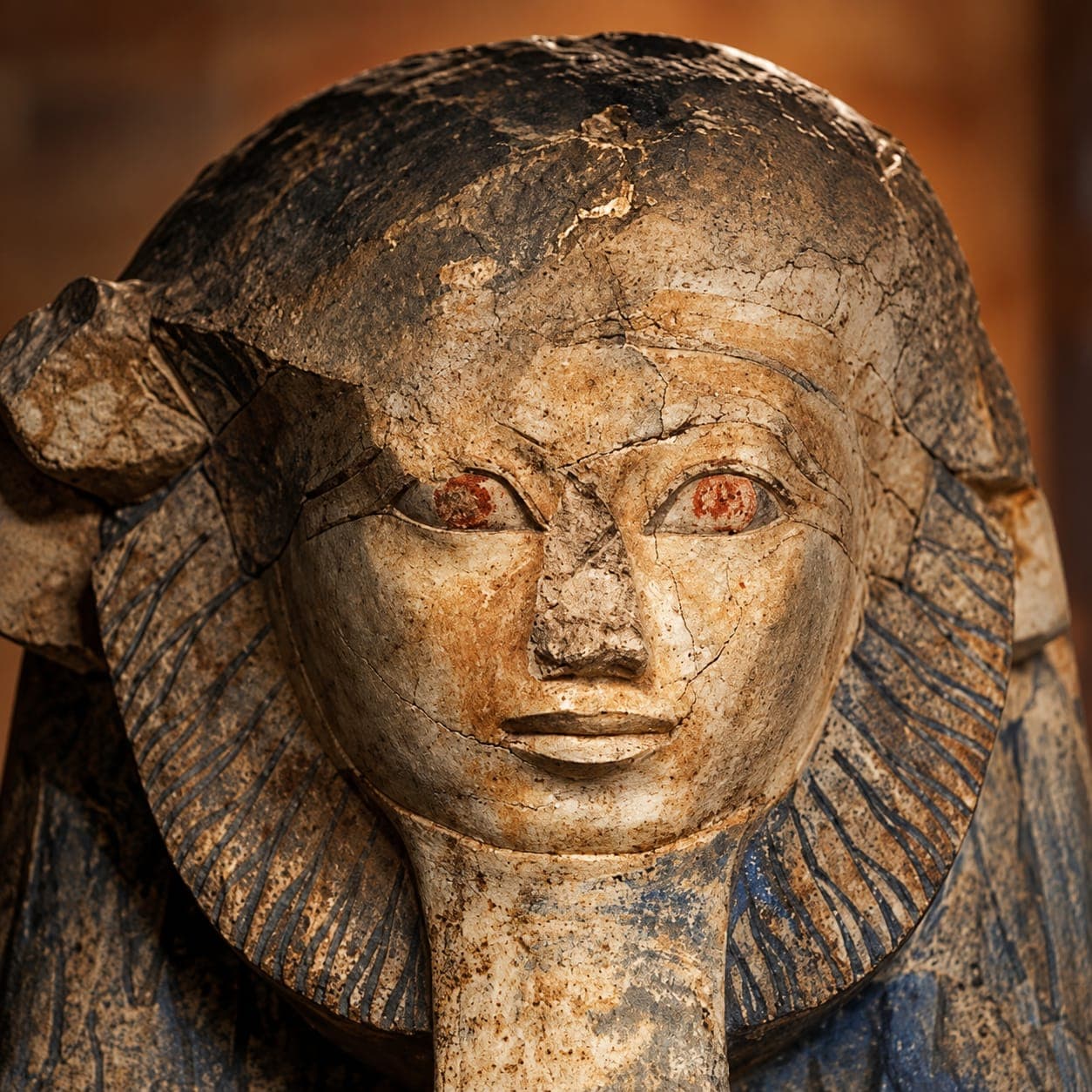
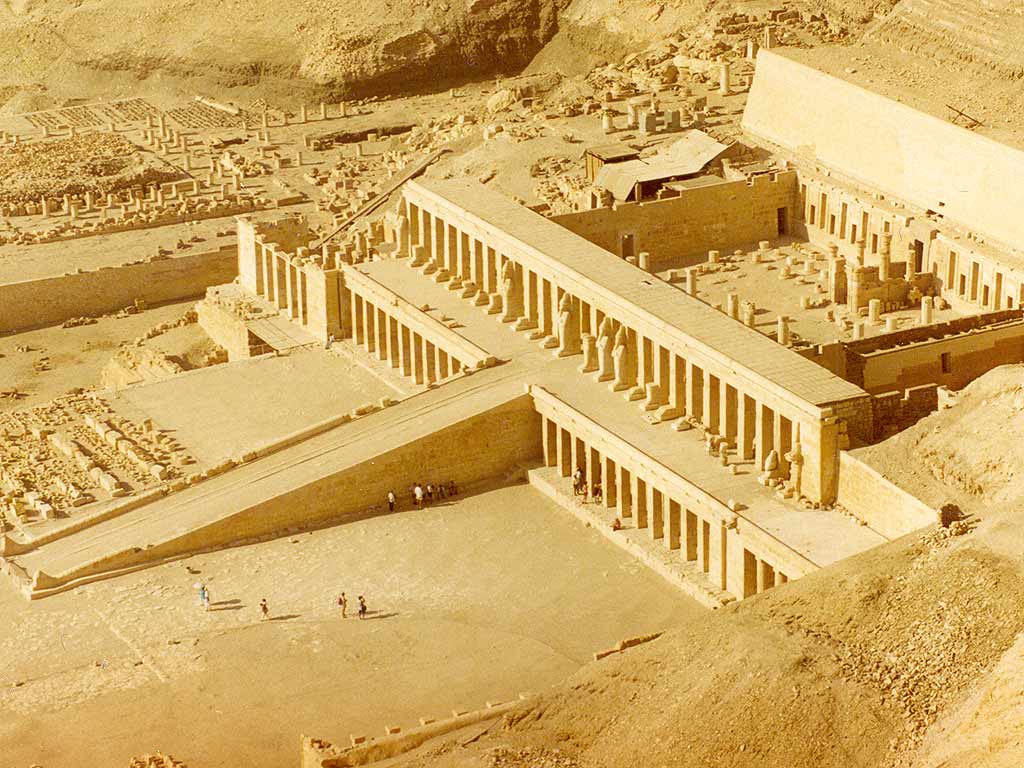
The terraces of Hatshepsut's temple at Deir el-Bahari
Practical notes for the journey
- Take your passport. Checkpoints occasionally ask, and you cannot fly domestically without it.
- Eat before the pick-up. A 3 am departure means a hotel breakfast box, and you will be hungry by seven.
- Water for the vehicle, more than you think. Air conditioning is drying and there is little on the road.
- A jacket in winter. Dawn in the desert is cold and the air conditioning does not care what the outside temperature is.
- Sit forward if you get carsick, and take something an hour before departure.
- Charge everything. Not every vehicle has working sockets.
- Ask what the return time actually is. "Evening" covers anything from eight to midnight depending on the itinerary and the last stop.
What else the road reaches
Once you accept that four hours of desert is the price of admission, it is worth knowing that Luxor is not the only thing at the end of it. The same crossing opens several destinations, and some of them are far quieter.
Dendera sits at Qena, which is where the desert road meets the Nile — so it is actually closer than Luxor by road, about three hours. Its Temple of Hathor has the best-preserved painted ceiling in Egypt and a fraction of Karnak's visitors. As a first cultural day from the coast it is an unconventional choice and a very good one.
Abydos is further north again, and usually paired with Dendera as a long day.
Aswan is roughly three hours beyond Luxor — too far for a day trip from Hurghada by road in any comfortable sense, which is why the Aswan and Abu Simbel programmes are multi-day or fly.
The Red Sea monasteries, St Anthony and St Paul, are a different road entirely — north up the coast rather than west across the desert — and a much shorter day.
The point is that the four hours buys a region, not a single town. If you are already accepting the drive, it is worth asking what else is on the other side.
The short answer
290 kilometres, four hours each way, and a road that is more interesting than it sounds.
If you have one free day and a budget, take the coach and write off tomorrow. If sitting for eight hours is a problem, fly and understand you are buying comfort rather than time. And if Luxor is genuinely one of the reasons you came to Egypt, take two days — the distance is the fixed cost either way, and two days is the version where it buys you something.

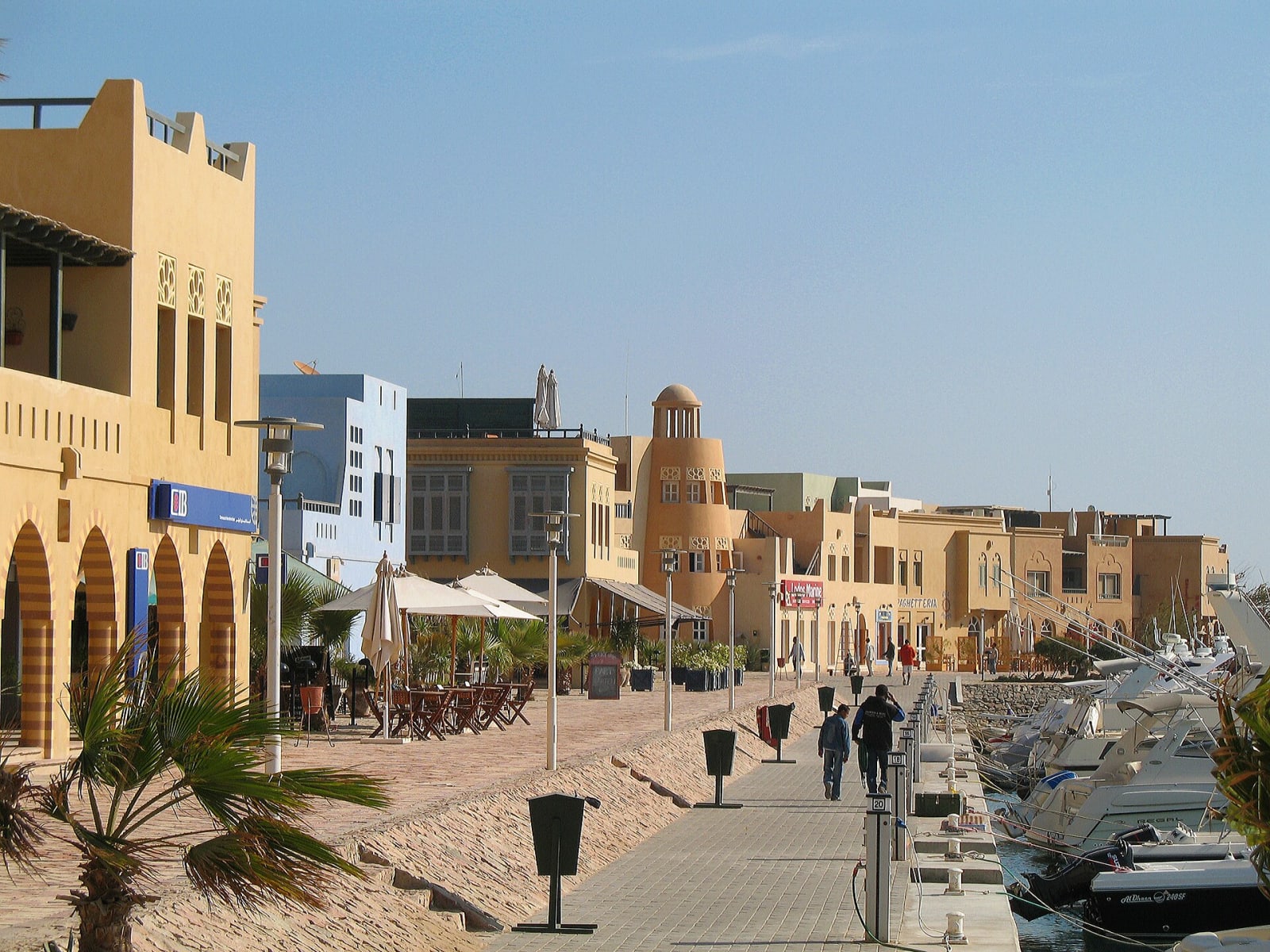
Boats and the waterfront promenade at Hurghada Marina
Book what you just read about
Tours from this article — private, with a licensed guide, and priced per person.
Luxor Day Tour — Karnak, Valley of the Kings & Free Nile Cruise
14 hours · Hurghada
$90/ person
See the tour
Luxor Day Trip by Plane — Valley of the Kings, Karnak & Free Nile Boat
15 hours · Hurghada
$265/ person
See the tourLuxor in 2 Days — Both Banks of the Nile Without the Rush
2 days · Hurghada
$250/ person
See the tourLuxor Hot Air Balloon Sunrise & West Bank Temples — 2 Days
24 hours · Hurghada
$240/ person
See the tour