Culture · Oct 9, 2026
Hurghada Bazaar: How to Shop El Dahar Old Town
Clothes, cotton, spices and souvenirs — what is genuine, how haggling works, and what never to take home
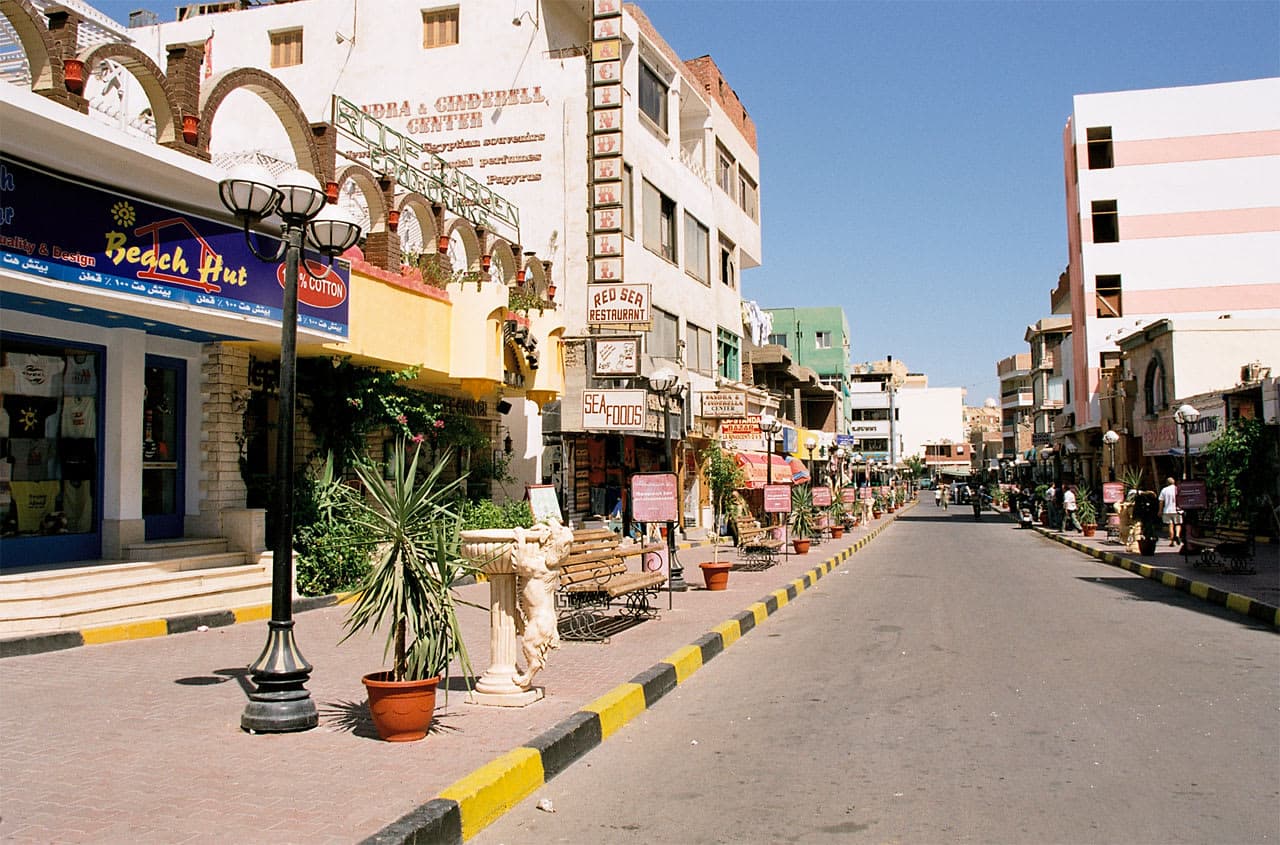
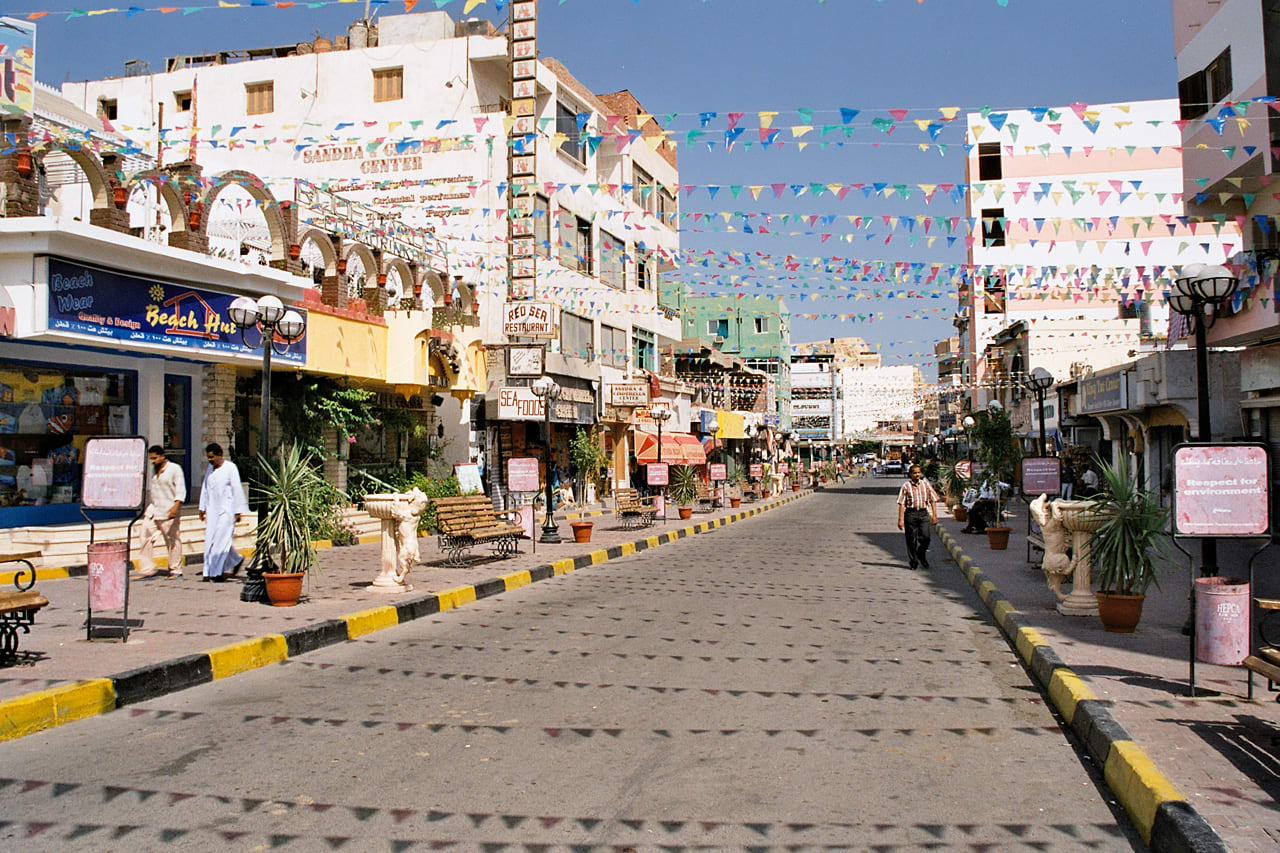
If you search for "the bazaar in Hurghada", you will be sent to El Dahar, the old town north of the marina. It is the part of the city that existed before the hotels: a working neighbourhood where people from Hurghada buy their shoes, school uniforms, vegetables and spices, with a tourist souk folded into it. You can buy proper clothes here, decent cotton and a few things worth carrying home. You can also buy a lot of rubbish. This guide is how we would shop it ourselves — we live here and send guests there every week.
Where is the bazaar in Hurghada?
There is no single covered market hall. "The bazaar" means the streets of El Dahar, the old quarter on the northern side of town, roughly between the mountain ridge and the sea. The lanes nearest the main roads are where the souvenir shops cluster; walk a few blocks further in and the shops start selling to locals instead — fabric, household goods, sandals, fruit and vegetables.
That second part is the more interesting one, and also the more honest one. Nobody there is waiting for a tourist bus.
Shops along the hotel strips in Sakkala and on the Village Road sell many of the same souvenirs. They are convenient if you are staying nearby, but they are not a bazaar, and the prices are set with holidaymakers in mind.
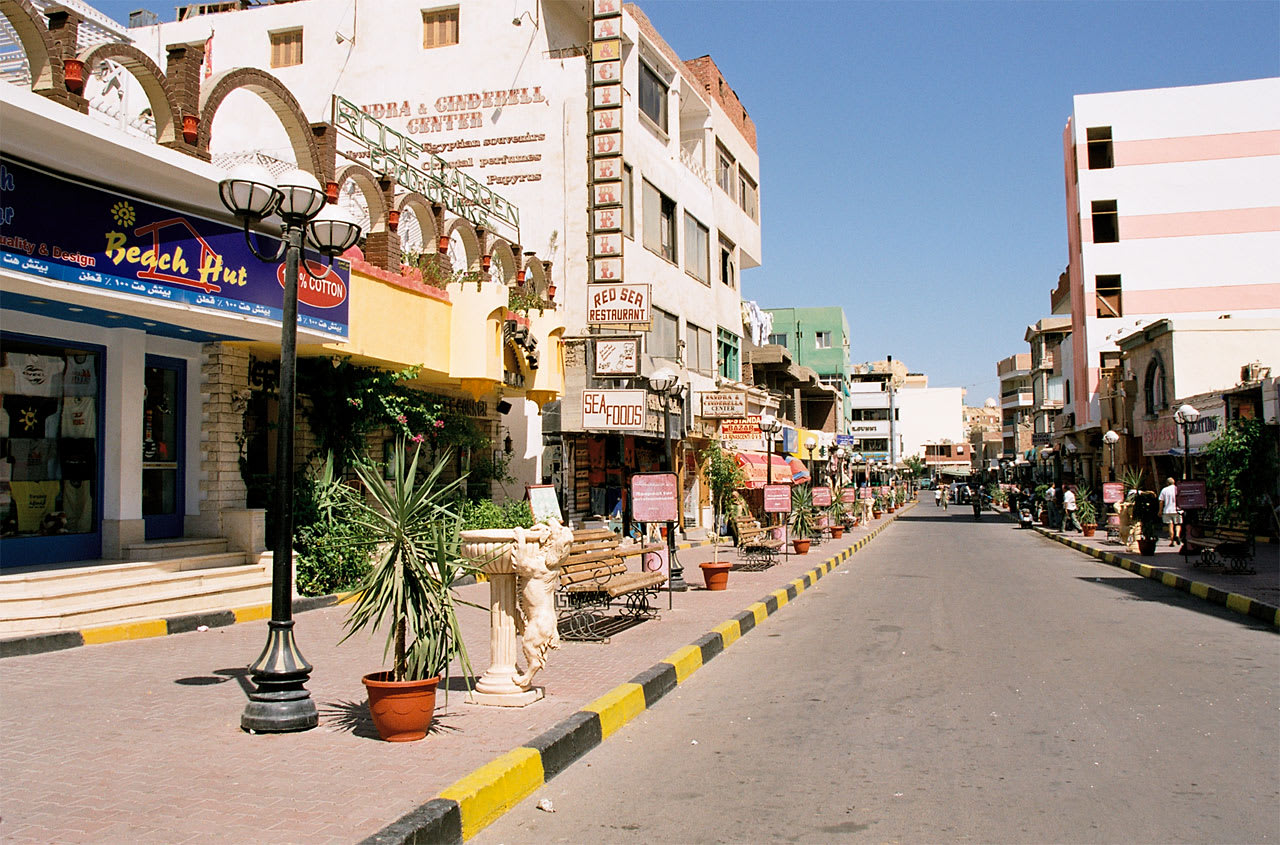
Hurghada old town, El Dahar
What the bazaar actually sells
- Everyday clothing — T-shirts, cotton trousers, children's wear, underwear, cheap shoes. This is stock for local families, not for tourists, and it is priced that way.
- Galabeyas and kaftans — the long, loose Egyptian robe. Plain cotton ones for everyday wear sit next to embroidered "show" versions for evenings and hotel themed nights.
- Spices and herbs — cumin, coriander, dried hibiscus (karkadeh) for tea, dried mint, mixed spice blends.
- Perfume oils — sold by the small bottle, often in decorative glass.
- Papyrus, alabaster, scarabs, statues — the classic Egypt souvenir set, ranging from honest handwork to factory imitation.
- Leather goods, shisha pipes, copper and brass, and the usual magnets, T-shirts with camels on them and fridge souvenirs.
Can you buy clothes in Egypt?
Yes, and many of our guests leave with more clothes than they arrived with. Egypt has grown cotton for export for two centuries and still has a large textile industry. Simple cotton shirts, linen-style trousers, loose dresses and galabeyas are good value and comfortable in the heat — often more comfortable than what people pack.
Three honest caveats:
- "Egyptian cotton" on a label is a claim, not a guarantee. The Cotton Egypt Association certifies genuine products with its own logo and even DNA testing. In 2016 a large US retailer had to refund sheets sold as Egyptian cotton that turned out to be something else. In a souk stall, assume nothing; judge the fabric by hand.
- Brand names in the bazaar are copies. A sports jersey with a famous logo is not the real thing. If you want genuine brands, go to a mall.
- Sizes vary. Try things on, or hold them against you. Most clothes shops will let you.
Genuine or tourist tat? How to tell
Papyrus
A lot of what is sold as papyrus is printed banana leaf. Real papyrus shows a criss-cross of layered strips when you hold it to the light, and it bends without cracking. Ask to bend a corner. A seller of the real thing will not mind.
Alabaster
Much of the "alabaster" in souvenir shops is cast resin with painted veins. Real stone is heavy for its size, feels cool even in a warm room and lets light glow through thin parts. Shine your phone torch through it. Painted veins look too regular; natural ones wander and branch.
Spices
Cheap "saffron" in Egyptian markets is almost always safflower — pleasant colour, very little taste. Buy it as safflower if you like, but do not pay for saffron. Hibiscus, cumin and mint are the safe, good buys.
"Antiques"
Any scarab or figurine offered as "real, from a tomb" is either fake or a crime. Antiquities cannot legally be sold or exported from Egypt (more below). Either way, do not buy it as an antique.
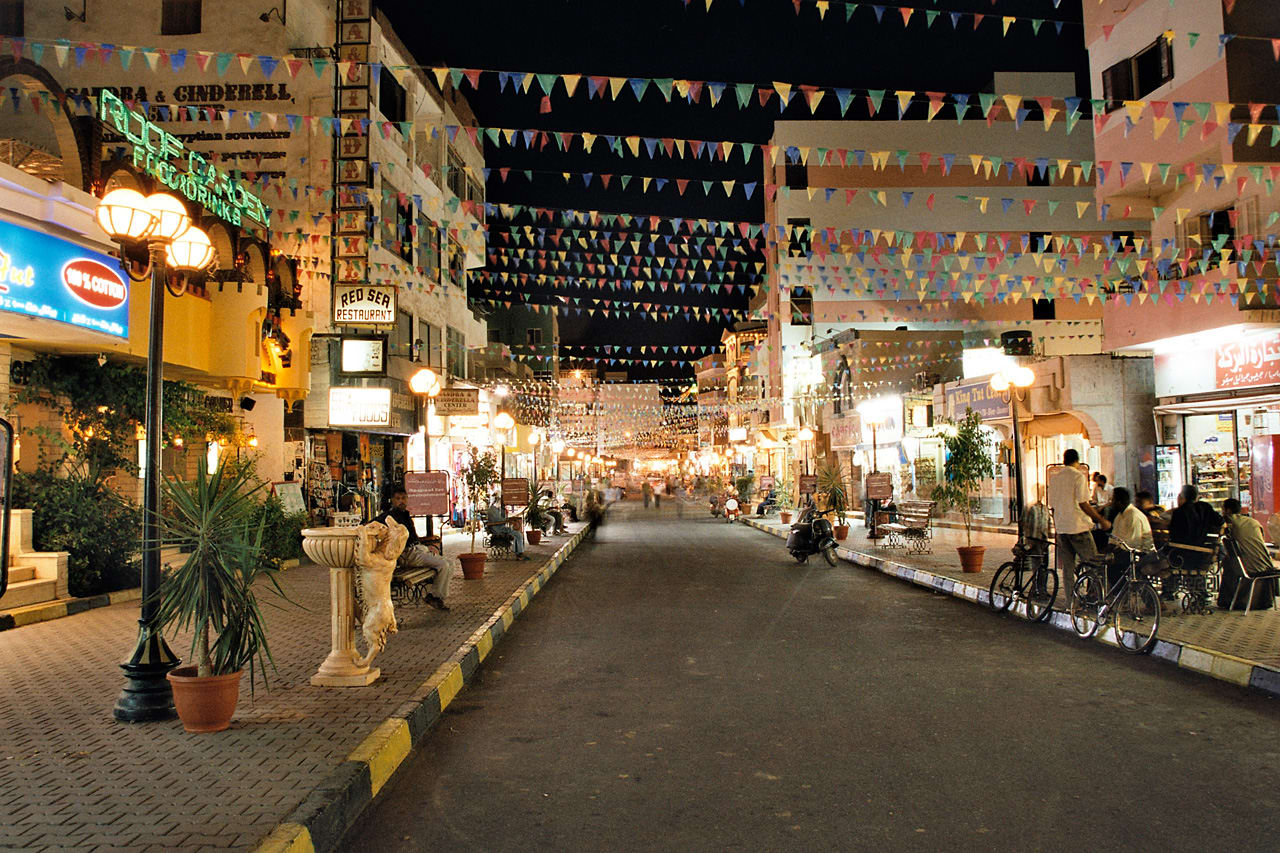
A street in El Dahar, Hurghada's old town
Book what you just read about
Explore related tours and check each trip for available booking options and inclusions.