Planning · Oct 15, 2026
German Christmas Markets: When They Open and Which to Visit
Opening dates for 2026, what to eat and drink, the famous markets and the smaller ones that are easier to enjoy

Most German Christmas markets open in the last week of November and close on 22 or 23 December, with a handful running into the days after Christmas. In 2026 the first Sunday of Advent falls on 29 November, so expect most markets to open between about 23 and 27 November. Nuremberg, Dresden and Cologne are the famous names; smaller cities such as Würzburg, Bamberg and Rothenburg ob der Tauber are often more relaxed and just as atmospheric.
When German Christmas markets open and close
The Weihnachtsmarkt season follows the church calendar. Traditionally markets did not open before Totensonntag, the Protestant day of remembrance on the last Sunday before Advent (22 November in 2026), and many cities still wait until the day after it. Others open on the Friday or Saturday before the first Advent Sunday. Most close on 23 December, some on the 22nd, and a few reopen or carry on as "winter markets" until the end of the year.
Opening hours are usually from late morning to around 9 pm, longer on Fridays and Saturdays. Some markets close early on 24 December or do not open at all that day, and very few operate on 25 and 26 December. Each city publishes its dates in late summer, so check the official city or tourism website before booking travel around a particular market.
What to expect at a German Christmas market
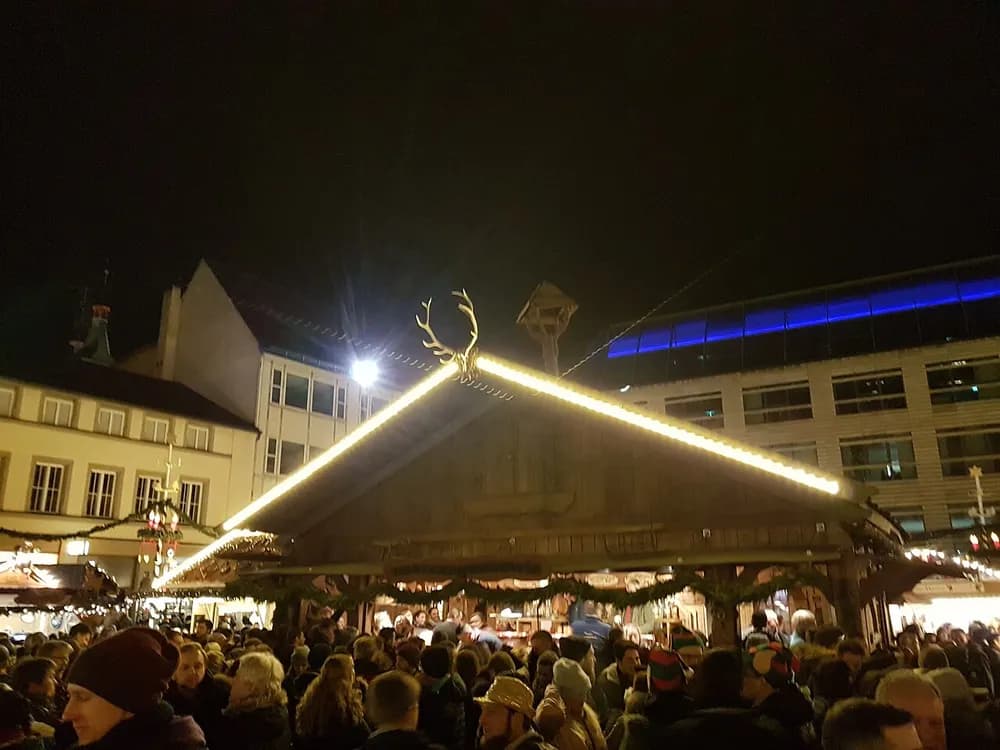
A Weihnachtsmarkt is a cluster of wooden stalls on a historic square, usually in front of a church or town hall, selling food, drinks and handmade gifts. The core of the experience is simple: you walk, you eat, you hold a hot mug in your hands and you meet friends. Germans go after work and at weekends, so weekday afternoons are the calmest time to visit.
Food and drink to try
- Glühwein: mulled red or white wine, often with an optional shot (mit Schuss). Franconian markets frequently serve versions made from local wine.
- Kinderpunsch: the alcohol-free version, spiced fruit punch for children and anyone not drinking.
- Bratwurst: grilled sausage in a bread roll; in Nuremberg, three small Nuremberg sausages in a roll (Drei im Weggla).
- Lebkuchen: spiced gingerbread, a Nuremberg speciality.
- Stollen: fruit bread dusted with sugar, closely associated with Dresden.
- Gebrannte Mandeln: sugar-roasted almonds, sold warm in paper cones.
- Feuerzangenbowle: mulled wine with a rum-soaked sugar cone set alight above it, served at some larger markets.
The mug deposit
Hot drinks come in ceramic mugs, and you pay a deposit (Pfand) with your first drink. Return the mug to any stall of the same operator to get the deposit back, or keep it as a souvenir. Many markets design a new mug every year, which has turned them into collectors' items.
The most famous Christmas markets
Nuremberg: Christkindlesmarkt
Nuremberg's market on the Hauptmarkt is the best known in Germany. It opens with the Christkind, a young woman chosen every two years, reciting a prologue from the balcony of the Church of Our Lady. Expect red-and-white striped stalls, Lebkuchen, plum-figure dolls (Zwetschgenmännla) and large crowds at weekends. Go on a weekday afternoon if you can.
Dresden: Striezelmarkt
The Striezelmarkt, first recorded in 1434, is considered one of the oldest Christmas markets in Germany. It is named after the Striezel, the old name for Stollen, and features a giant wooden Christmas pyramid. Dresden also has several smaller themed markets in the old town.
Cologne
Cologne runs several markets at once, the most photographed being the one beside the cathedral. The city is easy to reach from many parts of western Europe, which makes it one of the busiest.
Munich
The main market fills Marienplatz in front of the New Town Hall, and the city has many smaller ones, including a medieval market and markets in the Residenz courtyards.
Smaller markets that are worth the trip
Large markets can be crowded to the point of shuffling. In smaller cities you still find the wooden stalls and mulled wine, but with room to breathe.
- Würzburg: on the market square around the Gothic Marienkapelle, with mulled wine made from Franconian wine.
- Rothenburg ob der Tauber: the Reiterlesmarkt in a walled medieval town, plus a famous year-round Christmas shop.
- Bamberg: a market on Maxplatz and a trail of nativity scenes in churches across the UNESCO-listed old town.
- Heidelberg: several small markets spread across the old town squares, with the castle lit up above.
In Würzburg our Christmas walk with cookies and mulled wine leads through the decorated old town with the stories behind German Advent traditions. For a slightly more festive version, the Advent walk with sparkling wine, cookies and mulled wine adds a toast at the start. Travelling with children? The winter walk for families with Christmas tastings is paced for younger legs and includes non-alcoholic treats.
How to plan a Christmas market trip
- Pick a region, not a list. Franconia is ideal: Würzburg, Bamberg, Nuremberg and Rothenburg are all within about an hour of each other by train.
- Book hotels early. Rooms in Nuremberg and Dresden on Advent weekends fill months ahead.
- Visit midweek. Monday to Thursday afternoons are calmer than Friday nights and Saturdays.
- Go at dusk. It gets dark around 4.30 pm in December, and the lights are the point.
- Carry some cash. Card payment is increasingly common at stalls, but not universal.
Getting between markets
Germany’s regional trains make a market-hopping trip easy without a car. Regional tickets and the nationwide Deutschlandticket (check current conditions and price before you travel, as of 2026) cover local and regional trains, though not the ICE high-speed services. Evening trains back to your base are frequent between the larger cities, but check the last connection before you settle in for a second mug of Glühwein.
What to wear
December in Germany is usually between about minus 2 and plus 6 degrees Celsius, damp rather than snowy, and you will stand outdoors for hours. Wear warm, waterproof shoes, layers, a hat and gloves. The cold comes up through the cobblestones, so thick socks matter more than a heavy coat.
FAQ
When do German Christmas markets open in 2026?
Most open between about 23 and 27 November 2026, around the first Advent Sunday on 29 November, and close on 22 or 23 December. Exact dates vary by city, so check the official listing.
Are Christmas markets open on Christmas Day?
Generally not. Most close before 24 December; a few winter markets reopen on 26 or 27 December and run to the end of the year.
Which German Christmas market is the best?
Nuremberg and Dresden are the most famous. For a more relaxed atmosphere, smaller Franconian cities such as Würzburg, Bamberg and Rothenburg ob der Tauber are excellent.
Are Christmas markets suitable for children and non-drinkers?
Yes. Every market sells Kinderpunsch and other alcohol-free drinks, and most have carousels or activities for children.
Book what you just read about
Explore related tours and check each trip for available booking options and inclusions.