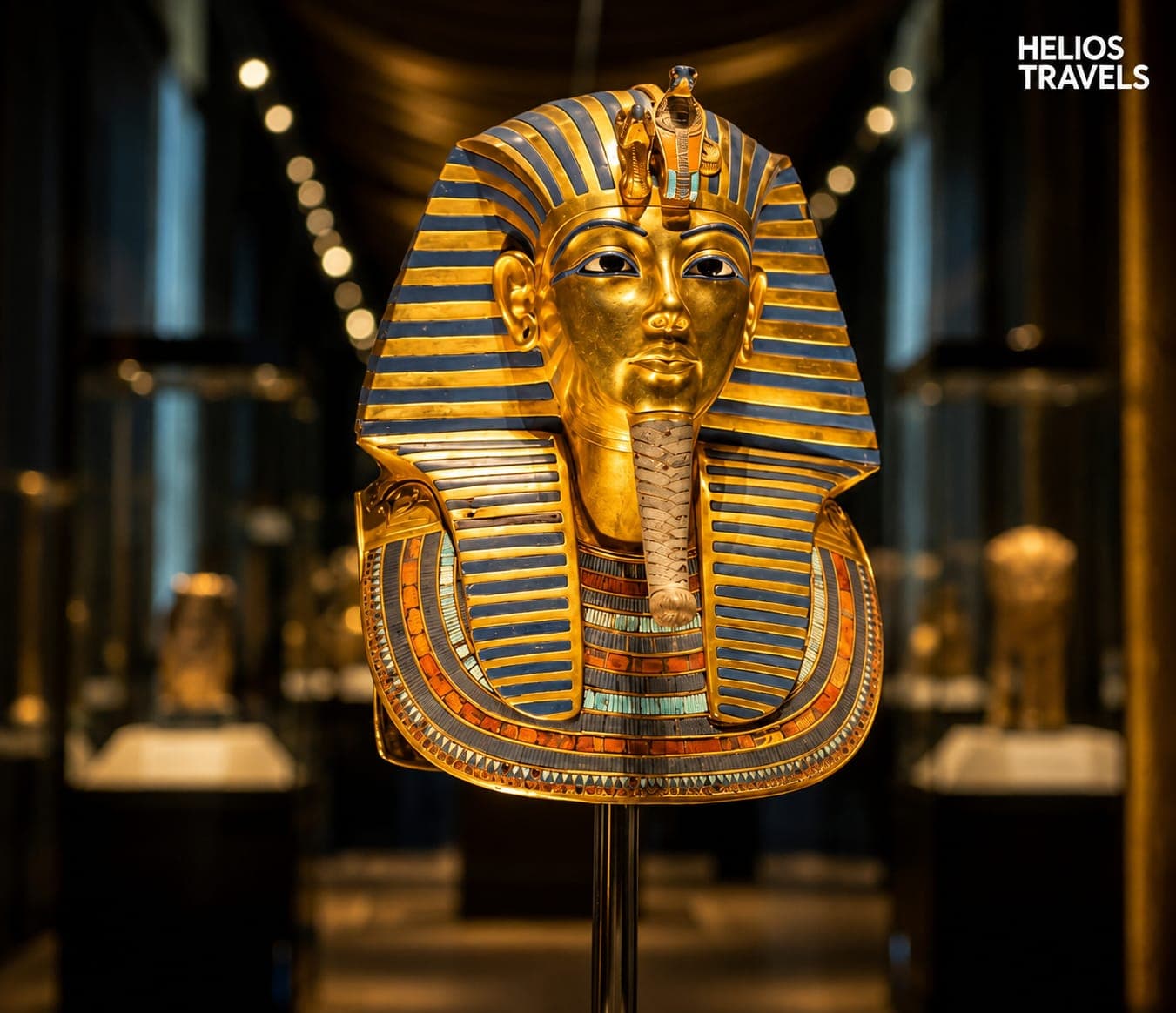
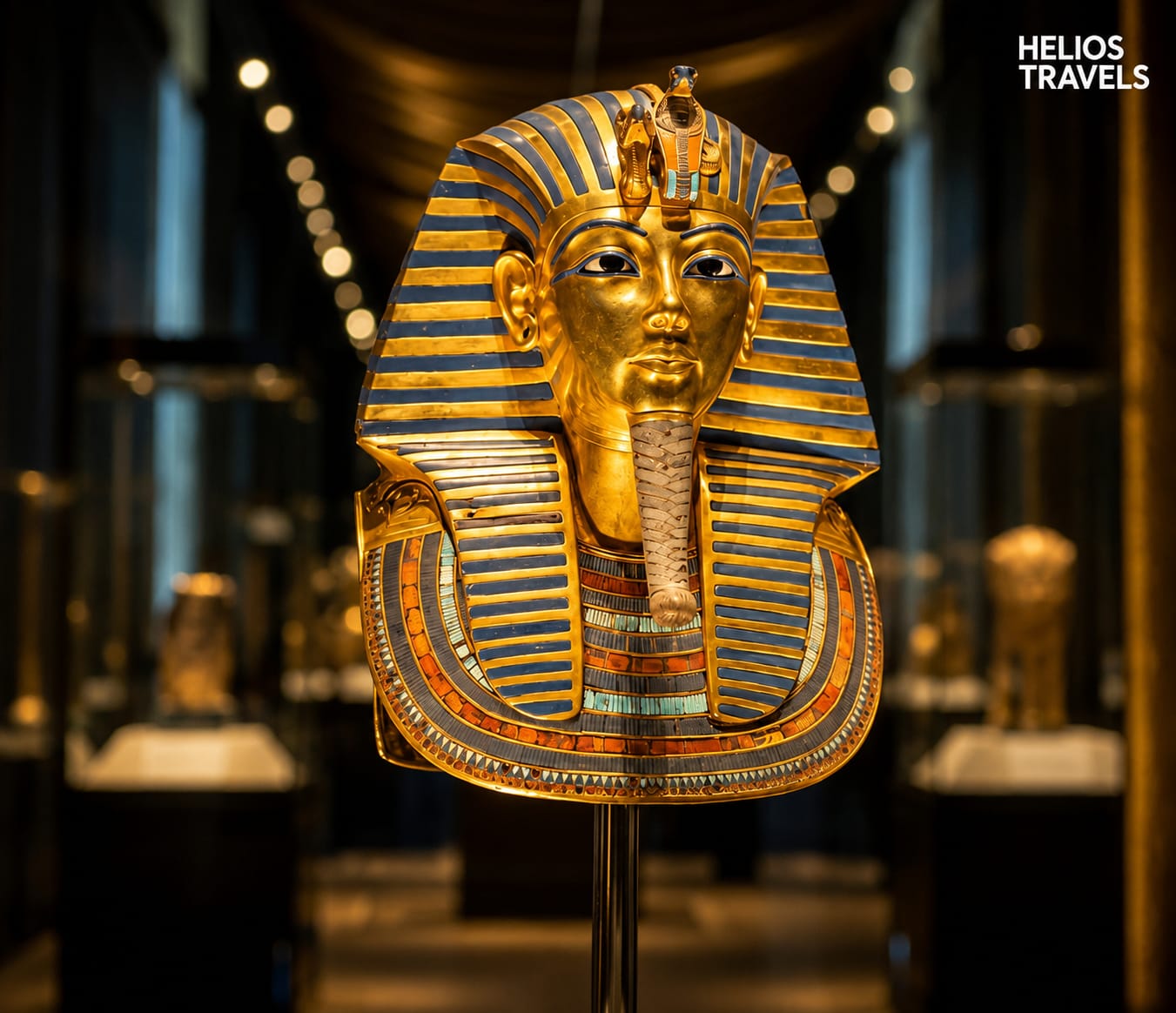
The Egyptian Museum on Tahrir Square
The salmon-pink building on the square opened in 1902 and looks it, gloriously. High ceilings, daylight, wooden vitrines, handwritten labels next to typed ones, and objects packed in a density no modern curator would permit.
That density is the point. At Tahrir you walk past hundreds of things that would be the single treasure of a provincial museum, because there was nowhere else to put them. It is the last museum in the world that still feels like a nineteenth-century collection, and when the reorganisation finishes that will be less true than it is now.
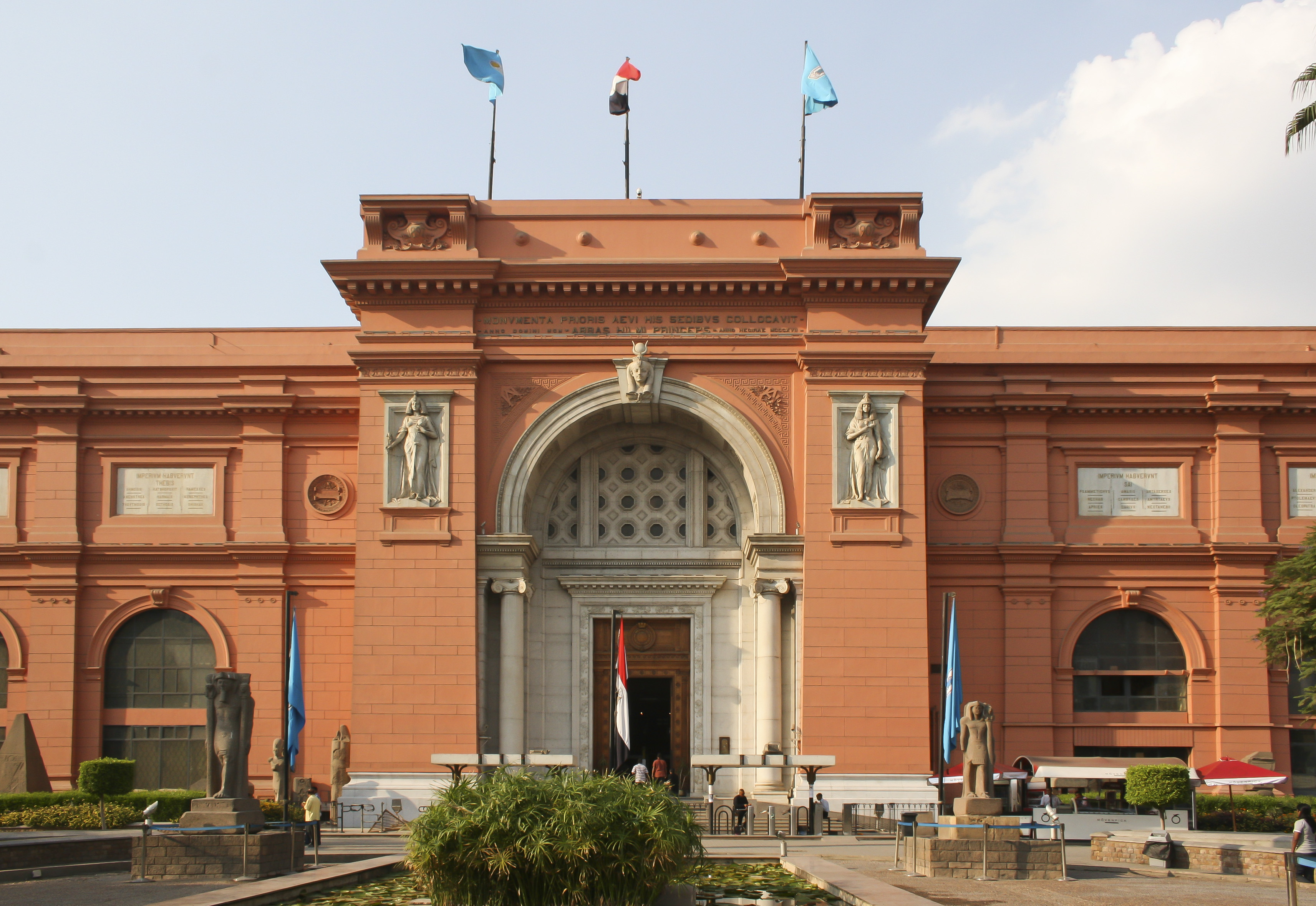
The 1902 facade of the Egyptian Museum on Tahrir Square
What it does not have is comfort. It is warm, the lighting is uneven, the labelling is inconsistent, and finding a specific object without a guide is genuinely difficult. People who need a museum to be legible find it frustrating. People who like the feeling of rummaging in an attic full of pharaohs love it, and go back.
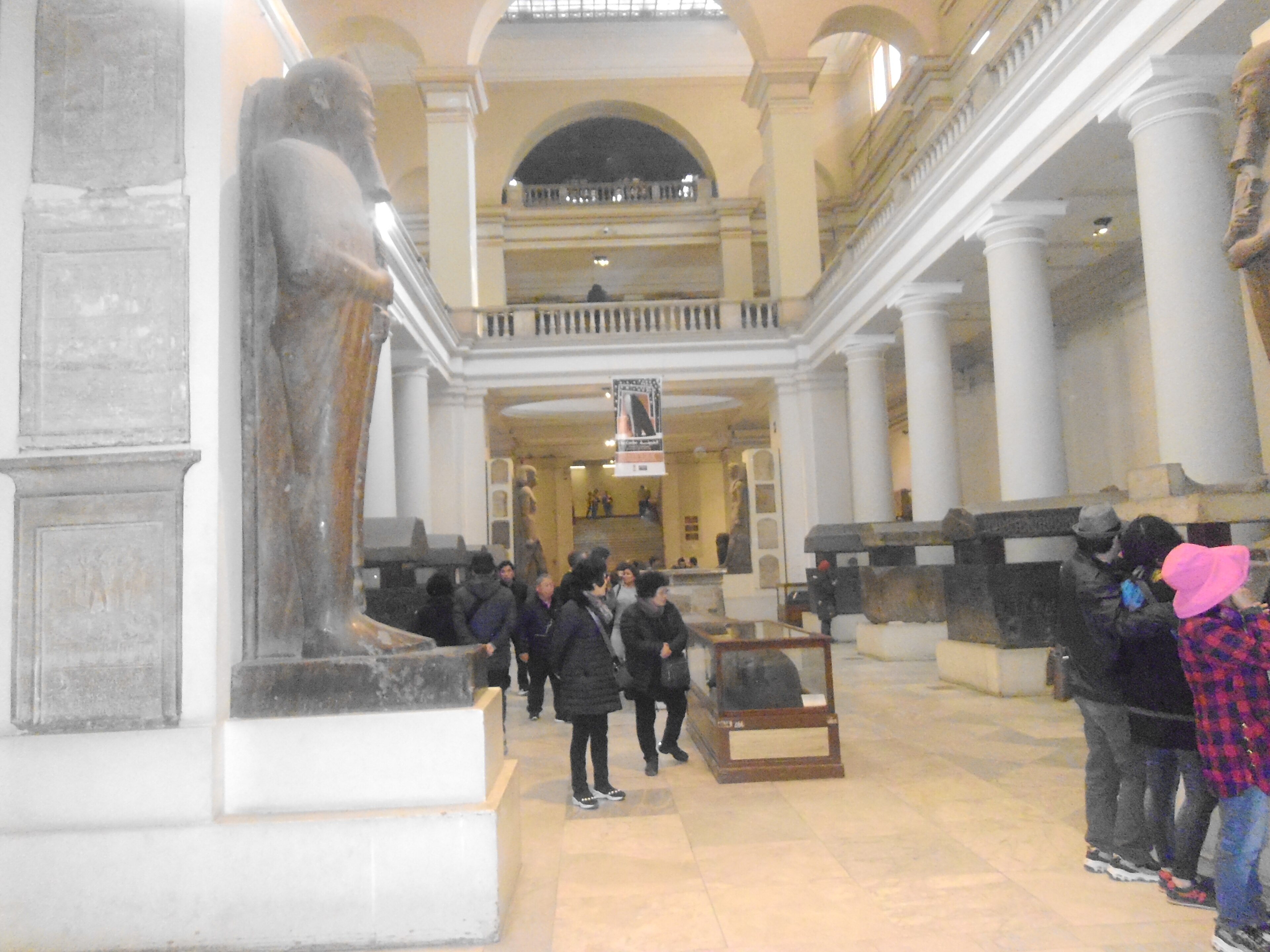
Statuary in the galleries of the Egyptian Museum, Cairo
The third museum, which nobody mentions
The royal mummies are in neither building. On 3 April 2021 twenty-two of them — Ramesses II, Seti I and Hatshepsut among them — were carried across Cairo in the Pharaohs' Golden Parade, from Tahrir to the National Museum of Egyptian Civilisation at Fustat, and that is where they have been ever since.
It matters because guests plan around a memory. People who visited Cairo before 2021 remember the mummy room at Tahrir and expect to find it there; people who have read about the GEM assume everything moved to Giza. Both are wrong, and the NMEC is a third ticket in a third part of the city.
Is it worth adding? If seeing the face of Ramesses II is something you have wanted since you were twelve, yes — and the gallery it is shown in is dim, quiet and rather serious, which suits it. If you are choosing between three museums across two days, it is the one to drop.
What to actually look at, in each
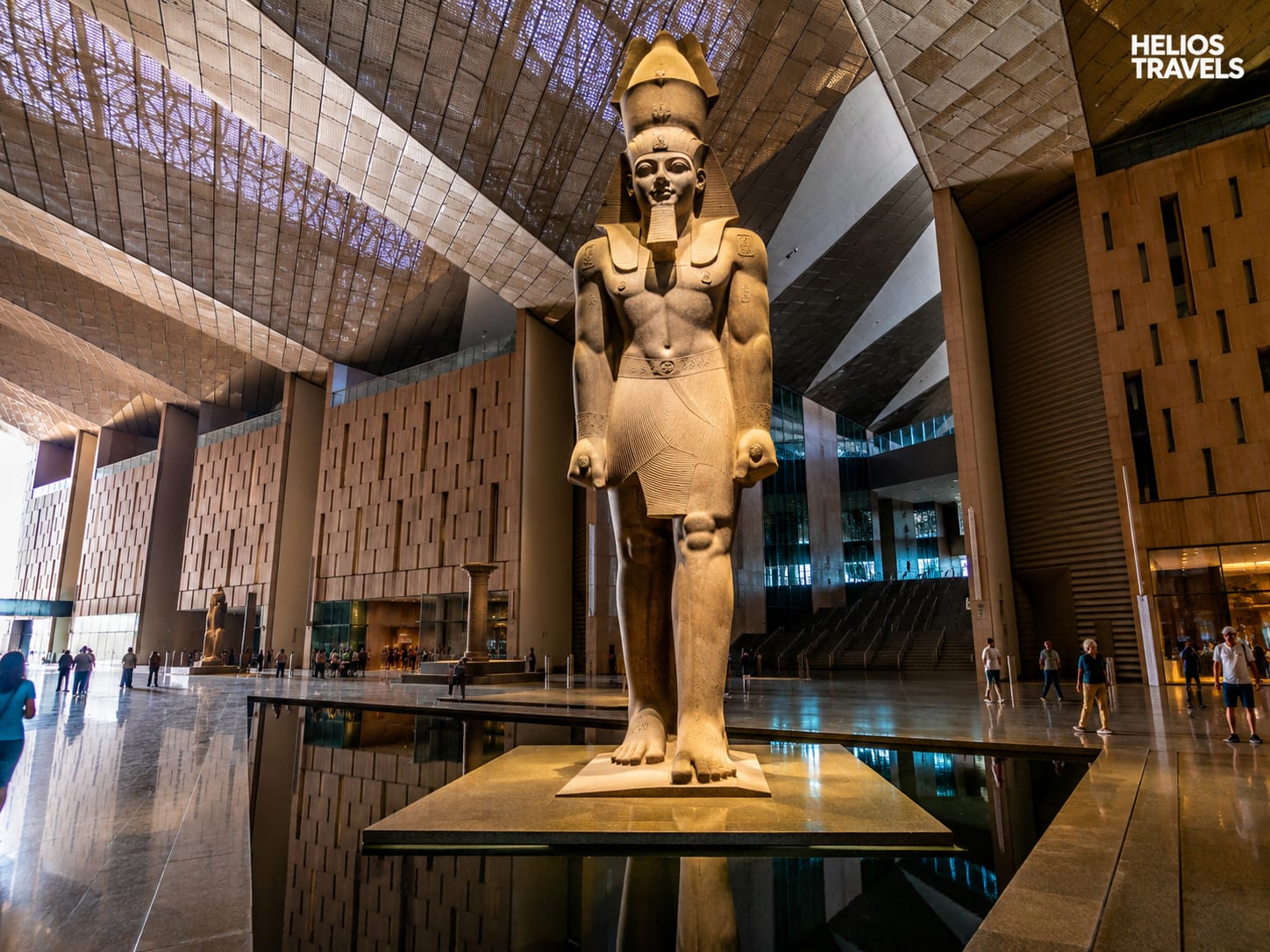
At the GEM, past Tutankhamun: the colossus of Ramesses II standing in the atrium, which sets the scale for everything after it; the Grand Staircase statuary, best taken slowly on the way up rather than glanced at on the way down; and Khufu's cedar boat, reassembled from more than a thousand pieces and shown here now rather than in the shed beside the Great Pyramid where it spent decades.
At Tahrir: the Amarna room, where Akhenaten's sculptors abandoned four thousand years of convention and carved actual faces; the Yuya and Thuya burial, the richest intact find in Egypt before Carter and barely visited; and the Old Kingdom statues — Rahotep and Nofret, the seated scribe, Khafre with the falcon behind his head — which are the works other museums send their curators to see.
Which one for which visitor
- First trip to Egypt, one museum, want the famous things: the GEM, without hesitation.
- Travelling with children: the GEM. Space, air conditioning, somewhere to sit, and objects big enough to hold attention from a distance.
- Been to Egypt before, or seriously interested: Tahrir, and take a guide who knows where things are. The material there rewards a second visit in a way a first-timer cannot use.
- Limited mobility: the GEM. Lifts, ramps, level floors and short distances between places to sit. Tahrir has stairs and long stone galleries.
- Both, in one trip: perfectly possible on a two-day Cairo itinerary, and they are 20 kilometres apart, so they do not belong in the same half-day.
The practical differences
Location. The GEM is at Giza, near the plateau, and pairs naturally with the pyramids. Tahrir is in the middle of downtown Cairo, and pairs naturally with Islamic Cairo, Coptic Cairo or a walk.
Time. Allow three hours at the GEM and two at Tahrir, and understand that both numbers are the floor, not the target.
Tickets. Separate for each, and inside the GEM the Tutankhamun galleries are ticketed separately again. Prices change and we do not print them; ask us or your guide on the day.
Photography. Both allow it, with restrictions that differ by gallery and change. Assume no flash and no tripod anywhere.
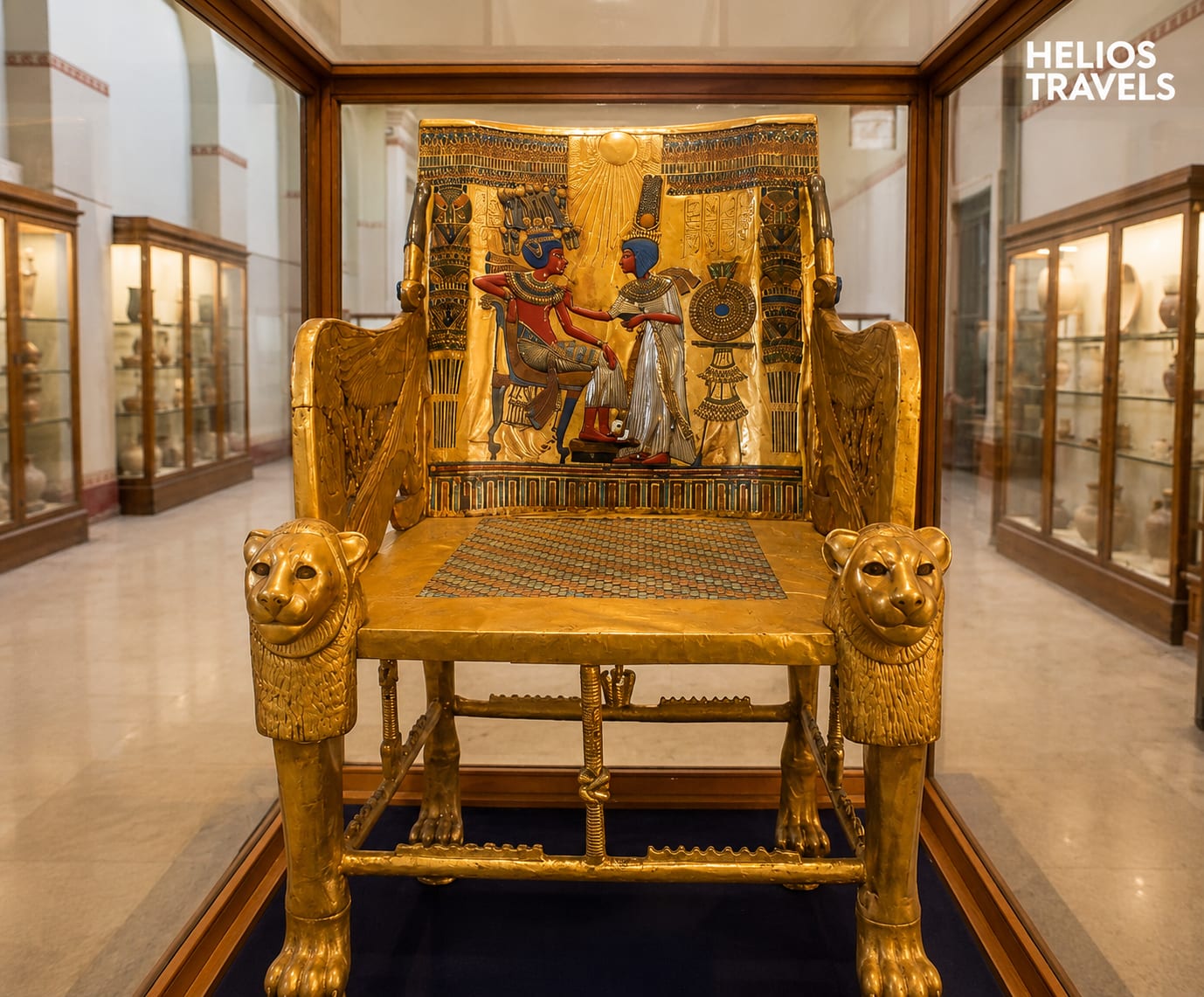
Galleries inside the Grand Egyptian Museum
What we actually recommend
On a single day in Cairo from the coast, the sensible shape is pyramids and the GEM, because they are next to each other and the day already contains a flight. Adding Tahrir to that day means two hours of Cairo traffic for a museum you will be too tired to look at.
On two days in Cairo, do both — GEM with the pyramids on one day, Tahrir with Islamic or Coptic Cairo on the other. That splits the museums by neighbourhood instead of by importance, which is how the city is actually laid out.
And if you have three days: go to Tahrir twice. Almost nobody does, and the people who do are the ones who come back talking about a single case in a corner rather than about the mask.