← Back to blog index

Red Sea · Sep 5, 2026

Your first dive in the Red Sea, start to finish

No certificate needed. One supervised dive, one physical skill that decides whether you enjoy it, and one rule that is absolute.
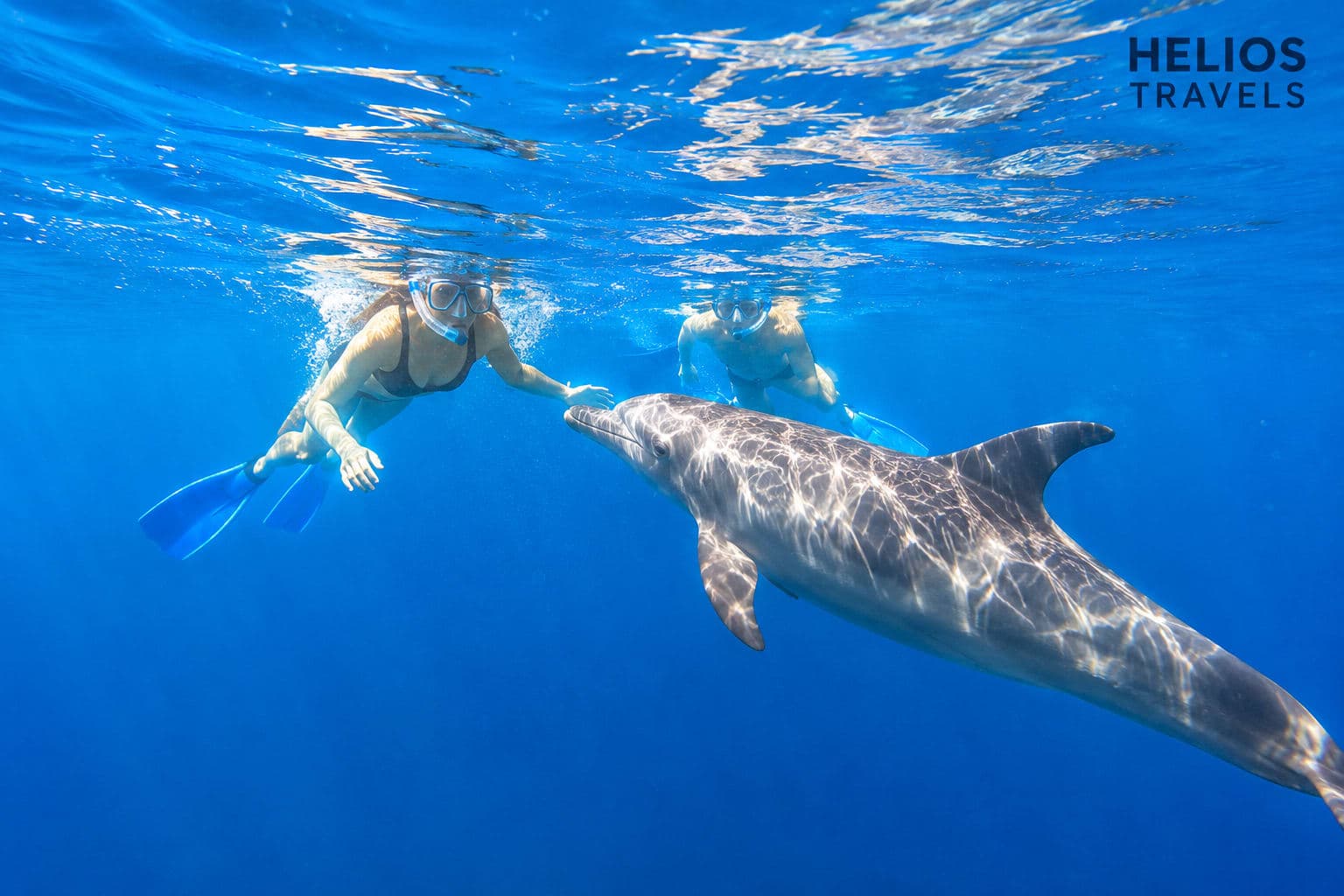
Helios Travels Team

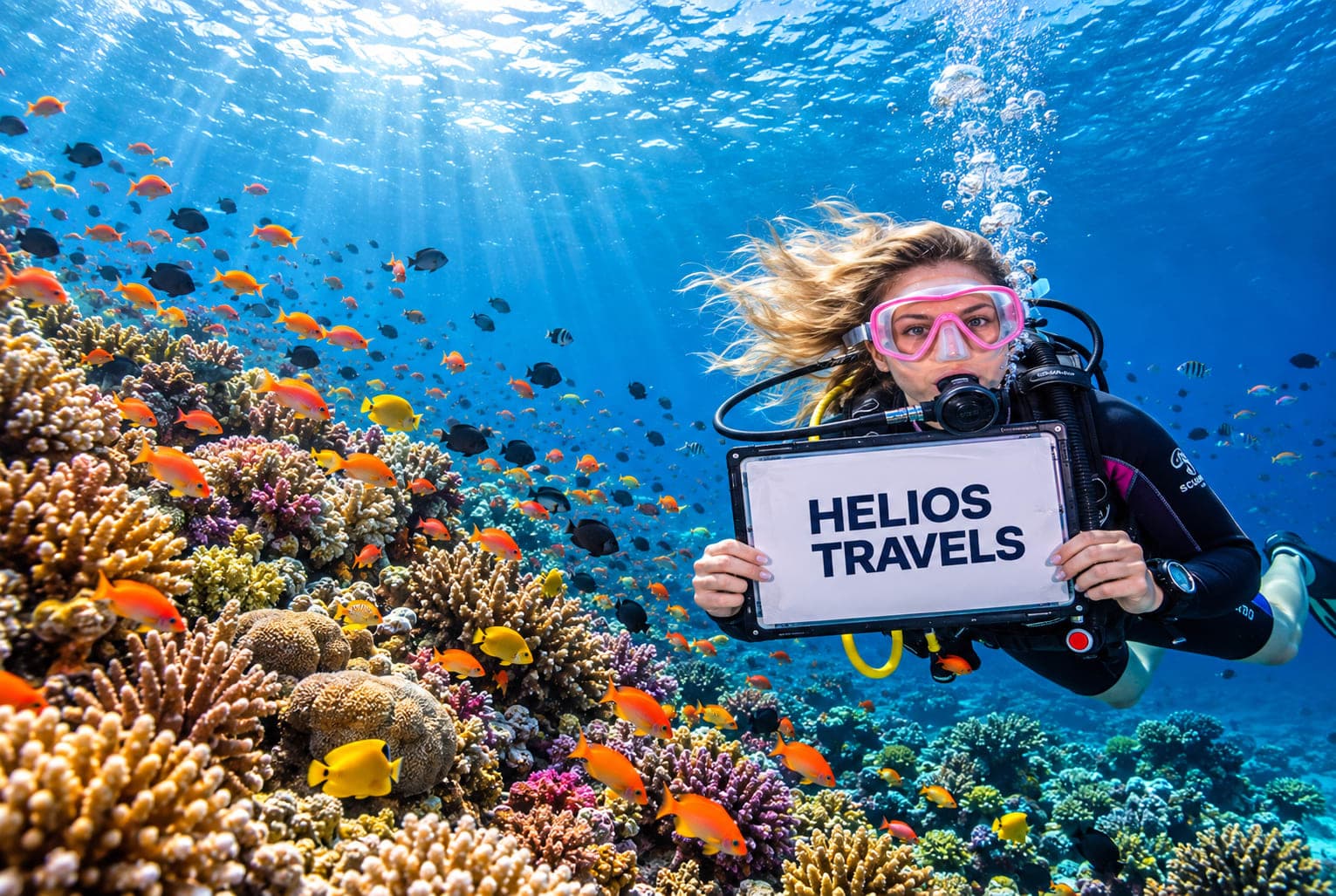
Divers above a coral reef in the clear water of the Red Sea

The Red Sea is one of the best places in the world to breathe underwater for the first time, and "Discover Scuba" is how most people do it: no certificate, no course, one supervised dive to shallow depth with an instructor within arm's reach.

Here is exactly what happens, what it feels like, what disqualifies you, and the one physical skill that decides whether you enjoy it.
Divers over a coral reef in the clear water of the Red Sea

Divers over a coral reef in the clear water of the Red Sea

What a first dive actually involves

The shape is the same everywhere, whether you go from a hotel jetty or a boat:

  1. Paperwork and a medical questionnaire. Ten minutes, and it matters — see below.
  2. A briefing on land. How the gear works, the hand signals, and the rules. Short, and worth actually listening to.
  3. Shallow-water practice. Standing in chest-deep water or a pool: breathing through the regulator, clearing water from your mask, finding a regulator you have dropped. This is the part that converts nervousness into confidence, and a good instructor does not rush it.
  4. The dive. Usually twenty to forty minutes, to a depth capped for beginners — commonly around twelve metres. The instructor stays with you throughout, often holding your arm or tank for the first few minutes.

Total time is a half day. Most people do a first dive and a second in the same session or the next day, because the second one is when you stop concentrating on the equipment and start looking at the reef.

The medical questionnaire is not a formality

You will be asked about asthma, heart conditions, recent surgery, epilepsy, diabetes, ear and sinus problems, pregnancy, and medications. Answering yes does not automatically disqualify you — it means a doctor needs to sign off first.

This is the part people are tempted to fudge to avoid losing the booking. Do not. The pressure changes involved make some conditions genuinely dangerous underwater in a way they are not on land, and an instructor who does not know cannot help you.

The two most common surprises: a childhood asthma history still needs a doctor's note, and a recent cold or blocked sinuses will stop the dive on the day — you cannot equalise through congestion, and forcing it damages your ears.
Equalising: the one skill that matters

Everything else about a first dive is done for you. This one is yours, and it is the difference between a lovely hour and a painful one.

As you descend, water pressure squeezes the air spaces in your ears. You have to add air to them, and the standard method is to pinch your nose and blow gently against it until you feel a click or a pop.

Three rules the good instructors repeat:

  • Start early. Equalise at the surface and every metre on the way down, before you feel anything. Waiting until it hurts is too late.
  • Gently. It is a soft push, not a hard blow.
  • If it will not clear, go up a little and try again. Never force your way deeper through pain. There is no prize for depth and the reef is beautiful at eight metres.

Some people equalise without thinking about it. Others need several attempts. Neither says anything about whether you will be a good diver.

The reef wall off Giftun Island dropping into deep blue water

The reef wall off Giftun Island dropping into deep blue water

The rules, and why the first one is absolute

  • Never hold your breath. Breathe continuously, always. Compressed air expands as you rise, and holding it shut in your lungs is the one beginner mistake that can cause serious injury. Everything else on this list is comfort; this one is safety.
  • Breathe slowly and deeply. Fast shallow breathing empties your tank and makes you feel short of air even when you are not.
  • Stay with your instructor. Within touching distance, on the side they tell you.
  • Do not touch anything. Coral is alive and fragile, fire coral stings for days, and a few reef animals defend themselves.
  • Signal, do not shout. Learn "OK", "problem", "up", "down" and "out of air". They will be shown to you; use them.
  • Ascend slowly. The instructor controls this, but never race them to the surface.

What it feels like

The honest version: the first two minutes are strange. Breathing underwater contradicts something deep in you, the regulator feels bulky, and the noise of your own breath is louder than expected. Almost everyone has a moment of thinking this was a mistake.

Then it passes, usually somewhere around minute three, and what replaces it is the thing people come back for — a sensation of weightless hovering that nothing on land resembles, with a reef wall going down into blue underneath you.

You will not remember much of the marine life from the first dive, because you will be concentrating. That is normal and it is why the second dive is better.

Flying afterwards: the rule that catches people

Diving puts nitrogen into your tissues, and it takes time to come out. Flying too soon risks decompression sickness.

Leave a clear gap between your last dive and your flight home — plan on at least eighteen to twenty-four hours, and confirm the exact interval with your instructor, since it depends on how many dives you did and how deep. The practical consequence for a week's holiday: do not dive on your last full day. People book a farewell dive the afternoon before an early flight and then have to cancel it at the dive centre.

The same logic applies to high mountain roads, though nothing you would drive from Hurghada comes close to mattering.

Where to do it, and what to do next

For a first dive, a house reef is easier than a boat: no crossing, no swell, and you can stop and start. The Hurghada house reefs are perfectly good for what a first dive needs, which is not spectacle but calm.

If it clicks — and it does for most people — the natural next steps are a two-dive boat trip to the Giftun reefs, where the coral is genuinely better, and then a proper open-water certification, which takes three to four days and turns a supervised experience into something you can do anywhere in the world.

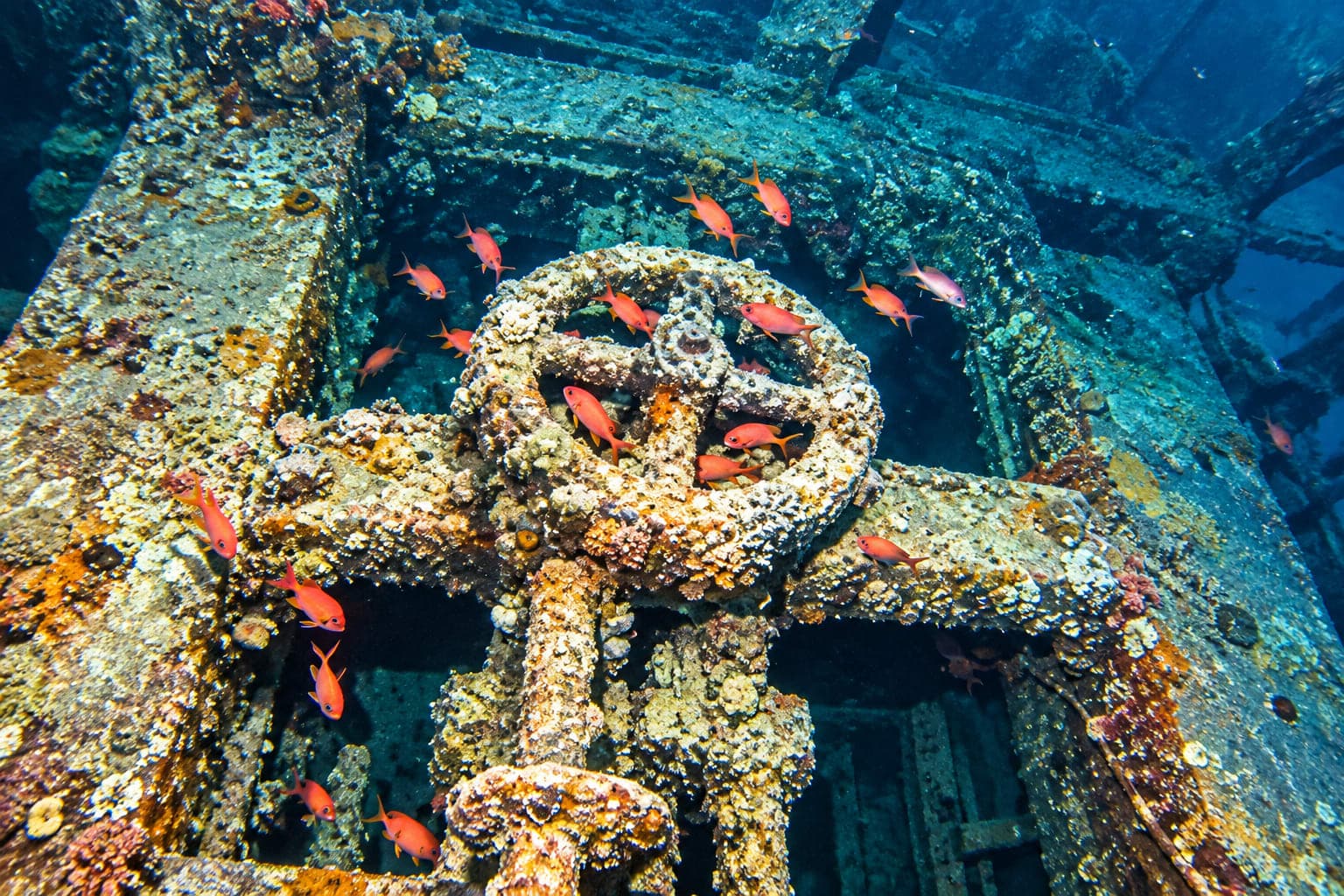
Two more things worth knowing for later: night diving is an entirely different experience of the same reef, with the day fish asleep and the hunters out; and the SS Thistlegorm, reachable as a long day trip, is one of the most famous wreck dives in the world. Neither is a first dive, but both are reasons to get certified.

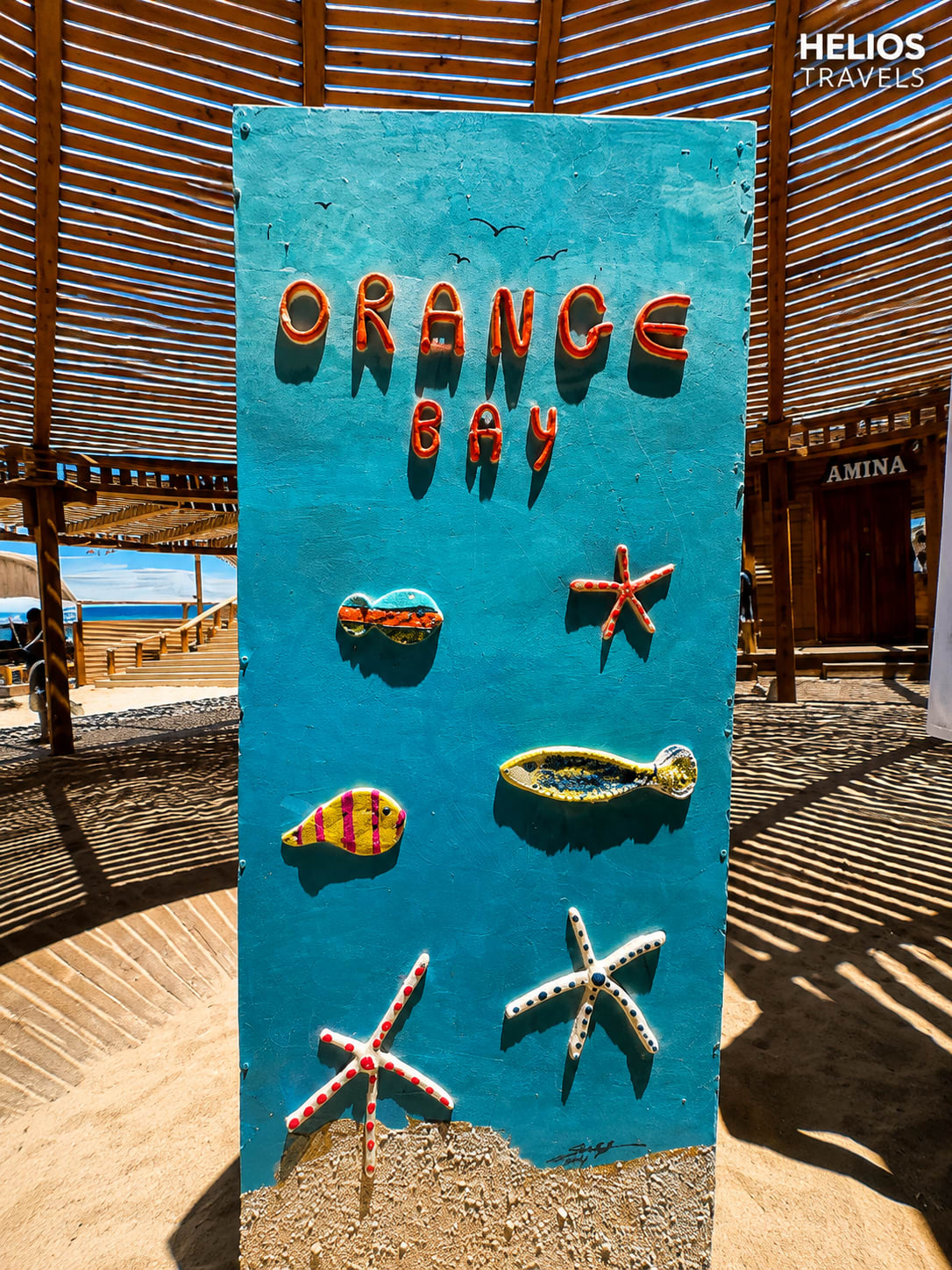
The white sand and shallow turquoise water at Orange Bay

The white sand and shallow turquoise water at Orange Bay

Practical notes

  • Do not dive on your arrival day, or the day after a long flight. Tired and dehydrated is the wrong state.
  • No alcohol the night before. Dehydration raises decompression risk and makes equalising harder.
  • Eat something light beforehand. Not nothing, and not a large meal.
  • Check the insurance. Many travel policies exclude diving by default, or cap the depth.
  • Contact lenses are fine; glasses are not. Ask about a prescription mask if you need one.
  • Age minimums apply, usually around ten for a supervised first dive. Confirm before booking for children.
  • You will be cold before you expect it in winter. Ask for a wetsuit that fits.

Book what you just read about

Tours from this article — private, with a licensed guide, and priced per person.

Related tours you can book