Planning · Oct 15, 2026
El Nido to Coron: Ferry vs 3-Day Boat Expedition
How the fast ferry works, what a multi-day island expedition is really like, and which suits your trip

There are two realistic ways to travel between El Nido and Coron: a fast ferry that takes roughly four to five hours, or a multi-day boat expedition, usually three days and two nights, that stops at islands, reefs and fishing villages and sleeps in simple beach huts. The ferry is the efficient choice; the expedition is, for many travellers, the best experience of their whole trip to the Philippines.
There is no road link, and flying means going back through Manila, so almost everyone crosses the Linapacan Strait by sea. Here is what each option involves, as of 2026.
Option 1: the fast ferry
Several operators run passenger fast craft between El Nido and Coron, usually leaving in the morning. Boats are enclosed, air-conditioned and seat roughly 100 to 200 passengers. In good weather the crossing takes about four to five hours, with part of it in open water.
- Book a few days ahead in peak season (December to May); departures do sell out.
- Check in at the port at least an hour before departure. Bring your passport; a terminal fee is collected separately.
- Luggage goes in a hold or on deck; keep valuables and medication with you.
- Seasickness is common when the sea is rough. Take medication before boarding, sit at the back and look at the horizon.
- Cancellations happen when the coast guard suspends sailings, mostly from June to November. Leave a buffer day before any flight.
Timetables and operators change from season to season, so confirm the current schedule close to your travel date.
Option 2: the three-day island expedition
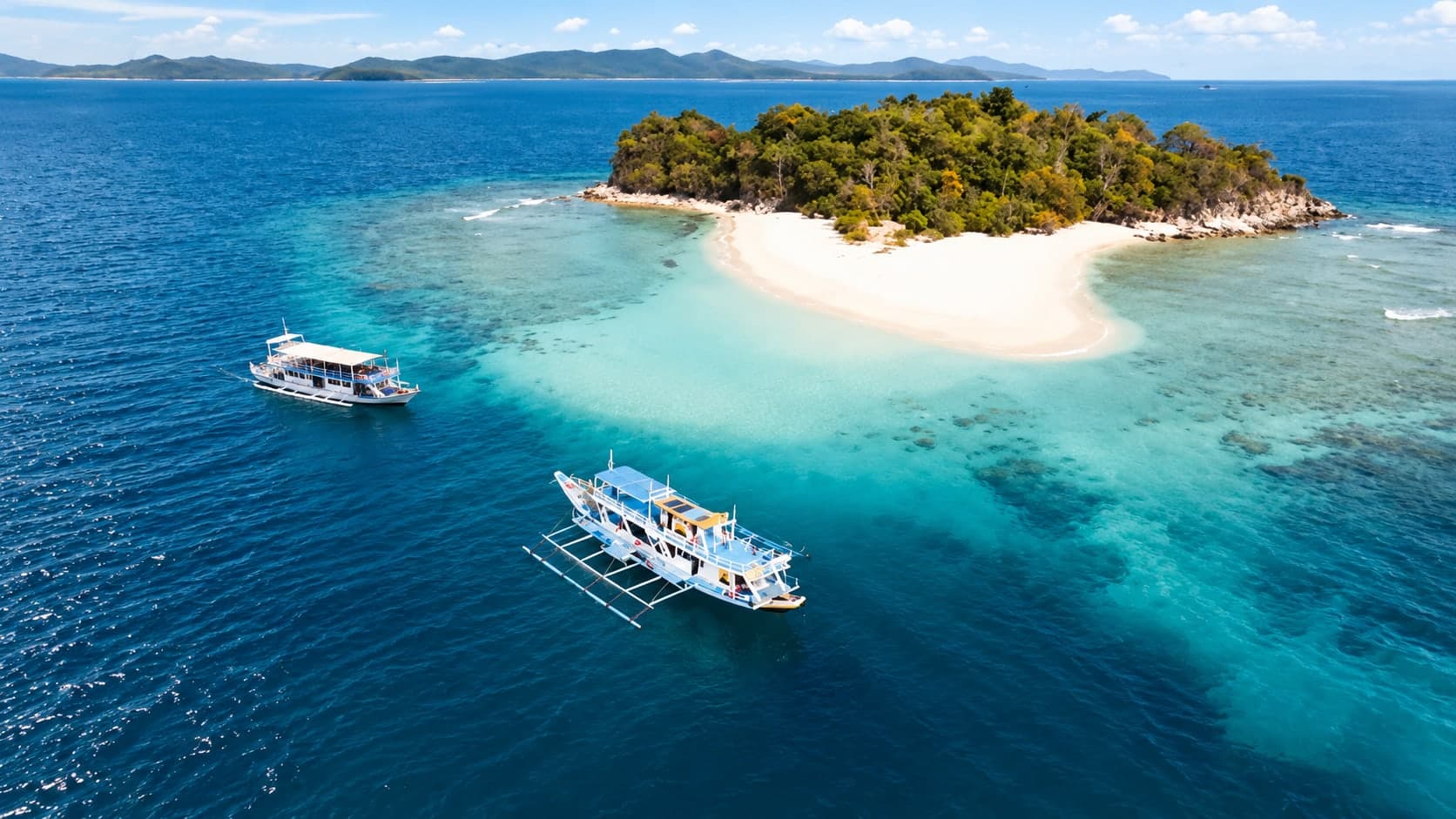
An expedition uses a traditional outrigger boat, a bangka, and island-hops slowly across the archipelago between northern Palawan and the Calamian Islands. Days are spent snorkelling, swimming, walking on empty beaches and visiting fishing communities. Nights are in basic but comfortable bamboo huts or tents on small islands, often without mains electricity.
What a typical day looks like
- Breakfast at the camp, then several hours on the boat with two or three stops for snorkelling and beaches.
- Lunch cooked on board or on a beach: grilled fish, rice, vegetables and fresh fruit.
- Afternoon swim or kayak, then arrival at the next camp before sunset.
- Dinner together, often with seafood, then an early night under a mosquito net.
Who it suits
Travellers who enjoy the sea, can do without air conditioning and Wi-Fi for two nights, and do not mind sharing a boat and a camp with a small group. It is less suitable for people who get very seasick, for very young children, or for anyone who needs a fixed schedule; routes adapt to wind and tides.
You can take it in either direction: the El Nido to Coron 3-day expedition with beach huts or the Coron to El Nido 3-day island-hopping expedition.
Ferry or expedition: side by side
| Fast ferry | 3-day expedition | |
|---|---|---|
| Duration | About 4 to 5 hours | 3 days, 2 nights |
| Boat | Enclosed, air-conditioned | Open outrigger bangka |
| Sightseeing | None on the way | Daily snorkelling, beaches, villages |
| Accommodation | Not needed | Included, simple huts or tents |
| Meals | Bring snacks | Included |
| Weather sensitivity | Cancelled in strong winds | Route adjusted, sometimes postponed |
Which direction is better?
Both work. Starting in El Nido suits travellers flying into Puerto Princesa and out of Busuanga (Coron). Starting in Coron suits those arriving from Manila to Busuanga and leaving via Puerto Princesa. Choose the direction that avoids backtracking for your flights. Scenery is equally good either way.
What to pack for the expedition
- A small bag; the main luggage is often carried separately or shipped. Ask your operator.
- Two swimsuits, a rash guard, a hat and reef-safe sunscreen.
- A headlamp or torch, insect repellent and a light long-sleeved layer for evenings.
- A dry bag, a power bank and any personal medication, including for seasickness.
- Cash for drinks and tips; there are no ATMs on the islands.
Seasickness and safety
The crossing includes open-water sections. On calm days they are pleasant; on windy days the bangka rolls. If you are prone to seasickness, take medication before departure, not after you feel unwell. Reputable operators carry life jackets for everyone, radios and first-aid kits, and they follow coast-guard advisories. If a typhoon or strong monsoon wind is forecast, departures are moved; that is a feature, not a failure.
When to go
The best months are roughly December to May, when the northeast monsoon gives calmer seas in this area and rain is rare. March to May typically brings the flattest water. Expeditions are reduced or paused at the height of the wet season, and ferries are more often cancelled from July to October.
Combining it with the rest of Palawan
A popular route for ten to twelve days: fly into Puerto Princesa, visit the Underground River, take the van to El Nido for three nights, cross to Coron by expedition, spend two or three nights in Coron, and fly out of Busuanga. That uses the boat journey as the link instead of a dead travel day.
Getting to and from the ports
In El Nido, ferries and most expeditions leave from the town pier or from a nearby beach; a tricycle from most hotels takes a few minutes. In Coron, boats arrive at the town port, from where hotels in town are also a short tricycle ride away. If you are flying out of Busuanga the same day you arrive by ferry, be careful: the airport is about 30 to 45 minutes from town and a late or cancelled boat could cost you the flight. The safer plan is to arrive in Coron at least one night before your flight. Expedition operators usually brief the group the evening before departure, check passports and explain how luggage is handled, so plan to be in town that afternoon. Keep some cash on arrival, since the first ATM you find may be out of service.
FAQ
How long is the ferry from El Nido to Coron?
About four to five hours in normal conditions. Rough seas can make it longer, and sailings are suspended in bad weather.
Is the 3-day expedition worth it?
For most people who enjoy the sea, yes. It replaces a travel day with three days of remote islands and snorkelling, and many travellers name it as their highlight.
Is there electricity and Wi-Fi on the expedition?
Usually only limited electricity, often from a generator or solar panels in the evening, and little or no mobile signal. Bring a power bank.
Can I fly between El Nido and Coron instead?
There is no regular direct flight. You would need to connect via Manila, which usually takes longer than the ferry.
What happens if the weather cancels my crossing?
The ferry or expedition is moved to the next safe day. This is why a buffer day before your onward flight is important.
Book what you just read about
Explore related tours and check each trip for available booking options and inclusions.