Culture, heritage and museums
On culture, Abu Dhabi holds the stronger hand. Sheikh Zayed Grand Mosque is the most visited sight in the capital, and for good reason: its white marble courtyards, colonnades and prayer hall are among the most striking interiors in the region, and visitors of all faiths are welcome as long as they follow the dress code. On Saadiyat Island, Louvre Abu Dhabi shows art from many civilisations side by side under a vast perforated dome, and the Zayed National Museum, which opened in December 2025, tells the story of the country and its founder. Qasr Al Watan, the presidential palace, opens its halls and library to visitors.
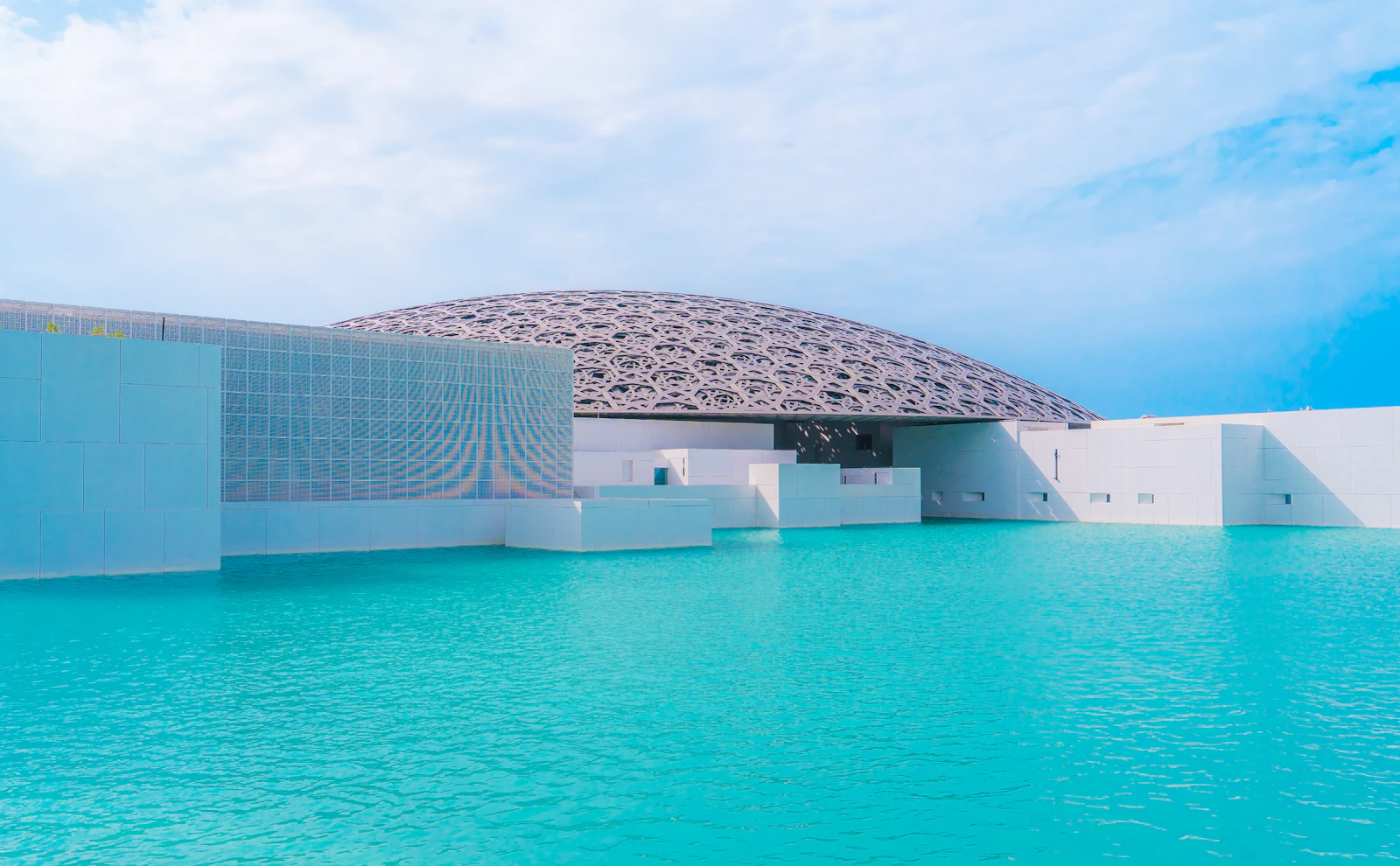
The dome of Louvre Abu Dhabi on Saadiyat Island — Photo: Unsplash
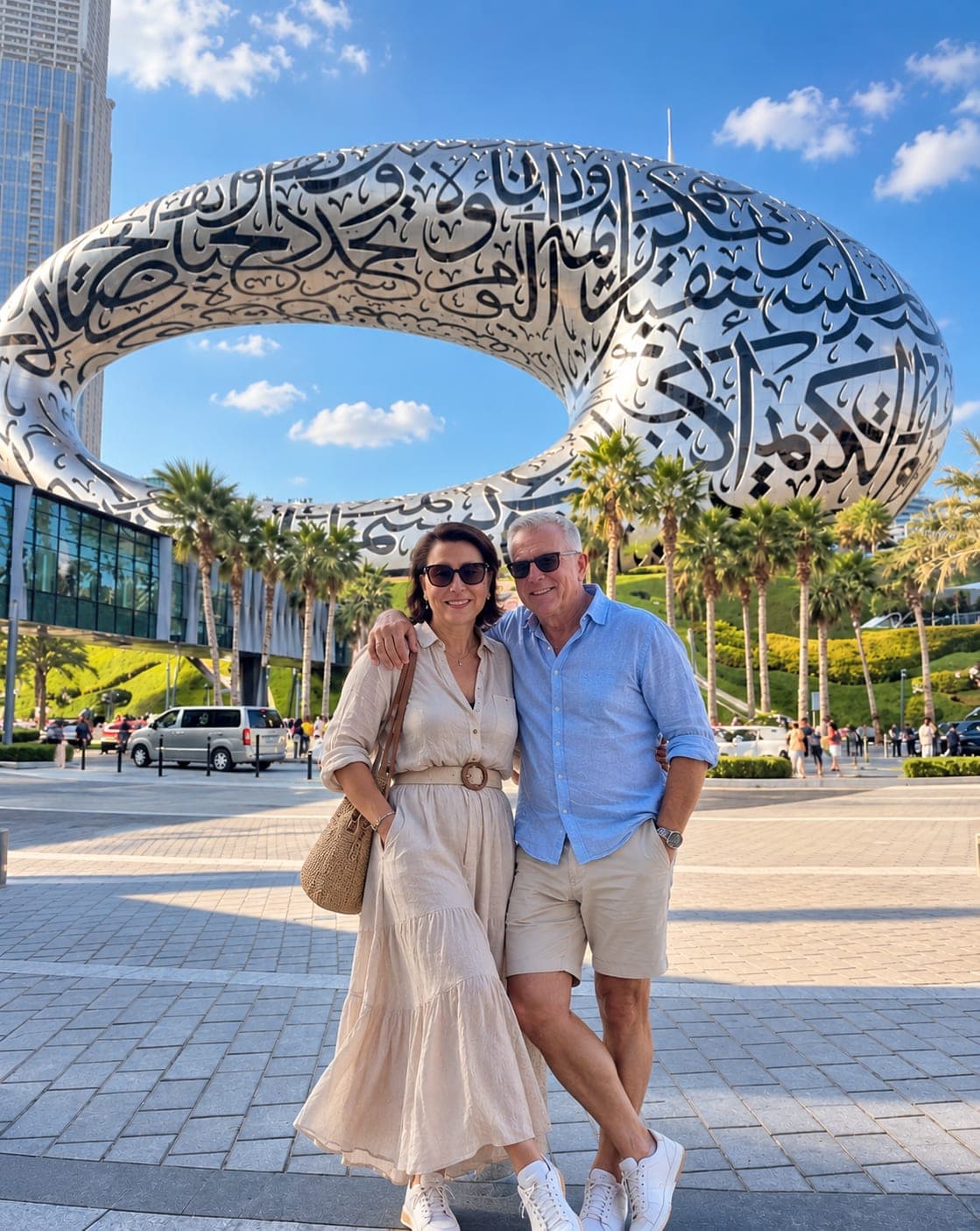
Dubai's cultural side is smaller in scale but more lived-in. The Al Fahidi historic district, with its wind towers and narrow lanes, the abra boats that still carry people across Dubai Creek, and the gold and spice souks of Deira give you a sense of the trading town that existed before the towers. The Museum of the Future is the city's architectural statement piece. Our Dubai City Tour from the Creek to Jumeirah covers the classic version of all this in about five hours: the Marina and the view of the Burj Al Arab, the Museum of the Future from outside and its ground floor, a guided visit to the Blue Mosque, Al Fahidi, an abra crossing and the souks.
If museums and architecture are the main reason for your trip, plan at least one full day in Abu Dhabi, wherever you sleep. If you mainly want atmosphere, markets and a feel for the old city, Dubai gives you more within a short distance.
Beaches
Both cities sit on the warm, shallow waters of the Gulf, and both have good public beaches. Dubai's beachfront is longer and more built up: hotel beaches run along Jumeirah and the Marina, and public stretches such as Kite Beach and the beach at JBR have cafés, promenades and plenty of people. It is lively, convenient and rarely empty.
Abu Dhabi's beaches tend to feel more spacious. The Corniche beach lies right in front of the city skyline, and Saadiyat Island has long stretches of pale sand that stay calm even at weekends. If your idea of a beach day is a quiet sunbed and a swim with little going on around you, Abu Dhabi usually delivers that more easily. If you want a beach with things to do and a short walk to dinner, Dubai does that better.
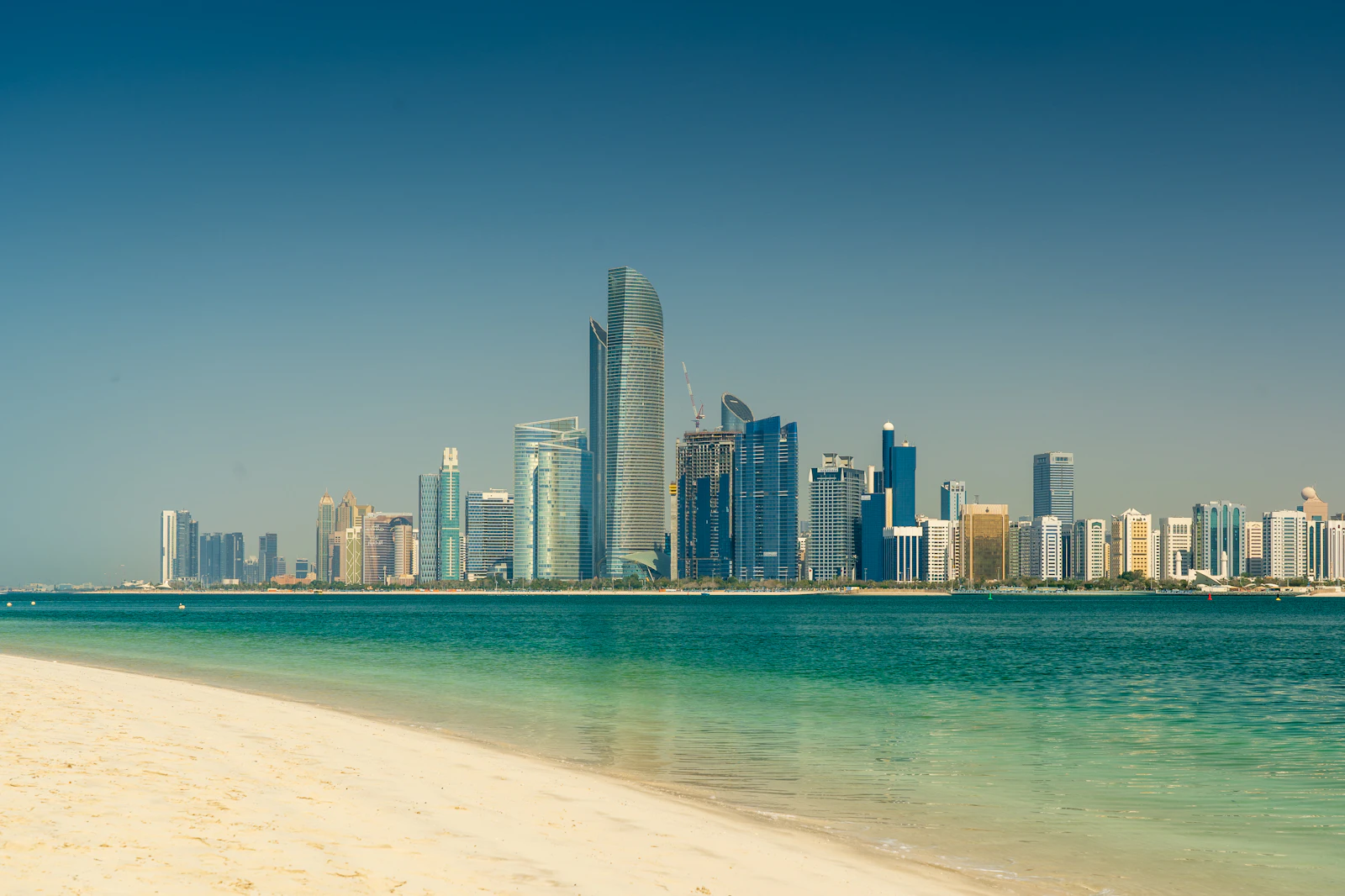
Abu Dhabi's skyline seen from a quiet stretch of beach — Photo: Unsplash
One honest point for both: from roughly May to September, the midday heat makes long hours on the sand hard work. Mornings and late afternoons are the comfortable times, and in summer many visitors use the hotel pool rather than public beaches.
The desert
You do not need to choose a city for the desert, because both have dunes within reach. From Dubai, desert trips are a short drive from the city, and the range is wide: evening safaris with dinner at a camp, morning dune drives, camel rides, overnight camps and quieter heritage-style outings in vintage four-wheel drives. From Abu Dhabi the dunes are close as well, and further inland the sand rises towards Liwa on the edge of the Rub' al Khali, the Empty Quarter. That is a long drive, better suited to a longer stay than to a quick outing.
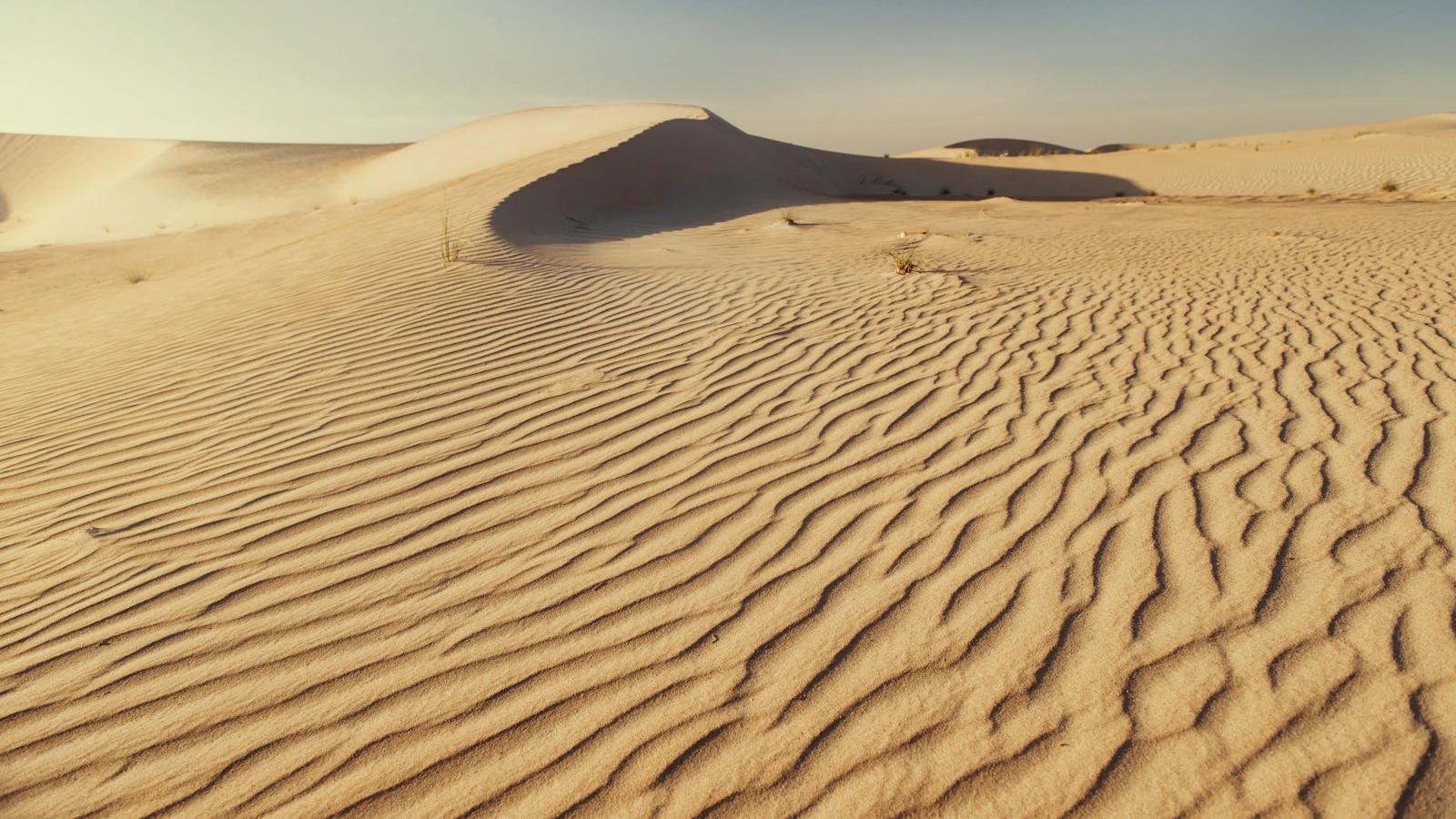
Wind-rippled dunes in the desert of the Emirates — Photo: Unsplash
Two rules apply to our desert trips in both cities. Desert safaris are not suitable for children under three, and quad bikes and dune buggies are only for children aged ten and over. Dune driving is bumpy and is not recommended for pregnant women or for people with back or heart problems.
If you want both the capital and a night under desert skies without organising anything yourself, our Three Days in Abu Dhabi and the Desert starts and ends at your Dubai hotel: a day in Abu Dhabi with a guide, a night in a 4-star hotel there, then a desert safari with a camel ride, a falcon and henna painting, and a night at a desert camp.
Getting around inside each city
Dubai has a metro running along its main axis, from the airport and the old districts past Downtown to the Marina, which makes independent sightseeing easier. Taxis and ride-hailing apps are widely available in both cities. Abu Dhabi is spread across several islands, and most visitors get around by taxi or on organised tours. In both cities, walking between sights is pleasant only in the cooler months, early in the morning or in the evening; distances that look short on a map feel long in the heat.
Why many visitors base in one and day-trip to the other
Changing hotels costs half a day: checking out, packing, the drive, checking in again. On a short trip that is time you do not get back. That is why many travellers pick one base and visit the other city on a single, well-planned day.
Most international flights and most hotel rooms are in Dubai, so the most common pattern is to stay in Dubai and go to Abu Dhabi for a day. Our Abu Dhabi Highlights Day Trip from Dubai is built for exactly that: hotel pickup in Dubai, the drive to the capital, time at Sheikh Zayed Grand Mosque and the Founder's Memorial, and photo stops at Etihad Towers, outside Louvre Abu Dhabi and at the Yas Island theme parks, before you are driven back in the late afternoon. Entry to the Louvre, Qasr Al Watan and the Etihad Towers deck is not included, so it suits people who want the main sights at an easy pace rather than long museum visits.
If you are staying in Abu Dhabi, or arriving on a cruise at Port Zayed, the reverse applies. Our Abu Dhabi City Tour: Mosque, Palace and Towers picks you up from your Abu Dhabi hotel or the cruise terminal and fits the Grand Mosque, the inside of Qasr Al Watan, the Etihad Towers observation deck and a photo stop at Louvre Abu Dhabi into about six hours, with no long motorway drive. From an Abu Dhabi base, Dubai then becomes your day trip.
A split stay makes sense when you have a week or more, or when you want both a lively city break and a few genuinely quiet beach days. In that case, put the quiet days at the end, so you fly home rested.
Which city suits whom
- First visit, four days or fewer: stay in Dubai and give Abu Dhabi one day. You will see the Grand Mosque without changing hotel.
- Art, architecture and museums: consider Abu Dhabi as your base, or at least plan a full day there with a museum ticket rather than a photo stop.
- Nightlife, shopping and eating out: Dubai, without much debate.
- A quiet beach holiday: Abu Dhabi, and Saadiyat in particular, usually feels calmer.
- Families with theme parks on the list: Yas Island in Abu Dhabi has several large theme parks side by side, so a stay there or a dedicated day makes sense; a quick photo stop will disappoint children who expected rides.
- Desert lovers: either city works for an evening safari. To combine a night in the dunes with the capital, a short multi-day trip is easier than two separate bookings.
- Travellers on a tight schedule: stay where your flight lands and choose a half-day option for the other city.
Practical points that apply to both
Both cities share the same climate. The cooler months, roughly November to March, are the most comfortable for sightseeing; from May to September temperatures are very high and outdoor visits are best kept to the early morning or late afternoon. During Ramadan, opening hours at mosques, museums and many attractions change, so check the official websites the week before you visit.
Fridays matter in both cities: Sheikh Zayed Grand Mosque closes to visitors over the midday Friday prayer and reopens in the afternoon, so a Friday trip has to be planned around that. Louvre Abu Dhabi is closed on Mondays. Dress modestly for any mosque visit. At the Grand Mosque, women need loose, ankle-length clothing with long sleeves and a headscarf, men need long trousers and tops with sleeves, and shoes come off before the prayer halls. In the rest of both cities, ordinary holiday clothes are fine, though covering shoulders and knees is respectful in traditional areas and souks.
So which is better?
Neither, in the abstract. Dubai is better for variety, evenings out and a dense first impression of the Emirates; Abu Dhabi is better for calm, culture and space. For most first-time visitors with less than a week, our honest recommendation is to sleep in Dubai and give one unhurried day to Abu Dhabi. If you already know you prefer quiet mornings and long museum visits to busy evenings, flip it around: base yourself in Abu Dhabi and treat Dubai as the day trip.