← Back to blog index

Red Sea · Sep 3, 2026

Dolphin House: what actually happens on the boat

Sha'ab El Erg is a resting place for wild spinner dolphins. That single fact explains everything good and everything frustrating about the trip.
Helios Travels Team

The horseshoe reef of Sha'ab El Erg north of Hurghada from the air

"Dolphin House" is the most oversold excursion on this coast, and also one of the best days out. Both things are true, and the gap between them is entirely about what you were told to expect.

Here is what actually happens on the boat, what the dolphins actually do, and what nobody putting up a poster will tell you: you might not see one.
The horseshoe reef of Sha'ab El Erg, north of Hurghada

What Dolphin House actually is

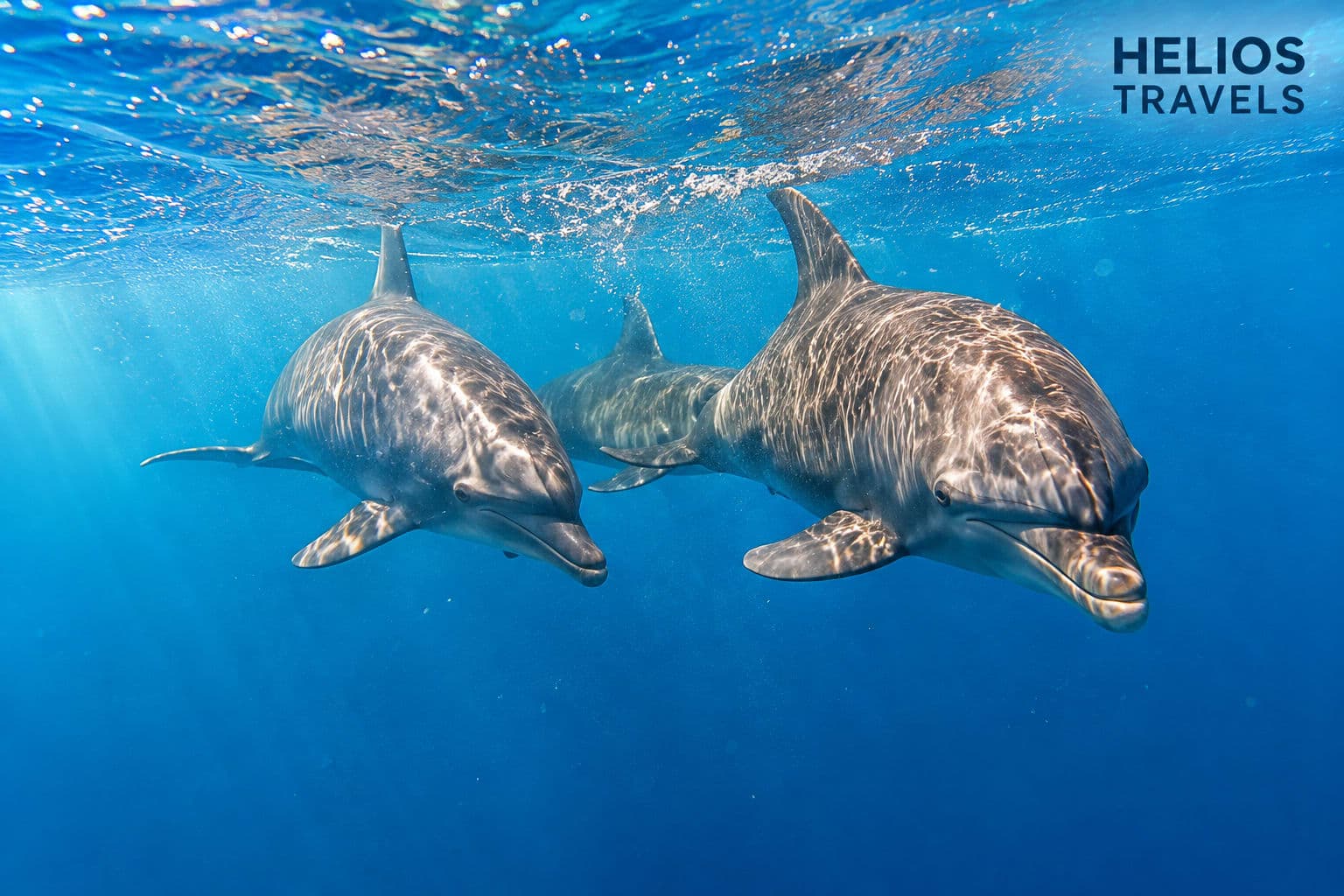
The name refers to Sha'ab El Erg, a large horseshoe-shaped reef north of Hurghada. A pod of spinner dolphins uses the sheltered lagoon inside the horseshoe as a resting place. That is the whole mechanism: it is not an attraction, an enclosure or a feeding station. It is a piece of reef that wild animals happen to find restful.

Everything good and everything frustrating about the trip follows from that single fact.

The part the posters leave out: they are resting

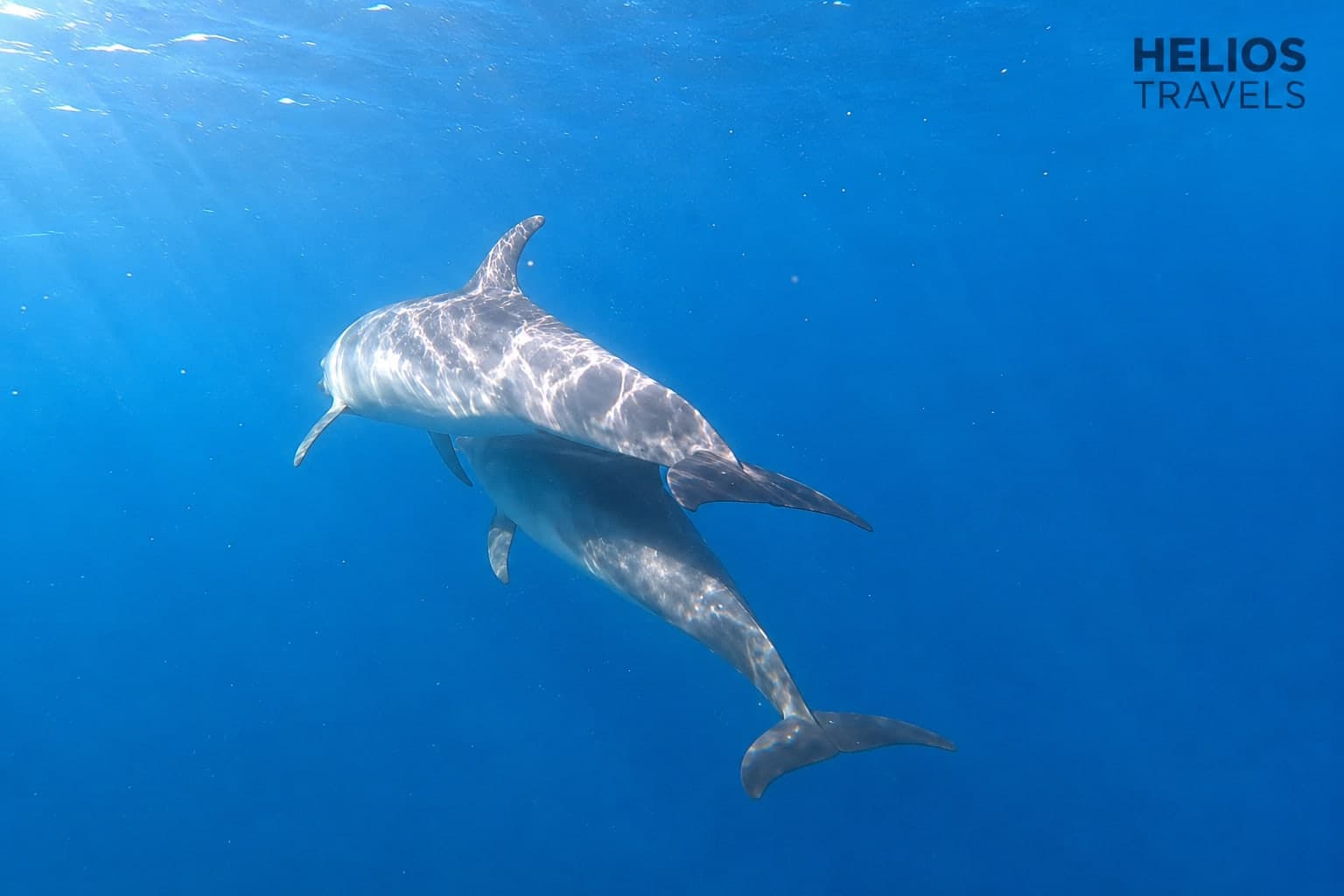
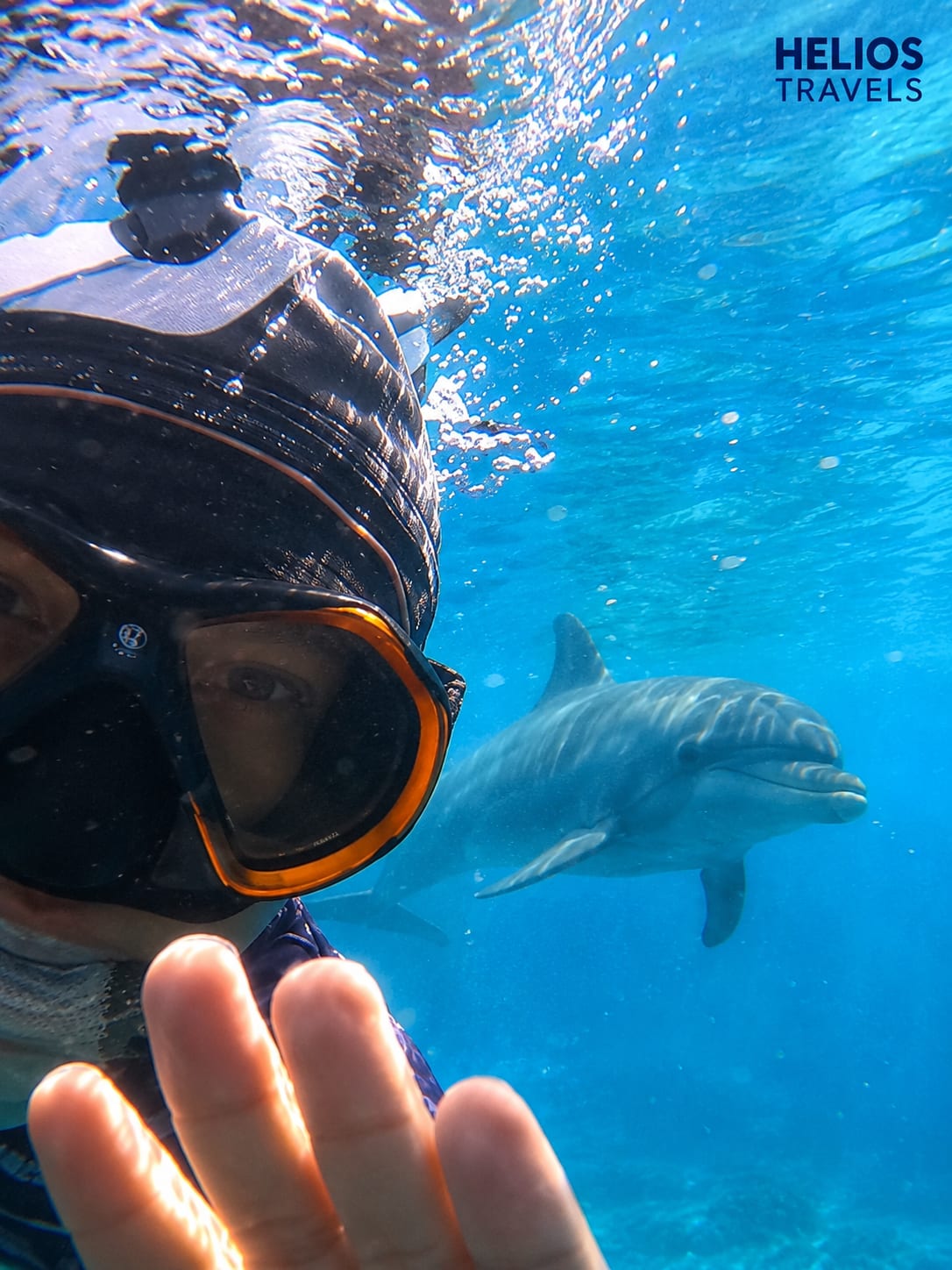
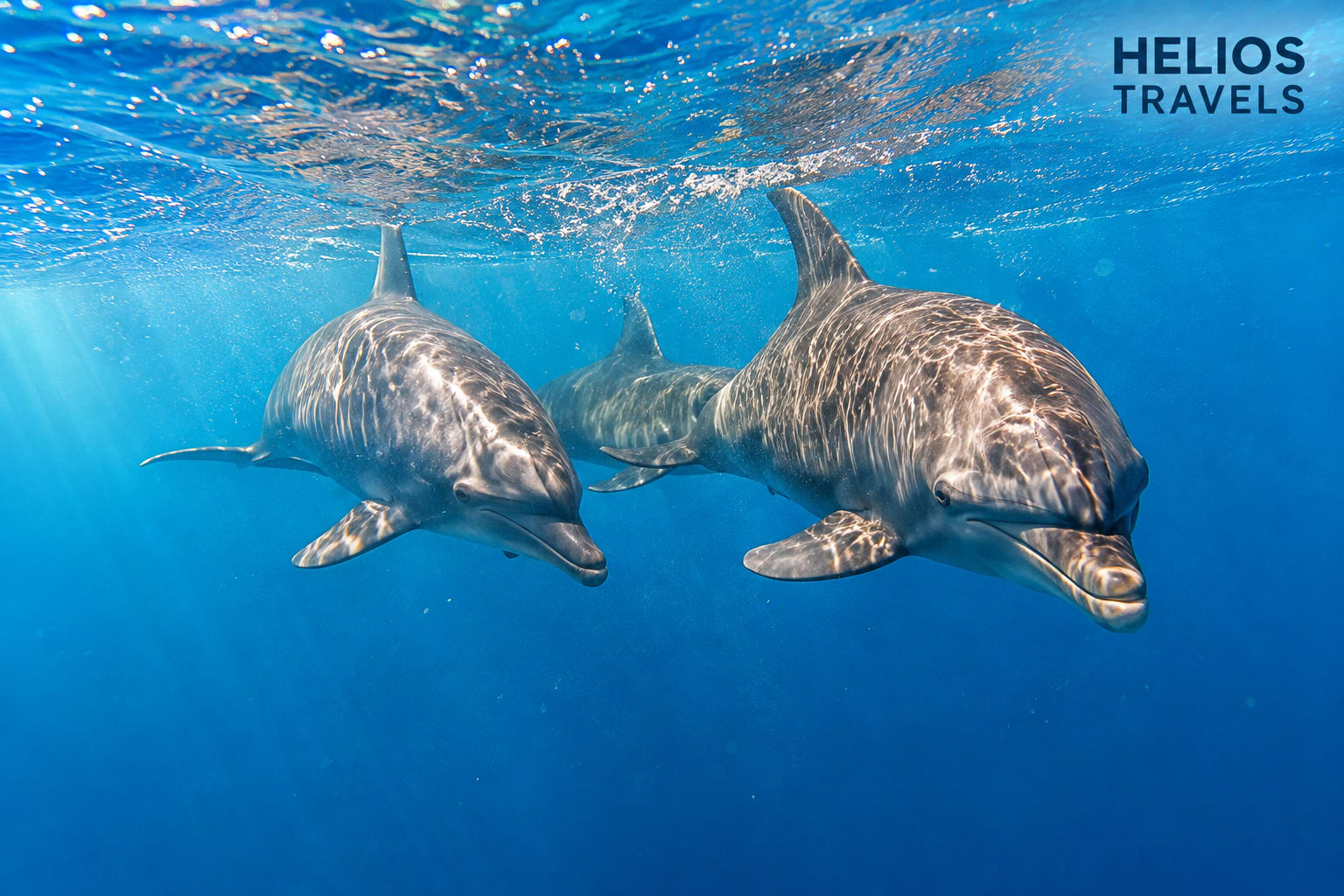
Spinner dolphins feed at night, in deep water, and come into shallow lagoons during the day to sleep. Dolphins sleep with half the brain at a time, which means a resting pod is doing something that looks like slow, aimless swimming, and is in fact recovery from a night of hunting.

Chasing them, swimming at them, or dropping thirty people into the middle of the pod interrupts that. Repeatedly interrupted rest is how a pod stops using a lagoon and leaves for good. Egyptian regulations restrict how boats may approach and where they may enter — those rules exist because the pressure here is real, and any operator who offers to get you closer than the rules allow is selling you the destruction of the thing you came to see.

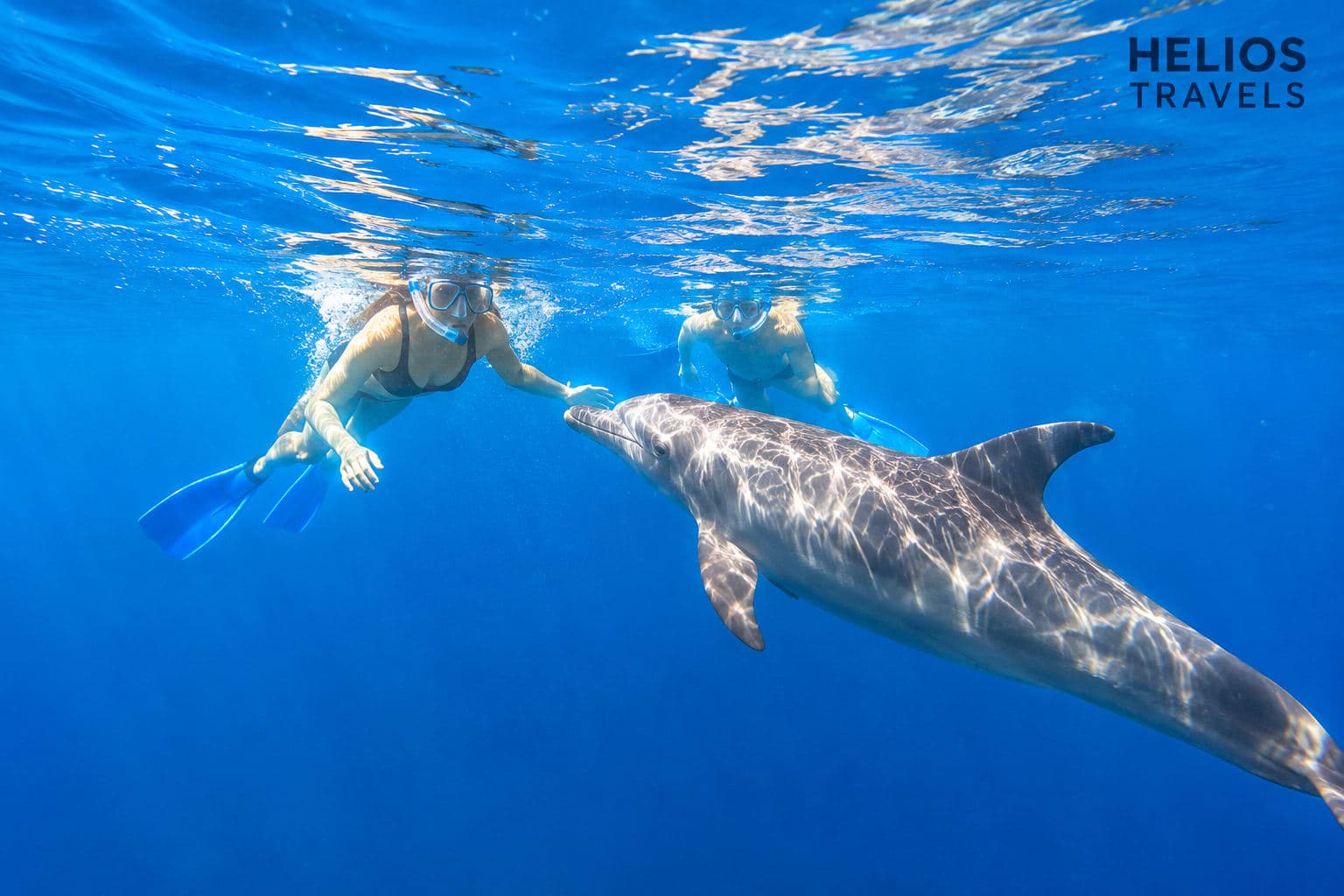
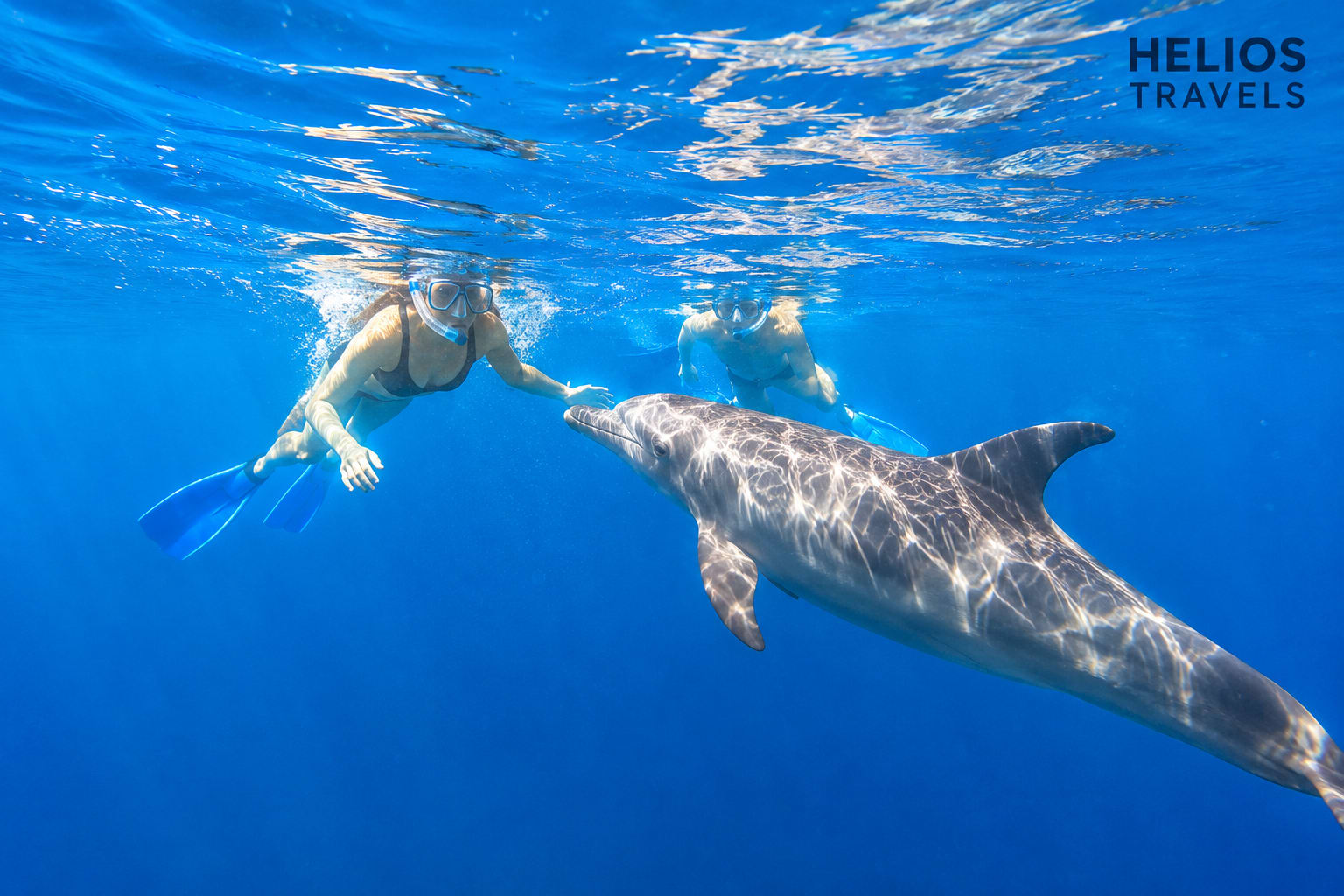
The right behaviour is unglamorous: the boat holds position outside the resting area, you enter the water quietly, you stay in a group, you let them come to you or you accept that they didn't.

A realistic timeline of the day

  • Pick-up, early. Between six and eight, depending on your hotel. Early is not a sales tactic — the sea is flat in the morning and the pod is more reliably present.
  • Out to the reef. Roughly an hour and a half by group boat, well under an hour by speedboat.
  • First snorkel stop. Usually on the outer reef, and often the best coral of the day. Do not skip this waiting for dolphins.
  • The dolphin approach. The crew looks for the pod. If they are there, the boat positions and you go in. This may last twenty minutes or it may last two hours.
  • Lunch on board, at anchor.
  • Second snorkel stop, then back. Home by late afternoon.
Snorkellers entering the water beside the boat at a Red Sea reef
Will you see dolphins?

Often — not always. Over a season, most boats find them most days. On any given day, no.

Wind moves them. Boat traffic moves them. Sometimes they are simply somewhere else, because they are wild animals with no obligation to your holiday. Any operator promising a guaranteed sighting is either lying or planning to harass the pod until something surfaces.

The way to enjoy this trip is to book it as a very good snorkelling day at a beautiful reef, with a strong chance of dolphins. Booked that way it almost never disappoints. Booked as a guaranteed dolphin encounter, it sometimes does.

How to behave in the water

  • Enter quietly. No jumping, no shouting, no splashing. Dolphins hear extraordinarily well and a noisy entry ends the encounter before it starts.
  • Never swim towards them. Move parallel, or float still. Approaching directly reads as a threat and the pod moves off.
  • Do not touch, and do not try to. It stresses them, it can transmit disease in both directions, and it is prohibited.
  • Stay with the group. Scattered swimmers surround a pod, which is exactly what makes them leave.
  • No flash. Obvious in principle, routinely forgotten in the moment.
  • If they leave, let them. The trip has ended well if the pod is still there tomorrow.

Which boat to take

This decision matters more here than on any other trip.

A large group boat is the cheapest way to go and the least likely to give you a good encounter: forty people cannot enter the water quietly, and the boat is slower to reposition when the pod moves.

A speedboat gets you there before the fleet, carries a handful of people, and can move immediately when conditions change. For dolphins specifically, this is the difference between a good day and a great one.

There is also a two-day version that stays out overnight on the boat. You wake up at the reef, and you get the early morning — the quietest, best hour, before the day boats arrive from Hurghada. For anyone serious about seeing dolphins properly, that is the trip.

Calm water inside the sheltered lagoon at Sha'ab El Erg

The rest of the reef, which is the actual insurance policy

If the pod isn't there, the day is not wasted — but only if you booked a trip that treats the reef as more than a waiting room.

Sha'ab El Erg is a large, healthy horseshoe of coral in its own right. The outer wall has good hard-coral cover and the drop-off draws the schooling fish; the lagoon side is shallow, bright and easy, with seagrass beds along the sandy edges. Those seagrass beds are worth knowing about: they are where green turtles feed, and turtle sightings here are common enough to be a genuine expectation rather than a lottery. Guests regularly come back talking about the turtle rather than the dolphins.

You will also, reliably, see the ordinary residents that make any Red Sea reef worth the crossing — parrotfish grinding at the coral, butterflyfish in pairs, clouds of anthias over the hard coral, blue-spotted rays on the sand, and the occasional trumpetfish hanging vertically and pretending to be a stick.

Ask, when you book, how many snorkel stops the trip includes. A programme with two or three proper stops is a good day regardless of what the dolphins do. A programme that is one long dolphin search with lunch attached has staked the entire day on wild animals, and that is a bet you will sometimes lose.

The best months for it

The pod is resident year-round — this is not a migration you can miss. What changes is the sea and the crowding.

April to June and September to early November are the sweet spots: settled water, comfortable air temperature, and long calm mornings. Midsummer works but is punishing on deck between eleven and three. December to February gives you the clearest visibility of the year and the fewest boats — bring or hire a wetsuit, because 22 °C water and repeated entries add up.

Whatever the month, the pattern is the same and it is worth repeating: the dolphins are calmest and the sea flattest early. The first boats at the reef get the best encounter, and the difference is not marginal. If you can only choose one thing about this trip, choose the earliest departure.

Practical notes

  • Take seasickness tablets before boarding if you are prone — an hour before, not when you feel it.
  • Rash vest, not just sunscreen. You will be in and out of the water all day.
  • Bring a towel and a dry bag. Boat towels are not a given.
  • Cameras: forget the perfect shot. Dolphins underwater at snorkelling depth defeat most phone housings. Watch them instead — this is genuinely the better decision.
  • Small children: the reef stops are fine; the dolphin entry is in open water with no bottom in sight. Judge honestly.

Go with the right expectations and Sha'ab El Erg is one of the best days you can have on the Red Sea. Go expecting a guaranteed performance and you have booked the wrong thing — and, worse, you are asking for the kind of behaviour that will eventually empty that lagoon.