The five things to find
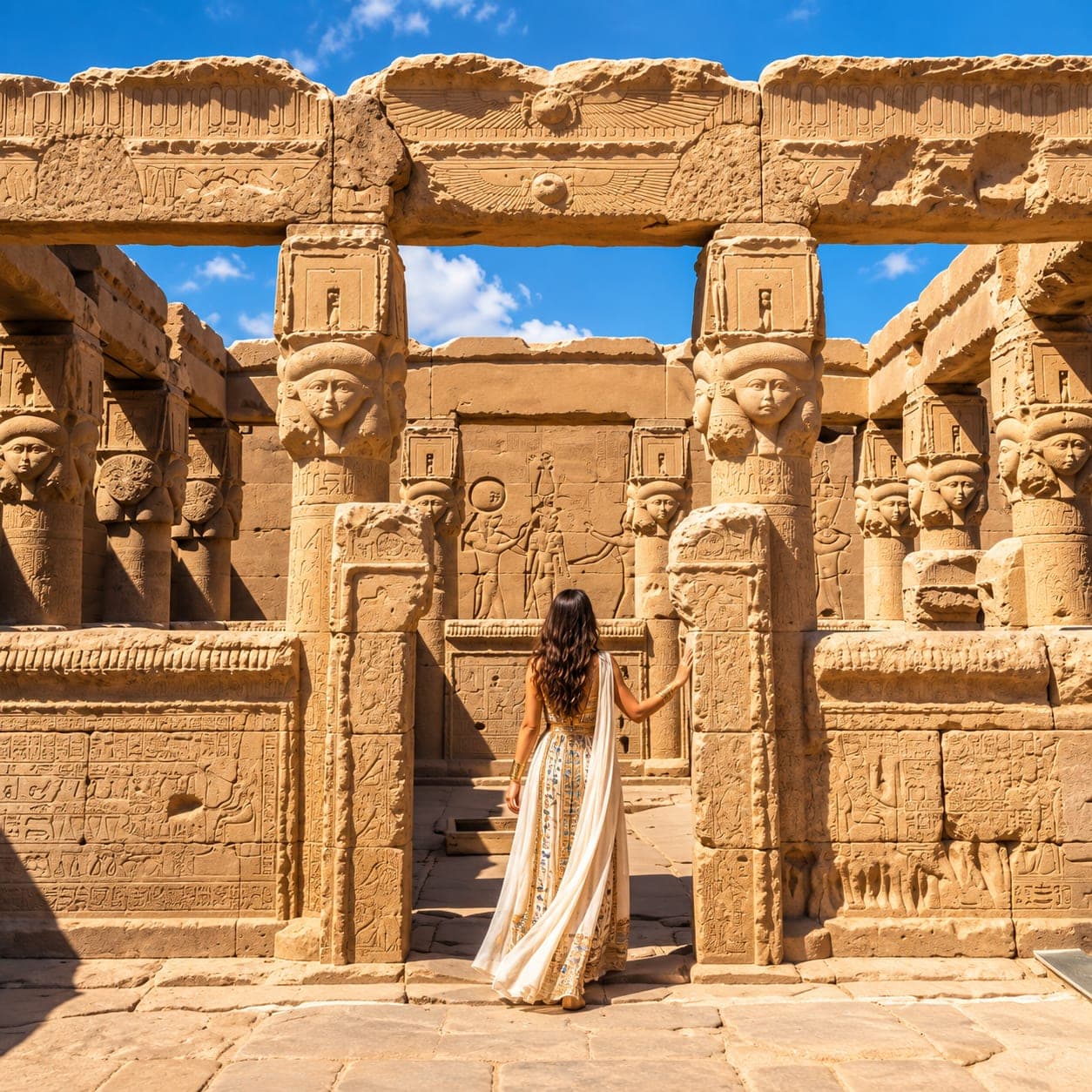
1. The Hathor columns. Twenty-four of them in the hypostyle hall, each capital carved on all four faces with Hathor's head — a human face with cow's ears. Most were defaced in later centuries, and the damage is part of the history rather than a blemish on it.
2. The zodiac. There is a famous circular zodiac ceiling in a chapel on the roof. Be aware that the one in place is a cast — the original was cut out and taken to Paris in the 1820s and is in the Louvre. Knowing that in advance prevents a small deflation on the day.
3. The roof. You can go up, and most groups do not. Chapels dedicated to the Osiris mysteries, a view over the palm and sugarcane of the flood plain, and the best light in the building.
4. The crypts. Narrow underground chambers with superb, tightly carved relief. One of these carries the relief popularly called the "Dendera light" — a lotus flower with a snake emerging, supported by a djed pillar. It is a standard creation image found elsewhere in Egyptian art; it is not a depiction of electrical equipment, and the guides who tell you otherwise are enjoying themselves.
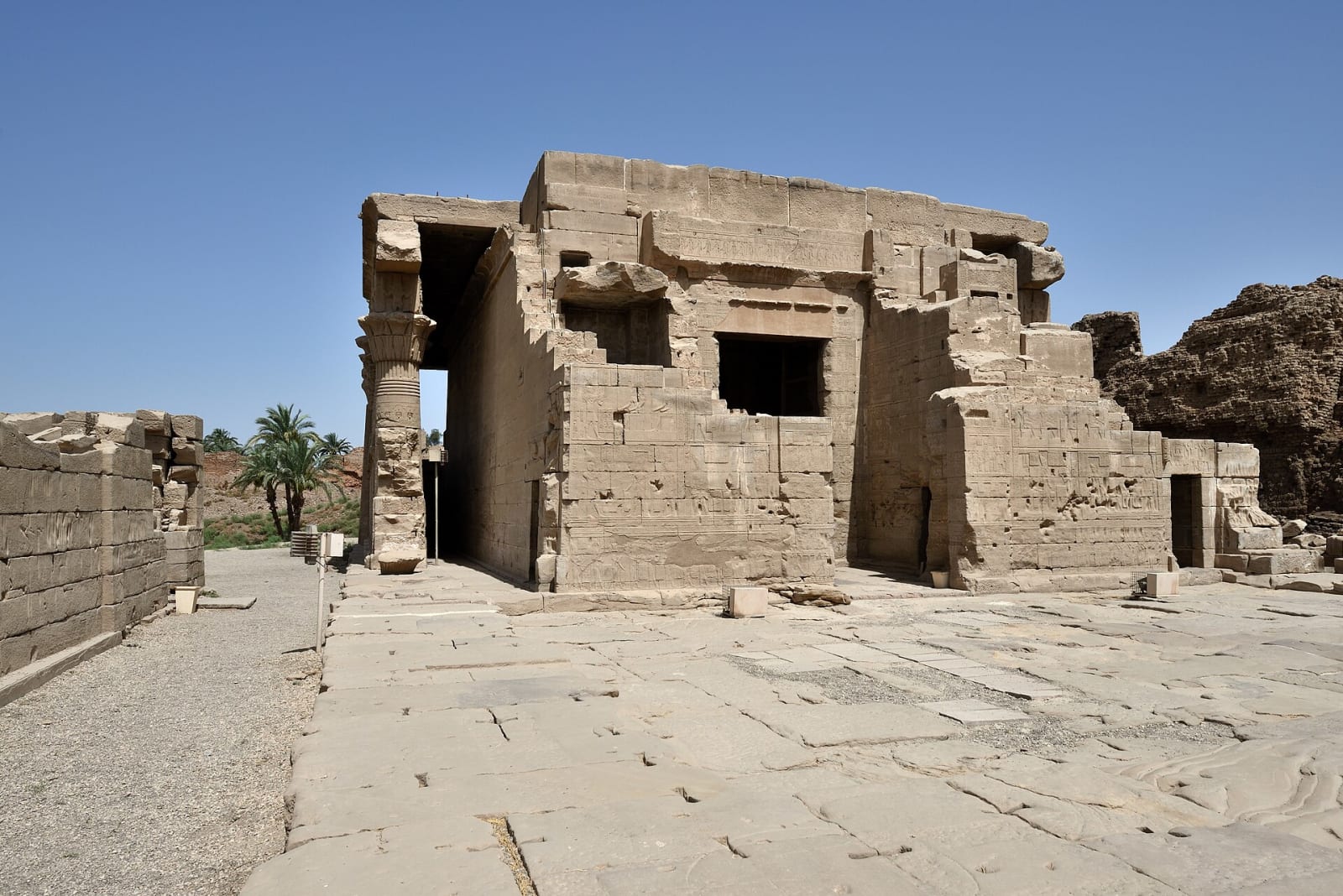
5. Cleopatra on the back wall. On the exterior rear wall is a large relief of Cleopatra VII with her son Caesarion, making offerings. It is one of very few ancient depictions of her, and it is stylised rather than a likeness — but she stood here, and it is the closest most visitors will get.
How it compares to Karnak
They are not competing, and if you have one day in Luxor you should see Karnak. Dendera is the second-day answer, and it is better than a second day of anything else within reach for three reasons.
- Colour. Karnak is monumental and largely bare stone. Dendera is paint.
- Enclosure. Karnak's hypostyle hall lost its roof. Dendera's did not, so you experience the interior as designed — dim, dense, lit from above.
- Quiet. You can stand in the middle of the hall at Dendera and hear nothing. That is not possible at Karnak at any hour.
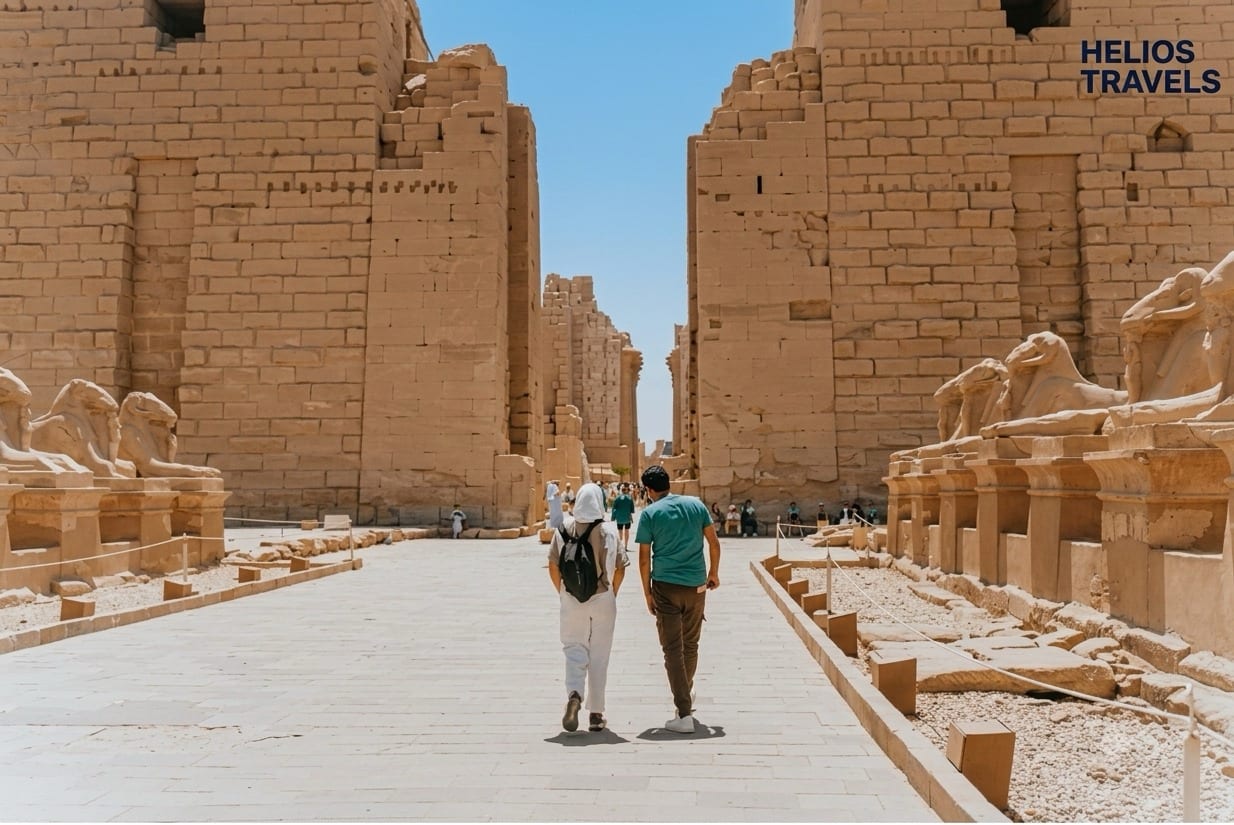
The Great Hypostyle Hall at Karnak, roofless and monumental
Pairing it with Abydos
Dendera is often sold together with Abydos, another hour and a half further north, and the pairing makes a long but excellent day.
Abydos is the older place by far — the cult centre of Osiris, a pilgrimage site for thousands of years, and home to the temple of Seti I with relief carving of a refinement that arguably exceeds anything else surviving. It also holds the Abydos king list, a wall recording the names of Seti's predecessors, which is one of the documents modern Egyptology was built on.
Done together it is a twelve-hour day from Luxor and longer from the Red Sea. Done as a three-day Luxor trip it is comfortable. If you can only do one, and colour is what moves you, take Dendera; if carving and history are what move you, take Abydos.
Who built it, and why it looks different
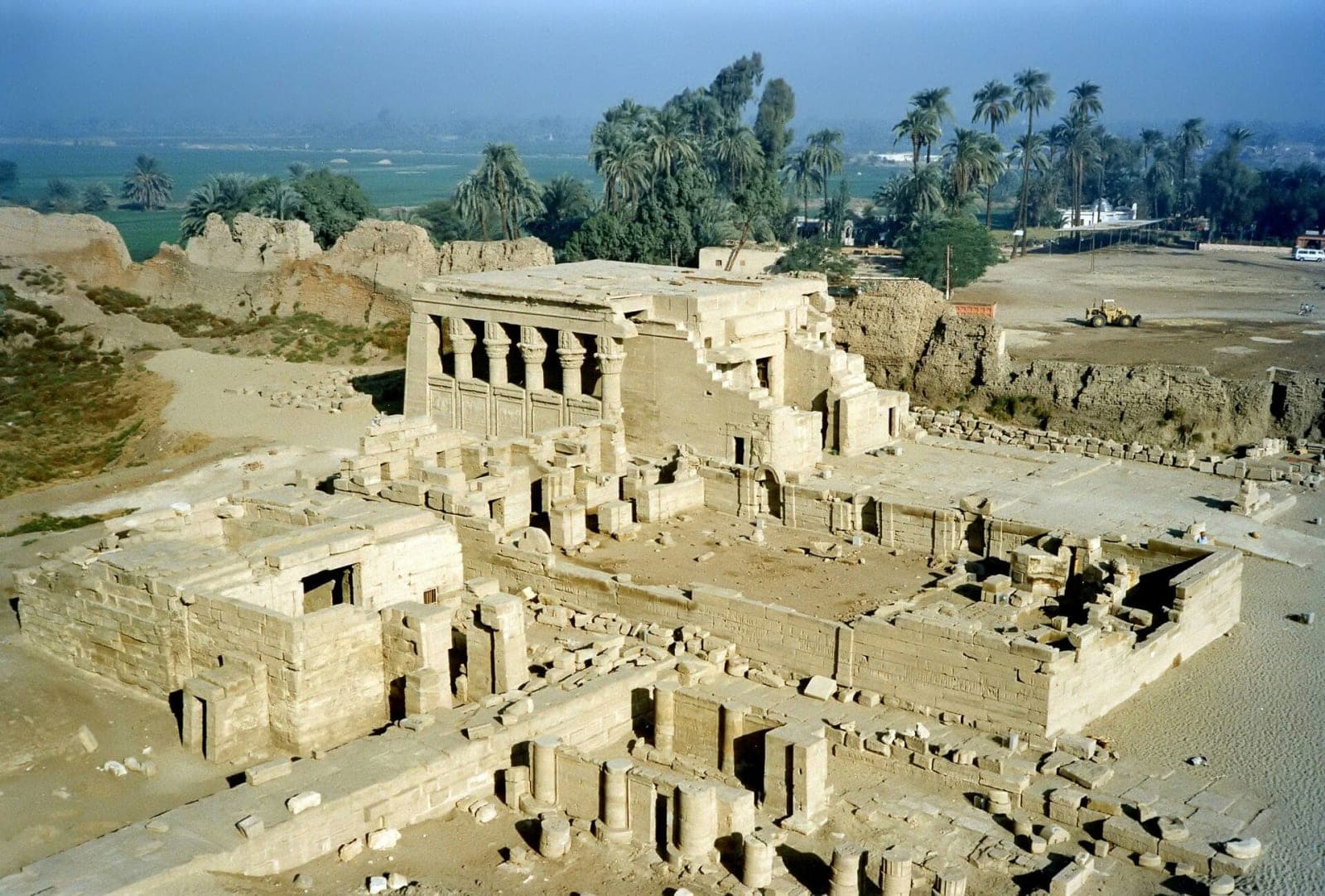
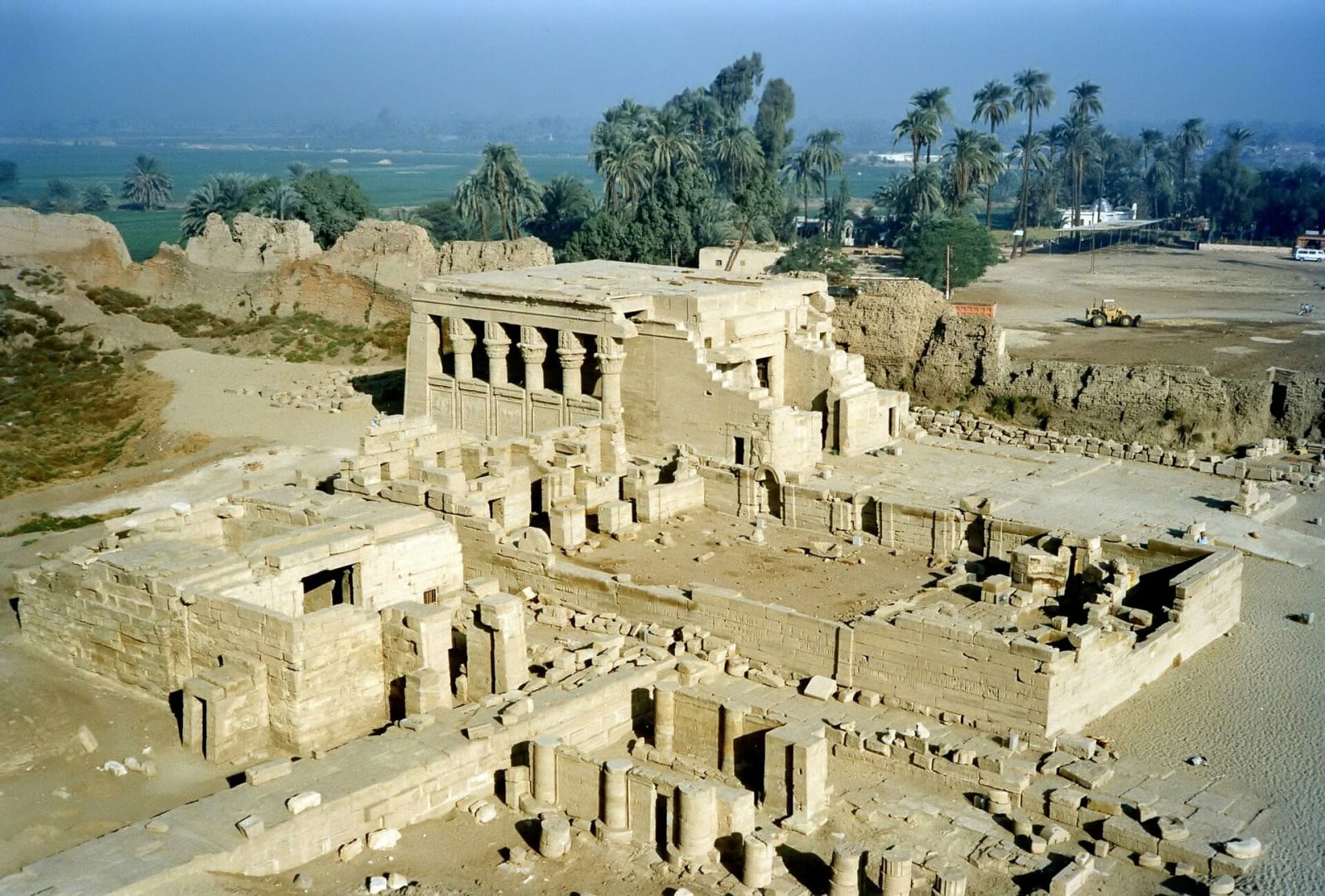
Dendera puzzles people who arrive from the west bank, because it does not look like the Egypt they have just seen. The reason is that it was built by Greeks and finished by Romans, in Egyptian.
After Alexander, Egypt was ruled for three centuries by the Ptolemies — a Macedonian Greek dynasty who governed as pharaohs, were crowned as pharaohs, and built temples in the pharaonic style because that was the language of legitimacy. Rome took over in 30 BC and carried on doing the same thing: Roman emperors appear on Egyptian temple walls dressed as pharaohs, offering to Egyptian gods, in hieroglyphs.
So the figures at Dendera are stockier and softer than the sharp New Kingdom line, the carving is deeper, and the decoration is denser — every surface covered, where Karnak leaves stone breathing. It is Egyptian art after a thousand years of change, made by people for whom it was already ancient.
That is worth carrying in with you, because the instinct is to read "late" as "lesser". It is not lesser. It is a civilisation still building at full strength within a century of the end.
Practical notes
- Go in the morning. The roof chapels and the exterior reliefs need direct light, and the drive is more pleasant before the heat.
- Bring a torch, or use your phone. The crypts are dark and the guides' lights are not always on offer.
- Look up constantly. The ceiling is the point, and neck ache is the sign of a visit done properly.
- Allow two hours minimum. Ninety minutes covers the hall and the roof at a rush; two and a half is comfortable.
- Half-day versions exist from Luxor, which is the right choice if you are combining it with the east bank rather than making it the whole day.
- It is not a Nile cruise stop. Cruises between Luxor and Aswan run south; Dendera is north. If you want it, it is a separate excursion.
Go once and you will understand why we keep pushing it. Dendera is the site people describe afterwards when someone asks what surprised them about Egypt — not the thing they came for, and the thing they remember.
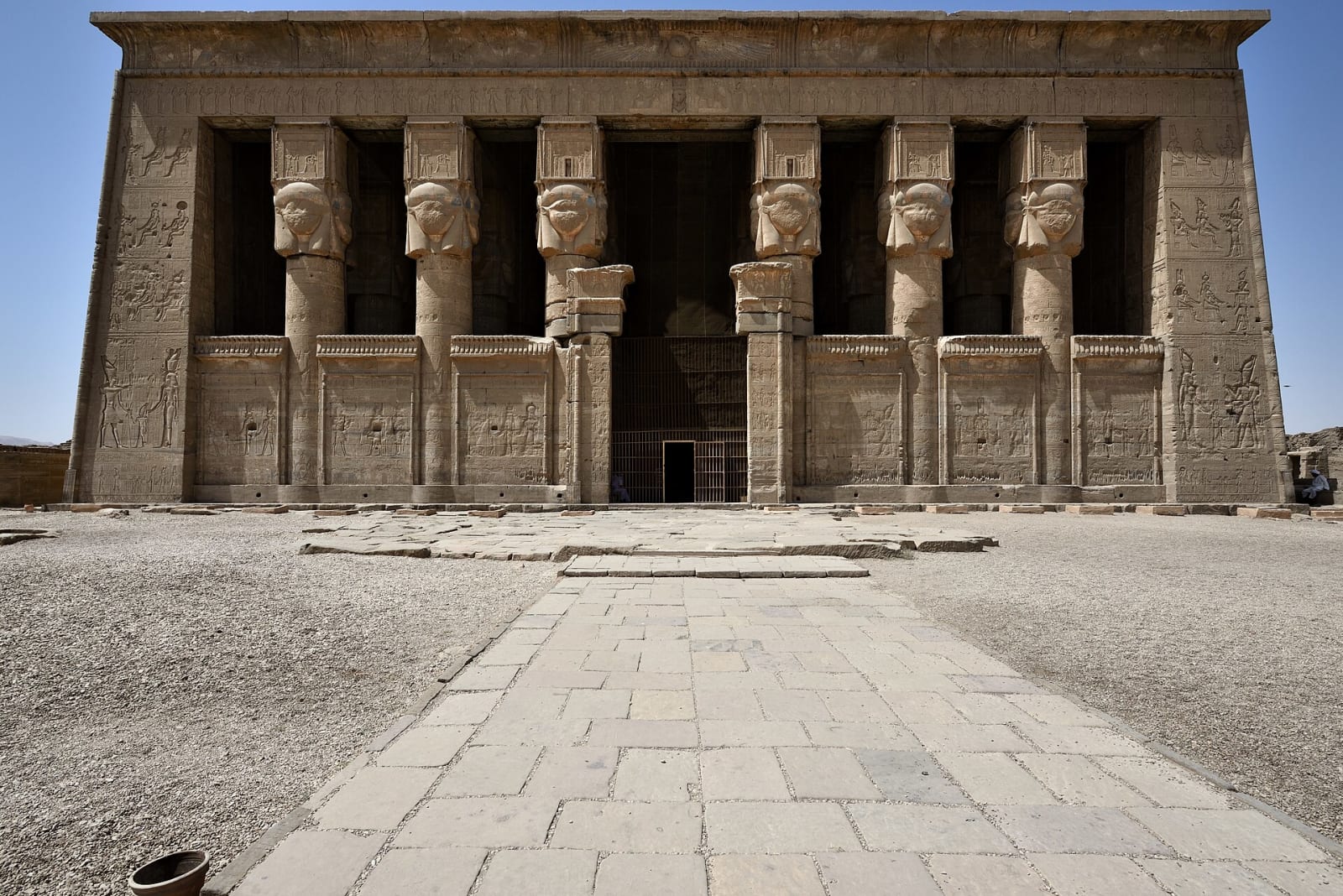
Carved relief and colour on the walls of the Temple of Hathor at Dendera