← Back to blog index

Destinations · Sep 9, 2026

Two days in Cairo, properly

Group the days by geography, not by interest. One crossing of the city instead of four.
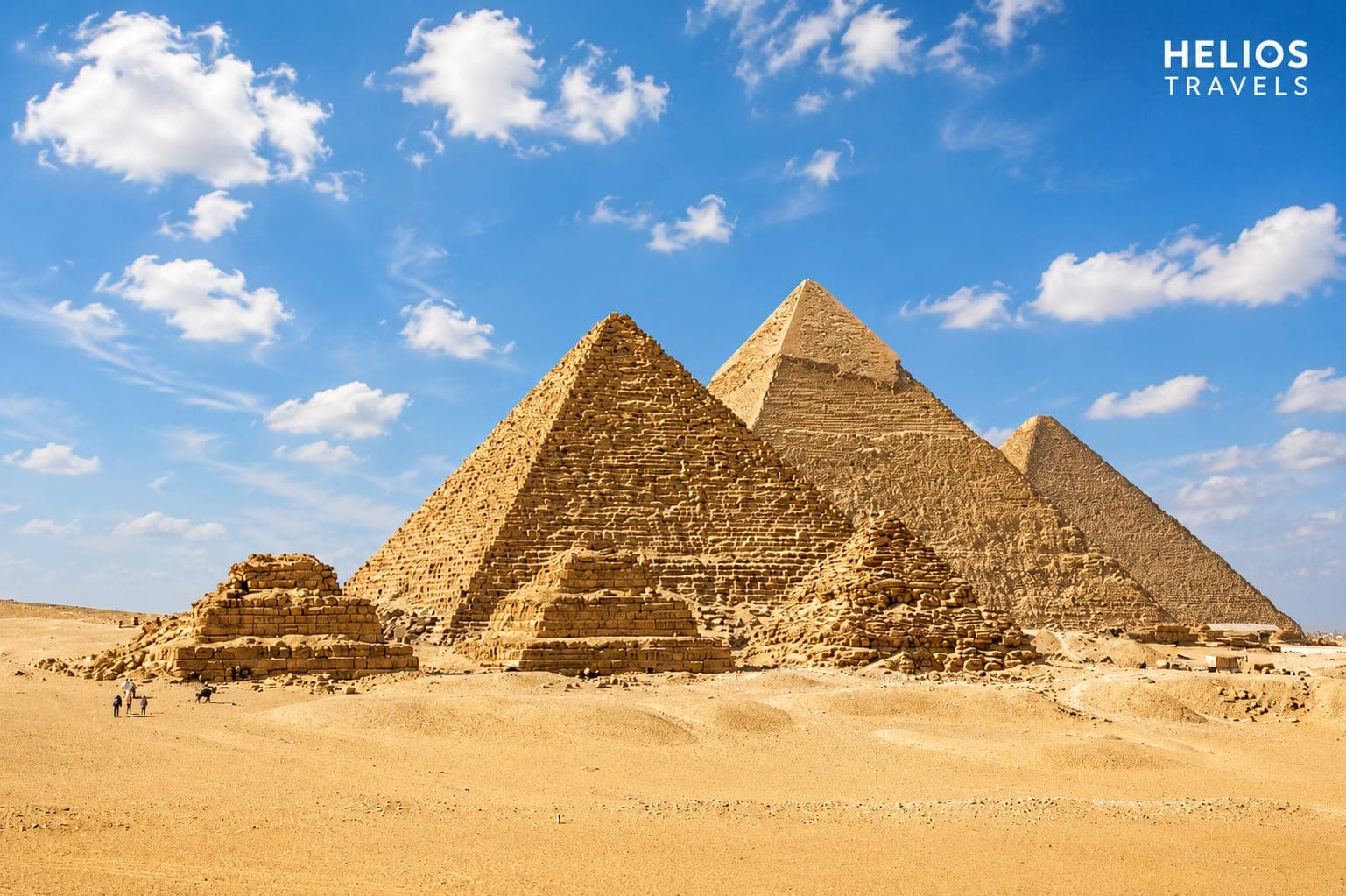
The three pyramids of Giza seen across the desert plateau

Cairo is twenty-two million people, four thousand years of layers, and a traffic system that turns every crossing of the city into forty-five minutes you did not plan for. One day forces you to choose badly, while tired.

Two days is the smallest amount of time in which Cairo stops being a rush and becomes a place. Here is how to spend them.
The Giza pyramids seen across the desert plateau

The Giza pyramids seen across the desert plateau

The organising principle: group by geography, not by interest

Cairo's sights are not near each other, and the cost of moving between them is the single biggest constraint on a two-day plan. Anything that crosses the city mid-morning or at five in the afternoon will cost you an hour.

So do not build the days around themes — "ancient day" and "Islamic day" sounds tidy and produces four crossings. Build them around west and east:

  • Day one, west: Giza plateau and the Grand Egyptian Museum. They are two kilometres apart and explain each other.
  • Day two, south or east: either Saqqara, Dahshur and Memphis (south, all desert-edge, no city traffic), or Islamic and Coptic Cairo (east, walkable in clusters).

That is one crossing across the whole trip, not four.

Day one: Giza and the GEM

Plateau at opening. Two hours. The Great Pyramid up close first — scale only registers at the base — then the panorama point where all three line up, then the Sphinx through the valley temple. Buy any interior ticket at the entrance; they are separate everywhere.

Lunch with a view of the plateau, rather than driving back into the city for it. Moving in Cairo at midday is time you cannot recover.

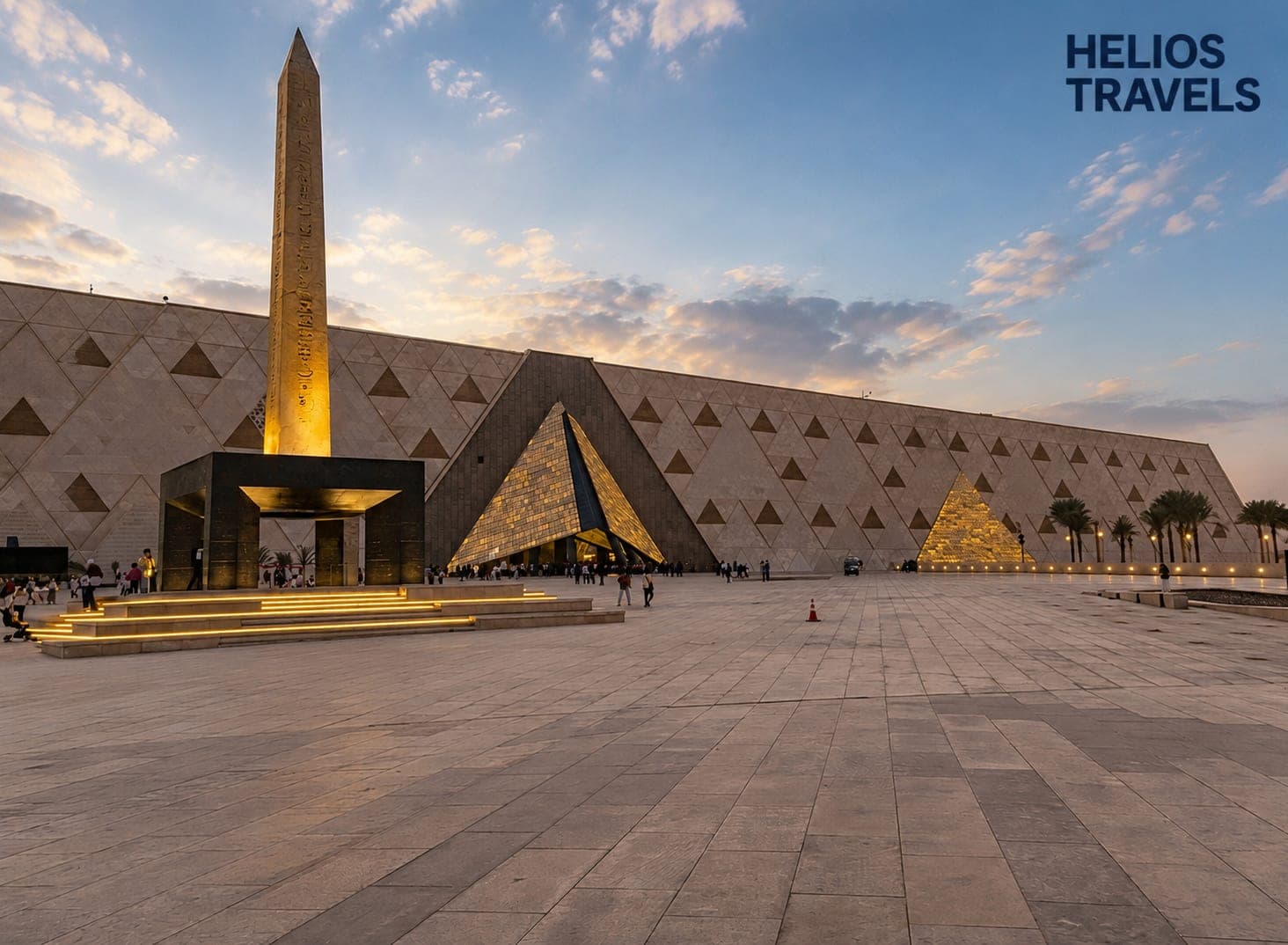
The Grand Egyptian Museum, three hours minimum. The atrium and the colossal Ramesses II, the Grand Staircase, the Tutankhamun galleries, and Khufu's solar boat if energy holds. Do not try to cover it — pick four things and look at them properly.

Evening: stay west or go in? If you are sleeping near the pyramids, a rooftop dinner with the plateau lit is a fine end. If you are staying centrally, the drive back at seven is easier than at five.
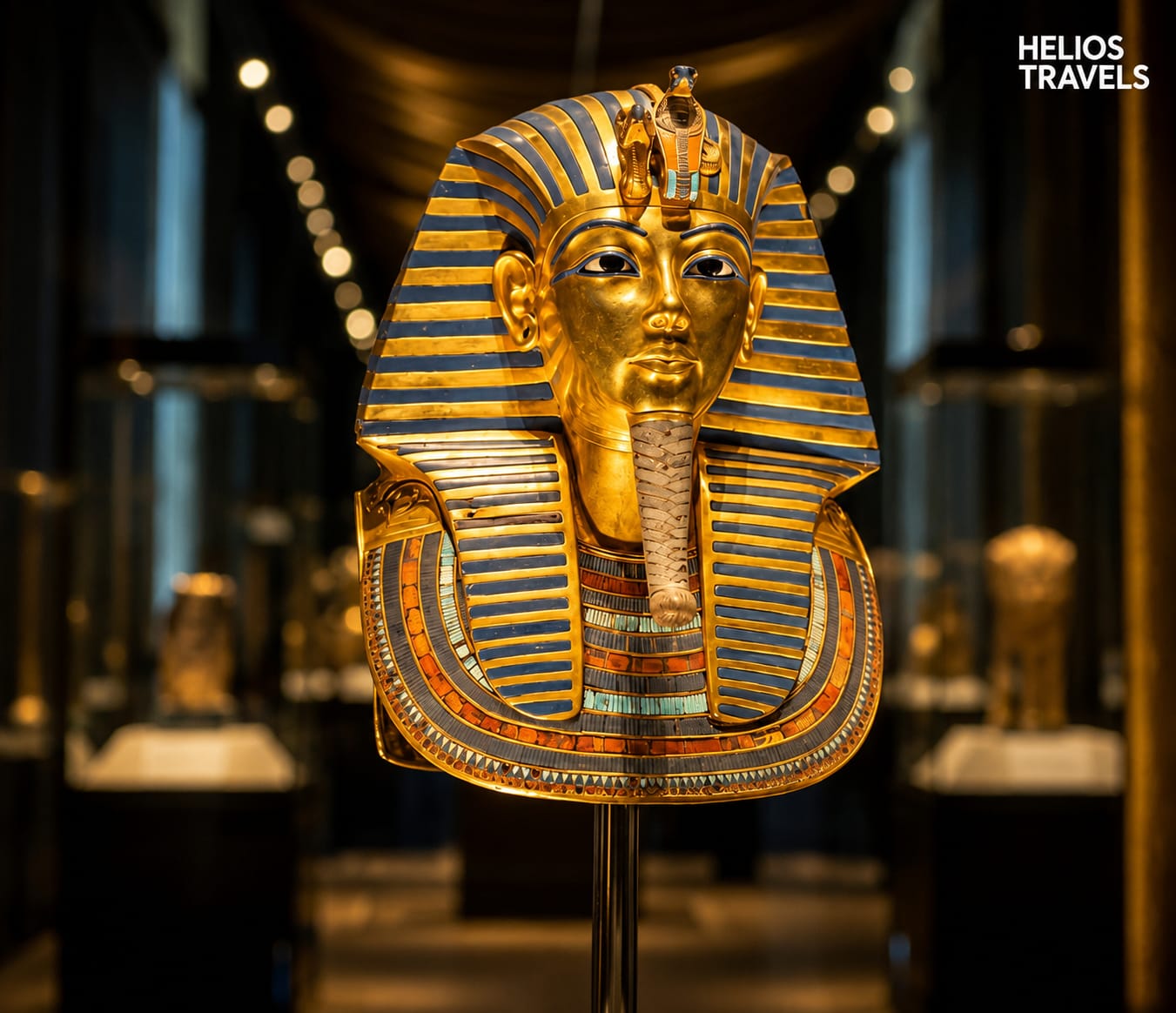
The atrium of the Grand Egyptian Museum at Giza
The atrium of the Grand Egyptian Museum at Giza
Day two, option A: Saqqara, Dahshur and Memphis

This is the choice we recommend for a first visit, and the one most two-day itineraries leave out.

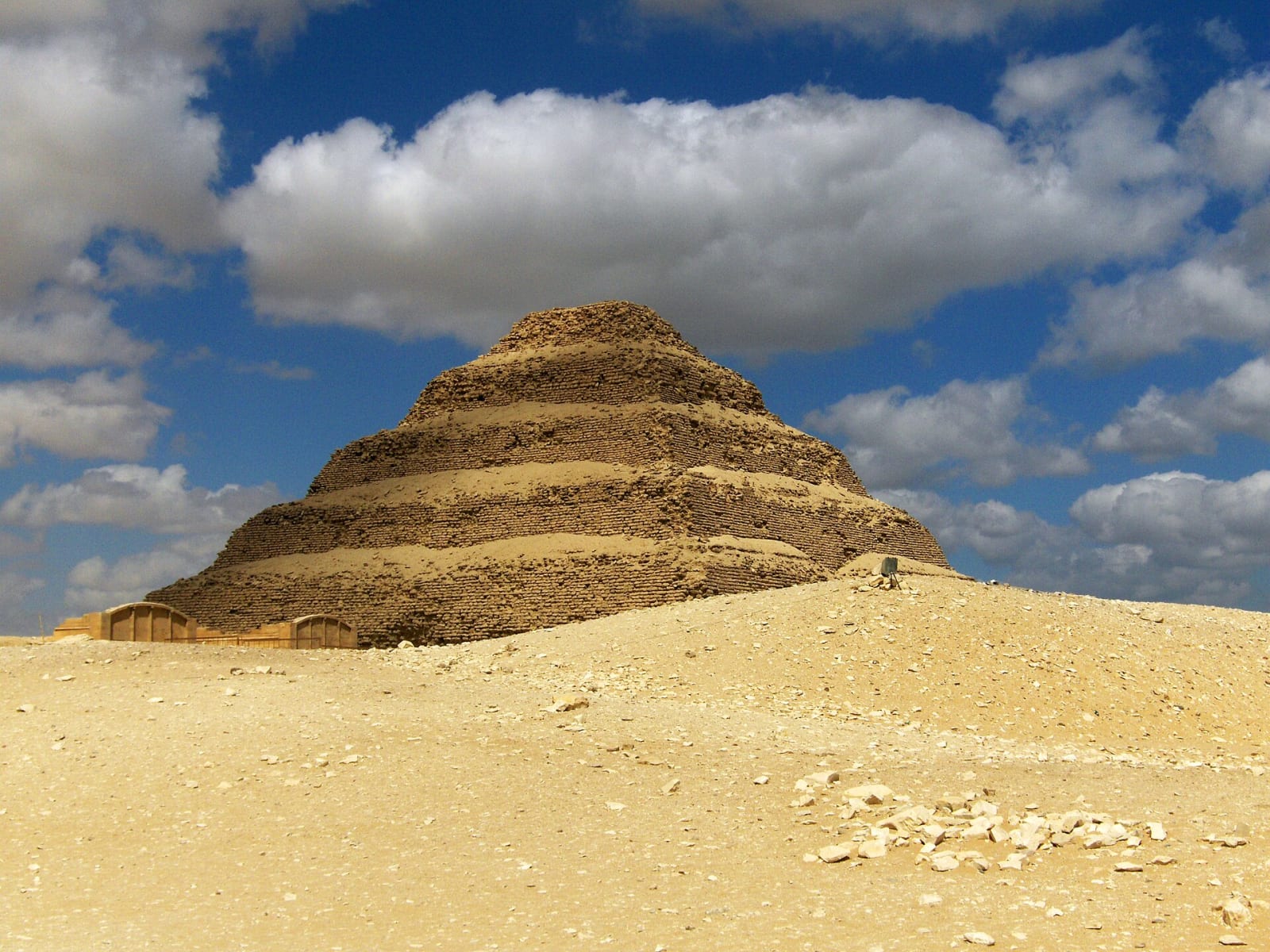
Saqqara is where pyramids begin. Djoser's step pyramid is the first monumental stone building anywhere, designed by Imhotep, and standing in front of it after a day at Giza reorganises everything you saw yesterday — this is the prototype, and Giza is the refinement. The nearby mastaba tombs have some of the liveliest relief in Egypt: markets, cattle, fishing, a man being treated by a doctor.

Dahshur is the engineering. The Bent Pyramid changes angle halfway up because the builders realised mid-construction that the original slope would not hold, and the Red Pyramid beside it is what they built once they knew. You can see a problem being solved, in stone, across two buildings. It is also usually almost empty, and you can go inside the Red Pyramid with far less queue than at Giza.

Memphis, the vanished capital, is a small open-air museum with a colossal recumbent Ramesses II. Half an hour, on the way past.

The whole day stays on the desert edge, south of the city. No traffic.

The step pyramid of Djoser at Saqqara, the first monumental stone building

The step pyramid of Djoser at Saqqara, the first monumental stone building

Day two, option B: Islamic and Coptic Cairo

Take this if you have seen pyramids elsewhere, or if the living city interests you more than the ancient one.

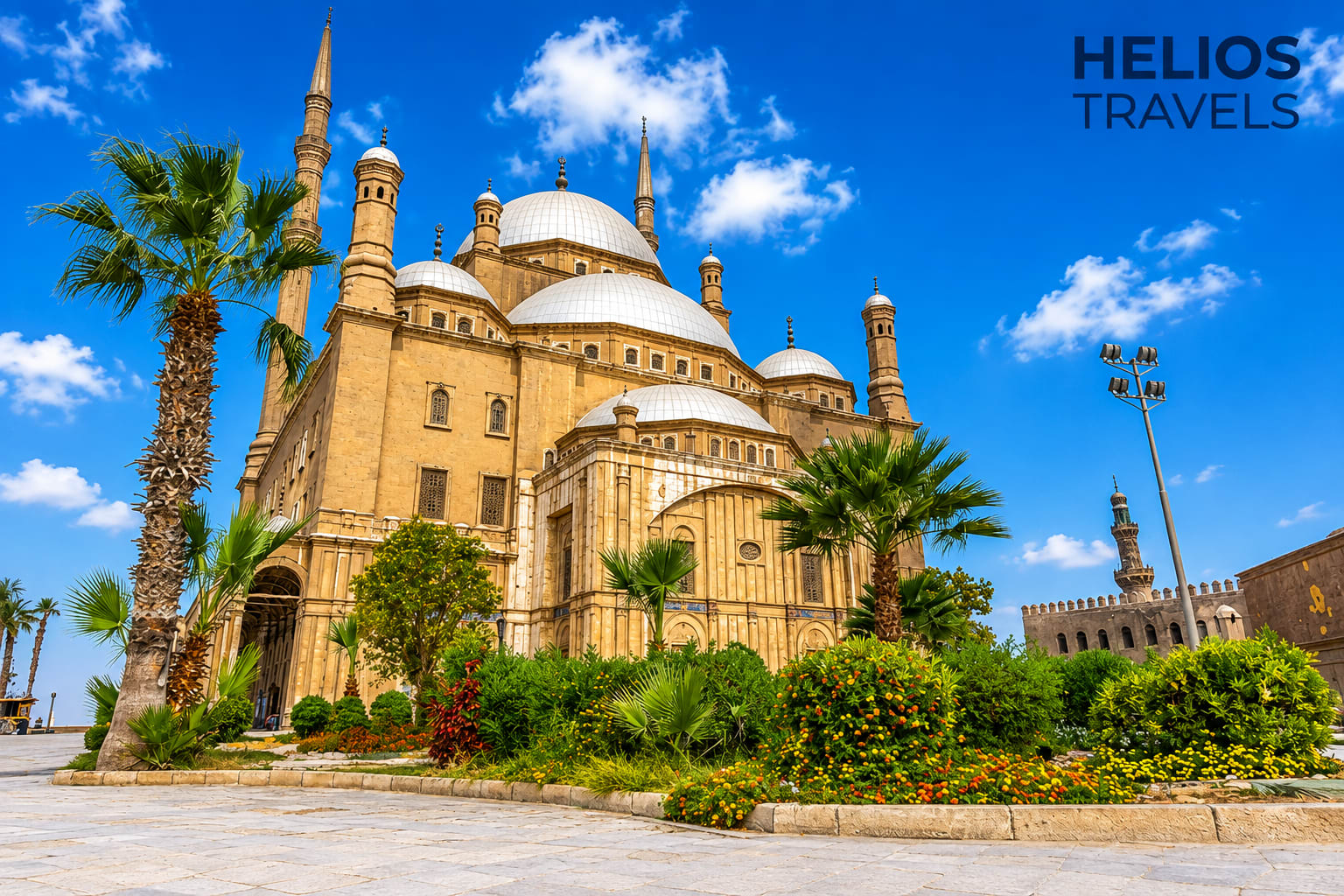
The Citadel first, for the Alabaster Mosque and the view over the whole city with the pyramids on the horizon. Then down into Al-Muizz Street, a thousand years of Fatimid, Mamluk and Ottoman architecture along one pedestrian road, best in the late afternoon when the lamps come on.

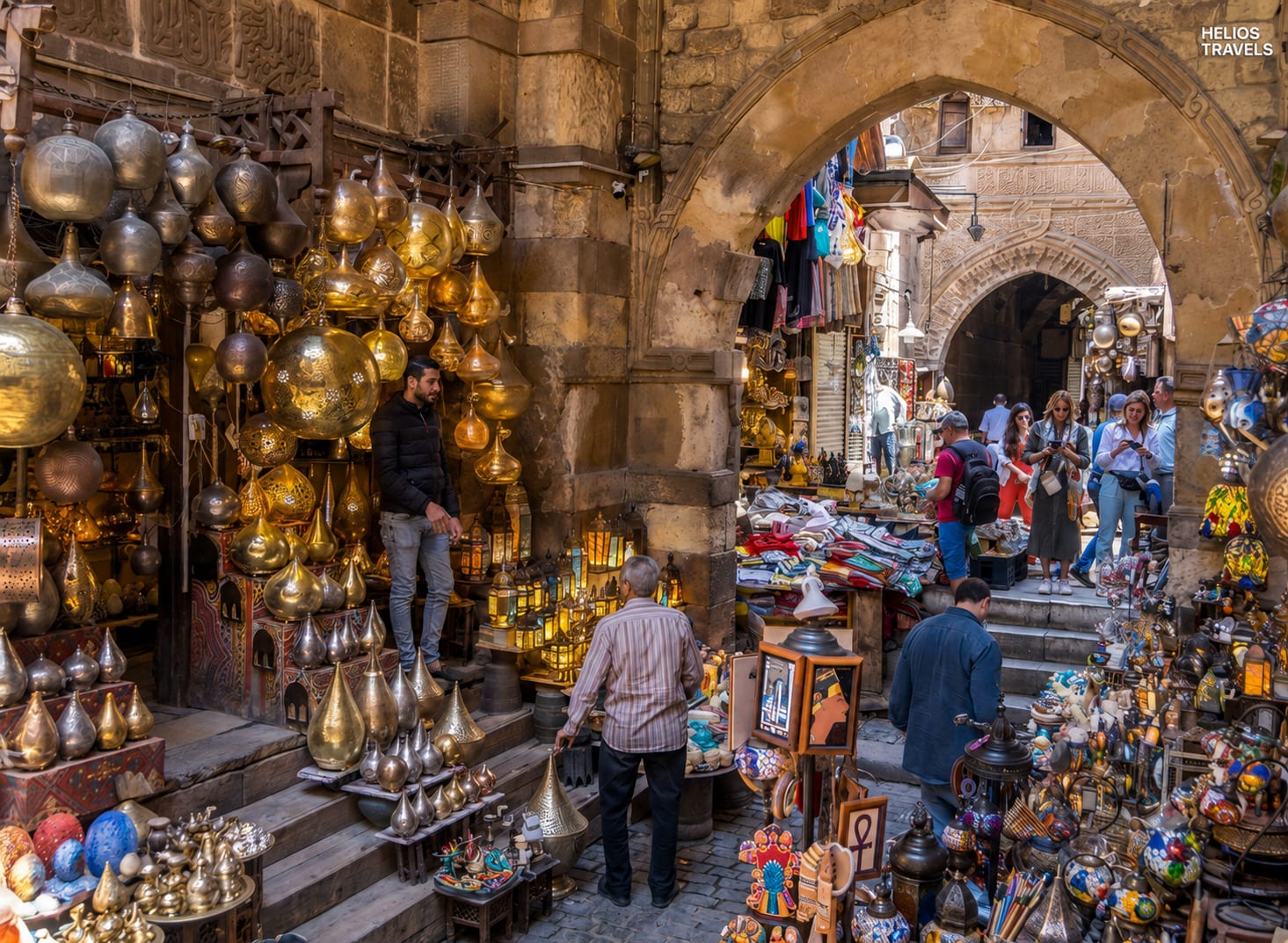
Khan el-Khalili adjoins it, and is more enjoyable if you treat it as a place to walk and drink tea than as a place to buy things.

Coptic Cairo is a short drive south: the Hanging Church, the Ben Ezra Synagogue, and a set of narrow lanes that feel centuries removed from the traffic outside. It is the quietest hour available in central Cairo.

Realistically this is a full day and you will not fit all four properly. Pick three.

Lanterns and shopfronts in the covered lanes of Khan el-Khalili

Lanterns and shopfronts in the covered lanes of Khan el-Khalili

Where to stay, which matters more than it sounds

Giza, with a pyramid view. You wake up to them, you are ten minutes from the plateau gate at opening, and the evening view is genuinely remarkable. The trade-off is that you are outside the city — dinner options are hotel-bound and getting into the centre is a project.

Zamalek or Garden City. Leafy, central, on the island or the riverbank, with actual restaurants and a walkable evening. The trade-off is a longer run to Giza in the morning, which on day one means leaving earlier than you want to.

Downtown. Cheapest and most atmospheric, noisiest, and closest to Islamic Cairo.

For a two-day trip built as above, Giza wins on day one and loses on the evening. If you are only sleeping two nights, we would take the pyramid view and accept hotel dinners — you can eat well anywhere, and you can only wake up to that from one place.

Getting there from the Red Sea

Two days in Cairo from Hurghada exists in both road and flying versions, and the calculation is different from the one-day trip.

On a one-day trip the flight is worth it, because twelve hours of driving for five hours in Cairo is a bad ratio and flying fixes it. On a two-day trip the road version already works — six hours out on the first morning and six back on the last afternoon, with a full day and a half in between, is a reasonable shape. The flight still buys you most of a morning at each end, and whether that is worth roughly triple depends on how much you value the extra half-day.

There is also a two-day version with a late start, which trades the first morning for an evening arrival, a night in the city, and two proper days after it. If the early pick-up is the thing you dread, that is the one to ask about.

Practical notes

  • Budget 45 minutes for any crossing of the city, and more between four and seven.
  • Cash for tickets and extras. Pyramid interiors and camera permits are separate at every site and card machines are unreliable.
  • Friday morning is quiet on the roads and busy at mosques; Sunday is a working day.
  • The touts at Giza are relentless. Firm, friendly, keep walking. Never accept anything described as free.
  • Closed shoes both days. Sand and rubble at Giza, uneven stone in the old city.
  • Do not add the Egyptian Museum at Tahrir to a two-day plan unless you drop something else. It deserves half a day of its own, and after the GEM it is a different experience rather than a repeat.

The Citadel of Cairo with the Alabaster Mosque above the city

The Citadel of Cairo with the Alabaster Mosque above the city

Book what you just read about

Tours from this article — private, with a licensed guide, and priced per person.

Related tours you can book