
← Back to blog index

Culture · Sep 9, 2026

The Bedouin village visit: what it is and what it isn't

A real community that adapted to receiving visitors, because visitors are one of the few incomes the desert now offers.
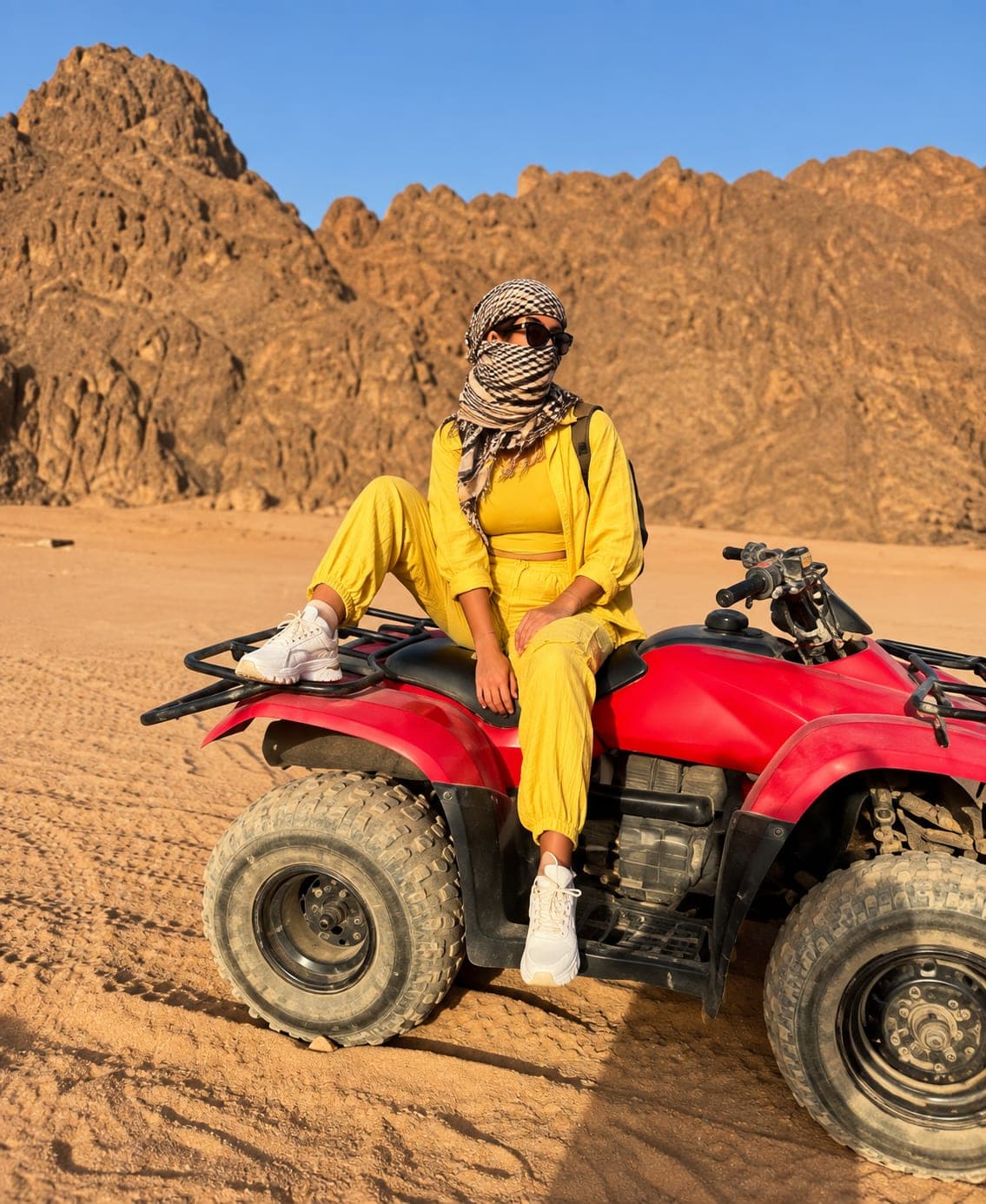
The Eastern Desert behind Hurghada in late afternoon light

Every desert safari from Hurghada includes a stop at a "Bedouin village", and visitors come away with wildly different impressions of it — some moved, some faintly embarrassed, most unsure what they just saw.

Here is what it actually is, what it is not, and how to be a good guest in a place where the answer to that question is not obvious.
The Eastern Desert behind Hurghada in late afternoon light

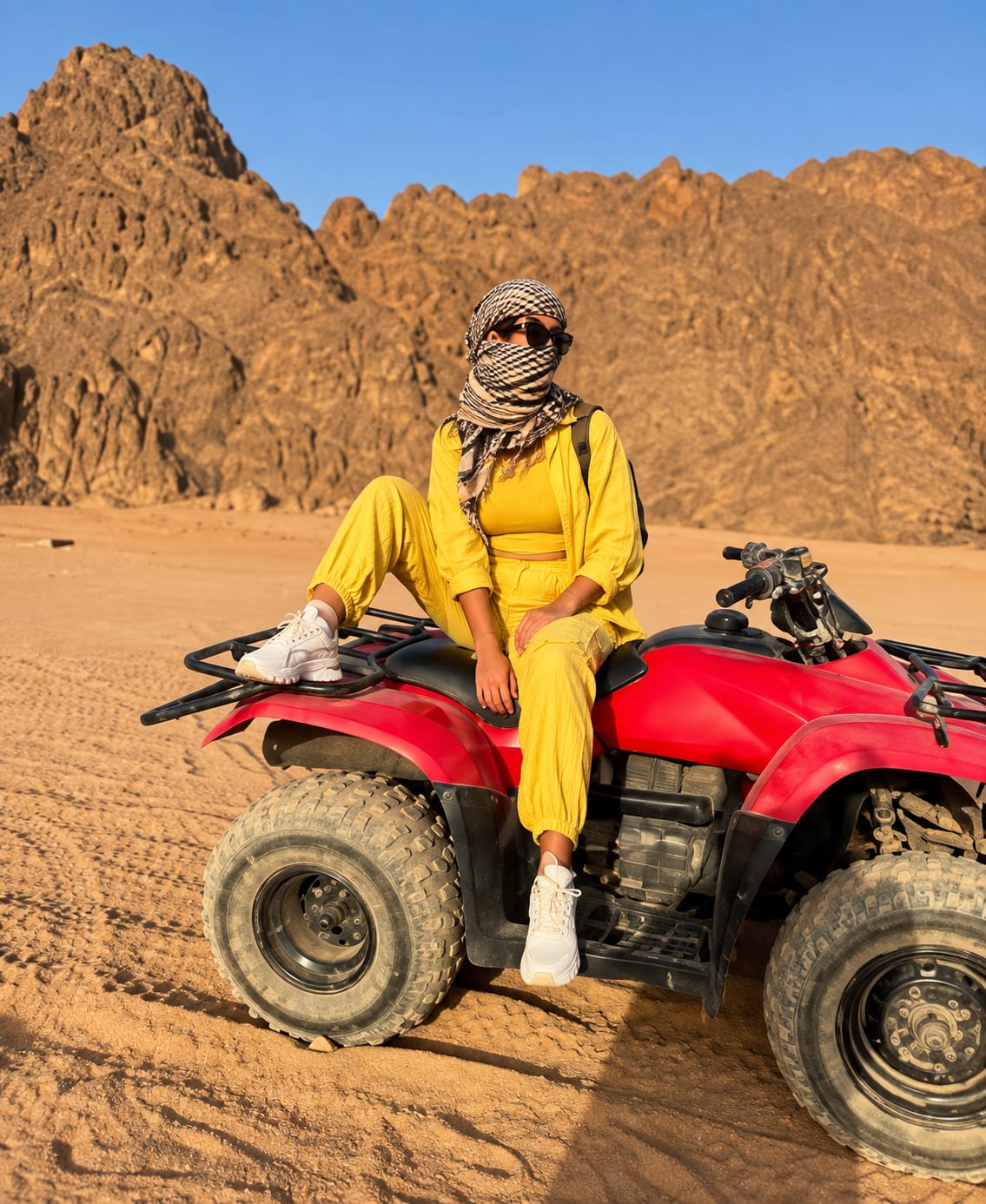
The Eastern Desert behind Hurghada in late afternoon light

Who actually lives out here

The Eastern Desert between the Nile and the Red Sea is not empty, and it has not been for a very long time. The people of these hills and wadis are principally the Ababda and, further south, the Bishari — groups whose presence in this landscape long predates Hurghada, the resorts, and the road you drove in on.

Traditionally they were pastoralists and traders, moving with camels and goats between wells and grazing, and working the routes between the Nile valley and the Red Sea ports. That way of life has contracted sharply within living memory — through drought, settlement policy, the end of the caravan trade, and the growth of the coast.

Tourism is one of the things that replaced it. That is the honest frame for the stop on your itinerary: not a museum, and not a performance either, but a real community that has adapted to receiving visitors because visitors are one of the few sources of income the desert now offers.

What the stop actually involves

Twenty to thirty minutes, usually including some combination of:

  • Tea. Bedouin tea, brewed strong over a fire with desert herbs — often marmariya, a wild sage. This is the genuinely good part and worth slowing down for.
  • Bread. Flatbread baked on a curved metal plate over embers, sometimes with the chance to try making one badly.
  • Camels. Usually a short ride, led. Ten minutes, for the photograph and the gait.
  • A shop. Beads, scarves, herbs, small silver. Prices are not marked and are negotiable.
  • Sometimes an explanation of the tents, the wells, the animals, delivered through your guide.

What it is not: a spectacular cultural performance, a full meal, or a long visit. Anyone arriving expecting an immersive evening will find it slight. Anyone arriving expecting nothing will find the tea unexpectedly good.
A desert vehicle on the stony plain behind the Red Sea coast
A desert vehicle on the stony plain behind the Red Sea coast

The question worth asking before you book

There is a real distinction, and operators are not always clear about it: is this a village, or a camp built for visitors?

Both exist along this coast. Some safari routes stop at genuine settlements where people live year-round. Others stop at a purpose-built site — tents, a fire, camels, a shop — staffed by people who go home elsewhere afterwards.

Neither is dishonest, and the purpose-built version can be perfectly pleasant. But they are different things, and if the authenticity matters to you, the way to find out is to ask directly when booking: do people live there? A good operator will answer plainly. An evasive answer is itself an answer.

Our own preference, and what we ask for on private trips, is the settlement — partly because it is more interesting, and partly because the money lands with the people whose landscape you are driving across.

How to be a good guest

This is the part worth getting right, because the stop is short and the asymmetry is large.

  • Ask before photographing people. Especially women, and especially children. Some will happily agree; some will not; asking costs you two seconds and is the single biggest difference between a guest and a tourist. A camera pointed at a stranger's face without a word is the thing visitors most often get wrong here.
  • Accept the tea. Refusing hospitality is a bigger deal than you might assume. If you genuinely cannot drink it, take the glass and hold it.
  • Buy something if you can. Not out of guilt — the shop is one of the few direct routes for money to reach the household rather than the operator. Herbs and scarves are light and cheap and travel home fine.
  • Haggle gently or not at all. The margins here are not the margins of Khan el-Khalili, and grinding someone down over a small sum in their own home reads exactly as it sounds.
  • Dress as you would visiting anyone's home. Shoulders and knees covered. You have come from a beach; they have not.
  • Do not treat the animals as props. Ask before climbing on a camel, and do not chase the goats for a photograph.

Is it exploitative?

Visitors ask us this, and it deserves a straight answer rather than a reassuring one.

The uncomfortable part is real: a convoy of quad bikes arrives, forty people photograph a family's home for twenty minutes, and leaves. Framed that way it is not flattering, and if it makes you uneasy, that reaction is not naive.

The other half is equally real. The income is genuine and it is one of very few available. The community chose to participate and continues to. The alternative — that visitors drive past without stopping, and the money stays entirely with coastal operators — is not obviously better for anyone living out there.

Where we land: it is defensible, and it is made better or worse almost entirely by how the visitors behave and which operator takes them. A small group that asks before photographing, buys some herbs and drinks the tea is a different event from a coach that treats the place as a photo stop. You have more influence over which of those it is than you might think.

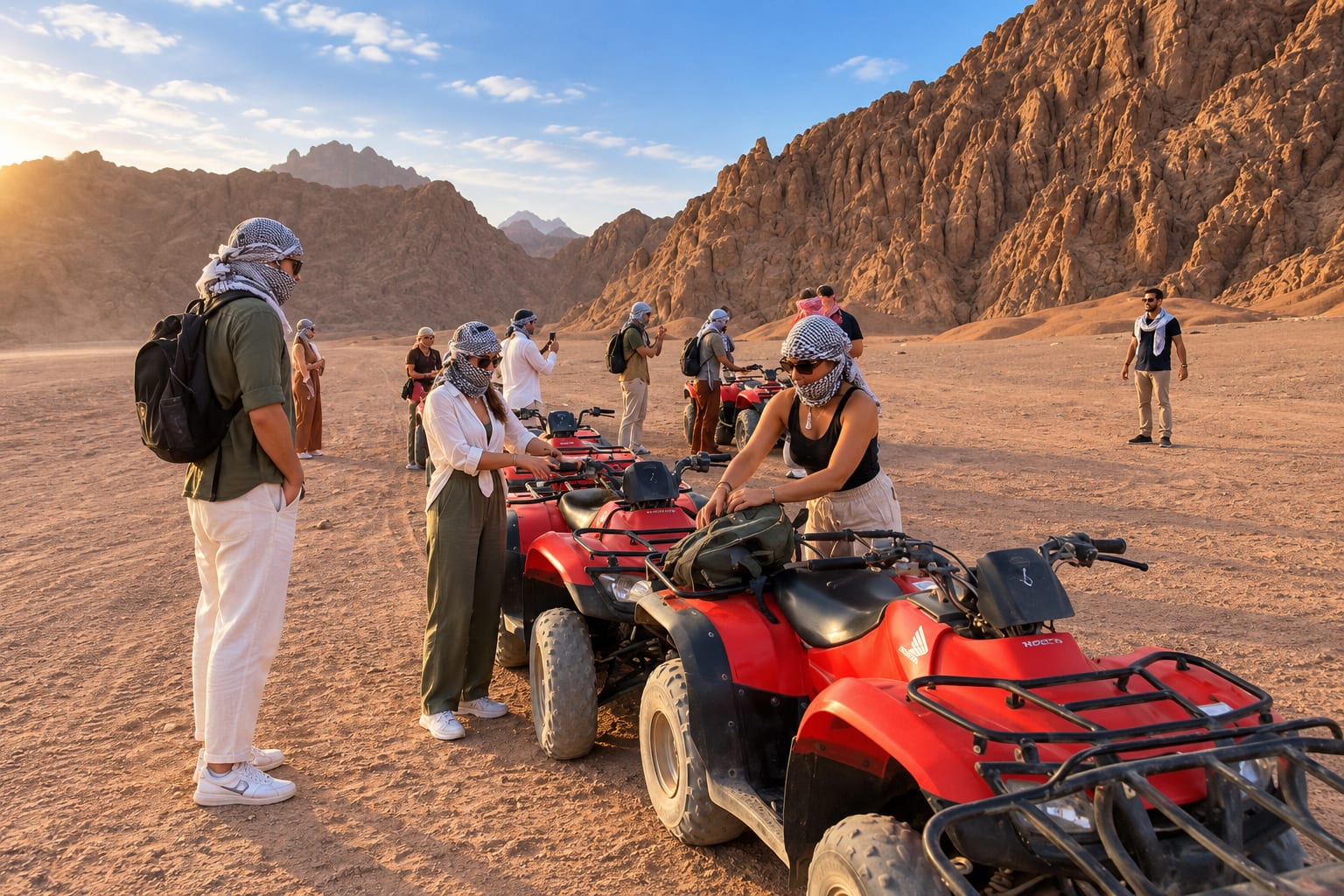
Quad bikes on a desert track in the Eastern Desert

Quad bikes on a desert track in the Eastern Desert

What to buy, and what it is

The shop is small and the stock is repetitive across villages, which puts people off. It is worth knowing what the things actually are.

Desert herbs are the best purchase by a distance. Marmariya — wild desert sage — is what the tea is made with, it costs very little, weighs nothing, and brewing it at home in February is a better souvenir than anything on a shelf. Ask which bag is which; several look identical.

Scarves. The long cotton wraps are genuinely useful in the desert and pack flat. The ones sold here are usually machine-made rather than hand-woven, and nobody claims otherwise if you ask directly.

Beadwork and small silver. Some is locally made, some is bought in from Aswan or further afield. A straight question gets a straight answer more often than people expect.

What to be sceptical of: anything presented as an antiquity. Genuine antiquities cannot legally leave Egypt, and what is offered as one in a desert camp is a modern copy. Buy it as a nice object if you like it; do not buy it as an artefact.

Practical notes

  • Take small notes. The shop cannot break large ones, and this is the classic situation where you want to buy something modest and cannot.
  • Go on the sunset run. The village stop in flat midday glare is far less pleasant than the same stop as the light goes.
  • A private trip changes the visit. Four people can sit and drink tea properly; forty cannot. If the cultural stop is the part you care about, this is where the money goes furthest.
  • Learn two words. Salam alaykum arriving and shukran for the tea. The reaction is out of all proportion to the effort.
  • Do not expect a toilet beyond the very basic.
  • Ask your guide what is appropriate if you are unsure about anything. That is what they are for, and they would much rather be asked.

Book what you just read about

Tours from this article — private, with a licensed guide, and priced per person.

Related tours you can book